Fiber Reinforced Tape for Cushioning
CN → US| HS Code | Tariff Rate | Origin | Destination | Doc |
|---|---|---|---|---|
| 3919905020 | 40.8% | CN | US | Official Doc |
| 3926909989 | 22.8% | CN | US | Official Doc |
| 3926905500 | 40.1% | CN | US | Official Doc |
| 3919102010 | 40.8% | CN | US | Official Doc |
| 5603110070 | 35.0% | CN | US | Official Doc |
Product Images
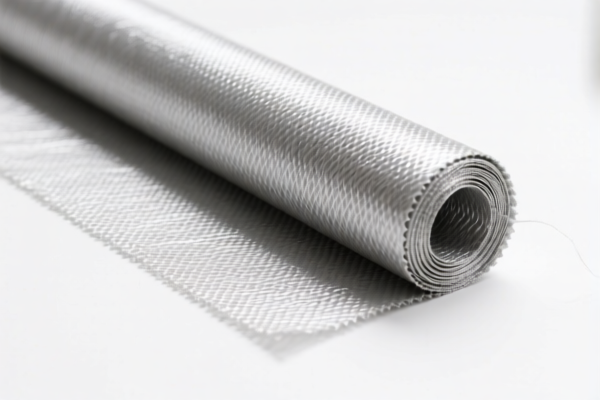
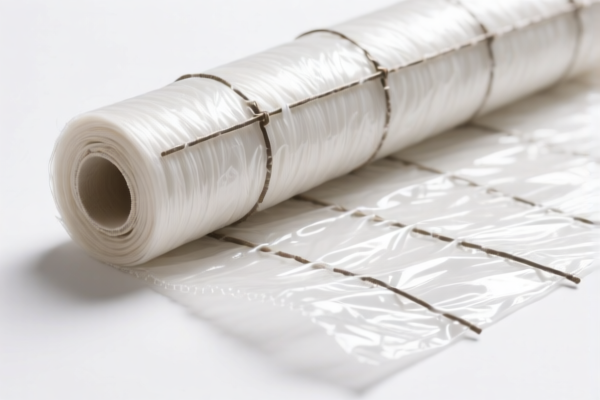
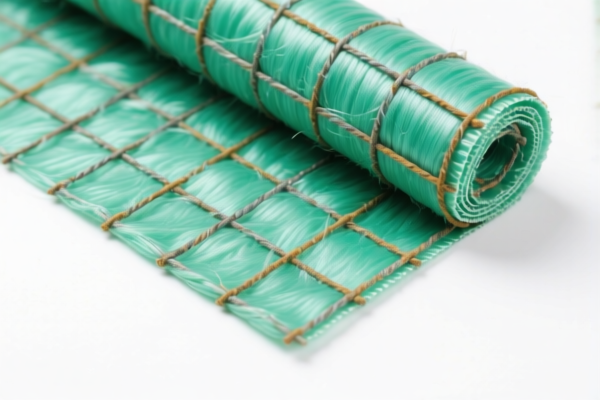
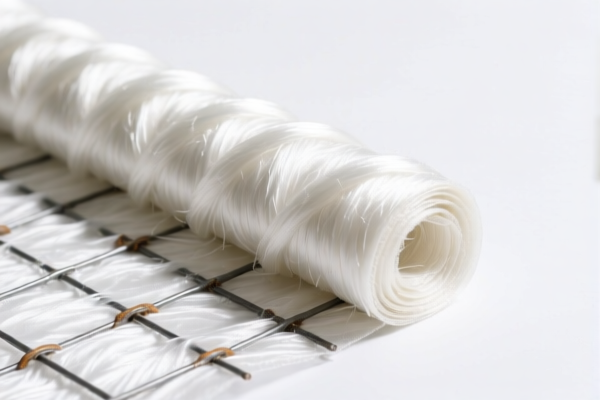
AI Analysis
📦 Fiber Reinforced Tape for Cushioning
🌐 HS Code Reference & Customs Clearance Guide | 2026 Latest Tariff Analysis | Professional Clearance Strategy
📌 Part 1: Product Definition & Classification: Do You Really Understand "Fiber Reinforced Tape"?
Fiber reinforced tapes are specialized industrial adhesives designed to provide high tensile strength, durability, and cushioning properties. They typically consist of a plastic or polymer base coated with adhesive and reinforced with fibers (such as glass, polyester, or synthetic fibers) to prevent tearing during handling and shipping.
In international trade, these tapes are classified based on their material composition, form (rolls vs. cut pieces), and primary function.
⚠️ Key Distinction Points:
- If the tape is primarily a plastic/polymer film with a fiber reinforcement layer, it generally falls under Chapter 39 (Plastics).
- If the tape is primarily a non-woven fabric or textile fiber with plastic backing, it may fall under Chapter 56 (Non-wovens) or Chapter 59 (Impregnated textiles), but the provided data focuses on Chapter 39 classifications.
- Self-adhesive nature is a critical feature for classification under Heading 3919.
📦 Part 2: HS Code Classification Details (2026 Latest Tariff Authority Comparison)
Based on the provided <DATA>, here are the specific HS Codes applicable to "Fiber Reinforced Tape for Cushioning," depending on its exact material structure and form:
| HS Code | Product Description | Application Scenario | Key Material/Feature |
|---|---|---|---|
3919.90.50.20 |
Fiber Reinforced Tape, Material & Form Match | General industrial reinforcement, cushioning packaging | Plastic base + Fiber reinforcement, self-adhesive |
3926.90.99.89 |
Plastic & Other Material Articles, Contains Plastic/Polymers | Non-adhesive plastic articles, generic plastic products | Plastic/polymer components, non-specific adhesive tape |
3926.90.55.00 |
Plastic/Other Material Articles Containing Textile Fibers | Hybrid materials, plastic products with textile fiber content | Textile fibers embedded in plastic matrix |
3919.10.20.10 |
Fiber Reinforced Tape, Roll Self-Adhesive Characteristics | Roll form, self-adhesive tapes for packaging/bonding | Self-adhesive, roll form, fiber-reinforced |
5603.11.00.70 |
Man-Made Filaments/Synthetic Fiber Non-Woven Articles | Non-woven tape products, lightweight reinforcement | Synthetic fibers, non-woven structure |
🔍 Key Reminder:
- HS 3919 codes are for self-adhesive plates, sheets, film, tape, strip, and other flat shapes, of plastics, whether or not in rolls.
- HS 3926 is a "catch-all" for other plastic articles. It should only be used if the product does not fit the specific definitions of 3919 (e.g., if it's not self-adhesive or not primarily a tape/plastic sheet).
- HS 5603 applies if the product is a non-woven fabric article, regardless of whether it is impregnated or coated.
💰 Part 3: 2026 Latest Tariff Rate Details (Including Surtaxes, Policy Add-ons)
✅ Applicable Country: United States (US)
✅ Origin: China (CN)
✅ Effective Time: Current tariffs apply (based on 301/122 clauses)
🎯 1. 3919.90.50.20 & 3919.10.20.10 —— Fiber Reinforced Tape (Plastic-Based)
These two codes share the same tariff structure due to similar material composition and policy treatment.
| Item | Content |
|---|---|
| Base Tariff Rate | 5.8% (Ad Valorem) |
| Section 301 Surtax | +25.0% (Added Tariff) |
| Section 122 Clause Tariff | +10.0% (Specific China Clause) |
| Total Tariff Rate | 40.8% |
| Tax Calculation | CIF Value × 40.8% |
| De Minimis Exemption | ❌ Not Eligible (Deny De Minimis) |
| Legal Basis Path | Base: 5.8% → 301: 25.0% → 122: 10.0% |
📌 Explanation:
- The 5.8% base tariff is the standard Most Favored Nation (MFN) rate for plastic tapes.
- The 25% additional tariff is imposed under Section 301 of the Trade Act of 1974 on Chinese goods.
- The 10% is applied under specific administrative clauses (often referred to as "122 Clause" in internal systems) targeting certain plastic/textile hybrid goods from China.
- Total 40.8% is a high tariff rate. Importers must factor this into cost modeling immediately.
🎯 2. 3926.90.99.89 —— Plastic & Other Material Articles
| Item | Content |
|---|---|
| Base Tariff Rate | 5.3% (Ad Valorem) |
| Section 301 Surtax | +7.5% (Added Tariff) |
| Section 122 Clause Tariff | +10.0% (Specific China Clause) |
| Total Tariff Rate | 22.8% |
| Tax Calculation | CIF Value × 22.8% |
| De Minimis Exemption | ❌ Not Eligible |
| Legal Basis Path | Base: 5.3% → 301: 7.5% → 122: 10.0% |
📌 Note:
- This classification applies if the tape is considered a "general plastic article" rather than a specific "self-adhesive tape."
- Lower total rate (22.8%) compared to 3919 codes.
- Risk: Misclassification. If CBP determines the product is indeed a self-adhesive tape, they will reclassify it to 3919, resulting in back taxes + penalties.
🎯 3. 3926.90.55.00 —— Plastic Articles Containing Textile Fibers
| Item | Content |
|---|---|
| Base Tariff Rate | 5.1% (Ad Valorem) |
| Section 301 Surtax | +25.0% (Added Tariff) |
| Section 122 Clause Tariff | +10.0% (Specific China Clause) |
| Total Tariff Rate | 40.1% |
| Tax Calculation | CIF Value × 40.1% |
| De Minimis Exemption | ❌ Not Eligible |
| Legal Basis Path | Base: 5.1% → 301: 25.0% → 122: 10.0% |
📌 Note:
- This code is for products where textile fibers are embedded in plastic, not just surface-reinforced.
- Tariff is high (40.1%) due to the 25% Section 301 rate.
- Differentiation: If the fiber is merely a coating or surface layer for reinforcement, 3919 is more appropriate. If the fiber is integral to the plastic matrix, 3926.90.55.00 may apply.
🎯 4. 5603.11.00.70 —— Man-Made Filaments/Synthetic Fiber Non-Woven Articles
| Item | Content |
|---|---|
| Base Tariff Rate | 0.0% (Ad Valorem) |
| Section 301 Surtax | +25.0% (Added Tariff) |
| Section 122 Clause Tariff | +10.0% (Specific China Clause) |
| Total Tariff Rate | 35.0% |
| Tax Calculation | CIF Value × 35.0% |
| De Minimis Exemption | ❌ Not Eligible |
| Legal Basis Path | Base: 0.0% → 301: 25.0% → 122: 10.0% |
📌 Note:
- The base rate is 0%, which looks attractive.
- However, the 25% Section 301 surtax brings the total to 35.0%.
- Applicability: Only if the product is a non-woven fabric article. If it is a woven tape or plastic film with fibers, this code is incorrect.
- Risk: Non-wovens are often confused with woven or plastic tapes. Must provide material test reports to prove non-woven structure.
🛠️ Part 4: Customs Clearance Practical Advice (Practical Pitfall Avoidance Guide)
✅ 1. Required Documentation Checklist (No Missing Items)
| Document | Required | Explanation |
|---|---|---|
| ✅ Product Specification Sheet | ✔️ | Must detail material composition (e.g., "PET film with glass fiber reinforcement"), adhesive type, and dimensions. |
| ✅ Material Composition Statement | ✔️ | Critical for distinguishing between 3919 (Plastic) and 5603 (Non-woven). |
| ✅ Product Photos (Clear Label) | ✔️ | Show the roll, the cross-section (to see fiber reinforcement), and any labeling. |
| ✅ Third-Party Test Report | ✔️ | Proof of non-woven vs. woven vs. plastic film structure. |
| ✅ Commercial Invoice | ✔️ | Clearly describe as "Fiber Reinforced Self-Adhesive Tape" and specify HS Code. |
| ✅ Packing List | ✔️ | Detail gross/net weight, number of rolls, and dimensions. |
✅ 2. Declaration Tips (Key Mantras)
🔥 "Material Defines Code, Adhesive Defines 3919, Non-Woven Defines 5603!"
| Scenario | Correct Declaration | Wrong Practice |
|---|---|---|
| Plastic film with fiber reinforcement, self-adhesive | 3919.90.50.20 or 3919.10.20.10 |
Report as "Plastic Tape" without specifying reinforcement → Risk of 3926 |
| Plastic article with embedded textile fibers, not tape | 3926.90.55.00 |
Report as "Tape" → Misclassification |
| General plastic article, not tape, not textile | 3926.90.99.89 |
Report as "Tape" → Wrong heading |
| Synthetic non-woven fabric, self-adhesive or not | 5603.11.00.70 |
Report as "Plastic Tape" → High risk of penalty |
✅ 3. Special Case Handling
| Scenario | Handling Advice |
|---|---|
| Hybrid Material (Plastic + Fabric) | Provide a material breakdown by weight. If plastic >50%, lean towards 3919/3926. If fabric is dominant, consider 5603/59. |
| Cut-to-Length Tapes | If sold in rolls, use 3919. If sold as cut pieces with no adhesive backing, they may fall under 3926. |
| Cushioning Function | "Cushioning" is a functional description, not a classification basis. Do not use "Cushioning Tape" as the primary HS code descriptor; use material-based descriptors. |
| OEM Custom Tapes | Provide customer POs and design specs to prove the intended use and material structure. |
🌍 Part 5: Global Main Market Customs Comparison (2026 Latest)
| Country/Region | Recommended HS Code | Tariff (China Origin) | Certification Requirements | Notes |
|---|---|---|---|---|
| 🇺🇸 USA | 3919.90.50.20 |
40.8% | FCC (if electronic), RoHS (if applicable) | High tariff due to 301/122 clauses. |
| 🇨🇳 China | 3919.90.50.20 |
~5% | CCC (if applicable) | Lower base rate, no 301 surtax. |
| 🇪🇺 EU | 3919.90.50.20 |
5.0% | CE, REACH | No additional surtaxes for China. |
| 🇦🇺 Australia | 3919.90.50.20 |
5.0% | RCM | No additional surtaxes. |
| 🇯🇵 Japan | 3919.90.50.20 |
3.5% | PSE | No additional surtaxes. |
📌 Conclusion:
- The USA is the most expensive market for fiber reinforced tapes from China due to Section 301 and 122 clause tariffs.
- Tariff Avoidance Strategy: Consider supply chain diversification (e.g., Vietnam, Thailand, Mexico) to mitigate 301/122 surtaxes.
- Pre-Clarification: Always apply for a Binding Tariff Information (BTI) or Advance Ruling if the product structure is ambiguous.
📌 Part 6: Common Errors & Pitfall Guide (Lessons Learned)
❌ Error 1: Misclassifying a plastic film tape as a non-woven (5603) to get 0% base rate.
👉 Consequence: CBP audits will reject this if test reports show a plastic film base. Back taxes + 35% penalty.
❌ Error 2: Using 3926.90.99.89 for a self-adhesive tape.
👉 Consequence: HS 3919 is the specific heading for self-adhesive tapes. Misclassification leads to underpayment of tariff (22.8% vs 40.8%).
❌ Error 3: Ignoring the 122 Clause impact.
👉 Consequence: Many importers only check 301 tariffs. The additional 10% is often overlooked, leading to budget shortfalls.
❌ Error 4: Vague description: "Tape for Cushioning."
👉 Consequence: CBP may request additional information, causing customs holds and demurrage charges.
✅ Correct Practice:
"Self-Adhesive Fiber Reinforced Plastic Tape, 25mm x 50m, PET Film with Glass Fiber Reinforcement, Industrial Grade, Model XYZ"
🎯 Part 7: Conclusion: Professional Declaration, Save Time, Reduce Costs!
🎯 Remember the Mantra:
🔹 "Plastic + Adhesive = 3919 (40.8%)"
🔹 "Plastic + Textile Fiber = 3926.90.55.00 (40.1%)"
🔹 "Non-Woven Fiber = 5603.11.00.70 (35.0%)"
🔹 "Generic Plastic Article = 3926.90.99.89 (22.8%)"
📌 Pro Tip:
If your tape is originating from Vietnam, Mexico, Thailand, or Malaysia, you may be eligible to avoid the 25% Section 301 and 10% 122 Clause tariffs, reducing the rate to the base rate (5.1% - 5.8%).
Recommendation: Always verify the Country of Origin on the bill of lading and certificate of origin.
📣 Immediate Action:
📞 Contact a professional customs broker + Provide material test reports + Apply for an HS Code Advance Ruling if unsure.
🚀 Ensure your fiber reinforced tape clears customs smoothly, efficiently, and cost-effectively!
✨ Professional Customs Clearance Starts with Accurate Classification!
💼 Every cent of your cost deserves to be calculated precisely!
Customer Reviews
About HS Code Classification
The Harmonized System (HS) is an internationally standardized nomenclature developed by the World Customs Organization (WCO) to classify traded products. Over 200 countries use the HS system as the basis for customs tariffs, trade statistics, and import/export regulations.
Each HS code follows a hierarchical structure:
- Chapter (2 digits) — Broad category of goods (e.g., Chapter 84: Machinery and Mechanical Appliances)
- Heading (4 digits) — More specific grouping within the chapter
- Subheading (6 digits) — Internationally standardized breakdown, used by all WCO member countries
- National subdivisions (8-10 digits) — Country-specific extensions for further classification, such as US HTSUS 10-digit codes
Correct HS code classification is essential for smooth customs clearance, accurate duty payment, and compliance with trade regulations. Misclassification can lead to customs delays, overpayment of duties, or penalties.
When importing from CN to US, the applicable tariff rates may include:
- Most-Favored-Nation (MFN) rate — The standard duty rate applied to WTO members
- General rate — Applied to countries without trade agreements
- Trade remedy duties — Additional tariffs such as Section 301 (anti-dumping), Section 232 (national security), or countervailing duties
The information provided on this page is for reference purposes only. For official classification, please consult with your local customs authority or a licensed customs broker.