Fiber Reinforced Tape for Medical Devices
CN → US| HS Code | Tariff Rate | Origin | Destination | Doc |
|---|---|---|---|---|
| 3919905020 | 40.8% | CN | US | Official Doc |
| 3926909989 | 22.8% | CN | US | Official Doc |
| 3926905500 | 40.1% | CN | US | Official Doc |
| 3919102010 | 40.8% | CN | US | Official Doc |
| 5603110070 | 35.0% | CN | US | Official Doc |
Product Images
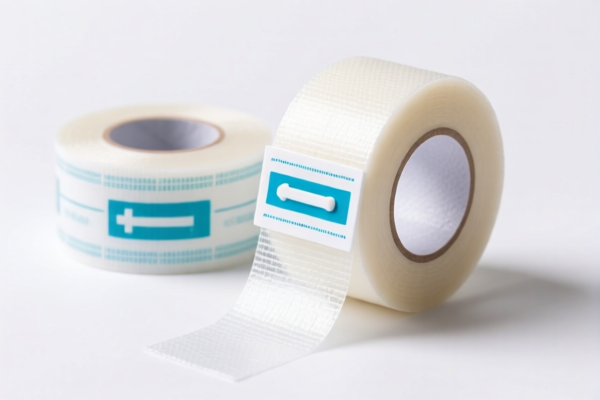
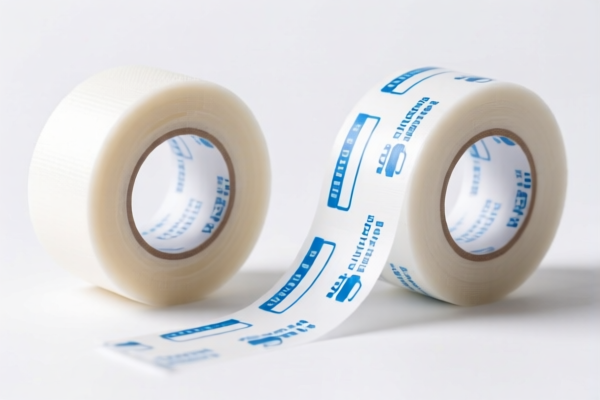
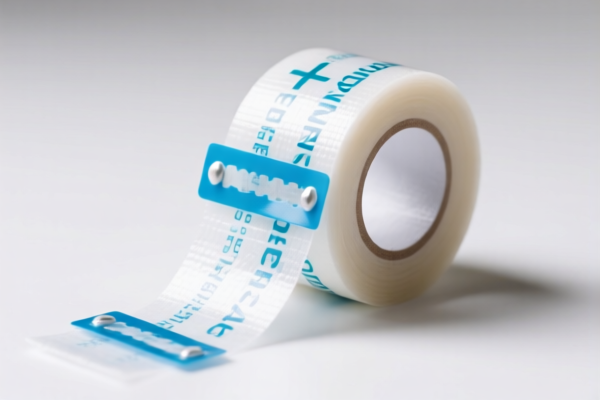
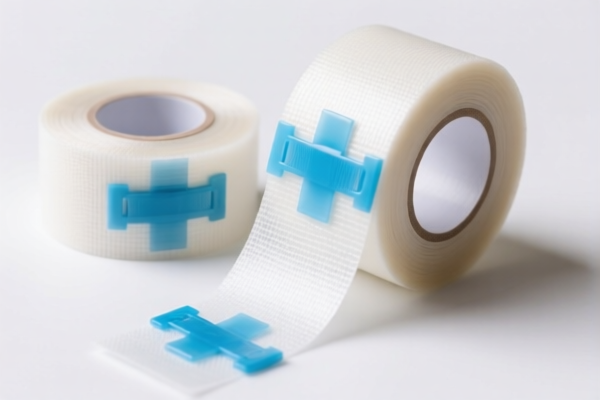
AI Analysis
🩺 Fiber Reinforced Tape for Medical Devices
🌐 HS Code Reference & Customs Clearance Guide | 2026 Latest Tariff Analysis | Professional Compliance Strategy
📌 I. Product Definition & Classification: What Exactly Is "Fiber Reinforced Tape" for Medical Use?
Fiber Reinforced Tape for Medical Devices is a specialized adhesive product used in healthcare settings for securing dressings, supporting joints, or reinforcing medical packaging. Unlike generic industrial tapes, these products often involve complex material compositions (plastics + textiles/fibers) which significantly impact their Harmonized System (HS) classification and resulting tariff rates.
In international trade, the critical distinction lies in the material composition and form factor:
- Plastic-Based Tapes with Fiber Reinforcement: Primarily plastic with embedded fibers for strength.
- Non-Woven Textile Tapes: Primarily textile/non-woven with plastic coating or binding.
⚠️ Key Distinction Point:
- If the product is a roll of self-adhesive tape made predominantly of plastic with fiber backing/reinforcement → Look at Chapter 39 (Plastics)
- If the product is a non-woven fabric with minimal plastic binding, primarily for absorption/dressing → Look at Chapter 56 (Textiles/Non-wovens)
📦 II. HS Code Classification Details (2026 Latest Tariff Authoritative Comparison)
Based on the provided data, here are the specific HS codes applicable to "Fiber Reinforced Tape for Medical Devices," categorized by material structure:
| HS Code | Product Description | Applicable Scenario | Material Composition |
|---|---|---|---|
3919.90.50.20 |
Fiber reinforced tape, material and form matching | Medical tapes that are clearly plastic-based with fiber reinforcement, self-adhesive | ✅ Plastic dominant + Fiber |
3919.10.20.10 |
Fiber reinforced self-adhesive tape in rolls | Roll-form medical tapes, plastic-based, self-adhesive | ✅ Plastic dominant + Fiber |
3926.90.55.00 |
Plastic/other material products containing textile fibers | Medical device components or tapes where plastic and textile fibers are integrated but not strictly "tape" in roll form | ✅ Mixed Plastic/Textile |
3926.90.99.89 |
Other articles of plastic and other materials | Generic plastic articles with plastic/polymer components, less specific than tape codes | ✅ Plastic dominant |
5603.11.00.70 |
Artificial filaments/synthetic fiber non-wovens | Non-woven medical tapes/dressings, primarily textile fiber with minimal plastic | ✅ Textile dominant |
🔍 Key Reminder:
- Chapter 39 (Plastics) usually applies to tapes with a plastic backing/adhesive layer, even if fibers are added for strength.
- Chapter 56 (Non-wovens) applies if the primary value and function come from the fibrous structure itself (e.g., surgical dressings, breathable wound care tapes).
- Misclassification Risk: Declaring a plastic-backed medical tape as "textile" to lower duties can lead to severe penalties. Conversely, declaring a non-woven dressing as "plastic tape" may attract higher duties unnecessarily.
💰 III. 2026 Latest Tariff Rate Breakdown (Including Surtaxes & Policy Add-ons)
✅ Applicable Country: United States (US)
✅ Origin: China (CN)
✅ Effective Time: 2025 onwards (including subsequent imports)
🎯 1. 3919.90.50.20 & 3919.10.20.10 —— Fiber Reinforced Plastic Tapes
These codes represent the most common classification for strong, self-adhesive medical tapes with plastic backing and fiber reinforcement.
| Item | Details |
|---|---|
| Base Tariff Rate | 5.8% (Ad valorem) |
| Section 301 Surtax | +25.0% (Due to USITC Footnote 9903.88.01 for Chinese goods) |
| Section 122 Add-on | +10.0% (Specific tariff clause for certain industrial/medical materials) |
| Total Effective Rate | 40.8% |
| Tax Calculation | CIF Value × 40.8% |
| De Minimis Exemption | ❌ Not Applicable (High-value medical imports usually excluded) |
| Legal Basis Path | Base: 5.8% → Surtax: 25.0% → Section 122: 10.0% |
📌 Explanation:
- The 40.8% total duty is significant for medical supplies.
- The 25% surtax is the standard Section 301 penalty for Chinese-origin plastic products.
- The 10% Section 122 is an additional layer for specific material categories.
- Cost Impact: For a $10,000 shipment, the duty alone is $4,080.
🎯 2. 3926.90.55.00 —— Plastic/Textile Mixed Articles
This code applies if the product is considered a composite article where plastic and textile fibers are integrated, but it doesn't fit the strict "tape in rolls" definition of 3919.
| Item | Details |
|---|---|
| Base Tariff Rate | 5.1% (Ad valorem) |
| Section 301 Surtax | +25.0% |
| Section 122 Add-on | +10.0% |
| Total Effective Rate | 40.1% |
| Tax Calculation | CIF Value × 40.1% |
| De Minimis Exemption | ❌ Not Applicable |
| Legal Basis Path | Base: 5.1% → Surtax: 25.0% → Section 122: 10.0% |
📌 Note:
- The rate is slightly lower (40.1%) than the pure tape codes (40.8%).
- This classification is riskier if the product is clearly a "tape" in rolls, as customs may reclassify it to 3919.
🎯 3. 3926.90.99.89 —— Other Plastic Articles
A catch-all category for plastic items not specifically described elsewhere.
| Item | Details |
|---|---|
| Base Tariff Rate | 5.3% (Ad valorem) |
| Section 301 Surtax | +7.5% (Lower surtax for general plastic articles in some contexts) |
| Section 122 Add-on | +10.0% |
| Total Effective Rate | 22.8% |
| Tax Calculation | CIF Value × 22.8% |
| De Minimis Exemption | ❌ Not Applicable |
| Legal Basis Path | Base: 5.3% → Surtax: 7.5% → Section 122: 10.0% |
📌 Warning:
- This has the lowest rate (22.8%), but it is only applicable if the product is not considered a "tape" or "textile-plastic composite."
- Misclassifying a clear medical tape as "other plastic article" is a high-risk audit trigger.
🎯 4. 5603.11.00.70 —— Non-Woven Fiber Products
For medical tapes that are primarily non-woven fabrics (e.g., surgical drapes, breathable dressings).
| Item | Details |
|---|---|
| Base Tariff Rate | 0.0% (Ad valorem) |
| Section 301 Surtax | +25.0% |
| Section 122 Add-on | +10.0% |
| Total Effective Rate | 35.0% |
| Tax Calculation | CIF Value × 35.0% |
| De Minimis Exemption | ❌ Not Applicable |
| Legal Basis Path | Base: 0.0% → Surtax: 25.0% → Section 122: 10.0% |
📌 Advantage:
- The 35.0% rate is the lowest among the high-duty codes because the base rate is 0%.
- Ideal for breathable, non-woven medical tapes or dressings.
🛠️ IV. Customs Clearance Practical Advice (Real-World Pitfall Guide)
✅ 1. Required Documentation Checklist (Non-Negotiable)
| Document | Required? | Notes |
|---|---|---|
| ✅ Product Specification Sheet | ✔️ | Must detail material composition (e.g., "Polyester fiber reinforced with acrylic adhesive") |
| ✅ Material Composition Statement | ✔️ | Explicitly state the percentage of plastic vs. textile vs. adhesive |
| ✅ Product Photos (Front/Side/Back) | ✔️ | Show the roll structure, adhesive side, and any medical certification marks |
| ✅ Medical Device Classification | ✔️ | FDA 510(k) number or CE Mark (if applicable) to prove medical use |
| ✅ Commercial Invoice | ✔️ | Clearly state "Fiber Reinforced Medical Tape" or "Non-Woven Medical Dressing" |
| ✅ Packing List | ✔️ | Detail weights and dimensions per unit |
✅ 2. Classification Strategy (Key Rules of Thumb)
🔥 "Material Dictates Code, Form Dictates Chapter, Honesty Saves Money!"
| Scenario | Recommended HS Code | Why? | Risk of Misclassification |
|---|---|---|---|
| Plastic-backed, roll-form, strong adhesive | 3919.90.50.20 / 3919.10.20.10 |
Clearly fits "Plastic Tapes in Rolls" | Low if specs are accurate |
| Non-woven, breathable, lightweight | 5603.11.00.70 |
Fits "Non-Woven Fabrics" | Low if texture is fabric-like |
| Composite piece, not roll-form | 3926.90.55.00 |
Plastic + Textile composite | Medium (Customs may reclassify to tape) |
| Generic plastic part, no specific form | 3926.90.99.89 |
Catch-all | High (Only use if no better fit) |
✅ 3. Special Considerations for Medical Products
| Situation | Handling Advice |
|---|---|
| FDA-Registered Medical Devices | Provide FDA registration number. Some medical devices may have separate exemptions, but tariffs on materials usually still apply. |
| Sterile vs. Non-Sterile | Sterile products require stricter documentation. Ensure sterilization method is declared. |
| OEM/Custom Design | Provide customer PO and design specs. Avoid generic descriptions like "Tape." Use precise technical terms. |
| Small Samples (De Minimis) | Even if under $800, medical devices are often scrutinized for compliance, not just duty. Ensure proper labeling. |
🌍 V. Global Market Comparison (2026 Latest)
| Country/Region | Recommended HS Code | Tariff Rate (China Origin) | Certification Requirements | Notes |
|---|---|---|---|---|
| 🇺🇸 USA | 3919.90.50.20 |
40.8% | FDA Registration + Labeling | High duty due to Section 301 + 122 |
| 🇨🇳 China | 3919.90.50.20 |
~5-7% | NMPA Registration | Lower duty, strict medical compliance |
| 🇪🇺 EU | 3919.90.90 |
0% (if under FTA) | CE Mark + MDR/IVDR | No Section 301 equivalent |
| 🇦🇺 Australia | 3919.90.00 |
5% | TGA Registration | Moderate duty, no surtax |
| 🇯🇵 Japan | 3919.90.00 |
~6% | PMDA Registration | Standard tariff, no major surtax |
📌 Conclusion:
- USA has the highest effective duty (40.8%) for plastic-based medical tapes due to layered tariffs.
- Non-woven medical tapes (5603.11.00.70) offer a lower rate (35.0%) in the US market.
- Consider product redesign (e.g., using non-woven materials) to optimize duty costs, if medically appropriate.
📌 VI. Common Mistakes & Pitfalls (Lessons Learned)
❌ Mistake 1: Declaring "Plastic Tape" as "Textile Bandage"
👉 Consequence: Customs inspection reveals plastic backing → Reassigned to 3919 → Back taxes + penalties.
❌ Mistake 2: Ignoring the 10% Section 122 Duty
👉 Consequence: Underpayment of duties → Audits and interest charges.
❌ Mistake 3: Using Generic Terms Like "Adhesive Tape"
👉 Consequence: Customs assigns default higher rate or delays clearance for additional info → Supply chain disruption.
❌ Mistake 4: Assuming Medical Use Exempts Tariffs
👉 Consequence: Medical compliance is required, but tariffs are material-based → Full duty payable.
✅ Correct Approach:
"Medical Adhesive Tape, Polyester Fiber Reinforced, Acrylic Adhesive, Roll Form, For Wound Securing, Model ABC, FDA Registered"
🎯 VII. Conclusion: Precision Classification Saves Money
🎯 Remember These Key Takeaways:
🔹 "Plastic Tape = ~40.8% Duty"
🔹 "Non-Woven Tape = ~35.0% Duty"
🔹 "Composite Article = ~40.1% Duty"
🔹 "Generic Plastic = ~22.8% (Risky)"🔹 "HS Code Determines Cost, Not Just Function!"
📌 Pro Tip:
If your medical tape is non-woven, classify under 5603.11.00.70 for a 5.8% duty savings compared to plastic-backed tapes.
For plastic-backed tapes, ensure your supplier provides detailed material specs to justify the HS code and avoid reclassification audits.
📣 Immediate Action:
📞 Consult with a Customs Broker + Provide Material Composition Report + Apply for Advance Ruling if shipment value is high.
🚀 Optimize your supply chain, reduce duty costs, and ensure compliant medical exports!
✨ Professional Customs Clearance Starts with Accurate Classification!
💼 Every percentage point matters in medical device imports!
Customer Reviews
About HS Code Classification
The Harmonized System (HS) is an internationally standardized nomenclature developed by the World Customs Organization (WCO) to classify traded products. Over 200 countries use the HS system as the basis for customs tariffs, trade statistics, and import/export regulations.
Each HS code follows a hierarchical structure:
- Chapter (2 digits) — Broad category of goods (e.g., Chapter 84: Machinery and Mechanical Appliances)
- Heading (4 digits) — More specific grouping within the chapter
- Subheading (6 digits) — Internationally standardized breakdown, used by all WCO member countries
- National subdivisions (8-10 digits) — Country-specific extensions for further classification, such as US HTSUS 10-digit codes
Correct HS code classification is essential for smooth customs clearance, accurate duty payment, and compliance with trade regulations. Misclassification can lead to customs delays, overpayment of duties, or penalties.
When importing from CN to US, the applicable tariff rates may include:
- Most-Favored-Nation (MFN) rate — The standard duty rate applied to WTO members
- General rate — Applied to countries without trade agreements
- Trade remedy duties — Additional tariffs such as Section 301 (anti-dumping), Section 232 (national security), or countervailing duties
The information provided on this page is for reference purposes only. For official classification, please consult with your local customs authority or a licensed customs broker.