Fiber Reinforced Tape for Pipe Wrapping
CN → US| HS Code | Tariff Rate | Origin | Destination | Doc |
|---|---|---|---|---|
| 5603110070 | 35.0% | CN | US | Official Doc |
| 5603120070 | 35.0% | CN | US | Official Doc |
| 3919102010 | 40.8% | CN | US | Official Doc |
| 3919905020 | 40.8% | CN | US | Official Doc |
| 3926905500 | 40.1% | CN | US | Official Doc |
Product Images


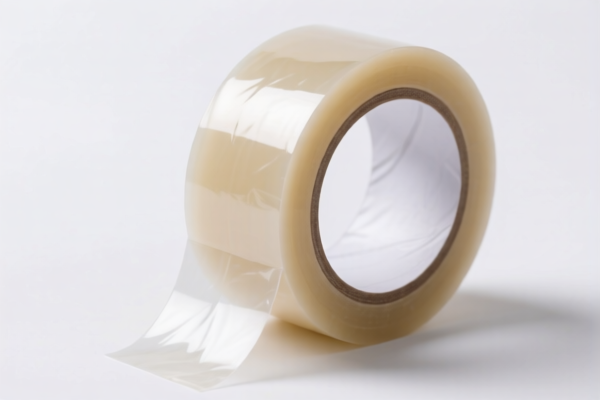

AI Analysis
Here is the comprehensive guide for Fiber Reinforced Tape for Pipe Wrapping, formatted as a professional Wiki entry with clear tax breakdowns and customs clearance strategies based strictly on your provided data.
🛡️ Fiber Reinforced Tape for Pipe Wrapping (Pipeline Protection)
🌐 HS Code Classification & Tax Strategy | 2026 Customs Guide | Professional Clearance Protocol
📌 Product Definition: What is "Pipe Wrapping Tape"?
Fiber Reinforced Tape is a specialized industrial material designed to protect steel pipelines from corrosion, mechanical damage, and chemical attacks during underground or underwater installation. It is typically a composite of: 1. Non-woven fabric (Synthetic/Polyester/Viscose) acting as the reinforcement matrix. 2. Adhesive layer (Pressure-sensitive or heat-activated) for bonding. 3. Outer carrier (Plastic film or fiberglass scrim) for strength.
In international trade, the classification depends entirely on the primary material composition (Fibers vs. Plastic) and the manufacturing process (Non-woven vs. Coated/Reinforced Plastic).
⚠️ Critical Distinction:
- If the tape is predominantly non-woven fibers with an adhesive coating → Chapter 56 (Textile/Non-woven).
- If the tape is predominantly plastic film reinforced with fibers → Chapter 39 (Plastics).
- Misclassification Risk: Declaring plastic-based tape as non-woven can lead to a massive tax difference (35% vs. 40.8%+) or seizure.
📦 II. HS Code Classification & Tax Breakdown (Strict Data Source)
Based on the specific product attributes provided in the dataset, here are the five critical HS Codes for Fiber Reinforced Pipe Wrapping Tape.
🧵 A. Non-Woven Fiber Categories (Chapter 56)
Best for: Tapes where the fabric structure is the defining characteristic.
| HS Code | Product Description | Material Basis | Tax Profile |
|---|---|---|---|
5603.11.00.70 |
Non-woven tape made of Artificial Long Fibers | Artificial/Chemical Long Filaments | 35.0% Total |
5603.12.00.70 |
Non-woven tape made of Synthetic Fibers (Fiberglass/Polymers) | Synthetic Long Fibers/Scrim | 35.0% Total |
📌 Why these codes?
These codes apply when the tape is manufactured as a non-woven web (felt-like structure) using long fibers. The "Pipe Wrapping" function is secondary to the material classification.
🧱 B. Plastic/Composite Reinforced Categories (Chapter 39)
Best for: Tapes where the plastic film/coating is the primary carrier, reinforced with fibers.
| HS Code | Product Description | Material Basis | Tax Profile |
|---|---|---|---|
3919.10.20.10 |
Self-adhesive rolls in sheets | Plastic base with fiber reinforcement | 40.8% Total |
3919.90.50.20 |
Other self-adhesive tapes (Fiber Reinforced) | Composite Plastic/Fiber | 40.8% Total |
3926.90.55.00 |
Other articles of plastics containing textile fibers | Plastic matrix with textile fiber content | 40.1% Total |
📌 Why these codes?
-3919: Specifically for "Self-adhesive plates, sheets, film, foil, tape, strip... of plastics." If the tape is essentially a plastic roll with fiber reinforcement for strength, this is the correct chapter.
-3926: A "catch-all" for plastic articles not elsewhere specified, but specifically captures items containing textile fibers (e.g., a plastic tape with a heavy fiber scrim embedded in it).
💰 III. Detailed Tariff Analysis (The 35% vs. 40.8% Battle)
All products listed below are subject to US Import Taxes for goods originating from China (CN). The total tax burden is a complex sum of three distinct layers.
📊 1. The "Textile/Non-Woven" Route (5603.11.00.70 & 5603.12.00.70)
Scenario: High fiber content, non-woven manufacturing. * Total Tax Rate: 35.0%
| Tax Component | Rate | Legal Basis | Explanation |
|---|---|---|---|
| Base MFN Duty | 0.0% | US Harmonized Tariff Schedule | Textile non-wovens generally have low or zero base duty. |
| Section 301 (Add-on) | 25.0% | "China Specific Tariffs" | Additional duty imposed under Trade Act Section 301 for Chinese goods. |
| Section 122 Duty | 10.0% | Specific 122 Clause | Additional specific duty targeting China (often related to trade remedy or specific policy). |
| ✅ TOTAL | 35.0% | Calculation: Base(0) + 301(25) + 122(10) = 35% |
📊 2. The "Plastic/Composite" Route (3919 & 3926)
Scenario: Plastic-dominant tape with fiber reinforcement.
* Total Tax Rates: 40.8% (for 3919) or 40.1% (for 3926)
Case A: Standard Self-Adhesive Plastic Tape (3919.10.20.10 / 3919.90.50.20)
- Base Duty: 5.8%
- 301 Add-on: 25.0%
- 122 Clause: 10.0%
- ✅ TOTAL: 40.8%
- Why higher? The plastic material has a base duty of 5.8%, which is added on top of the punitive tariffs.
Case B: Plastic Articles with Textile Fibers (3926.90.55.00)
- Base Duty: 5.1%
- 301 Add-on: 25.0%
- 122 Clause: 10.0%
- ✅ TOTAL: 40.1%
- Why slightly lower? The specific subheading for "other plastic articles" has a marginally lower base duty (5.1%) compared to standard adhesive tapes.
🚨 Critical Insight:
The 25% (301) and 10% (122) are mandatory for all items. The only variable is the Base Duty (0% vs. 5.x%). - Choosing Chapter 56 (Non-woven) saves you 5% - 5.8% in base duties compared to Chapter 39 (Plastic). - Strategy: If your tape is technically a "felt" or "non-woven fabric" with adhesive, push for5603to save nearly 6% in taxes.
🛠️ IV. Customs Clearance Strategy & Practical Advice
✅ 1. Documentation & Declaration Checklist
To avoid detention or re-classification by Customs and Border Protection (CBP), you must provide:
| Document | Requirement | Why it Matters |
|---|---|---|
| Product Spec Sheet | Must explicitly state: "Non-woven," "Fiberglass Scrim," or "Plastic Film Carrier." | Determines if it goes to Chapter 56 or Chapter 39. |
| Material Composition Report | % of Fibers vs. % of Plastic/Resin. | If >50% is non-woven fiber, argue for 5603. If plastic is dominant, prepare for 3919. |
| Process Description | "Needle-punched," "Chemically bonded" (Non-woven) vs. "Extruded," "Laminated" (Plastic). | Non-woven processes = 5603. Laminated/Extruded = 3919. |
| Usage Photo | Clear shot of the tape being applied to a pipe. | Confirms "Fiber Reinforced" nature; helps CBP distinguish from simple duct tape. |
| Country of Origin Cert | Must be China (CN) to apply the 35% or 40.8% rates. | If not China, tax rates differ significantly. |
✅ 2. Classification Logic: How to Argue for the Lower Rate?
🗣️ The "Non-Woven" Argument (Targeting
5603- 35% Rate) "This tape is manufactured via a wet-laid or dry-laid process creating a non-woven web of synthetic filaments. The adhesive is applied to the non-woven fabric. The structural integrity comes from the fibers, not the plastic film. Therefore, it is a non-woven textile product, not a plastic article." * Result: Base Duty 0%. Total Tax 35%.🗣️ The "Plastic" Argument (Targeting
3919- 40.8% Rate) "This tape is a plastic film (Polyethylene/PP) laminated with a fiber scrim for tear resistance. The primary carrier is plastic. The fibers are merely a reinforcement within a plastic matrix." * Result: Base Duty 5.8%. Total Tax 40.8%.
💡 Pro Tip: If you have a hybrid product, provide evidence of the manufacturing process. If the fiber web is formed first and then coated, it is almost certainly 5603.
✅ 3. Common Pitfalls to Avoid
| ❌ Mistake | 🚫 Consequence | ✅ Solution |
|---|---|---|
| Generic Description: "Pipe Tape" | CBP assigns random code → 40.8% or higher | Use specific HS Codes: 5603.11.00.70 or 3919.10.20.10. |
| Ignoring "Fiber" Content | If you ignore fibers, CBP sees "Plastic Tape" → 40.8% | Explicitly mention "Fiber Reinforced" in the description. |
| Mixing "Non-Woven" with "Plastic" | Confusion leads to "Ad Valorem" errors | Be decisive: Is it a fabric (5603) or a plastic film (3919)? |
| Missing 122 Clause Disclosure | Penalties & delays | Ensure your broker declares the 10% 122 clause for Chinese goods. |
✅ 4. Cost Optimization Recommendation
- Design Shift: If possible, reformulate the product to use a Non-Woven Carrier instead of a Plastic Film.
- Savings: 5.8% - 5.1% on every $10,000 shipment = $510 - $580 saved.
- Pre-Ruling: Apply for an Advance Ruling from CBP with a physical sample.
- Benefit: Locks in the 35% rate (
5603) before shipping, preventing surprise audits at the border.
- Benefit: Locks in the 35% rate (
- Supplier Audit: Ensure the factory clearly labels the product as "Non-Woven Tape" if it is indeed a felt-like structure.
🎯 V. Summary: Quick Reference Table
| HS Code | Classification | Base Duty | 301 (25%) | 122 (10%) | Total Tax | Best For |
|---|---|---|---|---|---|---|
5603.11.00.70 |
Non-woven, Artificial Fibers | 0.0% | 25.0% | 10.0% | 35.0% | Best Option (Felt-like) |
5603.12.00.70 |
Non-woven, Synthetic Fibers | 0.0% | 25.0% | 10.0% | 35.0% | Best Option (Fiberglass felt) |
3919.10.20.10 |
Self-adhesive Plastic (Fiber) | 5.8% | 25.0% | 10.0% | 40.8% | Plastic-based tape |
3919.90.50.20 |
Other Self-adhesive Plastic | 5.8% | 25.0% | 10.0% | 40.8% | Composite tape |
3926.90.55.00 |
Plastic w/ Textile Fibers | 5.1% | 25.0% | 10.0% | 40.1% | Hybrid plastic/fiber |
📣 Final Call to Action
Do not guess your HS Code! The difference between 35% and 40.8% is significant over large volumes.
- Step 1: Confirm if your tape is a Non-Woven Fabric (
5603) or a Plastic Film (3919). - Step 2: Declare the correct code to claim the 0% Base Duty.
- Step 3: Prepare full technical specs to defend against CBP re-classification.
🚀 Smart Logistics = Lower Taxes + Faster Clearance.
Ensure your declaration matches the5603family for the most cost-effective pipeline protection tape import!
Customer Reviews
About HS Code Classification
The Harmonized System (HS) is an internationally standardized nomenclature developed by the World Customs Organization (WCO) to classify traded products. Over 200 countries use the HS system as the basis for customs tariffs, trade statistics, and import/export regulations.
Each HS code follows a hierarchical structure:
- Chapter (2 digits) — Broad category of goods (e.g., Chapter 84: Machinery and Mechanical Appliances)
- Heading (4 digits) — More specific grouping within the chapter
- Subheading (6 digits) — Internationally standardized breakdown, used by all WCO member countries
- National subdivisions (8-10 digits) — Country-specific extensions for further classification, such as US HTSUS 10-digit codes
Correct HS code classification is essential for smooth customs clearance, accurate duty payment, and compliance with trade regulations. Misclassification can lead to customs delays, overpayment of duties, or penalties.
When importing from CN to US, the applicable tariff rates may include:
- Most-Favored-Nation (MFN) rate — The standard duty rate applied to WTO members
- General rate — Applied to countries without trade agreements
- Trade remedy duties — Additional tariffs such as Section 301 (anti-dumping), Section 232 (national security), or countervailing duties
The information provided on this page is for reference purposes only. For official classification, please consult with your local customs authority or a licensed customs broker.