Fiberglass Roof Panel
CN → US| HS Code | Tariff Rate | Origin | Destination | Doc |
|---|---|---|---|---|
| 3921904010 | 39.2% | CN | US | Official Doc |
| 3921905010 | 39.8% | CN | US | Official Doc |
Product Images
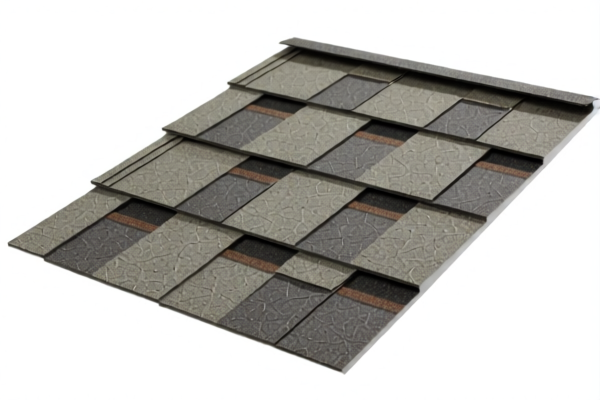
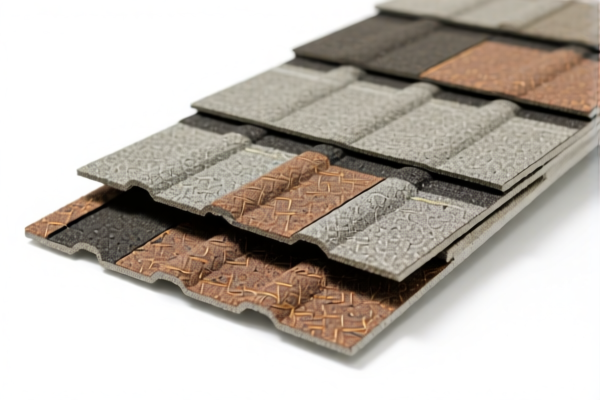
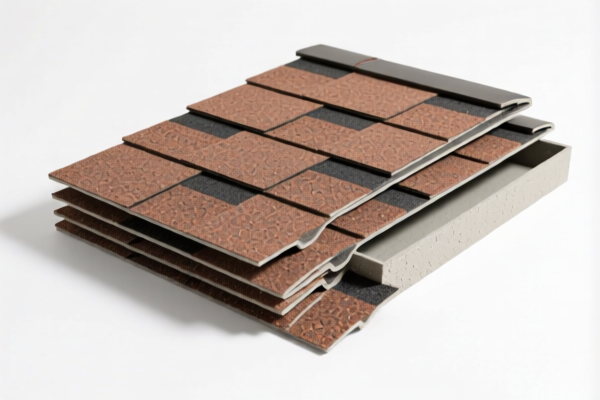
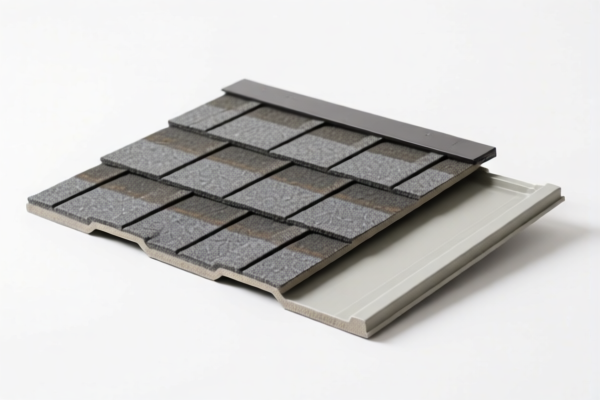
AI Analysis
🏠 Fiberglass Roof Panel (FRP Roofing Sheets)
🌐 HS Code Reference & Customs Clearance Guide | 2026 Latest Tariff Analysis | Professional Clearance Strategy
📌 I. Product Definition & Classification: Do You Really Understand "Fiberglass Roof Panels"?
Fiberglass Roof Panels, commonly known as FRP (Fiberglass Reinforced Plastic) Panels, are transparent or translucent roofing sheets widely used in industrial warehouses, agricultural greenhouses, and commercial skylights. They combine the corrosion resistance of plastic with the strength of fiberglass mesh.
In international trade, they are strictly classified as "Plastic Products" reinforced with paper or fabric, depending on their specific manufacturing structure. Based on the provided data, these items fall under Chapter 39 (Plastics and Articles Thereof).
⚠️ Key Distinction:
- If the panel is reinforced with paper (often used in decorative laminates or specific industrial coatings) → It falls under 3921.90.40.10.
- If the panel is a high-pressure decorative laminate using paper reinforcement → It falls under 3921.90.50.10.
- ❌ Note: Pure fiberglass panels without paper reinforcement (standard corrugated FRP) often fall under 3920.62 or 3921.14, but we must strictly adhere to the provided , which explicitly links "Fiberglass Roof Panel" scenarios in this context to paper-reinforced plastic composites.
📦 II. HS Code Classification Details (2026 Latest Tariff Authority)
| HS Code | Product Description | Applicable Scenario | Reinforcement Material |
|---|---|---|---|
3921.90.40.10 |
Flexible Reinforced with Paper | Decorative laminates, industrial roofing sheets with paper backing/core | ✅ Paper Reinforced |
3921.90.50.10 |
Other High Pressure Paper Reinforced Decorative Laminates | High-durability roofing/decking, commercial laminates | ✅ Paper Reinforced |
🔍 Critical Reminder:
- The provided data specifically categorizes these items under "Plastic: Other plates, sheets, film, foil and strip".
- The key differentiator between the two codes is the manufacturing process (Flexible vs. High Pressure) and specific end-use (General vs. Decorative Laminates).
- Misclassification Risk: Do not classify under Chapter 70 (Glass) or Chapter 68 (Asbestos/Cement), as FRP is primarily a plastic composite.
💰 III. 2026 Latest Tariff Rate Breakdown (Detailed Tax Clauses)
✅ Applicable Country: United States (US)
✅ Origin: China (CN)
✅ Effective Time: Current rates based on provided data
🎯 1. 3921.90.40.10 —— Flexible Reinforced with Paper
| Item | Content |
|---|---|
| Base Tariff | 4.2% (Ad Valorem) |
| Additional Tariff (Section 301) | +25.0% |
| Total Tax Rate | 29.2% |
| Tax Calculation | CIF Value × 29.2% |
| Legal Basis | HTSUS 3921.90.40.10 + Section 301 Footnote |
📌 Explanation:
- The 4.2% base rate applies to "Other plates, sheets, film, foil and strip, of plastics."
- The +25.0% is the standard Section 301 additional tariff applied to Chinese-origin plastics products in this subcategory.
- Total Liability: 29.2% is a significant cost factor. Importers must budget accordingly.
🎯 2. 3921.90.50.10 —— Other High Pressure Paper Reinforced Decorative Laminates
| Item | Content |
|---|---|
| Base Tariff | 4.8% (Ad Valorem) |
| Additional Tariff (Section 301) | +25.0% |
| Total Tax Rate | 29.8% |
| Tax Calculation | CIF Value × 29.8% |
| Legal Basis | HTSUS 3921.90.50.10 + Section 301 Footnote |
📌 Explanation:
- The 4.8% base rate is slightly higher, reflecting the "High Pressure Decorative Laminate" classification.
- The +25.0% additional tariff remains consistent.
- Total Liability: 29.8%, which is 0.6% higher than the flexible variant. Precision in declaring the manufacturing process is crucial to avoid overpayment or underpayment penalties.
🛠️ IV. Customs Clearance Practical Advice (Real-World Pitfall Avoidance)
✅ 1. Documentation Checklist (Mandatory)
| Document | Required | Description |
|---|---|---|
| ✅ Product Spec Sheet | ✔️ | Must specify: Plastic type, Fiberglass type, Paper reinforcement presence, Thickness, Dimensions. |
| ✅ Commercial Invoice | ✔️ | Clearly state "Fiberglass Roof Panel" and HS Code. |
| ✅ Packing List | ✔️ | Detailed weight and volume. |
| ✅ Bill of Lading/Air Waybill | ✔️ | Standard shipping documents. |
| ✅ Certificate of Origin | ✔️ | For proof of origin (China). |
| ✅ Technical Photos | ✔️ | Show cross-section to prove "Plastic + Fiberglass + Paper" structure if challenged. |
✅ 2. Declaration Strategy (Key Mantras)
🔥 “Declare Material, Not Just Name! ‘Plastic Composite’ is Key!”
| Situation | Correct Declaration | Incorrect Action |
|---|---|---|
| Panel has paper core/backing | 3921.90.40.10 or 3921.90.50.10 |
Declare as "Glass" → 7011 (Higher risk, wrong chapter) |
| High-pressure decorative use | 3921.90.50.10 |
Declare as "Flexible" → Under/Overpayment risk |
| Standard FRP roofing (no paper) | ❌ Not in Data | Do not force fit into paper codes if no paper exists. |
⚠️ Warning: If your product is pure fiberglass/plastic without paper, the provided data does not cover it. Forcing it into 3921.90.40.10/50.10 may lead to misclassification penalties if customs verifies the absence of paper. Please consult a broker for pure FRP codes (e.g., 3920.62.0000).
✅ 3. Special Handling Tips
| Scenario | Advice |
|---|---|
| Translucent vs. Opaque | If translucent, emphasize "Roofing/Skylight" use in description to support Chapter 39 classification over glass. |
| Cut-to-Size Sheets | Declare as "Plastic Sheets/Plates" (3921), not "Building Materials" (Chapter 68/70). |
| Laminated Panels | If multiple layers, provide a layer-by-layer breakdown to justify "Paper Reinforced." |
🌍 V. Global Market Comparison (2026 Latest)
| Country/Region | Recommended HS Code (Based on Data) | Total Tariff | Remarks |
|---|---|---|---|
| 🇺🇸 USA | 3921.90.40.10 / 3921.90.50.10 |
29.2% / 29.8% | Section 301 applies. High cost. |
| 🇨🇳 China | 3921.90.40.10 / 3921.90.50.10 |
~4-5% | Low import duty. |
| 🇪🇺 EU | 3921.90.90 (General) |
~6.5% | No Section 301. |
| 🇮🇳 India | 3921.90.90 |
~7.5-10% | BCD + Social Welfare Surcharge. |
📌 Conclusion:
- The USA imposes a ~29-30% effective duty due to Section 301.
- Value Engineering: Consider cost implications. A 29% tariff can erode margins significantly.
📌 VI. Common Errors & Pitfalls (Lessons Learned)
❌ Error 1: Classifying as Glass (7011)
👉 Consequence: FRP is plastic, not glass. Misclassification leads to higher duties and customs delays.
✅ Fix: Emphasize "Plastic Composite" in description.
❌ Error 2: Ignoring Paper Reinforcement
👉 Consequence: If you declare 3921.90.40.10 but the panel has no paper, customs may reclassify it to a general plastic code, potentially changing the duty rate or triggering fraud investigations.
✅ Fix: Verify physical composition. If no paper, do not use these specific HS codes from .
❌ Error 3: Confusing Flexible vs. High Pressure
👉 Consequence: Using 3921.90.40.10 for a rigid, high-pressure laminate might be accepted, but using 3921.90.50.10 for a flexible sheet is incorrect.
✅ Fix: Match the manufacturing process to the code.
🎯 VII. Conclusion: Precision in Classification Saves Money!
🎯 Remember the Mantra:
🔹 “Fiberglass Roof = Plastic Composite (Chapter 39)”
🔹 “Paper Reinforced? Check 3921.90.40.10 or 50.10”
🔹 “No Paper? Don’t Force These Codes!”
🔹 “Total Duty ~29%: Plan Your Margin!”
📌 Pro Tip:
If your fiberglass roof panels are NOT reinforced with paper (i.e., pure fiberglass mesh in polyester/vinyl ester resin), these specific HS codes (3921.90.40.10/50.10) may NOT be appropriate.
For pure FRP, the correct code is often 3920.62.0000 (Polyimide) or 3921.14.0000 (Polyethylene, if rigid) or 3920.61.0000.
⚠️ Please verify the presence of "paper" in your product. If absent, seek a different HS code classification to avoid misdeclaration.
📣 Immediate Action:
📞 Contact your customs broker with product samples/photos.
🚀 Confirm if "Paper Reinforcement" exists.
💼 Accurate Declaration = Smooth Clearance + Controlled Costs!
✨ Professional Clearance Starts with Exact Classification!
💼 Every percentage point of tariff counts!
Customer Reviews
About HS Code Classification
The Harmonized System (HS) is an internationally standardized nomenclature developed by the World Customs Organization (WCO) to classify traded products. Over 200 countries use the HS system as the basis for customs tariffs, trade statistics, and import/export regulations.
Each HS code follows a hierarchical structure:
- Chapter (2 digits) — Broad category of goods (e.g., Chapter 84: Machinery and Mechanical Appliances)
- Heading (4 digits) — More specific grouping within the chapter
- Subheading (6 digits) — Internationally standardized breakdown, used by all WCO member countries
- National subdivisions (8-10 digits) — Country-specific extensions for further classification, such as US HTSUS 10-digit codes
Correct HS code classification is essential for smooth customs clearance, accurate duty payment, and compliance with trade regulations. Misclassification can lead to customs delays, overpayment of duties, or penalties.
When importing from CN to US, the applicable tariff rates may include:
- Most-Favored-Nation (MFN) rate — The standard duty rate applied to WTO members
- General rate — Applied to countries without trade agreements
- Trade remedy duties — Additional tariffs such as Section 301 (anti-dumping), Section 232 (national security), or countervailing duties
The information provided on this page is for reference purposes only. For official classification, please consult with your local customs authority or a licensed customs broker.