Field Crop Insecticide
CN → US| HS Code | Tariff Rate | Origin | Destination | Doc |
|---|---|---|---|---|
| 3808911500 | 35.0% | CN | US | Official Doc |
| 3808912501 | 41.5% | CN | US | Official Doc |
| 3808915001 | 40.0% | CN | US | Official Doc |
| 3808520000 | 24.0% | CN | US | Official Doc |
Product Images
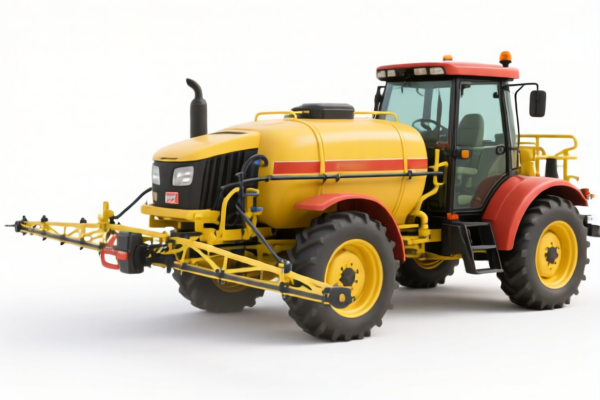
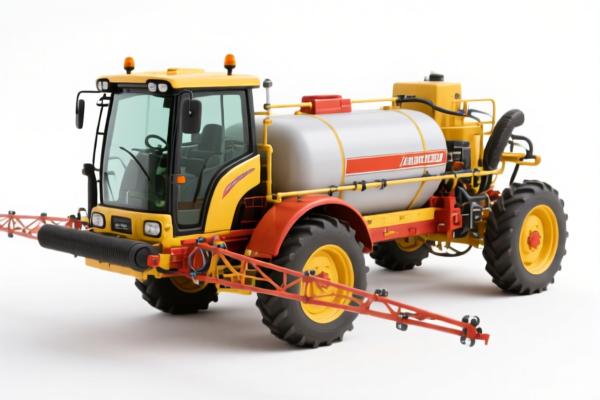

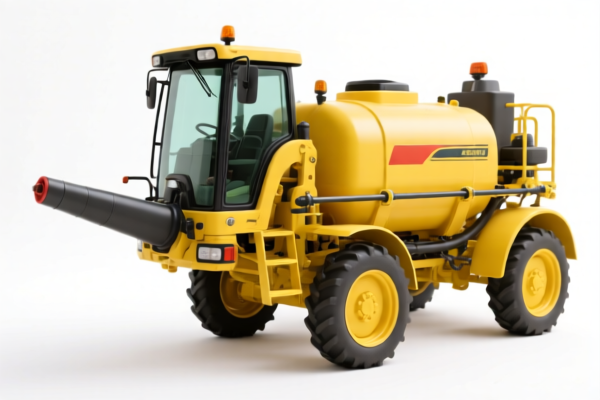
AI Analysis
🐞 Field Crop Insecticide (Agricultural Pest Control)
🌐 HS Code Reference & Customs Clearance Guide | 2026 Latest Tariff Analysis | Professional Entry Strategy
📌 I. Product Definition & Classification: Do You Truly Understand "Field Crop Insecticide"?
Field Crop Insecticides are chemical or biological substances specifically formulated to control, suppress, or eradicate pests (insects, mites, nematodes) that threaten large-scale agricultural crops such as corn, wheat, soybeans, rice, and cotton.
In international trade, these products are classified under Chapter 38 (Miscellaneous Chemical Products), specifically within Heading 3808 (Insecticides, Rodenticides, Fungicides, Herbicides, Anti-Sprouting Products and Plant-Growth Regulators, Disinfectants and Similar Products, Put Up in Forms or Packings for Retail Sale or as Preparations or Articles).
The classification depends heavily on: 1. Active Ingredient Composition: Whether it contains specific aromatic compounds or is a generic preparation. 2. Formulation: Is it ready for retail sale, or a bulk industrial preparation? 3. Specific HS Subheadings: Distinguishing between general insecticides (3808.91) and those specifically categorized under 3808.52.
⚠️ Key Distinction Point:
- General Field Crop Insecticides: Often fall under 3808.91 series. These are typically broad-spectrum or mixed formulations.
- Specific Agricultural Preparations: Some may fall under 3808.52 if they meet specific criteria for "preparations of a kind used for agricultural purposes."
- Aromatic Components: If the insecticide is based on aromatic compounds (often implied by specific subheadings like 3808.91.25), it triggers different tax calculations compared to standard preparations.
📦 II. HS Code Classification Details (2026 Latest Tariff Authority Comparison)
Based on the provided data, here are the precise HS Codes and their corresponding tax implications for Field Crop Insecticides:
| HS Code | Product Description | Application/Usage | Tax Detail Breakdown |
|---|---|---|---|
3808.91.15.00 |
Field Crop Insecticide | Matches usage for Insecticide Category. Likely a standard, non-aromatic based preparation. | Total Tax: 35.0% - Base Tariff: 0.0% - Additional Tariff: 25.0% - Section 301/122 Clause: 10% |
3808.91.25.01 |
Field Crop Insecticide (Aromatic Base) | Based on common sense, inferred to contain aromatic components. Often implies specific chemical structures like pyrethroids or aromatic hydrocarbons. | Total Tax: 41.5% - Base Tariff: 6.5% - Additional Tariff: 25.0% - Section 301/122 Clause: 10% |
3808.91.50.01 |
Crop Pest Control Agent | Usage fully aligns with the insecticide category. A general-purpose agricultural pest control formulation. | Total Tax: 40.0% - Base Tariff: 5.0% - Additional Tariff: 25.0% - Section 301/122 Clause: 10% |
3808.52.00.00 |
Crop Pest Control Agent | Usage is consistent with insecticide classification but falls under a different subheading, possibly for specific agricultural preparations or bulk forms. | Total Tax: 24.0% - Base Tariff: 6.5% - Additional Tariff: 7.5% - Section 301/122 Clause: 10% |
🔍 Key Insight:
-3808.91.15.00offers the lowest base tariff (0%), but the high additional tariffs push the total to 35%.
-3808.52.00.00has the lowest total tax (24%) despite a higher base rate, due to a significantly lower additional tariff (7.5% vs 25%). This makes it the most cost-effective if the product qualifies.
-3808.91.25.01is the most expensive (41.5%) due to the 6.5% base tariff plus standard additional tariffs. This applies to insecticides with aromatic components.
💰 III. 2026 Latest Tariff Rate Details (Including Additional Taxes & Policy Surcharges)
✅ Applicable Country: United States (US)
✅ Origin: China (CN)
✅ Effective Date: Includes imports since November 10, 2025 (subject to ongoing policy reviews)
🎯 1. 3808.91.15.00 —— Field Crop Insecticide (Standard Category)
| Item | Content |
|---|---|
| Base Tariff | 0% (ad valorem) |
| USITC Additional Tariff | +25% (Under Section 301) |
| Section 122 Clause Tariff | +10% (Specific to this classification) |
| Total Tax Rate | 35% |
| Tax Calculation | CIF Value × 35% |
| De Minimis Exemption | ❌ Not Applicable (High tariff goods excluded) |
| Legal Basis Path | USITC:3808.91.15.00 → Section 301: 25% → Section 122: 10% |
📌 Explanation:
- The 0% base tariff is offset by the 25% Section 301 tariff and 10% Section 122 tariff.
- This code is suitable for standard insecticides without complex aromatic structures.
🎯 2. 3808.91.25.01 —— Field Crop Insecticide (Aromatic Components)
| Item | Content |
|---|---|
| Base Tariff | 6.5% |
| USITC Additional Tariff | +25% |
| Section 122 Clause Tariff | +10% |
| Total Tax Rate | 41.5% |
| Tax Calculation | CIF Value × 41.5% |
| De Minimis Exemption | ❌ Not Applicable |
| Legal Basis Path | USITC:3808.91.25.01 → Section 301: 25% → Section 122: 10% |
📌 Note:
- This is the highest tax bracket. It applies if the insecticide contains aromatic compounds (e.g., certain pyrethroids or synthetic organic chemicals).
- Ensure your chemical formulation does not trigger this classification if possible.
🎯 3. 3808.91.50.01 —— Crop Pest Control Agent
| Item | Content |
|---|---|
| Base Tariff | 5.0% |
| USITC Additional Tariff | +25% |
| Section 122 Clause Tariff | +10% |
| Total Tax Rate | 40.0% |
| Tax Calculation | CIF Value × 40.0% |
| De Minimis Exemption | ❌ Not Applicable |
| Legal Basis Path | USITC:3808.91.50.01 → Section 301: 25% → Section 122: 10% |
📌 Note:
- Slightly lower than the aromatic category due to a 5% base tariff.
- Use this for general-purpose agricultural pest control products.
🎯 4. 3808.52.00.00 —— Crop Pest Control Agent (Lowest Total Tax)
| Item | Content |
|---|---|
| Base Tariff | 6.5% |
| USITC Additional Tariff | +7.5% (Significantly lower) |
| Section 122 Clause Tariff | +10% |
| Total Tax Rate | 24.0% |
| Tax Calculation | CIF Value × 24.0% |
| De Minimis Exemption | ❌ Not Applicable |
| Legal Basis Path | USITC:3808.52.00.00 → Section 301: 7.5% → Section 122: 10% |
📌 Critical Advantage:
- This is the most cost-effective option at 24% total tax.
- The Additional Tariff is only 7.5% (vs 25% for 3808.91 codes).
- Verify Eligibility: Ensure your product genuinely fits the criteria for 3808.52 (specific agricultural preparations). Misclassification can lead to severe penalties.
🛠️ IV. Customs Clearance Practical Advice (Battle-Tested Pitfall Avoidance)
✅ 1. Required Documentation Checklist (Mandatory)
| Document | Must Provide | Description |
|---|---|---|
| ✅ Product Specification Sheet | ✔️ | Detailed active ingredients, concentration, physical form. |
| ✅ Safety Data Sheet (SDS) | ✔️ | Critical for chemical products. Must meet OSHA/GHS standards. |
| ✅ EPA Registration Number | ✔️ | Mandatory for US. Insecticides must be registered with the US Environmental Protection Agency (EPA). |
| ✅ Certificate of Analysis (COA) | ✔️ | Proves chemical composition and purity. |
| ✅ Commercial Invoice | ✔️ | Clearly state "Field Crop Insecticide" and exact HS Code. |
| ✅ Packing List | ✔️ | Net/Gross weight, dimensions, number of packages. |
| ✅ Proof of Origin | ✔️ | To verify Chinese origin and apply correct tariffs. |
✅ 2. Declaration Tips (Key Mantra)
🔥 “EPA First, Ingredient Clear, HS Code Precise, Tax Saved!”
| Situation | Correct Declaration | Wrong Practice |
|---|---|---|
| General Insecticide | 3808.91.15.00 |
Misclassify as 3808.52.00.00 → Penalty for misdeclaration |
| Aromatic-Based Insecticide | 3808.91.25.01 |
Hide aromatic components → Severe fraud charges |
| Bulk Agricultural Prep | 3808.52.00.00 (if eligible) |
Overpaying 17% by using 3808.91 codes unnecessarily |
| Without EPA Reg | Do Not Import | Attempting clearance without EPA number → Seizure & Fine |
✅ 3. Special Handling Cases
| Situation | Handling Advice |
|---|---|
| EPA Registration | Must have a valid EPA Registration Number for the US market. Without it, the product will be rejected at customs. |
| Multi-Ingredient Formulas | Provide full ingredient breakdown. If any ingredient is restricted or requires additional reporting, declare it explicitly. |
| Liquid vs. Solid | Specify physical state. Liquids may require special packaging and hazard class declaration. |
| Private Label (OEM) | Provide the brand owner’s EPA registration. Do not use the manufacturer’s EPA number if it’s not authorized for the private label. |
🌍 V. Global Market Comparison for Insecticides (2026)
| Country/Region | Recommended HS Code | Tariff (China Origin) | Key Certification | Notes |
|---|---|---|---|---|
| 🇺🇸 USA | 3808.52.00.00 (Best) or 3808.91.xxxx |
24% - 41.5% | EPA Registration (Mandatory) | High regulatory barrier. Tariffs vary by subheading. |
| 🇨🇳 China | 3808.91 / 3808.52 |
5% - 14% | Domestic Registration | Lower tariffs, but strict environmental regulations. |
| 🇪🇺 EU | 3808.94 / 3808.93 |
6.5% | EFSA Approval | Requires extensive toxicological data. No Section 301 tariffs. |
| 🇦🇺 Australia | 3808.91 |
5% | APVMA Registration | Strict biosecurity laws. |
📌 Conclusion:
- The US market is the most complex due to EPA requirements and Section 301/122 tariffs.
- Tariff arbitrage is possible by correctly classifying under3808.52.00.00(24% total) vs3808.91.25.01(41.5% total).
- Do not attempt to under-declare value or misclassify EPA-regulated goods. The fines are severe.
📌 VI. Common Mistakes & Pitfall Avoidance (Blood & Tears Lessons)
❌ Mistake 1: Importing without EPA Registration
👉 Consequence: Goods seized, destroyed, and fines imposed. No exceptions.
❌ Mistake 2: Misclassifying 3808.91.25.01 (Aromatic) as 3808.91.15.00 (Standard)
👉 Consequence: Underpayment of 6.5% base tariff + potential penalties. Customs may audit chemical composition.
❌ Mistake 3: Ignoring the Section 122 Clause
👉 Consequence: The 10% surcharge is mandatory for all these codes. Failing to include it leads to immediate debt collection.
❌ Mistake 4: Using "Pesticide" as a generic term without specifying "Insecticide"
👉 Consequence: Customs may delay clearance for additional documentation. Be specific.
✅ Correct Practice:
"Field Crop Insecticide, Active Ingredient: [Name], EPA Reg. No. [Number], HS Code: 3808.52.00.00, CIF: $[Value]"
🎯 VII. Conclusion: Professional Declaration Saves Money!
🎯 Remember the Mantra:
🔹 "EPA First, HS Code Second, Tariff Third!"
🔹 "Aromatic codes cost 41.5%, General costs 35%, but 3808.52 is the sweet spot at 24%!"
🔹 "Misclassification is not a strategy, it’s a lawsuit waiting to happen!"
📌 Pro Tip:
If your insecticide does not contain aromatic components and is a general agricultural preparation, strive for classification under 3808.52.00.00 to save 11-17.5% in tariffs compared to other codes.
Apply for a Binding Ruling with US Customs (CBP) before shipping to lock in your HS Code and tariff rate.
📣 Immediate Action:
📞 Consult a Licensed Customs Broker
📄 Secure EPA Registration
📊 Verify Chemical Composition
🚀 Ensure Smooth Clearance, Maximize Profit!
✨ Professional Customs Clearance Starts with Accurate Classification!
💼 Every Percent Saved is Pure Profit!
Customer Reviews
About HS Code Classification
The Harmonized System (HS) is an internationally standardized nomenclature developed by the World Customs Organization (WCO) to classify traded products. Over 200 countries use the HS system as the basis for customs tariffs, trade statistics, and import/export regulations.
Each HS code follows a hierarchical structure:
- Chapter (2 digits) — Broad category of goods (e.g., Chapter 84: Machinery and Mechanical Appliances)
- Heading (4 digits) — More specific grouping within the chapter
- Subheading (6 digits) — Internationally standardized breakdown, used by all WCO member countries
- National subdivisions (8-10 digits) — Country-specific extensions for further classification, such as US HTSUS 10-digit codes
Correct HS code classification is essential for smooth customs clearance, accurate duty payment, and compliance with trade regulations. Misclassification can lead to customs delays, overpayment of duties, or penalties.
When importing from CN to US, the applicable tariff rates may include:
- Most-Favored-Nation (MFN) rate — The standard duty rate applied to WTO members
- General rate — Applied to countries without trade agreements
- Trade remedy duties — Additional tariffs such as Section 301 (anti-dumping), Section 232 (national security), or countervailing duties
The information provided on this page is for reference purposes only. For official classification, please consult with your local customs authority or a licensed customs broker.