File Binder
CN → US| HS Code | Tariff Rate | Origin | Destination | Doc |
|---|---|---|---|---|
| 4820300040 | 35.0% | CN | US | Official Doc |
| 4820300020 | 35.0% | CN | US | Official Doc |
| 3926908700 | 40.3% | CN | US | Official Doc |
| 4202322000 | 55.0% | CN | US | Official Doc |
| 3926909989 | 22.8% | CN | US | Official Doc |
Product Images
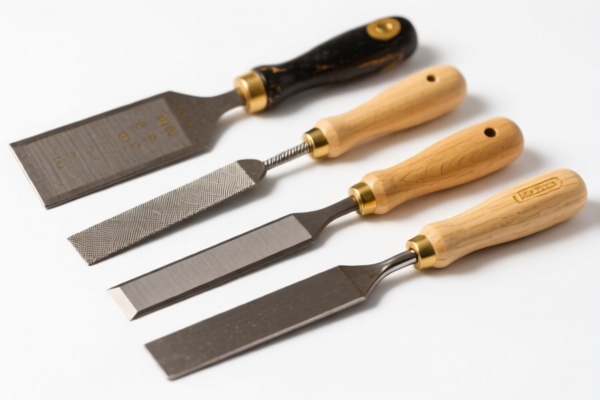
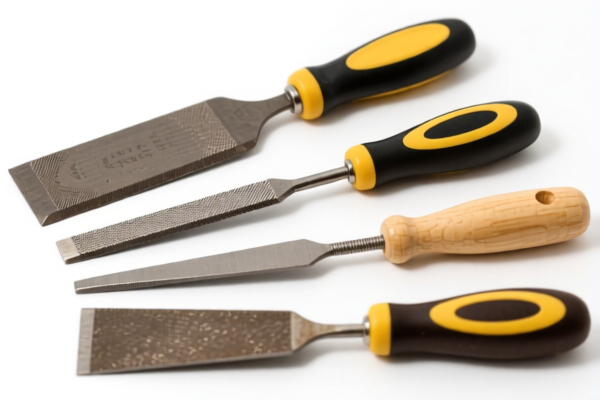
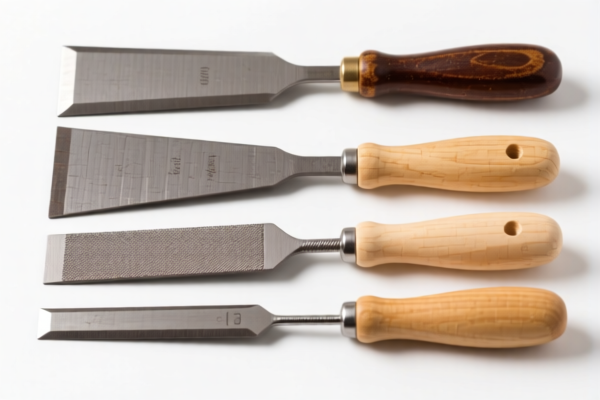

AI Analysis
📂 File Binders (Folders, Ring Binders, and Organizers)
🌐 HS Code Reference & Customs Clearance Guide | 2026 Latest Tariff Analysis | Professional Entry Strategy
📌 I. Product Definition & Classification: Do You Really Know a "File Binder"?
In international trade, "File Binders" are not a single monolithic category. They are strictly differentiated by material composition and structural design. Misclassification is the most common reason for customs delays, as the tariff burden varies significantly based on whether the item is made of paper/cardboard or plastic, and whether it is classified as a simple stationery item or a container.
1. Paper/Cardboard Binders: Simple folding folders or cardboard folders.
2. Plastic Binders: Rigid or semi-rigid plastic folders (often with rings or clips).
3. Composite/Other Binders: Items where the primary material is ambiguous or falls into "other plastic articles."
⚠️ Critical Distinction:
- If it is primarily paper/cardboard, it falls under Chapter 48.
- If it is primarily plastic, it falls under Chapter 39.
- If it has a specific outer cover made of plastic but functions as a general container, it might be classified under Chapter 42 (though less common for standard binders, see HS 4202.32.20.00 below).
📦 II. HS Code Classification Details (2026 Latest Tariff Authority Match)
Based on the provided data, here are the exact HS Codes applicable to File Binders:
| HS Code | Product Description | Material Attribute | Classification Scope |
|---|---|---|---|
4820.30.00.40 |
Paper or cardboard folders, classified as paper stationery items | Paper/Cardboard | Stationery category |
4820.30.00.20 |
Paper or cardboard folders, conforming to folder/ring binder classification | Paper/Cardboard | Specific folder/binder category |
3926.90.87.00 |
Plastic flat file folders, classified as plastic products | Plastic | Plastic products attribute |
4202.32.20.00 |
Folders with outer surface made of plastic sheets, classified as containers | Plastic (Cover) | Container category |
3926.90.99.89 |
Unspecified material plastic or paper folders, classified as other plastic products | Unspecified/Mixed | Other plastic articles |
🔍 Key Insight:
- Paper Binders (4820.30.00.40/4820.30.00.20) generally have lower base tariffs but still attract significant additional duties. - Plastic Binders (3926.90.87.00) have a base tariff of 5.3% plus additional duties. - Complex/Container-like Binders (4202.32.20.00) are treated differently, often resulting in higher base tariffs (20%) due to being classified as "containers" rather than just stationery.
💰 III. 2026 Latest Tariff Rate Breakdown (Including Additional Taxes & Policy Surcharges)
✅ Applicable Country: United States (US)
✅ Origin: China (CN)
✅ Effective Time: Ongoing (based on current trade measures)
🎯 1. 4820.30.00.40 & 4820.30.00.20 —— Paper or Cardboard Folders
These codes cover standard paper file folders and cardboard binders.
| Item | Content |
|---|---|
| Base Tariff | 0.0% |
| Section 301 Surcharge | +25.0% |
| 122 Clause Tariff | +10.0% |
| Total Rate | 35.0% |
| Tax Calculation | CIF Value × 35% |
| De Minimis Eligibility | ❌ No (Subject to scrutiny) |
| Legal Basis Path | USITC:4820.30.00 → Section 301: 25% → 122 Clause: 10% |
📌 Explanation:
- Although the base tariff is 0%, the 301 Section Surcharge (25%) and 122 Clause Tariff (10%) apply heavily to Chinese-origin paper goods. - Total Cost Impact: High. Even with a low base rate, the 35% total duty significantly impacts margins.
🎯 2. 3926.90.87.00 —— Plastic Flat File Folders
This code is for folders specifically made of plastic, classified under general plastic articles.
| Item | Content |
|---|---|
| Base Tariff | 5.3% |
| Section 301 Surcharge | +25.0% |
| 122 Clause Tariff | +10.0% |
| Total Rate | 40.3% |
| Tax Calculation | CIF Value × 40.3% |
| De Minimis Eligibility | ❌ No |
| Legal Basis Path | USITC:3926.90.87 → Section 301: 25% → 122 Clause: 10% |
📌 Note:
- The base tariff is 5.3%, but the additional duties push the total to 40.3%. - This is slightly higher than the paper counterpart (35%) due to the base rate.
🎯 3. 4202.32.20.00 —— Folders with Plastic Outer Surface (Container Category)
This code applies to folders where the outer surface is plastic sheets, classified as "containers" rather than simple stationery.
| Item | Content |
|---|---|
| Base Tariff | 20.0% |
| Section 301 Surcharge | +25.0% |
| 122 Clause Tariff | +10.0% |
| Total Rate | 55.0% |
| Tax Calculation | CIF Value × 55.0% |
| De Minimis Eligibility | ❌ No |
| Legal Basis Path | USITC:4202.32.20 → Section 301: 25% → 122 Clause: 10% |
⚠️ High Risk Alert:
- This is the most expensive classification. - The 20% base tariff is due to the "container" classification (Chapter 42). - Do not misclassify a simple plastic folder as a "container" if it fits3926.90.87.00. Misclassification here costs an extra 14.7% in duty!
🎯 4. 3926.90.99.89 —— Unspecified Material Folders (Other Plastic Products)
For folders where material is not clearly defined as standard plastic or paper, falling into "other" plastic articles.
| Item | Content |
|---|---|
| Base Tariff | 5.3% |
| Section 301 Surcharge | +7.5% (Note: Lower 301 rate applies here) |
| 122 Clause Tariff | +10.0% |
| Total Rate | 22.8% |
| Tax Calculation | CIF Value × 22.8% |
| De Minimis Eligibility | ❌ No |
| Legal Basis Path | USITC:3926.90.99 → Section 301: 7.5% → 122 Clause: 10% |
📌 Strategic Insight:
- This code has the lowest total tax (22.8%) among all options. - However, it carries a higher risk of customs rejection if the product clearly fits a more specific category (like3926.90.87.00or4820.30.00.20). - Use only if the material composition is genuinely ambiguous or mixed in a way that doesn't fit other specific subheadings.
🛠️ IV. Customs Clearance Practical Advice (Battle-Tested Pitfall Avoidance)
✅ 1. Documentation Checklist (Non-Negotiable)
| Document | Mandatory? | Purpose |
|---|---|---|
| ✅ Product Specifications | ✔️ | Must state material (e.g., "100% Polypropylene" or "300gsm Cardboard"). |
| ✅ Product Photos | ✔️ | Show the folder closed and open. Highlight the material texture. |
| ✅ Commercial Invoice | ✔️ | Clearly describe as "Plastic File Folder" or "Cardboard Paper Folder." Avoid vague terms like "Office Supplies." |
| ✅ Material Declaration | ✔️ | Explicitly state the primary material. This is crucial for choosing between HS 4820 and HS 3926. |
| ✅ Packing List | ✔️ | Ensure weights and dimensions match customs entry. |
✅ 2. Declaration Strategy (Key Mantras)
🔥 “Material Determines Code, Description Determines Rate!”
| Scenario | Correct Declaration | Risk if Wrong |
|---|---|---|
| Standard Plastic Folder | 3926.90.87.00"Plastic File Folder" |
If declared as 4202.32.20.00 → 55% Tax (Overpaid 14.7%) |
| Standard Cardboard Folder | 4820.30.00.20"Cardboard File Folder" |
If declared as 3926.90.87.00 → 40.3% Tax (Overpaid 5.3%) |
| Unclear/Mixed Material | 3926.90.99.89"Miscellaneous Folder" |
If clearly plastic, customs may reclassify to 3926.90.87.00 → 40.3% Tax (Overpaid 17.5%) |
| High-End Plastic Cover Binder | 4202.32.20.00"Plastic Covered Binder Container" |
Only use if it functions as a rigid container. Misuse leads to high audits. |
✅ 3. Special Handling Cases
| Case | Advice |
|---|---|
| Ring Binders with Plastic Covers | If the rings and interior are paper/metal but the cover is plastic, customs may still classify under 3926.90.87.00 if plastic is the principal material. |
| Folding Folders vs. Ring Binders | Both paper folding folders and paper ring binders can fall under 4820.30.00.20 or .40. Ensure the description matches "Folder" or "Binder" clearly. |
| "Green" or Biodegradable Binders | If made from paper-based bioplastics, they may still be classified under 4820 (paper) rather than 3926 (plastic), potentially lowering the base tariff. Provide material certification. |
| Bulk Shipments | For large volumes, consider applying for an Advance Ruling if you have multiple variations (paper, plastic, mixed). This locks in the HS code and prevents ad-valorem disputes. |
🌍 V. Global Market Comparison (2026)
| Country/Region | Recommended HS Code | Total Tax Rate (China Origin) | Remarks |
|---|---|---|---|
| 🇺🇸 USA | 3926.90.87.00 |
40.3% | High due to 301 + 122 Clause. Paper (4820) is cheaper at 35%. |
| 🇨🇳 China | 4820.30.00.20 |
~5-8% | Low base duty, no surcharges. |
| 🇪🇺 EU | 4820.30.00 |
~5-10% | Varies by specific type, generally lower than US. |
| 🇬🇧 UK | 4820.30.00 |
~5-10% | Post-Brexit tariffs similar to EU for stationery. |
| 🇯🇵 Japan | 4820.30.00 |
~0-6% | Low tariffs on paper/plastic stationery. |
📌 Conclusion:
- The US market is the most expensive for file binders due to the combination of 301 Section Tariffs and the new 122 Clause. - Paper binders (4820.30.00.20/40) are slightly cheaper than standard plastic binders (3926.90.87.00) in the US. - Avoid4202.32.20.00unless the product is genuinely a rigid container, as it triggers the highest tax bracket.
📌 VI. Common Errors & Pitfalls (Lessons Learned)
❌ Error 1: Calling all folders "Office Supplies" on the invoice.
👉 Result: Customs cannot determine the material → Delay for classification review.
❌ Error 2: Declaring a plastic folder as "Paper Folder" to save tax.
👉 Result: Customs inspection reveals plastic → Reclassification to 40.3% + potential penalties.
❌ Error 3: Assuming all plastic folders are 3926.90.87.00.
👉 Result: If it has a hard plastic cover and functions as a container, it might be 4202.32.20.00 (55%). Misclassification leads to underpayment.
❌ Error 4: Ignoring the "122 Clause" (10% surcharge).
👉 Result: This applies to all listed HS codes. Failing to budget for this 10% can wipe out profit margins.
✅ Correct Practice:
"Plastic Polypropylene File Folder, 3-Ring, A4 Size, Imported from China"
HS Code:3926.90.87.00| Tax: 40.3%"Cardboard File Folder, 4-Tab, Letter Size, Imported from China"
HS Code:4820.30.00.20| Tax: 35.0%
🎯 VII. Conclusion: Smart Classification Saves Money!
🎯 Remember the Mantra:
🔹 "Paper is 35%, Plastic is 40.3%, Container is 55%!"
🔹 "Don't guess the material, declare it clearly!"
🔹 "122 Clause adds 10% to EVERYTHING!"
📌 Pro Tip:
If you import large volumes of plastic folders, compare the cost impact of switching to paper/cardboard binders (HS 4820.30.00.20 at 35%) vs. plastic (HS 3926.90.87.00 at 40.3%). The 5.3% difference can be significant for bulk shipments.
📣 Immediate Action:
📞 Consult your customs broker with clear material specifications.
📄 Provide high-res photos of the folder's interior and exterior.
🚀 File accurate entries to avoid audits and ensure smooth clearance.
✨ Precision in Classification, Profit in Clearance!
💼 Your File Binder, Your Tax Strategy!
Customer Reviews
About HS Code Classification
The Harmonized System (HS) is an internationally standardized nomenclature developed by the World Customs Organization (WCO) to classify traded products. Over 200 countries use the HS system as the basis for customs tariffs, trade statistics, and import/export regulations.
Each HS code follows a hierarchical structure:
- Chapter (2 digits) — Broad category of goods (e.g., Chapter 84: Machinery and Mechanical Appliances)
- Heading (4 digits) — More specific grouping within the chapter
- Subheading (6 digits) — Internationally standardized breakdown, used by all WCO member countries
- National subdivisions (8-10 digits) — Country-specific extensions for further classification, such as US HTSUS 10-digit codes
Correct HS code classification is essential for smooth customs clearance, accurate duty payment, and compliance with trade regulations. Misclassification can lead to customs delays, overpayment of duties, or penalties.
When importing from CN to US, the applicable tariff rates may include:
- Most-Favored-Nation (MFN) rate — The standard duty rate applied to WTO members
- General rate — Applied to countries without trade agreements
- Trade remedy duties — Additional tariffs such as Section 301 (anti-dumping), Section 232 (national security), or countervailing duties
The information provided on this page is for reference purposes only. For official classification, please consult with your local customs authority or a licensed customs broker.