File Organizer Folder
CN → US| HS Code | Tariff Rate | Origin | Destination | Doc |
|---|---|---|---|---|
| 4820300020 | 35.0% | CN | US | Official Doc |
| 4820300040 | 35.0% | CN | US | Official Doc |
| 3926908700 | 40.3% | CN | US | Official Doc |
| 4202322000 | 55.0% | CN | US | Official Doc |
| 3926909989 | 22.8% | CN | US | Official Doc |
Product Images


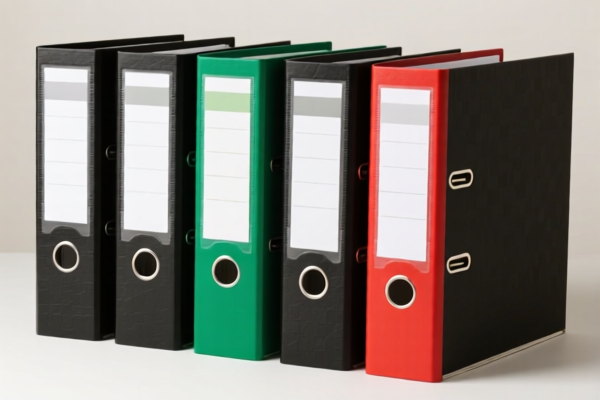
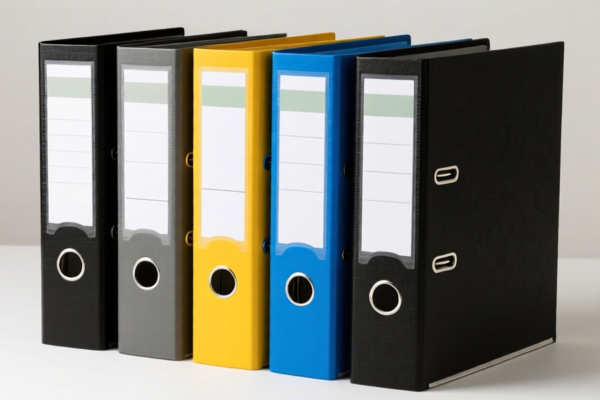
AI Analysis
📁 File Organizer Folder: The Ultimate HS Code & Duty Guide for 2026
🌐 HS Code Reference & Customs Clearance Guide | 2026 Tax Regime Breakdown | Professional Entry Strategy
📌 I. Product Definition: What Exactly is a "File Organizer Folder"?
In the global trade of office supplies, the term "File Organizer Folder" is a broad category covering items designed to hold, organize, and transport paper documents. However, in international customs classification (HS Code), the material composition and structural design dictate the entire duty liability.
Common Types & Their Distinctions: * Paper/Cardboard Organizers: Standard folders, binders, or wall files made of cellulose. * Plastic Organizers: Flat sheets, accordion files, or rigid containers made of synthetic polymers. * Composite/Container-Style: Folders with plastic outer surfaces acting as containers (often treated as luggage/travel goods or containers).
⚠️ Critical Classification Rule:
- Paper/Cardboard → Typically falls under Chapter 48 (Paper & Paperboard).
- Plastic (Flat/Non-container) → Typically falls under Chapter 39 (Plastics and Articles Thereof).
- Plastic with Rigid Outer Surface (Container-like) → Often falls under Chapter 42 (Leather/Travel Goods/Containers) due to structural function.
📦 II. HS Code Classification Matrix (2026 Latest Tariff Data)
Based on current 2026 tariff projections for US imports from China, here are the exact HS Codes and tax implications for File Organizer Folders:
| HS Code | Product Description (Summary) | Material & Structure | Total Tax Rate | Tax Breakdown Details |
|---|---|---|---|---|
4820.30.00.20 |
Paper/Cardboard Folders (Stationery) | Paper/Cardboard Standard stationery folders |
35.0% | Base: 0% Add-on: 25.0% 122 Sec: 10% |
4820.30.00.40 |
Paper Stationery Folders (Non-Ring) | Paper Non-ring binder type |
35.0% | Base: 0% Add-on: 25.0% 122 Sec: 10% |
3926.90.87.00 |
Plastic Folders (Flat) | Plastic Flat plastic articles |
40.3% | Base: 5.3% Add-on: 25.0% 122 Sec: 10% |
4202.32.20.00 |
Container-Type Folders (Plastic Surface) | Plastic Surface Container-like classification |
55.0% | Base: 20.0% Add-on: 25.0% 122 Sec: 10% |
3926.90.99.89 |
Mixed/Unspecified Material | Plastic/Paper Other plastic articles |
22.8% | Base: 5.3% Add-on: 7.5% 122 Sec: 10% |
🔍 Key Insight:
- The35.0%rate for paper folders is driven by the 25% Add-on Tariff (Section 301/China specific) + 10% Section 122 Tariff. - The55.0%rate for4202.32.20.00is the highest because the "Base Tariff" (20%) is already high, plus the additional penalties. -3926.90.99.89is a "catch-all" for unclear materials but offers the lowest total tax (22.8%) due to a lower Add-on (7.5%), though it carries classification risk.
💰 III. 2026 Tax Rate Deep Dive & Policy Explanation
✅ Applicable Country: United States (US)
✅ Origin: China (CN)
✅ Effective Date: 2025–2026 Regime
🎯 1. Paper/Cardboard Folders (4820.30.00.20 & .40)
Total Duty: 35.0%
| Component | Rate | Legal Basis | Explanation |
|---|---|---|---|
| MFN Base Rate | 0.0% | Standard MFN Tariff | Paper products often enjoy duty-free entry under normal conditions. |
| Section 301 / "Add-on" | 25.0% | US Trade Act 301 | Critical: Mandatory surcharge on Chinese goods to address trade imbalances. |
| Section 122 Tariff | 10.0% | Specific China Clause | Critical: Additional penalty tax specific to certain Chinese manufacturing categories. |
| Total | 35.0% | No De Minimis exemption applies here. |
📌 Why 35%? Even though paper is "cheap," the political tariffs (25% + 10%) make it expensive to import.
🎯 2. Plastic Flat Folders (3926.90.87.00)
Total Duty: 40.3%
| Component | Rate | Legal Basis | Explanation |
|---|---|---|---|
| MFN Base Rate | 5.3% | Standard Plastic Tariff | Plastics generally carry a small base duty. |
| Section 301 / "Add-on" | 25.0% | US Trade Act 301 | Full penalty applied. |
| Section 122 Tariff | 10.0% | Specific China Clause | Full penalty applied. |
| Total | 40.3% | Higher than paper due to the base 5.3%. |
🎯 3. Plastic Container-Style Folders (4202.32.20.00)
Total Duty: 55.0% (⚠️ HIGHEST RISK)
| Component | Rate | Legal Basis | Explanation |
|---|---|---|---|
| MFN Base Rate | 20.0% | Travel/Leather Category | If the folder is viewed as a "container" (like a briefcase), it falls here. |
| Section 301 / "Add-on" | 25.0% | US Trade Act 301 | Full penalty applied. |
| Section 122 Tariff | 10.0% | Specific China Clause | Full penalty applied. |
| Total | 55.0% | Avoid this code if possible. Misclassifying a flat folder as a "container" increases costs drastically. |
🎯 4. Unspecified/Mixed Material (3926.90.99.89)
Total Duty: 22.8% (⚠️ Risk vs. Reward)
| Component | Rate | Legal Basis | Explanation |
|---|---|---|---|
| MFN Base Rate | 5.3% | Other Plastic Articles | Base duty applies. |
| Section 301 / "Add-on" | 7.5% | Partial Penalty | Unique: Some "other" plastic items receive a reduced add-on (7.5% vs 25%). |
| Section 122 Tariff | 10.0% | Specific China Clause | Full penalty applied. |
| Total | 22.8% | Lowest rate, but high risk of Customs audit if the product doesn't strictly fit "other plastic." |
🛠️ IV. Customs Clearance Strategy & Practical Advice
✅ 1. Material Verification is Key
Before shipping, you MUST know the exact material composition:
* 100% Paper/Cardboard? → Use 4820 (35% tax).
* 100% Plastic (Flat)? → Use 3926.90.87.00 (40.3% tax).
* Plastic with Rigid Structure (like a briefcase)? → 4202 (55% tax) - Avoid if possible.
* Mixed (Plastic cover + Paper inserts)? → Can be risky. If the plastic is the "essential character," use 3926. If it's ambiguous, 3926.90.99.89 offers the lowest tax (22.8%) but requires strong justification.
🔥 Pro Tip: If you design a folder with a plastic outer shell but it functions purely as a flat folder, argue for
3926.90.87.00(40.3%) rather than4202(55%). The key is proving it is not a container.
✅ 2. Documentation Checklist
To prevent delays and audits: * Technical Data Sheet: Clearly state "Paper," "Cardboard," or "PP/PET Plastic." * Photos: Show the interior and exterior. If it has no rigid walls, prove it's not a container. * Bill of Lading: Consistently use the description "File Organizer" or "Office Folder," not "Container" or "Briefcase." * Commercial Invoice: Must match the HS Code exactly. Do not write "Stationery" generically; specify the material.
✅ 3. The "Section 122" Warning
- What is it? A specific punitive tariff (10%) on certain Chinese goods.
- Impact: It adds 10% on top of the base and Section 301 rates for ALL the codes above.
- Strategy: There is no easy workaround. Factor this 10% into your landed cost immediately.
✅ 4. Avoiding the 55% Trap (4202.32.20.00)
- The Mistake: Importing a plastic folder with a hard plastic front and calling it a "container."
- The Fix: If the folder is flat and holds papers without standing up like a box, insist on
3926(Plastics). The US Customs may classify it as4202if the structure is too rigid. Ensure the product design is clearly "folder-like" not "case-like."
🌍 V. Global Market Context (2026)
| Market | Typical Duty Structure | Comparison to US |
|---|---|---|
| 🇺🇸 USA | Base + 25% (301) + 10% (122) | Highest (Up to 55%) due to layered penalties. |
| 🇪🇺 EU | Base (~2-5%) + No Section 301 | Moderate (~5-10%). No punitive "Add-on." |
| 🇨🇦 Canada | Base (~5%) + No 122 | Low (~5-8%). |
| 🇯🇵 Japan | Base (~4-6%) | Low (~6-8%). |
📌 Conclusion: The US market is the most expensive for importing file organizers due to the Section 122 and Section 301叠加 (stacking). If possible, explore assembly or final packaging in non-China countries to mitigate some risks, though the 10% 122 clause is very specific to origin.
📌 VI. Common Mistakes & Pitfalls (Do Not Do This!)
❌ Mistake 1: Classifying a flat plastic folder as a "Travel Goods Container" (4202) to avoid paperwork.
👉 Result: If audited, you will be hit with 55% tax + penalties for misclassification.
❌ Mistake 2: Ignoring the "Section 122" (10%) in your pricing model.
👉 Result: Profit margins vanish. 10% is a massive chunk of a low-margin stationery item.
❌ Mistake 3: Using "Unspecified Plastic" (3926.90.99.89) for clearly 100% plastic items just to get 22.8% tax.
👉 Result: High risk of Customs audit. If the product is clearly 3926.90.87.00, Customs will reassess to 40.3% + fines.
✅ Best Practice:
"Classify accurately based on Material (Paper vs. Plastic) and Function (Flat vs. Container).
Paper = 35%, Flat Plastic = 40.3%, Container Plastic = 55%.
Never guess the HS Code!"
🎯 VII. Final Verdict: Action Plan
- Check Material: Is it paper or plastic?
- Check Shape: Is it a flat folder or a rigid container?
- Select Code:
- Paper →
4820.30.00.20(35%) - Plastic (Flat) →
3926.90.87.00(40.3%) - Plastic (Container) →
4202.32.20.00(55%) - Mixed/Unspecified (if justified) →
3926.90.99.89(22.8%)
- Paper →
- Calculate Landed Cost: Include Base + 25% + 10%.
- Prepare Docs: Provide material specs and photos to support the code selection.
📣 Ready to Ship?
🚀 Get your HS Code pre-ruling from Customs Broker.
💡 Save money by avoiding the 55% Container trap.
🛡️ Protect your margin from Section 122 surprises.
✨ Precision in Classification = Precision in Profit!
💼 Your folder might be simple, but your taxes should be complex.
Customer Reviews
About HS Code Classification
The Harmonized System (HS) is an internationally standardized nomenclature developed by the World Customs Organization (WCO) to classify traded products. Over 200 countries use the HS system as the basis for customs tariffs, trade statistics, and import/export regulations.
Each HS code follows a hierarchical structure:
- Chapter (2 digits) — Broad category of goods (e.g., Chapter 84: Machinery and Mechanical Appliances)
- Heading (4 digits) — More specific grouping within the chapter
- Subheading (6 digits) — Internationally standardized breakdown, used by all WCO member countries
- National subdivisions (8-10 digits) — Country-specific extensions for further classification, such as US HTSUS 10-digit codes
Correct HS code classification is essential for smooth customs clearance, accurate duty payment, and compliance with trade regulations. Misclassification can lead to customs delays, overpayment of duties, or penalties.
When importing from CN to US, the applicable tariff rates may include:
- Most-Favored-Nation (MFN) rate — The standard duty rate applied to WTO members
- General rate — Applied to countries without trade agreements
- Trade remedy duties — Additional tariffs such as Section 301 (anti-dumping), Section 232 (national security), or countervailing duties
The information provided on this page is for reference purposes only. For official classification, please consult with your local customs authority or a licensed customs broker.