Filling, Capping, Sealing, or Labeling Machinery
CN → US| HS Code | Tariff Rate | Origin | Destination | Doc |
|---|---|---|---|---|
| 8422309185 | 35.0% | CN | US | Official Doc |
| 8479899595 | 37.5% | CN | US | Official Doc |
| 8422309191 | 35.0% | CN | US | Official Doc |
| 8438800000 | 35.0% | CN | US | Official Doc |
| 8438909090 | 37.8% | CN | US | Official Doc |
Product Images
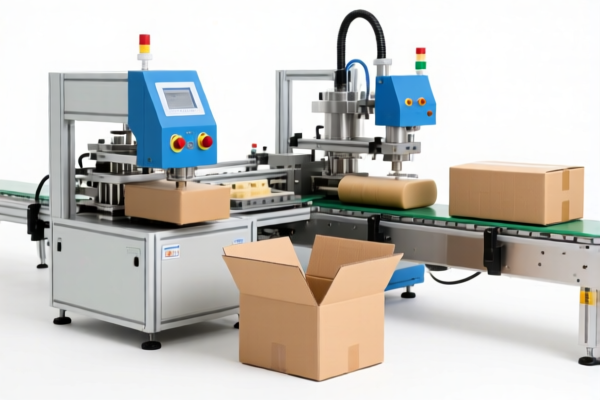
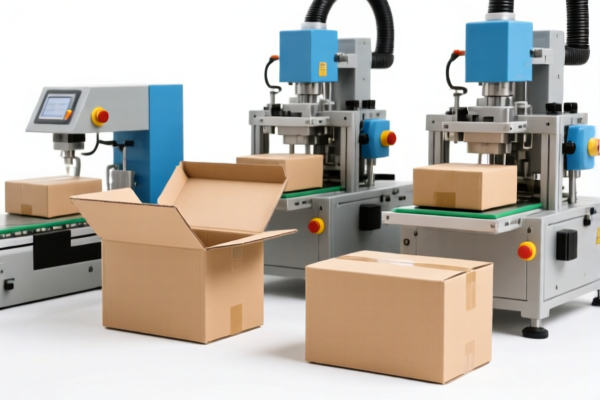
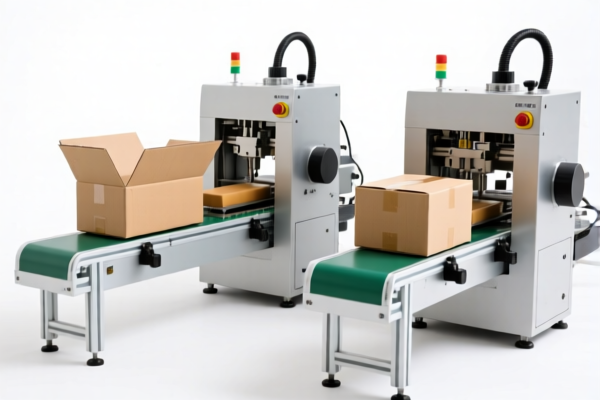
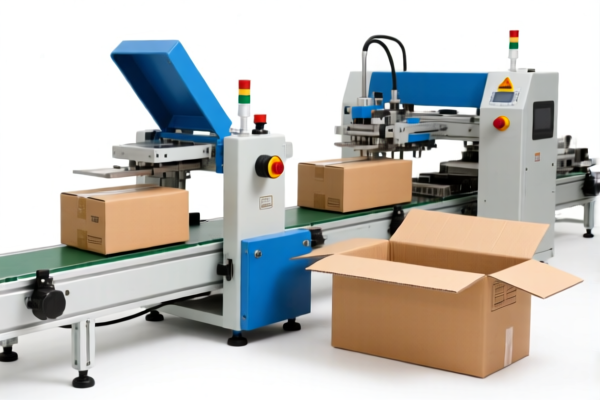
AI Analysis
🏭 Filling, Capping, Sealing, or Labeling Machinery
🌐 HS Code Reference & Customs Clearance Guide | 2026 Latest Tariff Full Analysis | Professional Customs Strategy
📌 Part 1: Product Definition & Classification: Do You Really Understand "Filling & Sealing Machinery"?
Filling, capping, sealing, labeling, packaging, and wrapping machinery are the core equipment in modern industrial production lines. In international trade, these machines are categorized based on their specific function, application industry, and technical structure.
Key Distinctions: - General Purpose Machines (8422.30) Machinery designed primarily for filling, closing, sealing, labeling, packaging, or wrapping, regardless of the product (liquid, solid, gas). These are typically assigned to Heading 8422.30. - Specific Industry Machines (8438) Machinery specifically designed for the food or beverage industry (e.g., bottling, canning). These are often assigned to Heading 8438. - Other Mechanical Apparatus (8479.89) Machinery with independent functions that do not fit neatly into specific headings like 8422 or 8438 but still perform mechanical tasks like filling or sealing.
⚠️ Critical Classification Point:
- If the machine is a general-purpose filler/sealer (e.g., for cosmetics, chemicals, hardware) → 8422.30 or 8479.89
- If the machine is exclusively for food/beverage (e.g., juice bottling, beer canning) → 8438.80 or 8438.90
- Misclassification can lead to massive tax differences (e.g., 35% vs. 37.8%).
📦 Part 2: HS Code Classification Details (2026 Latest Tariff Authority Comparison)
| HS Code | Product Description | Application Scenario | Tax Rate (Total) | Key Feature |
|---|---|---|---|---|
8422.30.91.85 |
Filling, closing, sealing, or labeling machines | General industrial use (cosmetics, chemicals, hardware) | 35.0% | No base tariff, high additional tariffs apply |
8479.89.95.95 |
Other mechanical appliances with independent functions | Specialized industrial machinery not elsewhere specified | 37.5% | Has 2.5% base tariff, high additional tariffs apply |
8422.30.91.91 |
Filling, closing, sealing, or labeling machines | General mechanical category, high functional match | 35.0% | Same as 8422.30.91.85, specific sub-item distinction |
8438.80.00.00 |
Bottling, canning, or filling machinery | Food or beverage industry preparation/manufacturing | 35.0% | No base tariff, high additional tariffs apply |
8438.90.90.90 |
Parts of food/beverage filling machinery | Industrial food/beverage preparation machinery parts | 37.8% | Has 2.8% base tariff, highest total tariff |
🔍 Key Reminder:
- Food/Beverage Specificity: Machines designed specifically for food/beverage (e.g., water bottling lines) fall under 8438. Even though the rate is similar, the base tariff differs (0% vs 2.8%). - General Purpose: Machines that can handle multiple industries (e.g., a filler for both shampoo and jam) are often classified under 8422.30. - Parts vs. Whole: If importing parts of food/beverage filling machinery, use 8438.90.90.90 (37.8%). If importing the machine itself, use 8438.80.00.00 (35.0%).
💰 Part 3: 2026 Latest Tariff Rate Details (Including Additional Taxes & Policy Surcharges)
✅ Applicable Country: United States (US)
✅ Country of Origin: China (CN)
✅ Effective Date: November 10, 2025 (for subsequent imports)
🎯 1. 8422.30.91.85 & 8422.30.91.91 —— General Purpose Filling/Sealing Machines
| Item | Content |
|---|---|
| Base Tariff Rate | 0% (ad valorem) |
| USITC Surcharge (Section 301) | +25.0% (From USITC Footnote 9903.88.01) |
| IEEPA Surcharge (China/HK) | +10.0% (Effective from Nov 10, 2025) |
| Total Tariff Rate | 35.0% |
| Tax Calculation | CIF Value × 35% |
| De Minimis Exemption | ❌ Not Eligible (deny_de_minimis) |
| Legal Basis Path | IEEPA:9903.01.25 → IEEPA:9903.01.24 → USITC:8422.30.91.85/91 → FOOTNOTE:9903.88.01 |
📌 Explanation:
- These codes fall under Heading 8422.30 (Machinery for filling, closing, sealing, labeling, etc.).
- Base tariff is 0%, but the Section 301 tariff (25%) and IEEPA surcharge (10%) push the total to 35%.
- High Risk: Any misclassification to a lower-tariff code (if any exists) is risky due to strict customs audits.
🎯 2. 8479.89.95.95 —— Other Mechanical Appliances
| Item | Content |
|---|---|
| Base Tariff Rate | 2.5% |
| USITC Surcharge (Section 301) | +25.0% |
| IEEPA Surcharge (China/HK) | +10.0% |
| Total Tariff Rate | 37.5% |
| Tax Calculation | CIF Value × 37.5% |
| De Minimis Exemption | ❌ Not Eligible |
| Legal Basis Path | IEEPA:9903.01.24 → USITC:8479.89.95.95 |
📌 Note:
- This code is for machinery that doesn’t fit other specific headings.
- Higher total tariff (37.5%) due to the 2.5% base tariff.
- Use this only if the machine cannot be classified under 8422 or 8438.
🎯 3. 8438.80.00.00 —— Food/Beverage Bottling/Filling Machinery
| Item | Content |
|---|---|
| Base Tariff Rate | 0.0% |
| USITC Surcharge (Section 301) | +25.0% |
| IEEPA Surcharge (China/HK) | +10.0% |
| Total Tariff Rate | 35.0% |
| Tax Calculation | CIF Value × 35% |
| De Minimis Exemption | ❌ Not Eligible |
| Legal Basis Path | IEEPA:9903.01.24 → USITC:8438.80.00.00 |
📌 Explanation:
- Specifically for food and beverage industry machinery.
- Same total rate as general 8422.30 machines, but legal context differs.
- Must provide proof of food/beverage industry use (e.g., specs for juice, beer, water).
🎯 4. 8438.90.90.90 —— Parts of Food/Beverage Filling Machinery
| Item | Content |
|---|---|
| Base Tariff Rate | 2.8% |
| USITC Surcharge (Section 301) | +25.0% |
| IEEPA Surcharge (China/HK) | +10.0% |
| Total Tariff Rate | 37.8% |
| Tax Calculation | CIF Value × 37.8% |
| De Minimis Exemption | ❌ Not Eligible |
| Legal Basis Path | IEEPA:9903.01.24 → USITC:8438.90.90.90 |
📌 Critical Warning:
- Highest tariff rate (37.8%) in this group.
- Applies to parts of food/beverage filling machines.
- Do NOT classify machine parts as whole machines to save taxes – customs will detect and impose penalties.
🛠️ Part 4: Customs Clearance Practical Advice (Real-World Pitfall Avoidance Guide)
✅ 1. Document Checklist (None Can Be Missing)
| Document | Mandatory | Description |
|---|---|---|
| ✅ Product Specification Sheet | ✔️ | Include capacity, speed, materials, power supply, application industry |
| ✅ Technical Diagrams | ✔️ | Show internal structure to confirm if it’s food-grade or general-purpose |
| ✅ Product Photos (with Nameplate) | ✔️ | Clear view of model, brand, input/output parameters, and "Food Grade" markings if any |
| ✅ Third-Party Certifications | ✔️ | FDA (for food), CE, RoHS, UL (if applicable) |
| ✅ Commercial Invoice | ✔️ | Must specify: "Filling Machine for [Specific Industry]" |
| ✅ Packing List | ✔️ | Clearly distinguish between machine parts and accessories |
| ✅ Letter of Guarantee | ✔️ | If claiming "Food/Beverage" use, provide a letter stating exclusive use |
✅ 2. Declaration Tips (Key Mantras)
🔥 "Correct Category, Correct Tax: Food vs. General, Parts vs. Whole!"
| Scenario | Correct Declaration | Wrong Practice |
|---|---|---|
| General filler (e.g., for shampoo) | 8422.30.91.85 or 8422.30.91.91 |
Misdeclare as food machinery → Risk of audit |
| Juice bottling machine | 8438.80.00.00 |
Misdeclare as general machinery → May trigger scrutiny |
| Filling machine parts | 8438.90.90.90 |
Declare as whole machine → Massive tax loss |
| Specialized mechanical sealer | 8479.89.95.95 |
Misdeclare as 8422 → If not fitting 8422, wrong classification |
✅ 3. Special Case Handling
| Scenario | Handling Advice |
|---|---|
| Multi-Industry Machine | If the machine can fill both cosmetics and food, declare as 8422.30 (General) unless it is exclusively designed for food. |
| Food-Grade Certified | If the machine has FDA-approved materials, it supports classification under 8438. Provide FDA compliance letter. |
| OEM Custom Machinery | Provide client order + design drawings to avoid being classified as "standard" if it’s unique. |
| Parts Import | Clearly list part names (e.g., "Nozzle," "Conveyor Belt") and HS code 8438.90.90.90 if related to food machinery. |
🌍 Part 5: Global Main Market Customs Comparison (2026 Latest)
| Country/Region | Recommended HS Code | Tariff | Certification Required | Notes |
|---|---|---|---|---|
| 🇺🇸 USA | 8422.30.91.85 / 8438.80.00.00 |
35% (General) / 35.0% (Food) | FCC + RoHS | IEEPA + Section 301 apply |
| 🇨🇳 China | 8422.30 / 8438.80 |
5%~10% | CCC + RoHS | No additional surcharges |
| 🇪🇺 EU | 8422.30 / 8438.80 |
0%~4% (if CE) | CE + Machinery Directive | No surcharges |
| 🇦🇺 Australia | 8422.30 / 8438.80 |
5% | RCM | No surcharges |
| 🇯🇵 Japan | 8422.30 / 8438.80 |
0% | PSE | No surcharges |
📌 Conclusion:
- USA is the only market with high surcharges (35% total).
- China, EU, Japan, Australia have significantly lower tariffs.
- Strategy: If exporting to the US, consider supply chain diversification (e.g., assemble in Vietnam/Mexico) to avoid IEEPA + Section 301 tariffs.
📌 Part 6: Common Errors & Pitfall Avoidance (Lessons Learned)
❌ Error 1: Declaring food machinery as general machinery to avoid scrutiny
👉 Consequence: If discovered, customs may reclassify and charge back taxes + penalties.
❌ Error 2: Declaring parts as whole machines
👉 Consequence: Tariff jumps from 37.8% (parts) to 35% (whole) — wait, actually parts have higher base tariff. But more importantly, it’s illegal misdeclaration.
❌ Error 3: Not providing proof of "Food/Beverage" use for 8438 codes
👉 Consequence: Customs may downgrade to 8422.30 or 8479.89, causing delays.
❌ Error 4: Using "Packaging Machine" as a generic term
👉 Consequence: Vague descriptions lead to customs hesitation and longer clearance times.
✅ Correct Practice:
"Automatic Filling Machine for Liquid Cosmetics, 500ml/min, Stainless Steel, Model XYZ, FCC & RoHS Certified"
OR
"Bottling Line for Fruit Juice, FDA Compliant, Model ABC, CE Certified"
🎯 Part 7: Conclusion: Professional Declaration Saves Money and Time!
🎯 Remember Mantra:
🔹 "General vs. Food: Choose Right, Tax is Same, Risk is Different!"
🔹 "Parts vs. Whole: 37.8% vs. 35%, Don’t Risk Illegal Declaration!"
🔹 "US Market is High Tariff: 35% is the New Normal!"
📌 Tips:
- If your machinery is assembled in Vietnam, Mexico, or Thailand, you may apply for IEEPA Exemption, reducing tariffs to 0%~5%.
- Advance Ruling: Apply for a binding ruling from US Customs and Border Protection (CBP) before shipment to ensure correct HS code classification.
📣 Immediate Action:
📞 Contact Professional Customs Broker + Provide Product Specs + Apply for HS Code Advance Ruling
🚀 Let your machinery clear customs smoothly, go global efficiently, and double your profits!
✨ Professional Customs Clearance Starts with Precise Classification!
💼 Every Penny of Your Cost Deserves to Be Calculated Precisely!
Customer Reviews
About HS Code Classification
The Harmonized System (HS) is an internationally standardized nomenclature developed by the World Customs Organization (WCO) to classify traded products. Over 200 countries use the HS system as the basis for customs tariffs, trade statistics, and import/export regulations.
Each HS code follows a hierarchical structure:
- Chapter (2 digits) — Broad category of goods (e.g., Chapter 84: Machinery and Mechanical Appliances)
- Heading (4 digits) — More specific grouping within the chapter
- Subheading (6 digits) — Internationally standardized breakdown, used by all WCO member countries
- National subdivisions (8-10 digits) — Country-specific extensions for further classification, such as US HTSUS 10-digit codes
Correct HS code classification is essential for smooth customs clearance, accurate duty payment, and compliance with trade regulations. Misclassification can lead to customs delays, overpayment of duties, or penalties.
When importing from CN to US, the applicable tariff rates may include:
- Most-Favored-Nation (MFN) rate — The standard duty rate applied to WTO members
- General rate — Applied to countries without trade agreements
- Trade remedy duties — Additional tariffs such as Section 301 (anti-dumping), Section 232 (national security), or countervailing duties
The information provided on this page is for reference purposes only. For official classification, please consult with your local customs authority or a licensed customs broker.