Filling, Capping, or Sealing Machine
CN → US| HS Code | Tariff Rate | Origin | Destination | Doc |
|---|---|---|---|---|
| 8422309150 | 35.0% | CN | US | Official Doc |
| 8422309160 | 35.0% | CN | US | Official Doc |
| 8422309140 | 35.0% | CN | US | Official Doc |
Product Images
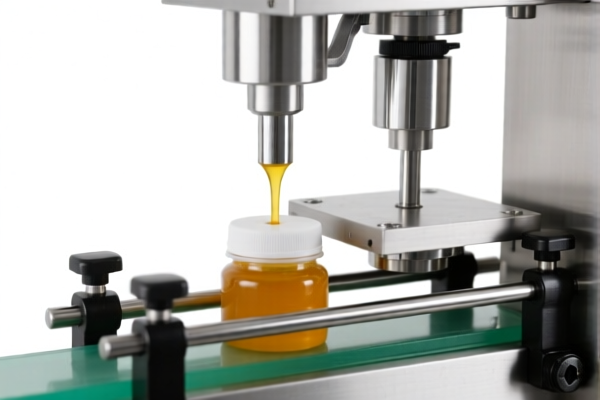
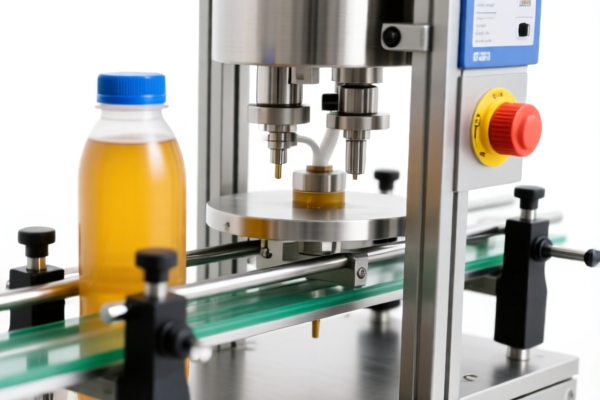
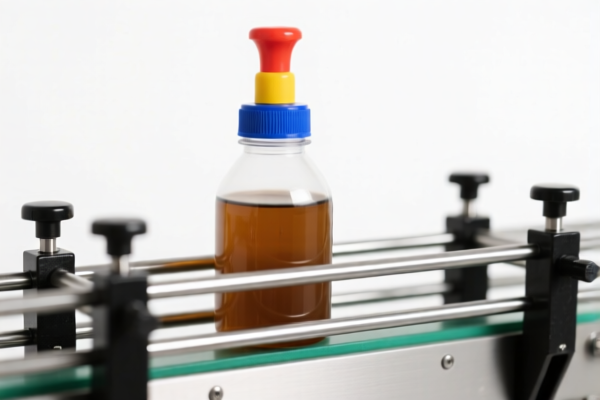
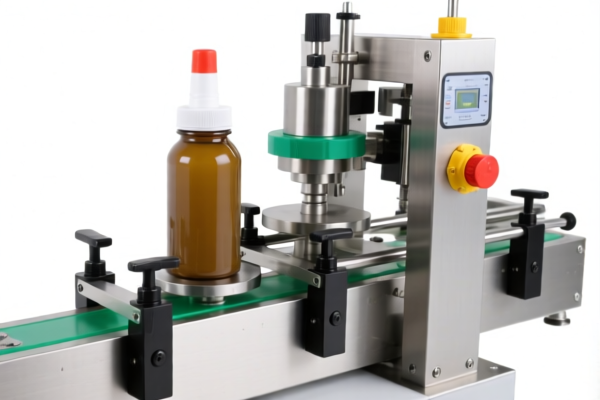
AI Analysis
🏭 Filling, Capping, & Sealing Machines (Packaging Machinery)
🌐 HS Code Reference & Customs Clearance Guide | 2026 Latest Tariff Analysis | Professional Clearance Strategy
📌 I. Product Definition & Classification: Understanding "Closing Machinery"
In international trade, machines used for filling, capping, or sealing are generally classified under Chapter 84 (Nuclear reactors, boilers, machinery...), specifically Heading 8422. These machines are essential for automating packaging lines in food, beverage, pharmaceutical, and chemical industries.
The classification hinges on the primary function and the mechanism: - Filling Machines: Specifically designed to measure and dispense liquids, powders, or granules into containers. - Closing/Sealing Machines: Designed to apply closures (caps, lids) or seal packages (foils, bags) to maintain integrity. - Combined Units: Machines that perform multiple functions (e.g., fill and cap) are typically classified under the primary function or the specific subheading for "closing" machinery if it dominates.
⚠️ Key Distinction:
- If the machine is purely for filling (measuring volume/mass) → Look at 8422.30 (Bottling/canning machinery, filling).
- If the machine is purely for sealing/capping (applying lids, crimping, heat sealing) → Also generally falls under 8422.30 or 8422.40 depending on automation level.
- Crucial Note for US Imports (China Origin): Most standard industrial filling/sealing/capping machines from China are subject to significant additional tariffs under Section 301 and IEEPA provisions.
📦 II. HS Code Classification Details (2026 Authoritative Mapping)
Based on the provided data for China-origin goods, the following HS codes apply. All listed items share the same tariff structure due to their nature as industrial packaging machinery.
| HS Code | Product Summary | Primary Function | Application Scenario |
|---|---|---|---|
8422.30.91.50 |
Sealing Machines | Sealing or closing operations | Heat sealers, induction sealers, crimping machines for bottles/jars |
8422.30.91.60 |
Closing Machines | Closing, sealing operations | Cap cappers, screw cappers, corking machines (classified as "other") |
8422.30.91.40 |
Filling Machines | Filling, closing, sealing operations | Liquid fillers, powder filler, volumetric fillers, auger fillers |
🔍 Important Note:
- These codes fall under 8422.30 (Machinery for filling, closing, sealing, capsuling bottles, cans, boxes, bags or other containers; machinery for aerosol filling or other gas filling; machinery for labeling, capping, corking or bottling).
- Do not confuse with 8422.40 (Wrapping or bundling machinery) unless the primary function is wrapping. For filling/sealing/capping, 8422.30 is the correct heading.
💰 III. 2026 Latest Tariff Rate Breakdown (Detailed Tax Clauses)
✅ Applicable Country: United States (US)
✅ Origin: China (CN)
✅ Effective Date: Current rates apply for imports entering the US market.
🎯 1. 8422.30.91.40 / 8422.30.91.50 / 8422.30.91.60 — Filling, Capping, & Sealing Machines
All three HS codes provided in the data share the identical tax structure:
| Tax Component | Rate | Description & Legal Basis |
|---|---|---|
| Base Duty (MFN) | 0.0% | General Rate of Duty under HTSUS for these specific subheadings. |
| Section 301 Tariff | +25.0% | Additional duty imposed under the Trade Promotion Authority Act, targeting Chinese imports. |
| Section 122 Tariff | +10.0% | Additional duty under the International Emergency Economic Powers Act (IEEPA) or specific trade action provisions. |
| Total Effective Rate | 35.0% | Sum of all applicable duties (0% + 25% + 10%). |
📌 Tax Calculation Example:
- CIF Value: $100,000 USD
- Base Duty: $0 (0%)
- Section 301 Duty: $25,000 (25%)
- Section 122 Duty: $10,000 (10%)
- Total Duty Payable: $35,000 USD
- Effective Tax Rate: 35%📚 Legal Path Reference:
-Base HTSUS: 8422.30.91.x
-USITC Footnote 9903.88.01(Section 301, 25%)
-IEEPA / Executive Order Provisions(Section 122, 10%)⚠️ Critical Warning:
- There is NO de minimis exemption for these machinery items if they meet the threshold for Section 301/IEEPA duties.
- The 35% rate is cumulative. You cannot choose between 25% or 10%; both apply.
🛠️ IV. Customs Clearance Operational Advice (Pitfall Avoidance Guide)
✅ 1. Required Documentation (Non-Negotiable)
| Document | Must Provide? | Purpose |
|---|---|---|
| Product Specification Sheet | ✔️ | Must detail: Max filling speed, container size range, sealing method (heat/induction/crimp), power requirements. |
| Commercial Invoice | ✔️ | Must explicitly state: "Industrial Filling/Sealing Machine" and Country of Origin: China. |
| Bill of Lading / Air Waybill | ✔️ | Ensure HS Code 8422.30.91.xx is listed correctly. |
| Certificate of Origin | ✔️ | Required to prove Chinese origin for tariff application (and potential future exemption checks). |
| User Manual & Parts List | ✔️ | Helps customs verify if imported items are spare parts (which might have different duty treatment if declared separately, though risky). |
✅ 2. Declaration Strategy (Key Tips)
🔥 Golden Rule:
"Describe the Primary Function Clearly. Do Not Split. Declare All Accessories."
| Scenario | Correct Declaration | Incorrect Declaration | Consequence |
|---|---|---|---|
| Single Unit Machine (e.g., a combined filler-capper) | Declare as "Automatic Liquid Filling and Capping Machine" under 8422.30.91.40 |
Split into "Filling Unit" and "Capping Unit" | Risk of Misclassification: Customs may reclassify or demand separate duties, leading to delays. |
| Spare Parts (e.g., nozzles, seals) | Declare as "Spare Parts for Filling Machines" under 8422.90 |
Declare as "New Machine" | High Duty Risk: Parts may have different rates, but misdeclaring as a machine incurs penalties. |
| Machine with Control Panel | Declare as Whole Machine | Separate declaration for "Control Panel" | Complexity: Risk of higher combined duties if classified as electrical equipment (8537). |
✅ 3. Special Considerations for US Customs (CBP)
- Section 301 Exclusions: Check if your specific machine type was excluded from Section 301 tariffs in the past. Note: Exclusions have largely expired or been narrowed. Assume 25% applies unless you have a valid, current exclusion letter.
- Valuation: CBP scrutinizes the Transaction Value. Ensure the invoice includes all costs (FOB, Freight, Insurance) to calculate CIF accurately. Under-declaring leads to severe penalties.
- Anti-Dumping/Countervailing Duties (AD/CVD): While rare for general packaging machinery, check if your specific component (e.g., certain steel parts or motors) is subject to AD/CVD. Most complete machines are not, but components might be.
- FCC Certification: If the machine has electronic controls or wireless features, ensure FCC Compliance is documented. Non-compliance leads to seizure.
🌍 V. Global Market Comparison (2026)
| Market | Recommended HS Code | Base Duty | Additional Tariffs (China Origin) | Total Estimated Duty |
|---|---|---|---|---|
| 🇺🇸 USA | 8422.30.91.xx |
0% | +25% (Sec 301) + 10% (Sec 122) | 35% |
| 🇨🇳 China | 8422.30.91.xx |
0% - 5% | None | 0-5% |
| 🇪🇺 EU | 8422.30.91.xx |
0% - 2% | No Section 301 equivalent | 0-2% |
| 🇬🇧 UK | 8422.30.91.xx |
0% - 2% | No Section 301 equivalent | 0-2% |
| 🇨🇦 Canada | 8422.30.91.xx |
0% | No Section 301 equivalent | 0% |
📌 Strategic Insight:
- The US market is the most expensive for Chinese-origin filling/sealing machinery due to the 35% cumulative tariff.
- Supply Chain Diversification: Consider sourcing from Vietnam, Mexico, or Thailand to avoid Section 301 tariffs (verify rules of origin).
- Pricing Strategy: Factor the 35% duty into your landed cost calculation. Do not offer FOB prices without warning US buyers of the import duties.
📌 VI. Common Mistakes & How to Avoid Them
❌ Mistake 1: Declaring "Parts" when it's a "Machine"
👉 Result: CBP may classify it as a complete machine with higher scrutiny or deny parts-specific benefits.
✅ Fix: Provide clear photos and specs showing it's a standalone unit.
❌ Mistake 2: Ignoring the "35% Total"
👉 Result: Budget miscalculation. Buyers may refuse to pay the extra 35%, leading to stranded cargo.
✅ Fix: Quote DDP (Delivered Duty Paid) or clearly inform buyers of the 35% duty burden.
❌ Mistake 3: Misidentifying the HS Code (e.g., using 8479 for "Other Machinery")
👉 Result: If 8479 has a different duty rate or no Section 301 coverage, you might face an audit for incorrect classification.
✅ Fix: Stick to 8422.30 as it is the specific provision for filling/capping/sealing.
🎯 VII. Conclusion: Professional Clearance, Cost Control
🎯 Key Takeaway:
Filling, Capping, and Sealing Machines from China face a 35% total duty rate in the US.
- Base: 0%
- Section 301: +25%
- Section 122: +10%
🔹 Action Plan:
1. Verify HS Code: Ensure it is 8422.30.91.40/50/60 based on primary function.
2. Budget for 35%: Include this in your landed cost model.
3. Document Thoroughly: Provide specs, origin proof, and FCC compliance.
4. Consider Alternatives: Evaluate sourcing from non-China origins if duty burden is unsustainable.
📣 Immediate Action:
📞 Consult a Licensed Customs Broker before shipping.
📄 Request a Binding Ruling from CBP if unsure about classification.
🚀 Plan for Duty Payment: Ensure liquidity for the 35% duty upon US entry.
✨ Precise Classification, Predictable Costs, Smooth Clearance!
💼 Your machinery journey starts with accurate HS Code selection!
Customer Reviews
About HS Code Classification
The Harmonized System (HS) is an internationally standardized nomenclature developed by the World Customs Organization (WCO) to classify traded products. Over 200 countries use the HS system as the basis for customs tariffs, trade statistics, and import/export regulations.
Each HS code follows a hierarchical structure:
- Chapter (2 digits) — Broad category of goods (e.g., Chapter 84: Machinery and Mechanical Appliances)
- Heading (4 digits) — More specific grouping within the chapter
- Subheading (6 digits) — Internationally standardized breakdown, used by all WCO member countries
- National subdivisions (8-10 digits) — Country-specific extensions for further classification, such as US HTSUS 10-digit codes
Correct HS code classification is essential for smooth customs clearance, accurate duty payment, and compliance with trade regulations. Misclassification can lead to customs delays, overpayment of duties, or penalties.
When importing from CN to US, the applicable tariff rates may include:
- Most-Favored-Nation (MFN) rate — The standard duty rate applied to WTO members
- General rate — Applied to countries without trade agreements
- Trade remedy duties — Additional tariffs such as Section 301 (anti-dumping), Section 232 (national security), or countervailing duties
The information provided on this page is for reference purposes only. For official classification, please consult with your local customs authority or a licensed customs broker.