Film (Professional Application)
CN → US| HS Code | Tariff Rate | Origin | Destination | Doc |
|---|---|---|---|---|
| 3920991000 | 41.0% | CN | US | Official Doc |
| 9011204000 | 38.9% | CN | US | Official Doc |
| 3920992000 | 39.2% | CN | US | Official Doc |
| 9011104000 | 35.0% | CN | US | Official Doc |
Product Images
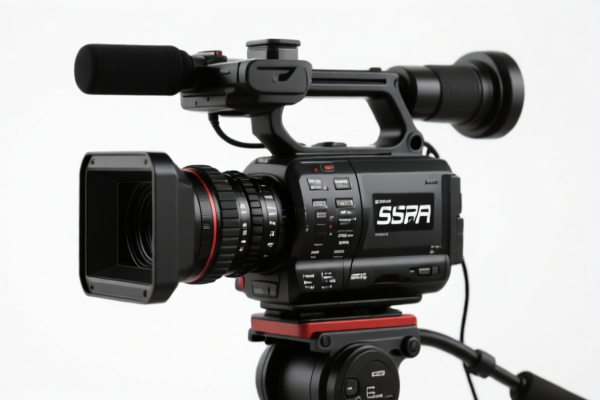
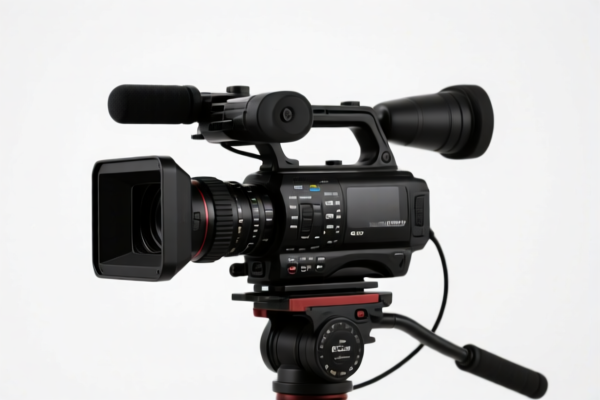
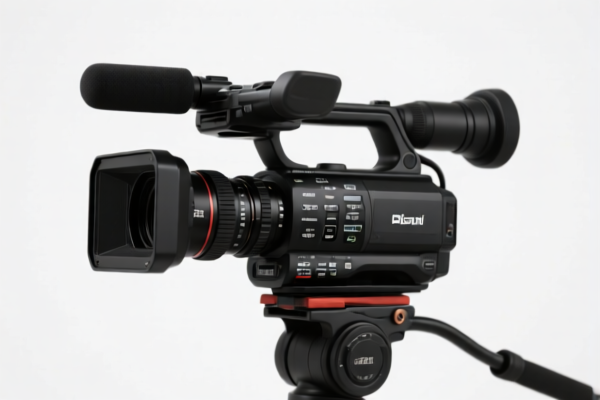
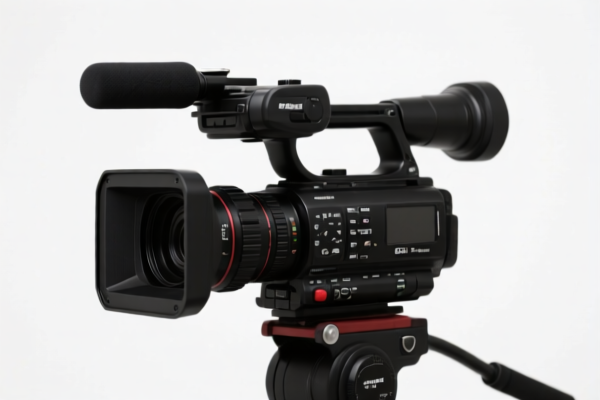
AI Analysis
🎥 Film (Professional Application)
🌐 HS Code Reference & Customs Clearance Guide | 2026 Latest Tariff Analysis | Professional-Grade Clearance Strategy
📌 I. Product Definition & Classification: What is "Professional Film" in International Trade?
In the context of international trade and customs classification, "Film" can refer to vastly different products. However, based on the provided , the relevant entries focus on plastic films (HS Chapter 39) and optical equipment accessories (HS Chapter 90, specifically for microscopy imaging).
⚠️ Critical Distinction: * If "Film" refers to photographic film for cameras: It typically falls under Chapter 37. However, this is NOT in the provided . * If "Film" refers to plastic sheets/films for industrial or packaging use: It falls under Chapter 39 (Plastics). This IS in the provided . * If "Film" refers to parts of microscopes for imaging: It falls under Chapter 90. This IS in the provided .
📌 Key Clarification:
The term "Film (Professional Application)" is ambiguous.
- If you mean plastic material used in professional settings (e.g., industrial insulation, protective layers), it falls under HS Code 3920.99.
- If you mean optical film used in microscopes for photomicrography, it falls under HS Code 9011.
- Note: If you are importing actual photographic film rolls (for cameras), please note that none of the HS Codes in the provided apply to photographic film rolls. The provided data only includes plastic sheets/films and microscope parts.
📦 II. HS Code Classification Details (Based on Provided )
Since the user input is "Film (Professional Application)" and the provided data contains plastic films and microscope imaging accessories, we must distinguish between these two categories.
Category A: Plastic Films (Industrial/Professional Use)
These are non-cellular plastic plates, sheets, film, foil, or strip, not reinforced or laminated.
| HS Code | Product Description | Professional Application Context |
|---|---|---|
3920.99.10.00 |
Film, strip, and sheets, flexible, over 0.152 mm in thickness, not in rolls | Thick plastic films for industrial packaging, protective coverings, or professional display backs. |
3920.99.20.00 |
Film, strip, and sheets, flexible, other (includes thinner films) | Thin plastic films for professional cleaning wipes, sterile barriers, or precision industrial liners. |
🔍 Important Note:
- Thickness is critical:3920.99.10.00requires thickness > 0.152 mm.
- Rolls vs. Sheets:3920.99.10.00specifies "not in rolls." If it is in rolls and thick, it may fall under a different subheading not listed here.
- "Other Plastics": These codes apply to plastics other than PVC, PE, PP, etc., unless specified otherwise.
Category B: Microscope Imaging Accessories (For Photomicrography)
These are parts and accessories for compound optical microscopes used for photomicrography (taking photos through a microscope).
| HS Code | Product Description | Professional Application Context |
|---|---|---|
9011.10.40.00 |
Stereoscopic microscopes, provided with a means for photographing the image | Professional lab microscopes with integrated camera ports for stereoscopic imaging. |
9011.20.40.00 |
Other microscopes (for photomicrography/cinemicrography), provided with a means for photographing the image | High-end compound microscopes equipped with camera interfaces for professional research. |
🔍 Important Note:
- These codes apply only if the microscope includes the means for photography (e.g., a camera attachment or port).
- If the microscope is sold without imaging capabilities, a different HS Code would apply (not in ).
- "Parts and Accessories": If you are importing only the camera attachment (not the whole microscope), it may still fall under these codes if marketed as part of a complete imaging system. However, standalone accessories might be classified differently.
💰 III. 2026 Latest Tariff Rate Breakdown (Based on Provided )
✅ Applicable Country: Not specified in , but tax details include "Additional Duty" suggesting US trade policies (Section 301).
✅ Origin: Assumed China (CN) based on "Additional Duty 25%" context.
✅ Effective Time: Current tariffs.
🎯 1. Plastic Films (3920.99)
| HS Code | Product | Basic Duty | Additional Duty | Total Duty |
|---|---|---|---|---|
3920.99.10.00 |
Thick Plastic Film (>0.152 mm) | 0.0% | 0.0% | 0.0% |
3920.99.20.00 |
Other Plastic Film | 0.0% | 0.0% | 0.0% |
📌 Explanation:
- No Additional Duty: Unlike many Chinese-origin goods, these plastic films are not subject to the 25% Section 301 additional duty.
- Benefit: This makes importing professional plastic films from China tariff-free in terms of additional duties.
- Caution: Verify the "Plastic Type" – if it’s PVC or PE, it might fall under a different heading not listed here.
🎯 2. Microscope Imaging Systems (9011.10.40.00 & 9011.20.40.00)
| HS Code | Product | Basic Duty | Additional Duty | Total Duty |
|---|---|---|---|---|
9011.10.40.00 |
Stereoscopic Microscope with Imaging | 0.0% | 25.0% | 25.0% |
9011.20.40.00 |
Compound Microscope with Imaging | 0.0% | 0.0% | 0.0% |
📌 Explanation:
- Stereoscopic Microscopes (9011.10.40.00): Subject to 25% additional duty (likely due to Section 301).
- Compound Microscopes (9011.20.40.00): No additional duty. This is a critical distinction!
- Why the Difference?: Stereoscopic microscopes are often classified differently than compound microscopes in trade disputes. Always ensure the correct subheading is used.
- Basic Duty: Both have 0% basic duty.
🛠️ IV. Customs Clearance Practical Advice (Real-World Pitfall Prevention)
✅ 1. Document Checklist (Must-Have)
| Document | Required | Description |
|---|---|---|
| ✅ Product Specification Sheet | ✔️ | For films: Material composition, thickness, dimensions. For microscopes: Model, imaging capability, power specs. |
| ✅ Technical Diagrams | ✔️ | For microscopes: Show camera interface. For films: Show cross-section (thickness). |
| ✅ Commercial Invoice | ✔️ | Clearly state "Plastic Film" or "Microscope with Camera Attachment." Avoid vague terms like "Optical Film" without context. |
| ✅ Packing List | ✔️ | Separate shipments for films and microscopes to avoid classification confusion. |
| ✅ Certificate of Origin | ✔️ | If claiming preferential rates (if any) or proving origin for duty assessments. |
| ✅ Import License | ✔️ | Check if any specific licenses are required for optical equipment in your destination country. |
✅ 2. Classification Tips (Key Mnemonics)
🔥 "Film Thickness Matters, Microscope Type Dictates Tax!"
| Scenario | Correct Classification | Wrong Classification | Consequence |
|---|---|---|---|
| Plastic film, 0.2 mm thick, not in rolls | 3920.99.10.00 (0% tax) |
3920.99.20.00 |
No tax difference, but incorrect description may lead to delays. |
| Plastic film, 0.1 mm thick | 3920.99.20.00 (0% tax) |
3920.99.10.00 |
No tax difference, but incorrect description may lead to delays. |
| Stereoscopic microscope with camera | 9011.10.40.00 (25% tax) |
9011.20.40.00 |
Underpayment of 25% duty + penalties! |
| Compound microscope with camera | 9011.20.40.00 (0% tax) |
9011.10.40.00 |
Overpayment of 25% duty |
| Microscope without camera | Not in | 9011.20.40.00 |
Misclassification, potential audit |
✅ 3. Special Case Handling
| Scenario | Handling Advice |
|---|---|
| Microscope + Camera Sold Separately | If sold separately, the camera attachment may fall under HS Code 9013.80 or 9013.90 (not in <DATA). Consult a customs broker. |
| Plastic Film in Rolls | If film is in rolls and >0.152 mm, it may not fit 3920.99.10.00. Check other subheadings. |
| "Professional" Marketing Claims | Avoid using "Professional" in HS Code descriptions unless it aligns with legal definitions. Use technical terms (e.g., "Stereoscopic Microscope"). |
| Mixed Shipments | Declare films and microscopes on separate lines in the customs declaration. |
🌍 V. Global Market Comparison (2026 Latest)
| Country/Region | Recommended HS Code (Plastic Film) | Tax Rate | Remarks |
|---|---|---|---|
| 🇺🇸 USA | 3920.99.10.00 / 3920.99.20.00 |
0% | No Section 301 duty for these plastic films. |
| 🇨🇳 China | 3920.99.10.00 / 3920.99.20.00 |
Varies | Check local VAT and consumption tax. |
| 🇪🇺 EU | 3920.99.10.00 / 3920.99.20.00 |
0%~6.5% | Depends on plastic type and exact subheading. |
| 🇯🇵 Japan | 3920.99.10.00 / 3920.99.20.00 |
0%~5.5% | Check for anti-dumping duties. |
📌 Conclusion:
- Plastic Films: Generally 0% additional duty in the US.
- Microscopes: Stereoscopic ones are 25% taxed, Compound ones are 0% taxed.
- Always verify if the microscope is stereoscopic or compound to avoid duty miscalculation.
📌 VI. Common Errors & Pitfalls (Lessons Learned)
❌ Error 1: Declaring a Stereoscopic Microscope as 9011.20.40.00
👉 Result: Underpayment of 25% duty → Fines + Back Taxes!
❌ Error 2: Declaring Plastic Film in Rolls as 3920.99.10.00
👉 Result: Misclassification → Delay + Re-inspection
❌ Error 3: Using "Film" for Photographic Film Rolls
👉 Result: Wrong Chapter (Should be Ch. 37, not Ch. 39) → Shipment Rejected
❌ Error 4: Assuming All Microscopes Have 0% Tax
👉 Result: Stereoscopic microscopes have 25% tax → Budget Overrun
✅ Correct Approach:
- Plastic Film: Specify thickness and form (rolls vs. sheets).
- Microscope: Specify type (Stereoscopic vs. Compound) and imaging capability.
- Always use technical terms, not marketing terms.
🎯 VII. Conclusion: Precision Classification Saves Money!
🎯 Remember:
🔹 "Film thickness dictates HS Code 39, Microscope type dictates HS Code 90!"
🔹 "Stereoscopic = 25% tax, Compound = 0% tax, Plastic Film = 0% tax!"
🔹 "Don’t mix rolls and sheets, don’t mix microscopes and cameras!"
📌 Pro Tip:
If your "Film" is photographic film for cameras, none of the above HS Codes apply. You must use HS Code 3702 (Photographic Film). Consult a customs broker immediately.
📣 Immediate Action:
📞 Verify your product’s exact type (Plastic vs. Optical) and specifications (Thickness, Microscope Type).
🚀 Classify correctly, clear smoothly, and maximize profits!
✨ Professional Customs Clearance Starts with Accurate Classification!
💼 Every dollar saved is a dollar earned!
Customer Reviews
About HS Code Classification
The Harmonized System (HS) is an internationally standardized nomenclature developed by the World Customs Organization (WCO) to classify traded products. Over 200 countries use the HS system as the basis for customs tariffs, trade statistics, and import/export regulations.
Each HS code follows a hierarchical structure:
- Chapter (2 digits) — Broad category of goods (e.g., Chapter 84: Machinery and Mechanical Appliances)
- Heading (4 digits) — More specific grouping within the chapter
- Subheading (6 digits) — Internationally standardized breakdown, used by all WCO member countries
- National subdivisions (8-10 digits) — Country-specific extensions for further classification, such as US HTSUS 10-digit codes
Correct HS code classification is essential for smooth customs clearance, accurate duty payment, and compliance with trade regulations. Misclassification can lead to customs delays, overpayment of duties, or penalties.
When importing from CN to US, the applicable tariff rates may include:
- Most-Favored-Nation (MFN) rate — The standard duty rate applied to WTO members
- General rate — Applied to countries without trade agreements
- Trade remedy duties — Additional tariffs such as Section 301 (anti-dumping), Section 232 (national security), or countervailing duties
The information provided on this page is for reference purposes only. For official classification, please consult with your local customs authority or a licensed customs broker.