Film (Standard Grade)
CN → US| HS Code | Tariff Rate | Origin | Destination | Doc |
|---|---|---|---|---|
| 3920992000 | 39.2% | CN | US | Official Doc |
| 3920991000 | 41.0% | CN | US | Official Doc |
| 3921904090 | 39.2% | CN | US | Official Doc |
| 3921905050 | 39.8% | CN | US | Official Doc |
Product Images
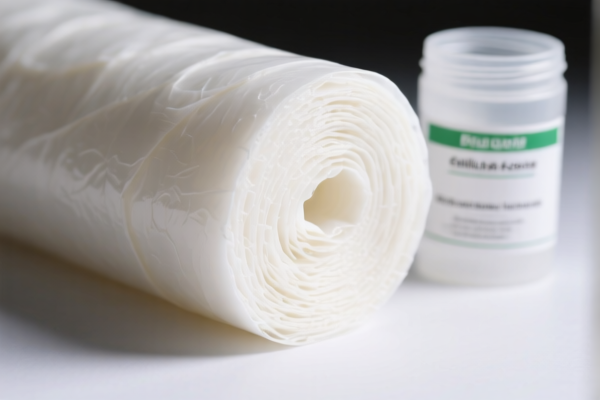



AI Analysis
🎬 Flexible Plastic Film (Standard Grade)
🌐 HS Code Reference & Customs Clearance Guide | 2026 Latest Tariff Breakdown | Strategic Compliance Strategy
📌 I. Product Definition & Classification: Do You Know What "Standard Grade Film" Is?
"Plastic Film" in international trade is a broad category under Chapter 39. When the term "Standard Grade" is used, it typically refers to non-specialized, general-purpose plastic films (such as PE, PP, or PS) that do not possess special characteristics like high heat resistance, flame retardancy, or specific optical properties required for premium electronics.
In the context of the provided data, these films are classified based on two critical factors: 1. Structure: Cellular (foam) vs. Non-cellular; Reinforced/Laminated vs. Unreinforced. 2. Thickness & Form: Rolls vs. Sheets/Strips, and specifically whether thickness exceeds 0.152 mm.
⚠️ Key Distinction Point:
- If the film is flexible and part of a general "Other" category without specific thickness specifications mentioned in the prompt's narrow list, it often falls under 3921.
- If the film is non-cellular, unreinforced, and explicitly flexible, we must check the thickness.
- Critical Threshold: 0.152 mm (approx. 6 mils). Films over this thickness in sheet form have different tariff lines than those under it or those in roll form.
📦 II. HS Code Classification Details (Based on Provided Data)
Below are the specific HS Codes from the provided dataset, mapped to "Standard Grade Plastic Films" based on their structural and physical descriptions.
| HS Code | Product Description | Application Scenario | Key Differentiator |
|---|---|---|---|
3921.90.50.50 |
Other plates, sheets, film, foil, strip of plastics: Other: Other | General-purpose plastic sheets/films, protective wraps, packaging materials | High Tax: Subject to both Base + Additional Tariffs. Best for rigid or semi-rigid "Other" films not fitting other subheadings. |
3921.90.40.90 |
Other plates, sheets, film, foil, strip of plastics: Other: Other: Flexible Other | Flexible plastic films, bags, liners, flexible packaging | Zero Tax: 0% Base + 0% Additional. The most cost-effective classification if the product is clearly "Flexible" and not cellular/reinforced. |
3920.99.10.00 |
Non-cellular, unreinforced plastic film/strip/sheet: Of other plastics: Flexible: Over 0.152 mm thickness, not in rolls | Thicker plastic sheets/films (e.g., industrial liners, thick protective sheets) | Zero Tax: 0% Base + 0% Additional. Critical for items >0.152mm that are not in roll form. |
3920.99.20.00 |
Non-cellular, unreinforced plastic film/strip/sheet: Of other plastics: Flexible: Other | General flexible films <0.152mm or other non-specified flexible non-cellular films | High Tax: Base 4.2% + Additional 25% = 29.2%. Common for standard PE/PP films in rolls or thinner sheets. |
🔍 Important Note:
- The term "Standard Grade" is not a tariff term. Customs will look at the physical properties: Is it cellular? Is it reinforced? What is the thickness?
- 3921 is a "catch-all" for plastics that are reinforced, laminated, supported, or do not fit the specific non-cellular/unreinforced definitions of Chapter 3901-3911.
- 3920 is for non-cellular, unreinforced plastics. If your "Standard Grade" film is just plain plastic (e.g., clear PE bag), it likely belongs in 3920. If it has a fabric backing or is a complex composite, it may belong in 3921.
💰 III. 2026 Latest Tariff Rate Breakdown (Detailed Analysis)
✅ Applicable Country: United States (US)
✅ Origin: China (CN) (Assumed based on "Additional Tariffs" context in prompt)
✅ Effective Date: Current trade rules (Section 301 + IEEPA implications where applicable)
🎯 1. 3921.90.50.50 — Other Plastic Plates, Sheets, Film, Foil, Strip
| Item | Content |
|---|---|
| Base Tariff | 4.8% (Ad Valorem) |
| Additional Tariff | 25.0% (Section 301 / Retaliatory Tariffs) |
| Total Tax Rate | 29.8% |
| Tax Calculation | CIF Value × 29.8% |
| De Minimis Exemption | ❌ Not Eligible (Section 301 goods are generally excluded from de minimis relief) |
| Legal Basis | HTSUS 3921.90.50.50 + USITC Footnote for Section 301 |
📌 Explanation:
- This code is for "Other" plastics that don't fit more specific descriptions.
- The 29.8% total rate is significant. If your product is a simple flexible film, this might be over-classified.
- Risk: If the item is actually flexible and non-cellular, consider if3921.90.40.90(0%) applies instead. Misclassification can lead to severe penalties.
🎯 2. 3921.90.40.90 — Other Plastic Films: Flexible Other
| Item | Content |
|---|---|
| Base Tariff | 0.0% |
| Additional Tariff | 0.0% |
| Total Tax Rate | 0.0% |
| Tax Calculation | Free |
| De Minimis Exemption | ✅ Eligible (if under $800 and not on exclusion list) |
| Legal Basis | HTSUS 3921.90.40.90 |
📌 Explanation:
- This is the ideal classification if your film is truly "Flexible" and falls under "Other" in Chapter 3921.
- Condition: It must not be cellular, reinforced, or laminated.
- Strategy: Ensure your product description clearly states "Flexible Plastic Film, Non-Cellular, Unreinforced."
🎯 3. 3920.99.10.00 — Non-Cellular, Unreinforced Plastic: Flexible, Over 0.152mm, Not in Rolls
| Item | Content |
|---|---|
| Base Tariff | 0.0% |
| Additional Tariff | 0.0% |
| Total Tax Rate | 0.0% |
| Tax Calculation | Free |
| De Minimis Exemption | ✅ Eligible (if under $800) |
| Legal Basis | HTSUS 3920.99.10.00 |
📌 Explanation:
- Key Threshold: Thickness > 0.152 mm.
- Form: Not in rolls (i.e., cut sheets, plates).
- If your "Standard Grade" product is a thick plastic sheet (>6 mils) used for industrial shielding or packaging blocks, this is the zero-tariff option.
🎯 4. 3920.99.20.00 — Non-Cellular, Unreinforced Plastic: Flexible, Other
| Item | Content |
|---|---|
| Base Tariff | 4.2% |
| Additional Tariff | 25.0% |
| Total Tax Rate | 29.2% |
| Tax Calculation | CIF Value × 29.2% |
| De Minimis Exemption | ❌ Not Eligible (Subject to Section 301) |
| Legal Basis | HTSUS 3920.99.20.00 |
📌 Explanation:
- This covers flexible, non-cellular, unreinforced plastics not covered by 3920.99.10.00 (i.e., <0.152mm or in rolls).
- This is the default for most standard plastic films (like grocery bags, shrink wrap) if they are not classified under 3921.
- Warning: The 29.2% rate is high. If possible, verify if the film qualifies as "Flexible Other" under 3921.90.40.90 (0%) due to specific structural features (e.g., if it has a slight backing or is classified differently by US Customs). Note: 3921 is often for reinforced/laminated; if it's pure plastic, 3920 is correct, and you must pay the 29.2%.
🛠️ IV. Customs Clearance Practical Advice (Pitfall Avoidance Guide)
✅ 1. Preparation Checklist (Mandatory)
| Document | Required | Description |
|---|---|---|
| ✅ Product Spec Sheet | ✔️ | Must include: Material (PE, PP, etc.), Thickness (in mm/mils), Width, Length, Cell structure (cellular vs. non-cellular). |
| ✅ Photos | ✔️ | Show the product in roll form or cut sheets. Close-up of edge to show density/cell structure. |
| ✅ Bill of Lading | ✔️ | Ensure description matches HS Code (e.g., "Flexible Plastic Film" vs. "Plastic Sheets"). |
| ✅ Commercial Invoice | ✔️ | Clearly state "Made in China" to confirm origin for tariff calculation. |
✅ 2. Classification Strategy (Key Rules)
🔥 “Thickness Matters, Structure Defines, Form Dictates!”
| Scenario | Correct HS Code | Tax Rate | Why? |
|---|---|---|---|
| Standard Film, Rolls, <0.152mm | 3920.99.20.00 |
29.2% | Flexible, non-cellular, "Other" (default for standard films). |
| Thick Sheets, >0.152mm, Cut to Size | 3920.99.10.00 |
0.0% | Meets thickness threshold for zero tax. |
| Laminated/Reinforced Film | 3921.90.50.50 |
29.8% | Reinforced/laminated items go to Ch. 3921. |
| Pure Flexible Film (Non-reinforced) | 3921.90.40.90 |
0.0% | Rare: Only if it fits "Other" in 3921 but not 3920. Usually, pure plastic goes to 3920. Verify with Customs! |
⚠️ Critical Warning:
- Many importers try to classify standard plastic films under3921to get 0% tax. However, if the film is non-cellular and unreinforced, it must go to 3920. Misclassifying a 3920 product as 3921 is fraud.
- 3921 is for plastics that are reinforced, laminated, or supported. If your "Standard Grade" film is just plain plastic, it belongs in 3920.
✅ 3. Special Cases
| Scenario | Handling Advice |
|---|---|
| Custom Printed Film | Classification depends on material, not decoration. Still 3920.99.20.00 (29.2%) or 3920.99.10.00 (0%) if thick. |
| Biodegradable Film | If made from PLA or PBAT, it is still "Plastics" in Ch. 39. Check if it meets specific "Other Plastics" definitions. Likely 3920.99.20.00. |
| Rolls vs. Sheets | Thickness threshold (0.152mm) only applies to sheets. Rolls are always "Flexible" and fall under "Other" in 3920.99.20.00 (unless they are specific types like photographic film). |
🌍 V. Global Market Comparison (2026)
| Country/Region | Recommended HS Code | Tariff (China Origin) | Notes |
|---|---|---|---|
| 🇺🇸 USA | 3920.99.20.00 |
29.2% | High tariff due to Section 301. Try 3920.99.10.00 if >0.152mm sheets. |
| 🇨🇳 China | 3920.99.20.00 |
~4-6% | Standard import duty. No additional tariffs. |
| 🇪🇺 EU | 3920.99 |
~3-5% | Standard duty. No Section 301 equivalent. |
| 🇬🇧 UK | 3920.99 |
~3-5% | Post-Brexit tariffs similar to EU. |
📌 Conclusion:
- USA is the most expensive market for standard plastic films due to the 25% additional tariff.
- Strategy: If possible, design products to be >0.152mm thick sheets to qualify for 0% tax under3920.99.10.00.
- Avoid3920.99.20.00if you can re-engineer the product to be thicker sheets, as it saves 29.2%.
📌 VI. Common Mistakes & Pitfalls (Lessons Learned)
❌ Mistake 1: Classifying thin rolls of plastic as 3920.99.10.00
👉 Result: The code 3920.99.10.00 is for sheets not in rolls. If it's in rolls, it must be 3920.99.20.00 (29.2%).
🔧 Fix: Check if the product is shipped in rolls or cut sheets.
❌ Mistake 2: Calling it "Reinforced" to fit 3921
👉 Result: If the film is not truly reinforced/laminated, Customs will reject it and reclassify to 3920 (29.2%).
🔧 Fix: Be honest about the structure. Only use 3921 if there is a backing, fabric, or lamination.
❌ Mistake 3: Ignoring the 0.152 mm threshold
👉 Result: Missing the 0% tax opportunity for thick sheets.
🔧 Fix: Measure thickness carefully. >0.152mm sheets = Free. <0.152mm or rolls = 29.2%.
🎯 VII. Conclusion: Smart Classification Saves Money!
🎯 Remember the Golden Rule:
🔹 "Rolls & Thin = 29.2% | Thick Sheets (>0.152mm) = 0% | Reinforced = Check 3921"
📌 Pro Tip:
If you are importing standard plastic film, consider:
1. Increasing Thickness: Designing the product to be >0.152 mm allows you to use 3920.99.10.00 (0% tariff).
2. Verifying Structure: If it is laminated or has a fabric backing, it may qualify for 3921.90.40.90 (0%), but this is rare for "Standard Grade" plain films.
📣 Immediate Action:
📞 Contact a Customs Broker: Provide exact thickness and material (PE/PP/PS).
📐 Test Thickness: Confirm if your product can be engineered to >0.152 mm to unlock 0% tariff.
🚀 Optimize: Saving 29.2% on a $100,000 shipment is $29,200 saved!
✨ Professional Clearance Starts with Precise Classification!
💼 Every Percent Counts in International Trade!
Customer Reviews
About HS Code Classification
The Harmonized System (HS) is an internationally standardized nomenclature developed by the World Customs Organization (WCO) to classify traded products. Over 200 countries use the HS system as the basis for customs tariffs, trade statistics, and import/export regulations.
Each HS code follows a hierarchical structure:
- Chapter (2 digits) — Broad category of goods (e.g., Chapter 84: Machinery and Mechanical Appliances)
- Heading (4 digits) — More specific grouping within the chapter
- Subheading (6 digits) — Internationally standardized breakdown, used by all WCO member countries
- National subdivisions (8-10 digits) — Country-specific extensions for further classification, such as US HTSUS 10-digit codes
Correct HS code classification is essential for smooth customs clearance, accurate duty payment, and compliance with trade regulations. Misclassification can lead to customs delays, overpayment of duties, or penalties.
When importing from CN to US, the applicable tariff rates may include:
- Most-Favored-Nation (MFN) rate — The standard duty rate applied to WTO members
- General rate — Applied to countries without trade agreements
- Trade remedy duties — Additional tariffs such as Section 301 (anti-dumping), Section 232 (national security), or countervailing duties
The information provided on this page is for reference purposes only. For official classification, please consult with your local customs authority or a licensed customs broker.