Film Application Tools
CN → US| HS Code | Tariff Rate | Origin | Destination | Doc |
|---|---|---|---|---|
| 8205906000 | 0.0% | CN | US | Official Doc |
| 3926909989 | 22.8% | CN | US | Official Doc |
| 3926908500 | 24.0% | CN | US | Official Doc |
| 8205517500 | 38.7% | CN | US | Official Doc |
| 3926100000 | 15.3% | CN | US | Official Doc |
Product Images
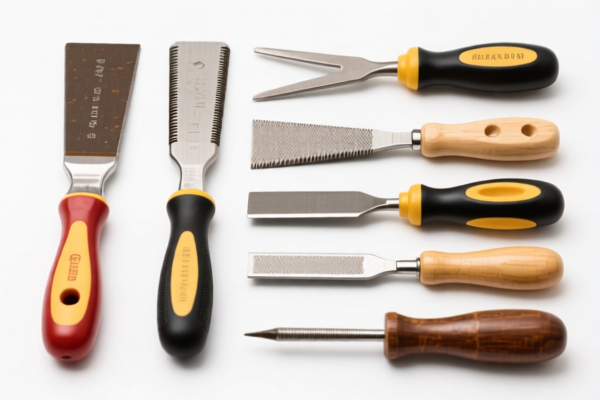
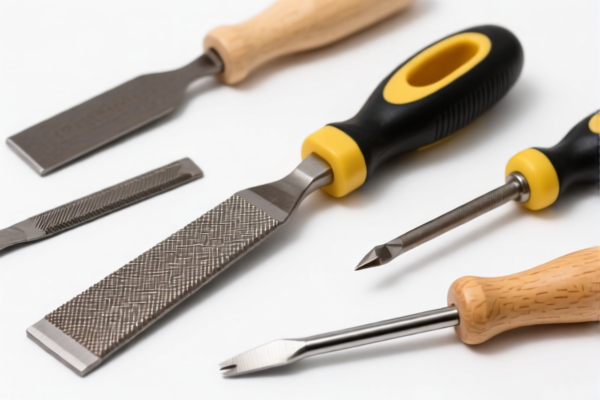
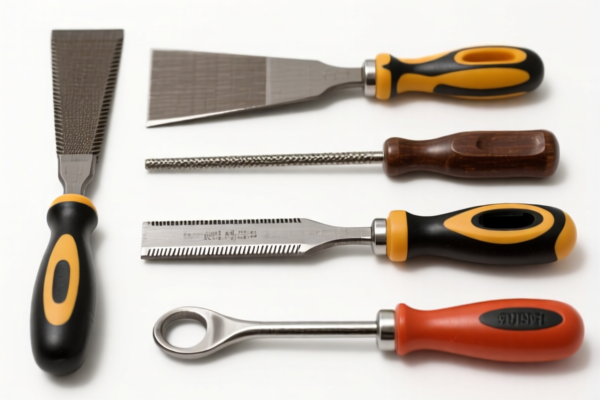
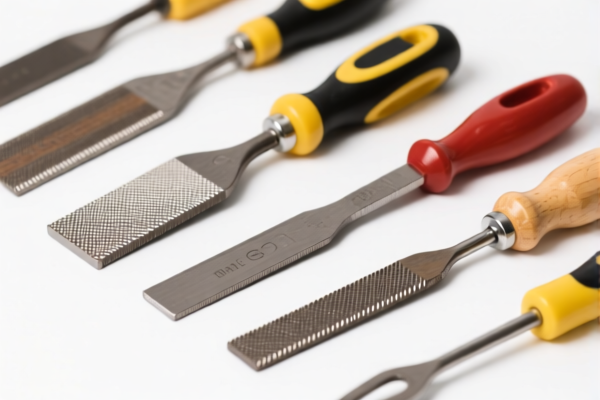
AI Analysis
🎬 Film Application Tools (Window Films, Decals, & Wraps)
🌐 HS Code Reference & Customs Clearance Guide | 2026 Latest Tariff Analysis | Professional-Level Compliance Strategy
📌 I. Product Definition & Classification: What Exactly Are "Film Application Tools"?
Film application tools are specialized implements used to install, smooth, cut, or remove various types of films (such as window tint, vehicle wraps, security films, or decorative decals). In international trade, these items are generally classified based on their material and function. They are typically either metal hand tools (squeegees, scrapers, cutters) or plastic accessories.
⚠️ Critical Distinction:
- Metal Hand Tools (e.g., Steel Squeegees, Blades): Usually fall under Chapter 82 (Tools of Base Metal).
- Plastic Accessories (e.g., Plastic Squeegees, Rulers, Masking Tape): Usually fall under Chapter 39 (Plastics and Articles Thereof).
- Why This Matters: The material dictates the HS Code, which drastically changes the tariff rate due to additional US duties (Section 301 & IEEPA).
📦 II. HS Code Classification Details (Based on Provided Data)
Below are the specific HS Codes derived from the provided dataset, along with the logical reasoning for each classification.
| HS Code | Summary & Reasoning | Tax Detail Breakdown | Total Tax |
|---|---|---|---|
8205.90.60.00 |
Metal/Plastic Manual Tools: Inferred as manual operation tools. Likely made of metal or plastic. Falls under the "other" category for tools not specifically listed elsewhere. | Base: Rate for specific article; Additional: 25.0% (Sec 301) + 10% (IEEPA Sec 122) | T + 35.0% |
3926.90.99.89 |
Plastic Plastics: Inferred material is mostly plastic. Classified as other plastic articles not specified in other subheadings. | Base: 5.3% Sec 301: 7.5% IEEPA Sec 122: 10% |
22.8% |
3926.90.85.00 |
Plastic Articles: Typically made of plastic, fitting the "plastic articles" category. Classified as "other" under reasonable matching. | Base: 6.5% Sec 301: 7.5% IEEPA Sec 122: 10% |
24.0% |
8205.51.75.00 |
Household/Manual Tools: Classified as auxiliary manual tools, matching the "other household tools and parts" catch-all category. | Base: 3.7% Sec 301: 25.0% IEEPA Sec 122: 10% |
38.7% |
3926.10.00.00 |
Plastic Office/Electronic Supplies: Inferred plastic material. Classified under "other plastic articles" logic for office/electronic accessories. | Base: 5.3% Sec 301: 0.0% IEEPA Sec 122: 10% |
15.3% |
🔍 Key Insight:
- Plastic Tools generally attract lower total tariffs (15.3% - 24.0%) compared to Metal Tools (35.0% - 38.7%).
- The classification hinges on whether the tool is deemed a "hand tool of base metal" (Ch 82) or a "plastic article" (Ch 39).
💰 III. 2026 Latest Tariff Rate Details (Including Surcharges)
✅ Applicable Country: United States (US)
✅ Origin: China (CN)
✅ Effective Date: Current US Trade Policy (Section 301 & IEEPA Sec 122)
🎯 1. 8205.90.60.00 & 8205.51.75.00 — Metal/Manual Tools
| Item | Content |
|---|---|
| Base Duty | Varies (e.g., 3.7% or unspecified "rate for specific article") |
| Section 301 Surcharge | +25.0% (Standard USITC Footnote for these subheadings) |
| IEEPA Sec 122 Surcharge | +10.0% (Targeted Chinese imports) |
| Total Tax Rate | 35.0% – 38.7% |
| De Minimis Exemption | ❌ Not Applicable (Section 321 does not apply to Section 301/IEEPA goods from China) |
| Legal Path | USITC:8205.xx.xx.xx → FOOTNOTE:301 → IEEPA:122 |
📌 Explanation:
- Tools made of base metal (steel, aluminum) are classified in Chapter 82.
- The 25% Section 301 tariff is standard for most hand tools.
- The 10% IEEPA Sec 122 tariff is an additional layer for Chinese-origin goods.
- Result: High tax burden. Misclassification as plastic could save ~15%, but risks severe penalties.
🎯 2. 3926.90.99.89 & 3926.90.85.00 — Plastic Tools
| Item | Content |
|---|---|
| Base Duty | 5.3% – 6.5% |
| Section 301 Surcharge | +7.5% (Lower rate for some plastic subheadings) |
| IEEPA Sec 122 Surcharge | +10.0% |
| Total Tax Rate | 22.8% – 24.0% |
| De Minimis Exemption | ❌ Not Applicable |
| Legal Path | USITC:3926.xx.xx.xx → FOOTNOTE:301 → IEEPA:122 |
📌 Explanation:
- Plastic squeegees, razors, and applicators fall under Chapter 39.
- The Section 301 rate is lower (7.5%) compared to metal tools (25%).
- Still subject to the 10% IEEPA tariff.
- Result: More cost-effective than metal tools, but still significant.
🎯 3. 3926.10.00.00 — Plastic Office/Electronic Accessories
| Item | Content |
|---|---|
| Base Duty | 5.3% |
| Section 301 Surcharge | 0.0% (Exempt or lower rate for this specific subheading) |
| IEEPA Sec 122 Surcharge | +10.0% |
| Total Tax Rate | 15.3% |
| De Minimis Exemption | ❌ Not Applicable |
| Legal Path | USITC:3926.10.00.00 → IEEPA:122 |
📌 Explanation:
- If the tool can be argued as an "accessory for office equipment" or similar plastic article, it may qualify for this lower rate.
- No Section 301 surcharge (0%), only the 10% IEEPA.
- Result: The most cost-effective classification among the options. Requires strong justification that the item is not a general "hand tool."
🛠️ IV. Customs Clearance Practical Advice (Pitfall Avoidance)
✅ 1. Preparation Checklist (Mandatory)
| Document | Required | Explanation |
|---|---|---|
| ✅ Product Photos | ✔️ | Clear images showing material (metal vs. plastic) and function. |
| ✅ Material Specification | ✔️ | Explicitly state: "Steel blade with plastic handle" or "100% Plastic Squeegee." |
| ✅ Function Description | ✔️ | e.g., "Window film installation tool," "Vinyl wrap cutter." |
| ✅ Commercial Invoice | ✔️ | Accurate description matching HS Code logic. |
| ✅ Packing List | ✔️ | Weight and dimensions for duty calculation. |
✅ 2. Classification Strategy (Key Rules)
| Scenario | Correct HS Code | Wrong Approach | Consequence |
|---|---|---|---|
| Metal Squeegee/Blade | 8205.51.75.00 or 8205.90.60.00 |
Classify as plastic → 3926.90.99.89 |
Penalty + Back Taxes (Diff: ~15%) |
| Plastic Squeegee/Ruler | 3926.90.99.89 or 3926.90.85.00 |
Classify as metal → 8205... |
Overpayment (Loss of ~15%) |
| Plastic Tool as Accessory | 3926.10.00.00 |
Classify as general plastic → 3926.90... |
Overpayment (Diff: ~10%) |
🔥 Pro Tip:
If the tool is primarily plastic (e.g., a plastic squeegee with a rubber blade), argue for Chapter 39. The tax savings are substantial (15.3% vs. 35-38%). However, if it has a significant metal component (e.g., steel blade), it must be classified under Chapter 82.
✅ 3. Special Cases
| Scenario | Handling Advice |
|---|---|
| Mixed Materials (Metal + Plastic) | Classify based on essential character. If metal blade is essential, use Ch 82. |
| Kit Set (Tool + Film) | Film itself may have different HS Code. Tools are classified separately if declared individually. |
| Custom/OEM Tools | Provide design specs to prove material composition. |
🌍 V. Global Market Comparison (2026)
| Market | Recommended HS Code | Approx. Tax Rate (China Origin) | Key Notes |
|---|---|---|---|
| 🇺🇸 USA | 3926.90.99.89 or 8205.51.75.00 |
15.3% – 38.7% | High Section 301 & IEEPA duties. Material is critical. |
| 🇨🇳 China | 3926.90.99.89 or 8205.51.75.00 |
~5-10% | No Section 301/IEEPA. Lower import duties. |
| 🇪🇺 EU | 3926.90.99 or 8205.51 |
~4-6% | No Section 301. Standard WTO rates apply. |
| 🇬🇧 UK | 3926.90.99 or 8205.51 |
~4-6% | Post-Brexit rules. No US-style surcharges. |
📌 Conclusion:
- USA is the most expensive market due to 35-38% effective rates for metal tools.
- Plastic tools are significantly cheaper (15-24%) in the US.
- EU/UK/China do not impose Section 301 or IEEPA Sec 122 tariffs, making them more favorable for high-volume exports.
📌 VI. Common Errors & Pitfalls (Lessons Learned)
❌ Error 1: Classifying all film tools as "Hand Tools" (Ch 82) regardless of material.
👉 Result: Unnecessary 25% Section 301 surcharge on plastic tools.
❌ Error 2: Failing to specify material in the invoice.
👉 Result: Customs may assign the highest duty rate automatically or delay clearance for inspection.
❌ Error 3: Ignoring IEEPA Sec 122 (10%) on all Chinese-origin goods.
👉 Result: Underpayment of duties and potential audits.
✅ Correct Practice:
"Plastic Window Film Squeegee, 100% PP Plastic, No Metal Components, Model XYZ, Made in China"
🎯 VII. Conclusion: Professional Classification for Cost Efficiency
🎯 Remember the Rule:
🔹 "Metal = Chapter 82 (High Tax), Plastic = Chapter 39 (Lower Tax)."
🔹 "IEEPA 10% is Non-Negotiable for China Origin."
🔹 "Material Specs Save Money!"
📌 Tips:
- If your tool is plastic, argue for 3926.10.00.00 (15.3%) if it fits "office/electronic accessories," or 3926.90.99.89 (22.8%) as general plastic.
- If your tool is metal, prepare for 35-38% total tax. Consider Section 301 Exclusions if available for specific tool types.
📣 Immediate Action:
📞 Consult a Customs Broker to confirm material composition.
📄 Provide photos and specs to support your HS Code claim.
🚀 Optimize your supply chain to minimize tax impact.
✨ Professional Classification Starts with Precision!
💼 Every Percent Saved is Pure Profit!
Customer Reviews
About HS Code Classification
The Harmonized System (HS) is an internationally standardized nomenclature developed by the World Customs Organization (WCO) to classify traded products. Over 200 countries use the HS system as the basis for customs tariffs, trade statistics, and import/export regulations.
Each HS code follows a hierarchical structure:
- Chapter (2 digits) — Broad category of goods (e.g., Chapter 84: Machinery and Mechanical Appliances)
- Heading (4 digits) — More specific grouping within the chapter
- Subheading (6 digits) — Internationally standardized breakdown, used by all WCO member countries
- National subdivisions (8-10 digits) — Country-specific extensions for further classification, such as US HTSUS 10-digit codes
Correct HS code classification is essential for smooth customs clearance, accurate duty payment, and compliance with trade regulations. Misclassification can lead to customs delays, overpayment of duties, or penalties.
When importing from CN to US, the applicable tariff rates may include:
- Most-Favored-Nation (MFN) rate — The standard duty rate applied to WTO members
- General rate — Applied to countries without trade agreements
- Trade remedy duties — Additional tariffs such as Section 301 (anti-dumping), Section 232 (national security), or countervailing duties
The information provided on this page is for reference purposes only. For official classification, please consult with your local customs authority or a licensed customs broker.