Film Cleaner
CN → US| HS Code | Tariff Rate | Origin | Destination | Doc |
|---|---|---|---|---|
| 3707903290 | 35.0% | CN | US | Official Doc |
| 3707906000 | 35.0% | CN | US | Official Doc |
| 3701910060 | 38.7% | CN | US | Official Doc |
| 3701996060 | 35.0% | CN | US | Official Doc |
| 3702320160 | 38.7% | CN | US | Official Doc |
Product Images

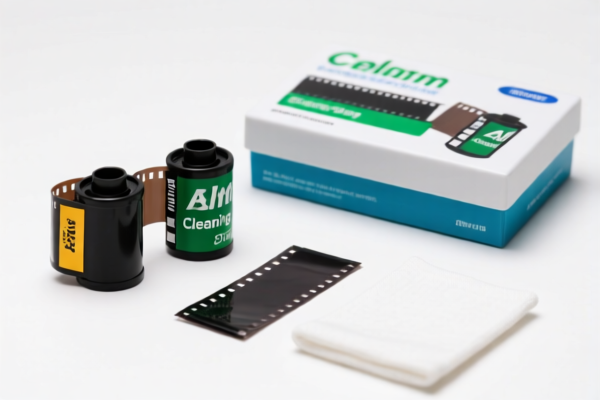
AI Analysis
🎞️ Film Cleaner & Photographic Chemicals (The Ultimate Guide)
🌐 HS Code Reference & Clearance Strategy | 2026 Latest Tariff Breakdown | Professional Import Compliance
📌 I. Product Definition & Classification: Do You Know What "Film Cleaner" Really Is?
"Film Cleaner" is a critical term in the photographic industry, but in international trade, it is not a single HS Code. It covers a spectrum of products ranging from pre-mixed liquid chemicals to concentrated powders and ready-to-use solutions for processing film.
The classification depends entirely on the state of the product and its usage:
- Pre-Mixed Ready-to-Use Solutions: Liquid concentrates that are directly poured into developing tanks (e.g., Kodak D-76, Ilford Ilfodol).
- Classification: Usually 3707.90 (Photographic Chemicals, Mixed).
- Unmixed/Concentrated Products: Powders or liquids that must be diluted with water before use.
- Classification: Often 3707.90 (Photographic Chemicals, Unmixed).
- Processing of the Film Itself: If the "cleaner" is actually a processing aid applied to exposed or unexposed film, it might fall under 3701 or 3702 (Film materials).
⚠️ CRITICAL DISTINCTION: - If the product is a chemical reagent used in the darkroom/lab to develop/fix the film → HS Code 3707. - If the product is the film strip itself (even if pre-processed) → HS Code 3701/3702. - Do not mix these! Misdeclaring film chemicals as film, or vice versa, leads to massive customs penalties.
📦 II. HS Code Classification Details (2026 Tariff Reference)
Based on the provided data for "Film Cleaner" and related photographic items, here is the precise breakdown:
| HS Code | Product Description | Applicable Scenario | Tax Rate (Total) |
|---|---|---|---|
3707.90.32.90 |
Chemical preparations for film development (Photographic chemical consumables) |
Pre-mixed liquid cleaners, developers, or fixers used directly for冲洗 (developing). | 35.0% |
3707.90.60.00 |
Unmixed photographic products, ready for use (Concentrated solutions) |
Concentrated powders or liquids requiring dilution; "Ready-to-use state" after mixing. | 35.0% |
3701.91.00.60 |
Flat, exposed film for color processing (Processed color film) |
Film that has already been exposed and partially developed (e.g., C-41 rolls). | 38.7% |
3701.99.60.60 |
Exposure-sensitive, unexposed film (Photography/Film products) |
Blank film rolls, unexposed negatives, or raw photographic film stock. | 35.0% |
3702.32.01.60 |
Halogen-silver emulsion film (Roll film applications) |
Specific roll film containing silver halide emulsion for standard photography. | 38.7% |
🔍 Key Insight for "Film Cleaner": - If your product is purely a liquid cleaner/chemical (like a pre-wash or rinse aid), it belongs to
3707.90.32.90or3707.90.60.00. - If you are importing the film rolls that are cleaned before processing, you must declare them as3701.99.60.60or3702.32.01.60.
💰 III. 2026 Latest Tariff Breakdown (Deep Dive into Tax Clauses)
✅ Origin: China (CN)
✅ Target Market: United States (US)
✅ Effective Date: 2025-2026 Period (Subject to ongoing trade policies)
🎯 1. The "35.0%" Rule: Photographic Chemicals (3707.90.32.90 & 3707.90.60.00)
Most common classification for "Film Cleaner" products.
| Tax Component | Rate | Legal Basis & Explanation |
|---|---|---|
| Base Tariff | 0.0% | Standard Most-Favored-Nation (MFN) rate for this category is often duty-free. |
| Section 301 / "Add-on" Tariff | +25.0% | Section 301 Tariffs (US Trade Act): Specific punitive tariff on Chinese goods in the chemical/catalyst category. |
| Section 122 Tariff | +10.0% | Section 122 Tariff (IEEPA related): Additional levy targeting specific Chinese imports to address national security concerns. |
| TOTAL RATE | 35.0% | 0% + 25% + 10% = 35% |
📌 Detailed Explanation: - The Base 0% is misleading; the 25% Section 301 is the heavy hitter. - The 10% Section 122 is an additional "layer" often applied to chemical imports from China. - De Minimis Exemption: ❌ NOT APPLICABLE. These are commercial goods, not small personal parcels. Full duty applies.
🎯 2. The "38.7%" Rule: Photographic Film (3701.91.00.60 & 3702.32.01.60)
Applicable if the "cleaner" is a processing aid on exposed film or if the user imports the film itself.
| Tax Component | Rate | Legal Basis & Explanation |
|---|---|---|
| Base Tariff | 3.7% | Standard MFN duty for photographic film products. |
| Section 301 / "Add-on" Tariff | +25.0% | Section 301 Tariffs: Applied to film and related materials. |
| Section 122 Tariff | +10.0% | Section 122 Tariff: Additional surcharge on Chinese film products. |
| TOTAL RATE | 38.7% | 3.7% + 25% + 10% = 38.7% |
📌 Detailed Explanation: - Unlike chemicals (Base 0%), Film has a base duty of 3.7%. - This makes film slightly more expensive than pure chemicals, but the 25% + 10% surcharges remain the same.
🛠️ IV. Clearance Practical Advice (Real-World Pitfalls & Solutions)
✅ 1. Documentation Checklist (Non-Negotiable)
| Document | Requirement | Why it matters |
|---|---|---|
| Certificate of Analysis (CoA) | ✔️ Required | Proves the chemical composition. Customs must verify it is a "Photographic Chemical" and not a hazardous industrial cleaner. |
| Material Safety Data Sheet (MSDS) | ✔️ Required | Crucial for safety. If the MSDS lists "Flammable" or "Toxic" incorrectly, the shipment will be held. |
| Product Formulation | ✔️ Required | To distinguish between 3707.90.32.90 (mixed) and 3707.90.60.00 (unmixed). |
| Commercial Invoice | ✔️ Required | Must explicitly state: "Photographic Chemicals for Film Processing" and declare the HS Code clearly. |
| Labeling (English) | ✔️ Required | Labels must indicate "For Photographic Use Only" and list ingredients. |
✅ 2. Declaration Tips (The "Cleaner" Trap)
🔥 Golden Rule: "Name it Right, Declare it Right, Avoid the 35% Shock!"
| Scenario | Correct HS Code | Incorrect (High Risk) | Consequence |
|---|---|---|---|
| Liquid Developer/Cleaner (Ready to use) | 3707.90.32.90 |
3808.91.50 (Other Cleaning Agents) |
38%+ vs 35% (Base rate mismatch) + Potential "Wrong Description" penalty. |
| Concentrated Powder Cleaner | 3707.90.60.00 |
3402.10.00 (Surfactants) |
35% vs 10%+ (Base rate mismatch) + High audit risk. |
| Film Roll (Unexposed) | 3701.99.60.60 |
3707.90.32.90 |
35% vs 38.7% (Base rate mismatch) + Classification error. |
| Film Roll (Exposed/Color) | 3701.91.00.60 |
3702.32.01.60 |
38.7% vs 38.7% (Same tax, but legal risk if product doesn't match description). |
⚠️ Warning: Do NOT declare photographic chemicals as "General Industrial Cleaner" (
3402series). The base tariff for industrial cleaners is often 0-5%, but if caught misclassifying to evade the 25% + 10% surcharge, you face fraud charges, seizure, and 10x fines.
✅ 3. Special Handling for "Film Cleaner"
| Situation | Strategy |
|---|---|
| Is it a "Universal" cleaner? | If the product claims to clean any film, but contains specific halogens/silver, it must be classified under 3707. If you declare it as a generic cleaner, you risk being flagged for "Chemical Mixture" violations. |
| Is it a "Pre-wash" rinse? | Even if it's just a rinse, if it's for film processing, it falls under 3707. It is a photographic auxiliary, not a household cleaner. |
| Small Batches (<$800) | De Minimis (Section 321) MAY apply if shipped directly to an individual consumer. However, commercial imports (even small boxes) are subject to the full 35% rate. Do not rely on De Minimis for business. |
🌍 V. Global Market Comparison (2026 Snapshot)
| Market | Recommended HS Code | Total Duty (China Origin) | Key Constraint |
|---|---|---|---|
| 🇺🇸 USA | 3707.90.32.90 / 3707.90.60.00 |
35.0% | High Section 301 (25%) + Section 122 (10%) penalties. |
| 🇨🇳 China | 3707.90.32.90 |
0% - 5% | Low base duty, no Section 301/122. |
| 🇪🇺 EU | 3707.90 |
6.5% | Standard MFN rate + VAT. No Section 301. |
| 🇯🇵 Japan | 3707.90 |
4.0% - 6.0% | Moderate duty, no punitive surcharges. |
📌 Conclusion: The US market is the most expensive for importing "Film Cleaner" from China due to the 35% total duty. Consider sourcing from Vietnam or Mexico if possible to bypass Section 301/122 surcharges (if eligible under local rules).
📌 VI. Common Mistakes & "Blood Tears" Lessons
❌ Mistake 1: Declaring "Film Cleaner" as "Soap" or "Detergent" (3402).
👉 Result: Customs detects the photographic ingredients. You face seizure, back-taxes (35%), and penalties.
👉 Fix: Always declare as 3707.90 with a clear description: "Photographic Chemical, Film Processing, Mixed".
❌ Mistake 2: Ignoring the "Unmixed" vs "Mixed" distinction.
👉 Result: 3707.90.60.00 (Unmixed) and 3707.90.32.90 (Mixed) have the same total tax, but different legal definitions. If you declare "Powder" as "Liquid", you risk documentation rejection.
👉 Fix: Match the physical state (Liquid vs Powder) to the HS Code subheading.
❌ Mistake 3: Assuming "De Minimis" applies to small shipments. 👉 Result: For commercial imports, even small boxes are taxed at 35%. 👉 Fix: Factor the 35% cost into your pricing immediately. Do not budget for 0% or 5%.
🎯 VII. Conclusion: Professional Declaration = Profit Protection
🔹 Remember: "Film Cleaner" is a Photographic Chemical, NOT a Household Cleaner!
🔹 Total Duty: 35.0% (Base 0% + 25% Section 301 + 10% Section 122).
🔹 Action: Use3707.90.32.90or3707.90.60.00based on product state.
🔹 Strategy: Pre-clear with a broker. Label correctly. Avoid misclassification to save time and money.
📣 Call to Action:
📞 Contact a Licensed Customs Broker immediately to apply for an Advance Ruling (CBP Ruling) for your specific "Film Cleaner" formula.
🚀 Prevent costly seizures at the US port. Protect your margin against the 35% tariff.
✨ Professional Classification, Smooth Clearance, Maximum Profit!
💼 Every Dollar of Tariff Matters!
Customer Reviews
About HS Code Classification
The Harmonized System (HS) is an internationally standardized nomenclature developed by the World Customs Organization (WCO) to classify traded products. Over 200 countries use the HS system as the basis for customs tariffs, trade statistics, and import/export regulations.
Each HS code follows a hierarchical structure:
- Chapter (2 digits) — Broad category of goods (e.g., Chapter 84: Machinery and Mechanical Appliances)
- Heading (4 digits) — More specific grouping within the chapter
- Subheading (6 digits) — Internationally standardized breakdown, used by all WCO member countries
- National subdivisions (8-10 digits) — Country-specific extensions for further classification, such as US HTSUS 10-digit codes
Correct HS code classification is essential for smooth customs clearance, accurate duty payment, and compliance with trade regulations. Misclassification can lead to customs delays, overpayment of duties, or penalties.
When importing from CN to US, the applicable tariff rates may include:
- Most-Favored-Nation (MFN) rate — The standard duty rate applied to WTO members
- General rate — Applied to countries without trade agreements
- Trade remedy duties — Additional tariffs such as Section 301 (anti-dumping), Section 232 (national security), or countervailing duties
The information provided on this page is for reference purposes only. For official classification, please consult with your local customs authority or a licensed customs broker.