Film Cutting Equipment
CN → US| HS Code | Tariff Rate | Origin | Destination | Doc |
|---|---|---|---|---|
| 8441100000 | 35.0% | CN | US | Official Doc |
| 8441900000 | 35.0% | CN | US | Official Doc |
Product Images
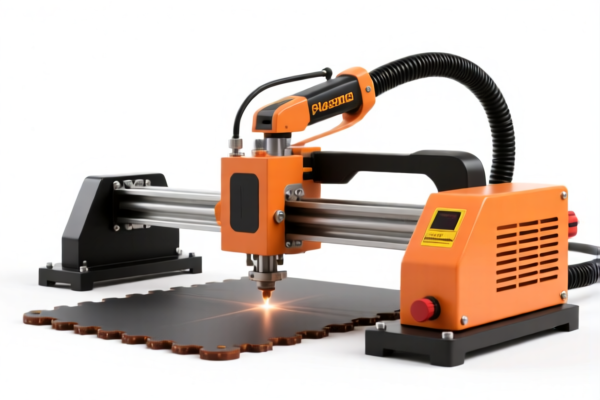
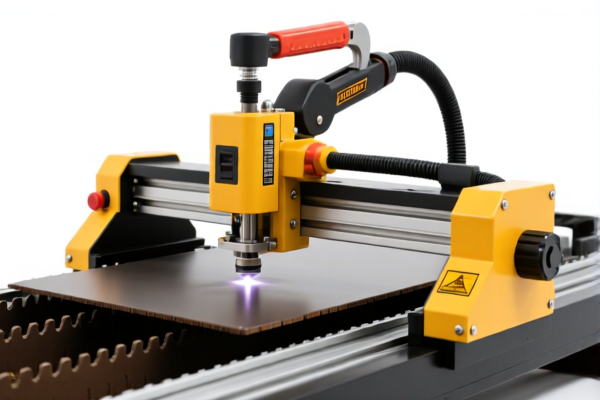
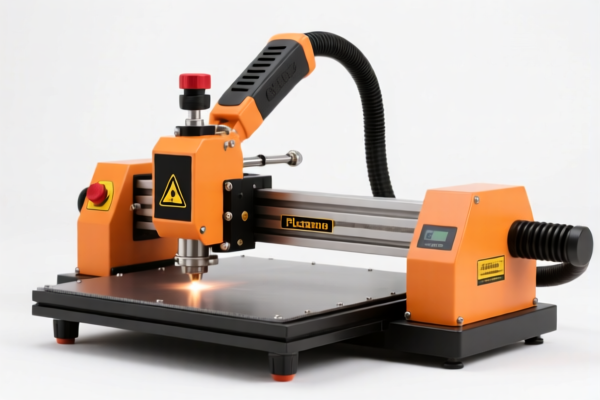
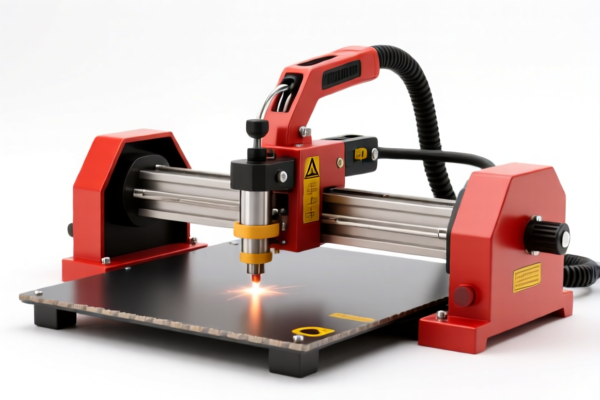
AI Analysis
🎞️ Film Cutting Equipment (Machinery for Making Up Paper Pulp, Paper, or Paperboard)
🌐 HS Code Reference & Customs Clearance Guide | 2026 Latest Tariff Analysis | Professional Clearance Strategy
📌 I. Product Definition & Classification: Do You Really Understand "Film Cutting Equipment"?
In the context of international trade and customs classification, "Film Cutting Equipment" is often a ambiguous term. It can refer to industrial machinery for cutting paper-based materials (classified under Chapter 84) or devices for cutting photographic/digital films (classified under Chapter 90 or 85).
However, based strictly on the provided , we are analyzing machinery for making up paper pulp, paper, or paperboard, including cutting machines of all kinds. This category covers industrial cutters used in printing, packaging, and paper converting industries.
Key Distinction: * Industrial Paper/Film Cutters (Chapter 84): Machines that cut rolls of paper, cardboard, or flexible packaging films (if associated with papermaking processes). These are machinery. * Photographic/Digital Film Cutters (Chapter 90/85): Devices for cutting photographic film, slides, or digital media components. These are NOT covered in the provided and fall under different HS codes (e.g., 9006, 8471).
⚠️ Critical Note for This Analysis:
The provided only covers HS Codes within 84.41. Therefore, this guide assumes "Film Cutting Equipment" refers to industrial cutting machines for paper/paperboard/flexible packaging rolls as defined by HS 84.41. If your equipment is for photographic film or electronic media, it does not fit these HS codes.
📦 II. HS Code Classification Details (Based on Provided Data)
The provided lists two specific HS codes under Chapter 84.41. Here is the breakdown:
| HS Code | Product Description | Applicable Scenario | Tax Rate (Total) |
|---|---|---|---|
8441.10.00.00 |
Cutting machines of all kinds | Industrial rotary cutters, straight-line cutters, slitters for paper, cardboard, or film rolls used in paper-making/packaging processes | 25.0% |
8441.90.00.00 |
Parts | Replacement blades, guards, rollers, motors, or control units specifically for the above machinery | 25.0% |
🔍 Classification Logic: 1. Machine vs. Part: If you are importing the complete machine (e.g., a slitting machine, guillotine cutter, or die-cutting press for paper/film), it falls under
8441.10.00.00. 2. Spare Parts: If you are importing components (e.g., a replacement blade or a motor for an existing machine), it falls under8441.90.00.00. 3. Exclusion: Equipment for cutting photographic film (e.g., lab equipment) or digital media is not included in this data set.
💰 III. 2026 Tariff Rate Breakdown (Detailed Tax Clauses)
✅ Applicable Country: United States (US)
✅ Origin: China (CN) (Implied by the 25% added tariff, typical of US Section 301 tariffs on Chinese goods)
✅ Effective Date: Current (Based on 2026 context in prompt)
🎯 1. HS Code 8441.10.00.00 – Cutting Machines
| Item | Detail |
|---|---|
| Base Duty Rate | 0.0% |
| Section 301 Additional Duty | +25.0% |
| Total Tariff Rate | 25.0% |
| Tax Calculation | CIF Value × 25% |
| De Minimis Exemption | ❌ Not Applicable (Section 301 goods are generally subject to full duty upon entry) |
| Legal Basis | U.S. Harmonized Tariff Schedule (HTSUS) 8441.10.00.00; USITC Footnote 9903.88.01 (or similar Section 301 listings for Chapter 84) |
📌 Explanation:
- The base tariff for machinery in this category is 0%, making it attractive from a base cost perspective.
- However, the 25% additional tariff applies to all goods originating from China classified under this heading. This is a significant cost driver.
- No tariff engineering can easily bypass this if the product is clearly a "cutting machine for paper/paperboard."
🎯 2. HS Code 8441.90.00.00 – Parts
| Item | Detail |
|---|---|
| Base Duty Rate | 0.0% |
| Section 301 Additional Duty | +25.0% |
| Total Tariff Rate | 25.0% |
| Tax Calculation | CIF Value × 25% |
| De Minimis Exemption | ❌ Not Applicable (Same as above) |
| Legal Basis | U.S. Harmonized Tariff Schedule (HTSUS) 8441.90.00.00 |
📌 Explanation:
- Parts are taxed at the same rate as the main machine.
- Important: Ensure that "parts" are not simply components that could be classified as "machine tools" or "general machinery parts" under different headings with lower tariffs. If a part is generic (e.g., a standard bolt or generic motor), it might fall under a different HS code. However, specific parts for 84.41 machinery are subject to this 25%.
🛠️ IV. Customs Clearance Practical Advice (Pitfall Avoidance Guide)
✅ 1. Required Documentation Checklist
| Document | Mandatory? | Purpose |
|---|---|---|
| ✅ Product Specification Sheet | ✔️ | Must clearly state: "Cutting Machine for Paper/Paperboard" or "Parts for Paper Cutting Machinery." |
| ✅ Commercial Invoice | ✔️ | Must match the HS code description exactly. Avoid vague terms like "Cutting Device." Use "Rotary Slitter for Paper Rolls." |
| ✅ Bill of Lading (B/L) | ✔️ | Ensure weight and dimensions match the invoice. |
| ✅ Country of Origin Certificate | ✔️ | Crucial for determining the 25% tariff. If produced in Vietnam/Mexico/Thailand, different rules may apply. |
| ✅ Part Number List (for Parts) | ✔️ | If shipping 8441.90.00.00, provide a detailed list showing these are indeed spare parts for specific machinery, not complete units. |
✅ 2. Declaration Best Practices
🔥 "Be Specific, Be Accurate, Avoid Ambiguity!"
| Scenario | Correct Declaration | Incorrect Declaration |
|---|---|---|
| Complete Machine | "Paper Cutting Machine, Model XYZ, for Industrial Use" → 8441.10.00.00 | "Film Cutter" (Too vague; could be misclassified) |
| Spare Parts | "Replacement Blade for Paper Slitter, Model XYZ" → 8441.90.00.00 | "Cutting Tool" (Could be classified as hand tool, 8208) |
| Photographic Film Cutter | Not Applicable (Falls outside this data) | Forcing it into 84.41 → High Risk of Penalty/Seizure |
✅ 3. Critical Warnings
- Do Not Misclassify: If your equipment is for cutting photographic film (e.g., in a photo lab), it does not belong in 84.41. It likely belongs in 9006.91 or 8471. Misclassification can lead to audits and back taxes.
- Parts vs. Units: If you ship a machine disassembled in multiple boxes, it is still considered a complete machine (HS 8441.10) for duty purposes. Do not try to classify it as "parts" (8441.90) to save time; the tariff rate is the same, but the description must be accurate.
- Section 301 List Check: Verify if your specific model is on the current USITC Section 301 exclusion list. As of 2026, most industrial machinery from China remains subject to the 25% tariff.
🌍 V. Global Market Comparison (2026)
| Region | Recommended HS Code | Tariff (China Origin) | Notes |
|---|---|---|---|
| 🇺🇸 United States | 8441.10.00.00 / 8441.90.00.00 |
25% | High tariff due to Section 301. |
| 🇨🇳 China | 8441.10.00.00 / 8441.90.00.00 |
~10% | Standard import duty, no Section 301. |
| 🇪🇺 EU | 8441.10.00.00 / 8441.90.00.00 |
~0-2% | Generally low base duty. No major additional tariffs for China in this category. |
| 🇬🇧 UK | 8441.10.00.00 / 8441.90.00.00 |
~0-2% | Post-Brexit tariffs are generally competitive. |
📌 Conclusion:
The United States is the most challenging market for this product due to the 25% additional tariff. Importers should consider: 1. Cost-Benefit Analysis: Factor the 25% into pricing. 2. Supply Chain Diversification: If possible, source from non-China origins to avoid Section 301 duties. 3. Pre-Ruling: Apply for a Binding Ruling from CBP (U.S. Customs and Border Protection) if there is any ambiguity about the machine's function.
📌 VI. Common Mistakes & Pitfalls (Lessons Learned)
❌ Mistake 1: Classifying a complete machine as "parts" to simplify paperwork.
👉 Consequence: CBP may assess penalties for misdeclaration, even if the rate is the same. More importantly, it triggers audits.
❌ Mistake 2: Using the term "Film Cutter" without specifying the material (Paper vs. Photo).
👉 Consequence: If it's for photo film, it will be rejected by customs as incorrectly classified under 84.41. It may be reassigned to Chapter 90 with different duties.
❌ Mistake 3: Ignoring the Section 301 impact.
👉 Consequence: Unexpected cash flow issues due to the 25% tariff. Budget accordingly!
❌ Mistake 4: Importing generic cutting blades (e.g., standard steel blades) and claiming they are "parts" for 84.41.
👉 Consequence: If the blade is generic, it may be classified under Chapter 82 (Tools), which might have a different tariff. Ensure they are specific to the machinery.
🎯 VII. Final Recommendations
- Precise Description: In your commercial invoice, write: "Industrial Cutting Machine for Paper/Paperboard, HS 8441.10.00.00" or "Spare Parts for Paper Cutting Machine, HS 8441.90.00.00."
- Verify Origin: If your product is not made in China, you may avoid the 25% tariff. Check the Certificate of Origin carefully.
- Consult a Broker: For high-value machinery, always work with a licensed customs broker to confirm the HS code and duty calculation.
🚀 Pro Tip:
If you are importing multiple units, consider negotiating Free on Board (FOB) terms to ensure accurate valuation at the port of entry. The 25% duty is calculated on the CIF (Cost, Insurance, Freight) value, so accurate freight costs are critical for budgeting.
✨ Professional Clearance, Start with Accurate Classification!
💼 Every percentage point matters in global trade!
Customer Reviews
About HS Code Classification
The Harmonized System (HS) is an internationally standardized nomenclature developed by the World Customs Organization (WCO) to classify traded products. Over 200 countries use the HS system as the basis for customs tariffs, trade statistics, and import/export regulations.
Each HS code follows a hierarchical structure:
- Chapter (2 digits) — Broad category of goods (e.g., Chapter 84: Machinery and Mechanical Appliances)
- Heading (4 digits) — More specific grouping within the chapter
- Subheading (6 digits) — Internationally standardized breakdown, used by all WCO member countries
- National subdivisions (8-10 digits) — Country-specific extensions for further classification, such as US HTSUS 10-digit codes
Correct HS code classification is essential for smooth customs clearance, accurate duty payment, and compliance with trade regulations. Misclassification can lead to customs delays, overpayment of duties, or penalties.
When importing from CN to US, the applicable tariff rates may include:
- Most-Favored-Nation (MFN) rate — The standard duty rate applied to WTO members
- General rate — Applied to countries without trade agreements
- Trade remedy duties — Additional tariffs such as Section 301 (anti-dumping), Section 232 (national security), or countervailing duties
The information provided on this page is for reference purposes only. For official classification, please consult with your local customs authority or a licensed customs broker.