Film Cutting Knife
CN → US| HS Code | Tariff Rate | Origin | Destination | Doc |
|---|---|---|---|---|
| 8211924050 | 0.0% | CN | US | Official Doc |
| 8211922000 | 0.0% | CN | US | Official Doc |
| 8205100000 | 41.2% | CN | US | Official Doc |
| 8205595510 | 40.3% | CN | US | Official Doc |
| 8466100110 | 38.9% | CN | US | Official Doc |
| 8466100130 | 38.9% | CN | US | Official Doc |
Product Images
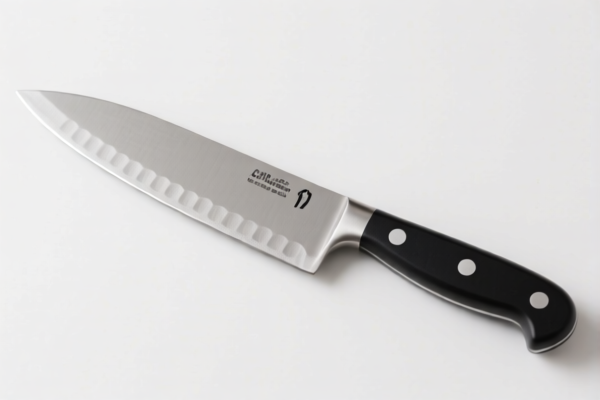
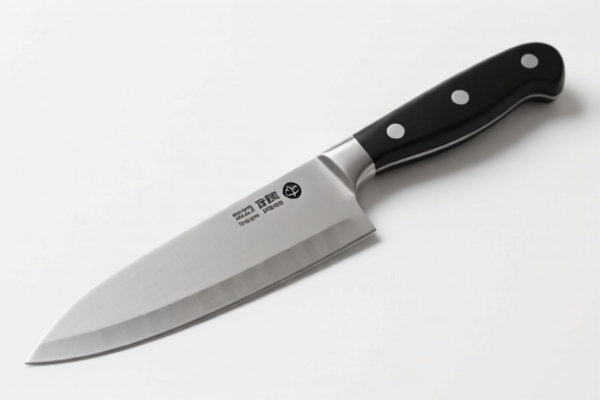
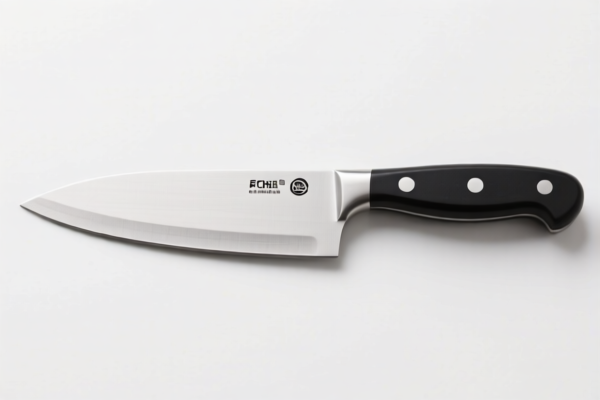
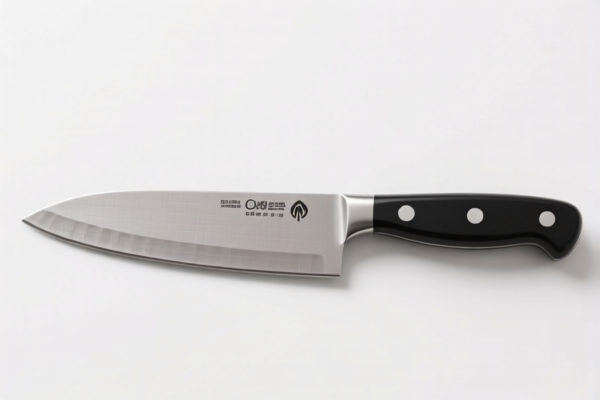
AI Analysis
🎬 Film Cutting Knife (Industrial & Professional Scissors)
🌐 HS Code Reference & Customs Clearance Guide | 2026 Latest Tariff Analysis | Professional Clearance Strategy
📌 I. Product Definition & Classification: Do You Really Know a "Film Cutting Knife"?
In international trade, the term "Film Cutting Knife" is ambiguous and highly sensitive. It generally refers to sharp-edged tools used for cutting plastic films, packaging materials, or textiles. However, under US Customs regulations, the classification depends entirely on the handle material, blade type, and intended use (e.g., kitchen vs. industrial).
Two Main Categories:
- Sheath-Type Knives (Industrial/General Use): Often have rubber/plastic handles and fixed blades. These are typically classified under 8211.92.
- Kitchen/Butcher Knives: Designed for food preparation. If made of base metal with rubber/plastic handles, they fall under specific subheadings within 8211.92.
⚠️ Critical Distinction Point:
- If the knife is a sheath-type knife (e.g., utility knife for cutting rolls of film/plastic) with rubber/plastic handles → HS 8211.92.40.50
- If the knife is a kitchen/butcher knife with rubber/plastic handles → HS 8211.92.20.00
- If it is a tool holder for a machine (e.g., CNC or industrial cutting machine) → HS 8466.10 (See Data below for tool holders)
📦 II. HS Code Classification Details (Based on Provided Data)
| HS Code | Product Description | Application Scenario | Handle Material | Key Feature |
|---|---|---|---|---|
8211.92.40.50 |
Sheath-type knives (Knives with cutting blades, serrated or not, including pruning knives, other than knives of heading 8208) | Industrial film cutting, packaging, general purpose cutting | Rubber or Plastic | Sheath-type (Folding/Retractable blade common) |
8211.92.20.00 |
Kitchen and butcher knives | Food preparation, butchery, kitchen use | Rubber or Plastic | Fixed blade, designed for culinary use |
8466.10.01.10 |
Tool holders for forming-type or cutting-type dies | Part of a machine (e.g., CNC, industrial cutter) | N/A (Metal/Industrial) | Not a hand-held knife; a holder for machine blades |
8466.10.01.30 |
Holders for replaceable cutting or drill inserts | Part of a machine | N/A (Metal/Industrial) | Not a hand-held knife; a holder for inserts |
8205.10.00.00 |
Drilling, threading or tapping tools | Not applicable for cutting film | N/A | Incorrect classification for cutting tools |
8205.59.55.10 |
Other edged handtools (of iron or steel) | Non-specific hand tools | Not specified | If handles are not rubber/plastic, this might apply, but data shows 0% tax |
🔍 Important Note:
- The data provided only lists HS codes for rubber/plastic handled knives under Chapter 82 and tool holders under Chapter 84.
- "Film Cutting Knife" is most commonly a sheath-type knife (8211.92.40.50) or a kitchen knife (8211.92.20.00) if used in a food packaging context.
- Do not confuse hand-held knives with machine tool holders (8466.10).
💰 III. 2026 Latest Tariff Rate Details (Including Additional Taxes)
✅ Applicable Country: United States (US)
✅ Origin: China (CN)
✅ Effective Time: 2025/2026 Trade Rules
🎯 1. 8211.92.40.50 —— Sheath-type Knives (Rubber/Plastic Handles)
| Item | Detail |
|---|---|
| Base Tariff | 0.0% |
| Additional Tariff (Section 301) | 0.0% |
| Total Tax Rate | 0.0% |
| Tax Calculation | CIF Value × 0% = $0 |
| De Minimis Exemption | ✅ Eligible (If value ≤ $800) |
| Legal Basis Path | HTSUS:8211.92.40.50 → Section 301: Footnote 9903.88.01 (Excluded or 0%) |
📌 Explanation:
- Sheath-type knives (often utility knives) are currently exempt from additional Section 301 tariffs.
- This makes them a low-cost item for US importers.
- Caution: Ensure the description clearly states "Sheath-type" and "Rubber/Plastic handles" to match this code.
🎯 2. 8211.92.20.00 —— Kitchen and Butcher Knives (Rubber/Plastic Handles)
| Item | Detail |
|---|---|
| Base Tariff | 0.8¢ each + 4.6% (ad valorem) |
| Additional Tariff (Section 301) | 7.5% |
| Total Tax Rate | 0.8¢ each + 12.1% (4.6% + 7.5%) |
| Tax Calculation | (0.8¢ × Qty) + (CIF Value × 12.1%) |
| De Minimis Exemption | ❌ Not Eligible for the per-unit fee, but ad valorem part may apply if value < $800 |
| Legal Basis Path | HTSUS:8211.92.20.00 → Section 301: Footnote 9903.88.01 (7.5%) |
📌 Explanation:
- Kitchen knives incur a per-unit charge (0.8 cents each) plus a high ad valorem rate.
- The 7.5% Section 301 tariff is added to the base 4.6%.
- Total effective rate is significantly higher than sheath-type knives.
- Warning: If the product is not actually for kitchen use (e.g., industrial film cutting), declaring it as a "kitchen knife" is misclassification and can lead to penalties.
🎯 3. 8466.10.01.30 —— Holders for Replaceable Cutting or Drill Inserts (Machine Parts)
| Item | Detail |
|---|---|
| Base Tariff | 3.9% |
| Additional Tariff (Section 301) | 25.0% |
| Total Tax Rate | 28.9% |
| Tax Calculation | CIF Value × 28.9% |
| De Minimis Exemption | ❌ Not Eligible |
| Legal Basis Path | HTSUS:8466.10.01.30 → Section 301: Footnote 9903.88.01 (25%) |
📌 Explanation:
- If your "Film Cutting Knife" is actually a tool holder for an industrial machine (not a hand-held knife), it falls under Chapter 84.
- High Tariff Risk: 28.9% is a significant cost increase.
- Ensure correct classification: Hand-held knives go to Ch. 82; Machine parts go to Ch. 84.
🛠️ IV. Customs Clearance Practical Advice (Pitfall Avoidance Guide)
✅ 1. Preparation Checklist (All Required)
| Document | Required | Notes |
|---|---|---|
| ✅ Product Photos | ✔️ | Clear images of the knife, showing handle material (rubber/plastic) and blade type (fixed/sheath). |
| ✅ Technical Specification Sheet | ✔️ | Must state: "Hand-held," "Cutting blades," "Intended use" (Industrial vs. Kitchen). |
| ✅ Commercial Invoice | ✔️ | Accurate description: "Sheath-type Knife, Rubber Handle, for Industrial Film Cutting" OR "Kitchen Knife." |
| ✅ Packing List | ✔️ | Quantity, weight, dimensions. |
| ✅ Origin Certificate | ✔️ | If claiming preferential rates (not applicable for China in most cases). |
✅ 2. Declaration Tips (Key Mantra)
🔥 "Be Specific: Sheath vs. Kitchen, Hand vs. Machine!"
| Scenario | Correct HS Code | Wrong Declaration | Consequence |
|---|---|---|---|
| Industrial Film Cutter (Rubber Handle) | 8211.92.40.50 |
"Kitchen Knife" | Overpaying taxes? No, underpaying if misclassified as kitchen? No, kitchen is 12.1%. Sheath is 0%. Risk of Misclassification Penalty. |
| Kitchen Knife (Rubber Handle) | 8211.92.20.00 |
"Sheath-type Knife" | Underpaying tariff (0% vs 12.1%) → Customs Audit + Back Taxes + Penalties. |
| Machine Tool Holder | 8466.10.01.30 |
"Hand-held Knife" | Underpaying tariff (28.9% vs 0%) → Major Penalty. |
| Generic "Knife" | Unclear | "Knife" | Customs will reclassify and assign the highest applicable duty or hold shipment. |
✅ 3. Special Cases
| Case | Handling Advice |
|---|---|
| OEM Custom Knives | Provide design specs. If handle material changes (e.g., metal handle), HS code may change to 8205.59.55.10 (0% tax, but different description). |
| Blades Only | If the knife is dismantled and only the blade is shipped, it may be classified as a "blade" under 8208 or 8211, not a "knife." Check data: 8208 is excluded. Blades may fall under 8205 or other categories. |
| Pruning Knives | If marketed as "pruning knives," they still fall under 8211.92 (as per description: "including pruning knives"). |
| Ceramic Knives | Not covered in provided data. Likely under 8211.91 or 8211.93. Check with customs broker. |
🌍 V. Global Market Comparison (2026 Latest)
| Country/Region | Recommended HS Code | Tariff (China Origin) | Notes |
|---|---|---|---|
| 🇺🇸 USA | 8211.92.40.50 (Sheath) |
0.0% | Best for industrial knives. |
| 🇺🇸 USA | 8211.92.20.00 (Kitchen) |
12.1% | High tax for kitchen knives. |
| 🇪🇺 EU | 8211.92 |
~1.7% - 4.5% | Varies by member state. No Section 301 equivalent. |
| 🇨🇳 China | 8211.92 |
~0% - 5% | Import duties apply, but lower than US. |
| 🇬🇧 UK | 8211.92 |
~1.7% - 4.5% | Post-Brexit tariffs apply. |
📌 Conclusion:
- US Market: Highly sensitive to classification. Sheath-type knives are tariff-free, making them competitive.
- Kitchen Knives: Face higher tariffs due to Section 301.
- EU/UK: More stable, but always verify local VAT.
📌 VI. Common Mistakes & Pitfalls (Lessons Learned)
❌ Mistake 1: Declaring an industrial film cutter as a "Kitchen Knife"
👉 Consequence: Paying 12.1% tax instead of 0%. Unnecessary cost.
❌ Mistake 2: Declaring a kitchen knife as a "Sheath-type Knife"
👉 Consequence: Customs Penalty for misclassification + Back taxes + Potential seizure.
❌ Mistake 3: Not specifying handle material
👉 Consequence: Customs cannot determine HS code → Delay in clearance → Demurrage fees.
❌ Mistake 4: Confusing "Tool Holder" with "Hand-held Knife"
👉 Consequence: Underpaying 28.9% tariff → Major Audit.
✅ Correct Declaration Example:
"Industrial Sheath-Type Knife, Rubber Handle, Fixed Blade, for Cutting Plastic Film, Model XYZ, Not for Kitchen Use"
🎯 VII. Conclusion: Precision Classification Saves Money!
🎯 Remember the Mantra:
🔹 "Sheath = 0%, Kitchen = 12.1%, Machine Holder = 28.9%!"
🔹 "Handle Material Matters: Rubber/Plastic = Ch. 82, Metal = Ch. 82/84!"
🔹 "Be Specific: Avoid 'Generic Knife' Descriptions!"
📌 Pro Tip:
If your product is not a hand-held knife but a blade for a machine, check if it fits 8208 (excluded) or 8205 (0% tax).
For hand-held knives, ensure the description matches the exact HS code description (e.g., "Sheath-type" vs. "Kitchen").
📣 Immediate Action:
📞 Contact your customs broker with product photos.
📋 Request an Advance Ruling if the classification is unclear.
🚀 Avoid costly mistakes by declaring accurately!
✨ Professional Clearance Starts with Accurate Classification!
💼 Your Cost Savings Depend on the Right HS Code!
Customer Reviews
About HS Code Classification
The Harmonized System (HS) is an internationally standardized nomenclature developed by the World Customs Organization (WCO) to classify traded products. Over 200 countries use the HS system as the basis for customs tariffs, trade statistics, and import/export regulations.
Each HS code follows a hierarchical structure:
- Chapter (2 digits) — Broad category of goods (e.g., Chapter 84: Machinery and Mechanical Appliances)
- Heading (4 digits) — More specific grouping within the chapter
- Subheading (6 digits) — Internationally standardized breakdown, used by all WCO member countries
- National subdivisions (8-10 digits) — Country-specific extensions for further classification, such as US HTSUS 10-digit codes
Correct HS code classification is essential for smooth customs clearance, accurate duty payment, and compliance with trade regulations. Misclassification can lead to customs delays, overpayment of duties, or penalties.
When importing from CN to US, the applicable tariff rates may include:
- Most-Favored-Nation (MFN) rate — The standard duty rate applied to WTO members
- General rate — Applied to countries without trade agreements
- Trade remedy duties — Additional tariffs such as Section 301 (anti-dumping), Section 232 (national security), or countervailing duties
The information provided on this page is for reference purposes only. For official classification, please consult with your local customs authority or a licensed customs broker.