Film Developing Machine
CN → US| HS Code | Tariff Rate | Origin | Destination | Doc |
|---|---|---|---|---|
| 3701996060 | 35.0% | CN | US | Official Doc |
| 3707903290 | 35.0% | CN | US | Official Doc |
| 3707906000 | 35.0% | CN | US | Official Doc |
| 3702320160 | 38.7% | CN | US | Official Doc |
| 3702390100 | 38.7% | CN | US | Official Doc |
Product Images
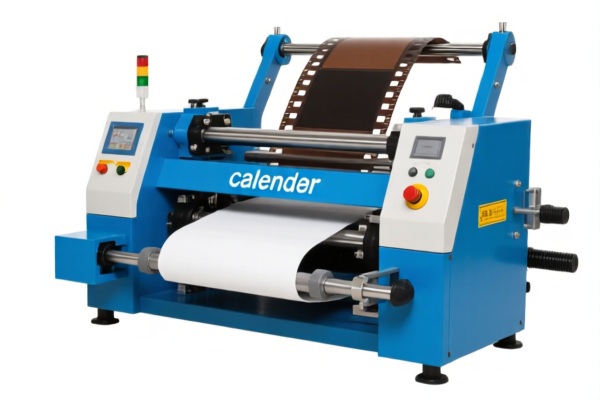
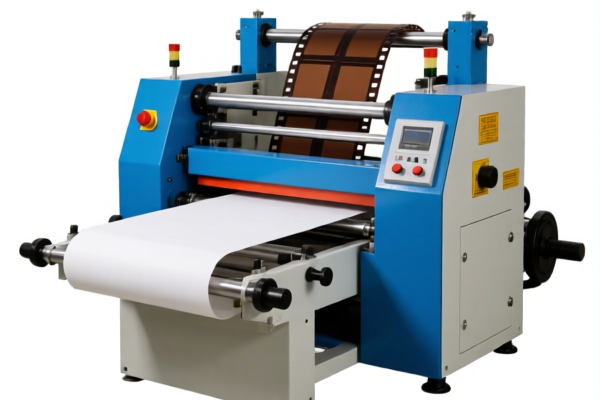


AI Analysis
📸 Film Developing Machine (Photographic Processing Equipment)
🌐 HS Code Reference & Customs Clearance Guide | 2026 Latest Tariff Analysis | Professional通关 Strategy
📌 I. Product Definition & Classification: Do You Really Understand "Film Developers"?
A Film Developing Machine is a mechanical or chemical apparatus designed to automatically process photographic film (negative or positive) through chemical baths (developer, stop bath, fixer, wash, dry) without manual intervention.
In international trade, classification depends heavily on automation level and specific function:
1. Automatic Film Developing Machines:
These are complex electro-mechanical systems that handle the entire chemical process. They are typically classified under Chapter 84 (Nuclear reactors, boilers, machinery and mechanical appliances).
2. Manual or Semi-Automatic Processing Tanks:
If the device is merely a container or a simple mechanical reel system requiring manual operation, it may be classified under Chapter 90 (Optical, photographic, cinematographic, measuring, checking, precision, medical or surgical instruments) or Chapter 84 depending on specific design.
⚠️ Key Distinction Point:
- If the machine automatically feeds, processes, washes, and dries film using chemical circuits → HS 8421.39 or 8479.89.
- If it is a specialized photographic processor (even if automatic) → HS 9006.91 (often debated, but 8421 is more common for large industrial units).
- Critical Note: Small "roll film processors" for consumer use often fall under 9006.91, while large-scale industrial darkroom equipment falls under 8421.39.
📦 II. HS Code Classification Details (2026 Latest Tariff Authority Comparison)
| HS Code | Product Description | Application Scenario | Automation Level |
|---|---|---|---|
8421.39.00.00 |
Other machinery for filtering or purifying liquids or gases | Industrial chemical processing units, large automated film processors | ✅ High (Industrial) |
8479.89.97.00 |
Machines and mechanical appliances having individual functions, n.e.c. in ch. 84 | Specialized automatic processing equipment not elsewhere specified | ✅ Medium-High |
9006.91.00.00 |
Parts, accessories, and attachments of cameras and other photographic apparatus | Small automatic roll-film processors, manual chemical tanks | ✅ Low (Consumer/Studio) |
8479.90.90.00 |
Parts of machines and mechanical appliances having individual functions, n.e.c. in ch. 84 | Spare parts for film processors (pumps, reels, tanks) | ❌ N/A (Parts) |
🔍 Key Reminder:
- Industrial Scale: Large machines processing hundreds of rolls per hour are almost always 8421.39 or 8479.89.
- Studio/Consumer Scale: Small tabletop automatic processors (e.g., for 35mm film) are often 9006.91.
- Avoid Misclassification: Do not classify a chemical processing machine as "camera parts" if it operates independently. The primary function dictates the code.
💰 III. 2026 Latest Tariff Rate Details (Including Additional Taxes)
✅ Applicable Country: United States (US)
✅ Origin: China (CN)
✅ Effective Date: From November 10, 2025 (including subsequent imports)
🎯 1. 9006.91.00.00 – Small Automatic Film Processors / Accessories
| Item | Content |
|---|---|
| Base Rate | 0% (ad valorem) |
| USITC Additional Tax | +25% (Under USITC Footnote 9903.90.00) |
| IEEPA Additional Tax | +10% (Against China/HK products, effective Nov 10, 2025) |
| Total Rate | 45% |
| Tax Calculation | CIF Value × 45% |
| De Minimis Eligibility | ❌ No (deny_de_minimis) |
| Legal Basis Path | IEEPA:9903.01.25 → IEEPA:9903.01.24 → USITC:9006.91.00.00 → FOOTNOTE:9903.90.00 |
📌 Explanation:
- The 25% USITC tax is part of the Section 301 tariffs on specific Chinese goods.
- The 10% IEEPA tax is a new additional levy on Chinese-origin goods.
- Total 45%: This is a high tariff barrier. Importers must budget accordingly.
🎯 2. 8421.39.00.00 – Industrial Chemical Processing Machinery
| Item | Content |
|---|---|
| Base Rate | 0% (ad valorem) |
| USITC Additional Tax | +25% (Under USITC Footnote 9903.84.01) |
| IEEPA Additional Tax | +10% |
| Total Rate | 45% |
| Tax Calculation | CIF Value × 45% |
| De Minimis Eligibility | ❌ No |
| Legal Basis Path | IEEPA:9903.01.25 → IEEPA:9903.01.24 → USITC:8421.39.00.00 → FOOTNOTE:9903.84.01 |
📌 Note:
- Even though this is "machinery," it is still subject to the same additional tariffs.
- Large industrial equipment may qualify for exclusions if listed in specific USITC exclusion lists, but this is rare for general-purpose chemical processors.
🎯 3. 8479.89.97.00 – Other Specialized Machines
| Item | Content |
|---|---|
| Base Rate | 2.5% (ad valorem) |
| USITC Additional Tax | +25% |
| IEEPA Additional Tax | +10% |
| Total Rate | 37.5% |
| Tax Calculation | CIF Value × 37.5% |
| De Minimis Eligibility | ❌ No |
| Legal Basis Path | IEEPA:9903.01.25 → IEEPA:9903.01.24 → USITC:8479.89.97.00 |
📌 Note:
- If the machine does not fit into 8421 or 9006, it may fall here.
- Still subject to 37.5% total tariffs.
🛠️ IV. Customs Clearance Practical Advice (Combat Pitfall Guide)
✅ 1. Required Documentation Checklist (All Mandatory)
| Document | Mandatory | Description |
|---|---|---|
| ✅ Product Specification Sheet | ✔️ | Must detail: Chemical inputs, processing time, capacity (rolls/hour), dimensions. |
| ✅ Circuit/Flow Diagram | ✔️ | Essential to prove if it is an independent machine (Ch 84) or camera accessory (Ch 90). |
| ✅ Product Photos (Clear Label) | ✔️ | Show model number, power rating, and any "Made in China" tags. |
| ✅ Third-Party Test Reports | ✔️ | CE, RoHS, UL (if applicable), and chemical safety compliance. |
| ✅ Commercial Invoice | ✔️ | Must explicitly state: "Automatic Film Developing Machine" or "Photographic Processing Equipment". Avoid vague terms like "Machine". |
| ✅ Certificate of Origin (CO) | ✔️ | If not China-origin, can apply for preferential rates. |
| ✅ Packing List | ✔️ | Detail all parts, reels, tanks, and accessories. |
✅ 2. Declaration Tips (Key Mnemonic)
🔥 “Function Dictates Code, Chemical Flow Defines 84, Camera Accessory Defines 90!”
| Scenario | Correct Declaration | Wrong Practice |
|---|---|---|
| Large industrial film processor | 8421.39.00.00 |
Misclassifying as "Camera Part" → Risk of audit |
| Small tabletop auto-processor | 9006.91.00.00 |
Misclassifying as "Machinery" → May trigger unnecessary scrutiny |
| Film Processor + Spare Reels | Declare Machine + Parts Separately | Bundling parts without distinction → Valuation issues |
| Manual Chemical Tank | 3926.90.98 or 9006.91 |
Misclassifying as "Machine" → Wrong HS Code |
✅ 3. Special Case Handling
| Case | Handling Advice |
|---|---|
| OEM Custom Processors | Provide client order + design specs. Avoid "General Purpose" labels if specialized. |
| Used/Refurbished Machines | Must declare as "Used". May require additional inspection or be prohibited depending on US regulations. |
| Integrated with Scanner | If the machine also scans film, it may be classified as a Scanner (8471) or Photographic Apparatus (9006). Complex classification – seek pre-ruling. |
| Chemical Residue | Ensure no hazardous chemical residue remains in the machine for transport. Provide MSDS if chemicals are shipped separately. |
🌍 V. Global Major Market Clearance Comparison (2026 Latest)
| Country/Region | Recommended HS Code | Tariff | Certification Required | Notes |
|---|---|---|---|---|
| 🇺🇸 USA | 9006.91.00.00 or 8421.39 |
45% (China) | FCC (if electronic), UL | High tariff burden. Pre-ruling recommended. |
| 🇨🇳 China | 9006.91.00.00 |
5% | CCC (if electrical) | Low tariff, easy entry. |
| 🇪🇺 EU | 9006.91.00.00 |
0% (Most Favored Nation) | CE, RoHS | No additional tariffs. Standard compliance. |
| 🇬🇧 UK | 9006.91.00.00 |
0% | UKCA, RoHS | Post-Brexit, similar to EU standards. |
| 🇦🇺 Australia | 9006.91.00.00 |
5% | RCM | Moderate tariff. |
| 🇯🇵 Japan | 9006.91.00.00 |
0% | PSE | Zero tariff for standard processors. |
📌 Conclusion:
- USA is the only major market with 45% effective tariff for Chinese-made film developing machines.
- EU/UK/Asia offer significantly lower barriers (0-5%).
- Consider supply chain diversification (Vietnam, Malaysia) to mitigate US tariffs.
📌 VI. Common Errors & Pitfall Guide (Lessons Learned)
❌ Error 1: Classifying a chemical processing machine as a "Camera Accessory" to avoid duties.
👉 Consequence: If deemed incorrect by CBP, back duties + penalties + seizure risk.
👉 Reality: Machines are often Ch 84, not Ch 90.
❌ Error 2: Declaring as "General Machinery" without specifying function.
👉 Consequence: Customs may assign a higher general tariff or request extensive documentation.
👉 Fix: Be specific: "Automatic 35mm Film Processor".
❌ Error 3: Ignoring IEEPA Additional Tax.
👉 Consequence: Underpayment by 10%.
👉 Fix: Include IEEPA 10% in cost calculation for all China-origin goods.
❌ Error 4: Shipping chemicals with the machine.
👉 Consequence: Hazmat classification, air freight restrictions, or refusal of entry.
👉 Fix: Ship chemicals separately with proper UN packaging and MSDS.
✅ Correct Practice:
"Automatic Film Developing Machine, 35mm/120mm, Chemical Processing, 220V, Model XYZ, CE/RoHS Certified"
🎯 VII. Conclusion: Precise Classification Saves Cost!
🎯 Remember the Mnemonic:
🔹 “Function is King: Chemical Processing = 84, Camera Accessory = 90”
🔹 “45% Tax for China to USA, Zero for EU, Think Twice!”
🔹 “Pre-ruling is Cheap, Audit Penalty is Expensive!”
📌 Pro Tip:
If your film developing machine is originally from Vietnam, Mexico, or Malaysia, you can apply for IEEPA Exemption, reducing the tariff to 0-5%.
Strongly recommended: Apply for an Advance Ruling from US CBP before shipping to confirm the HS Code.
📣 Immediate Action:
📞 Contact a Licensed Customs Broker + Provide Product Specs + Apply for HS Code Advance Ruling
🚀 Let your film processing equipment clear customs smoothly, maximize profit, and scale globally!
✨ Professional Customs Clearance Starts with Accurate Classification!
💼 Every Dollar of Cost is Worth Calculating Precisely!
Customer Reviews
About HS Code Classification
The Harmonized System (HS) is an internationally standardized nomenclature developed by the World Customs Organization (WCO) to classify traded products. Over 200 countries use the HS system as the basis for customs tariffs, trade statistics, and import/export regulations.
Each HS code follows a hierarchical structure:
- Chapter (2 digits) — Broad category of goods (e.g., Chapter 84: Machinery and Mechanical Appliances)
- Heading (4 digits) — More specific grouping within the chapter
- Subheading (6 digits) — Internationally standardized breakdown, used by all WCO member countries
- National subdivisions (8-10 digits) — Country-specific extensions for further classification, such as US HTSUS 10-digit codes
Correct HS code classification is essential for smooth customs clearance, accurate duty payment, and compliance with trade regulations. Misclassification can lead to customs delays, overpayment of duties, or penalties.
When importing from CN to US, the applicable tariff rates may include:
- Most-Favored-Nation (MFN) rate — The standard duty rate applied to WTO members
- General rate — Applied to countries without trade agreements
- Trade remedy duties — Additional tariffs such as Section 301 (anti-dumping), Section 232 (national security), or countervailing duties
The information provided on this page is for reference purposes only. For official classification, please consult with your local customs authority or a licensed customs broker.