Film Encapsulation
CN → US| HS Code | Tariff Rate | Origin | Destination | Doc |
|---|---|---|---|---|
| 3921905010 | 39.8% | CN | US | Official Doc |
| 3921904010 | 39.2% | CN | US | Official Doc |
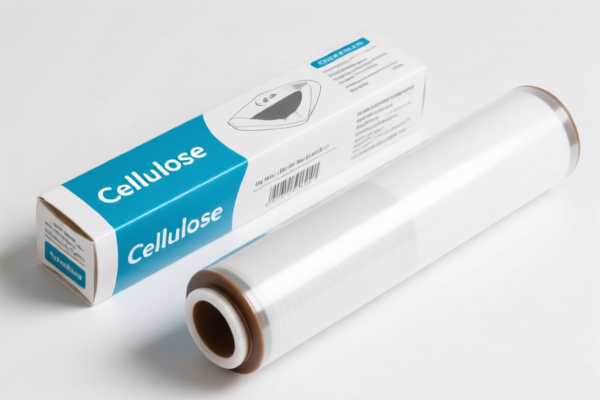
Product Images



AI Analysis
📦 Film Encapsulation (Plastic Sheets, Films, Foils & Strips)
🌐 HS Code Reference & Customs Clearance Guide | 2026 Latest Tariff Analysis | Professional Entry Strategy
📌 I. Product Definition & Classification: What Exactly is "Film Encapsulation"?
"Film Encapsulation" generally refers to plastic products in the form of plates, sheets, film, foil, or strips that are used for protective, decorative, or structural purposes. In international trade, the classification depends heavily on material composition and reinforcement layers.
Based on the provided data, these products fall under Chapter 39 (Plastics and Articles Thereof), specifically heading 3921. The two key distinctions are: 1. High-Pressure Decorative Laminates: Rigid, paper-reinforced surfaces used for furniture, countertops, and walls. 2. Flexible Reinforced Films: Flexible sheets combined with paper, used for packaging, signage, or protective covers.
⚠️ Key Distinction Point:
- If the product is rigid, high-pressure, paper-reinforced, and decorative → It is classified as "High pressure paper reinforced decorative laminates".
- If the product is flexible, paper-reinforced, and used for general purposes → It is classified as "Flexible Reinforced with paper".
📦 II. HS Code Classification Details (Based on Provided Data)
| HS Code | Product Description | Key Characteristics | Primary Use Case |
|---|---|---|---|
3921.90.50.10 |
High pressure paper reinforced decorative laminates | Rigid, high-pressure formed, paper-reinforced, decorative surface | Furniture veneers, countertop surfaces, wall cladding, decorative panels |
3921.90.40.10 |
Flexible Reinforced with paper | Flexible sheet, reinforced with paper, not high-pressure | Packaging films, flexible signage, protective wraps, composite paper-plastic sheets |
🔍 Critical Reminder:
- Do not confuse rigid decorative laminates with flexible films. The physical properties (rigidity vs. flexibility) and manufacturing process (high-pressure vs. standard lamination) dictate the HS code.
- Both codes include "Other plates, sheets, film, foil and strip, of plastics" as the parent category, but the sub-classification depends on the reinforcement and pressure treatment.
💰 III. 2026 Latest Tariff Rate Breakdown (Including Surcharges & Policy Add-ons)
✅ Applicable Country: United States (US)
✅ Country of Origin: China (CN)
✅ Effective Time: Current rates apply (as per data provided)
🎯 1. 3921.90.50.10 —— High Pressure Paper Reinforced Decorative Laminates
| Item | Content |
|---|---|
| Base Tariff | 4.8% (Ad Valorem) |
| Additional Tariff (Section 301) | +25.0% |
| Total Tariff Rate | 29.8% |
| Tax Calculation | CIF Value × 29.8% |
| De Minimis Exemption | ❌ Not Eligible (High tariffs generally exclude de minimis benefits for China-origin goods under Section 301) |
| Legal Basis Path | HS 3921.90.50.10 → Section 301 Footnote → China Origin Surcharge |
📌 Explanation:
- The 4.8% base tariff is the standard Most Favored Nation (MFN) rate for other plastic plates/sheets.
- The 25.0% additional tariff is imposed under Section 301 of the Trade Act of 1974 on specific Chinese goods, including certain plastics and laminates.
- Total of 29.8% is significant and must be factored into costings.
🎯 2. 3921.90.40.10 —— Flexible Reinforced with Paper
| Item | Content |
|---|---|
| Base Tariff | 4.2% (Ad Valorem) |
| Additional Tariff (Section 301) | +25.0% |
| Total Tariff Rate | 29.2% |
| Tax Calculation | CIF Value × 29.2% |
| De Minimis Exemption | ❌ Not Eligible |
| Legal Basis Path | HS 3921.90.40.10 → Section 301 Footnote → China Origin Surcharge |
📌 Explanation:
- The 4.2% base tariff is slightly lower than the rigid laminate due to different material processing.
- The 25.0% additional tariff is the same as above, applied uniformly to many Chinese plastic products.
- Total of 29.2% is still high, though slightly more favorable than the decorative laminate category.
🛠️ IV. Customs Clearance Practical Advice (Real-World Pitfall Avoidance)
✅ 1. Required Documentation Checklist (Non-Negotiable)
| Document | Must Provide? | Description |
|---|---|---|
| ✅ Product Specification Sheet | ✔️ | Detail material composition (plastic type, paper type), thickness, flexibility, and pressure treatment. |
| ✅ Photographs | ✔️ | Clear images showing the product’s form (rigid sheet vs. flexible roll/film). |
| ✅ Commercial Invoice | ✔️ | Must explicitly describe the product as "High Pressure Decorative Laminate" or "Flexible Reinforced Film" — do not use generic terms like "Plastic Sheet". |
| ✅ Packing List | ✔️ | Show dimensions, weight, and packaging type. |
| ✅ Country of Origin Certificate | ✔️ | Critical for determining Section 301 applicability. |
| ✅ Third-Party Test Report | ✔️ | If claiming "High Pressure" or "Decorative," lab reports confirming pressure levels (e.g., 1000+ psi) may be requested. |
✅ 2. Declaration Tips (Key Mantra)
🔥 "Rigid Decorative vs. Flexible Reinforced: Description Determines Code!"
| Scenario | Correct Declaration | Wrong Declaration | Consequence |
|---|---|---|---|
| Rigid, hard, used for countertops | 3921.90.50.10 (High Pressure Decorative) |
"Plastic Sheet" or "Film" | Misclassification → Potential audit, penalties, or retroactive duties |
| Flexible, bendable, used for packaging | 3921.90.40.10 (Flexible Reinforced) |
"Decorative Laminate" | Overpayment of duty (29.8% vs 29.2%) or clearance delay |
| Plastic without paper reinforcement | Not in provided data | Attempting to fit into 3921.90.50.10 |
Rejected by Customs |
✅ 3. Special Cases & Handling
| Case | Handling Advice |
|---|---|
| Mixed Shipments (Rigid + Flexible) | Split the shipment or declare separately. Do not combine under one HS Code. Mixed declarations lead to clearance delays. |
| Sample Imports | Even samples are subject to the 29.8% / 29.2% duty. Do not assume "samples" are duty-free for China-origin goods under Section 301. |
| Value Declaration | Ensure the declared value includes all costs (CIF). Under-declaring value to reduce duty is illegal and leads to severe penalties. |
| Labeling | Product labels should clearly indicate "Plastic Laminate" or "Plastic Film" to avoid confusion with natural materials. |
🌍 V. Global Market Comparison (2026 Update)
| Country/Region | Recommended HS Code | Tariff Rate (China Origin) | Notes |
|---|---|---|---|
| 🇺🇸 USA | 3921.90.50.10 / 3921.90.40.10 |
29.8% / 29.2% | High Section 301 tariffs apply. |
| 🇨🇳 China | 3921.90.50.10 / 3921.90.40.10 |
Varies (Import Duty) | Check current Chinese import tariffs. |
| 🇪🇺 EU | 3921.90 (General) |
~4-6.5% | No Section 301 equivalent, but anti-dumping may apply. |
| 🇬🇧 UK | 3921.90 (General) |
~4-6.5% | Post-Brexit tariffs apply. |
📌 Conclusion:
- The USA is the most challenging market for these products due to the 25% Section 301 surcharge.
- Accurate classification between "High Pressure Decorative" and "Flexible Reinforced" is crucial to ensure correct duty assessment.
- No major exemptions are currently available for China-origin plastic laminates/films entering the US.
📌 VI. Common Errors & Pitfalls (Lessons Learned)
❌ Error 1: Describing "High Pressure Laminates" as "Plastic Film"
👉 Consequence: Customs may reclassify to a higher tariff or reject the entry due to material mismatch.
👉 Fix: Always specify "Decorative Laminate" or "High Pressure Sheet."
❌ Error 2: Ignoring the "Paper Reinforcement" aspect
👉 Consequence: If the product is paper-reinforced, it must be classified under the specific subheadings for paper-reinforced plastics. Generic plastic codes may be rejected.
👉 Fix: Highlight "Reinforced with Paper" in the product description.
❌ Error 3: Assuming All Plastics Are the Same Tariff
👉 Consequence: 3921.90.50.10 (29.8%) vs 3921.90.40.10 (29.2%) — a 0.6% difference matters for large volumes.
👉 Fix: Get a Pre-Ruling (Ruling Letter) from US Customs (CBP) if unsure.
🎯 VII. Conclusion: Precise Classification Saves Money
🎯 Remember the Mantra:
🔹 "Rigid & Decorative → 29.8% | Flexible & Reinforced → 29.2%"
🔹 "Section 301 is Always On for China Plastics"
🔹 "Describe Clearly: 'High Pressure' vs. 'Flexible' Saves Time"
📌 Pro Tip:
If your shipment is large, consider applying for a CBP Binding Ruling before shipment. This provides legal certainty on the HS code and tariff rate, preventing unexpected costs or delays.
📣 Immediate Action:
📞 Consult a Customs Broker + Provide Product Samples/Photos + Verify Material Composition
🚀 Ensure Accurate Declaration → Smooth Clearance → Cost Control!
✨ Professional Clearance Starts with Precise Classification!
💼 Every Percent of Duty Counts!
Customer Reviews
About HS Code Classification
The Harmonized System (HS) is an internationally standardized nomenclature developed by the World Customs Organization (WCO) to classify traded products. Over 200 countries use the HS system as the basis for customs tariffs, trade statistics, and import/export regulations.
Each HS code follows a hierarchical structure:
- Chapter (2 digits) — Broad category of goods (e.g., Chapter 84: Machinery and Mechanical Appliances)
- Heading (4 digits) — More specific grouping within the chapter
- Subheading (6 digits) — Internationally standardized breakdown, used by all WCO member countries
- National subdivisions (8-10 digits) — Country-specific extensions for further classification, such as US HTSUS 10-digit codes
Correct HS code classification is essential for smooth customs clearance, accurate duty payment, and compliance with trade regulations. Misclassification can lead to customs delays, overpayment of duties, or penalties.
When importing from CN to US, the applicable tariff rates may include:
- Most-Favored-Nation (MFN) rate — The standard duty rate applied to WTO members
- General rate — Applied to countries without trade agreements
- Trade remedy duties — Additional tariffs such as Section 301 (anti-dumping), Section 232 (national security), or countervailing duties
The information provided on this page is for reference purposes only. For official classification, please consult with your local customs authority or a licensed customs broker.