Film Negative Storage
CN → US| HS Code | Tariff Rate | Origin | Destination | Doc |
|---|---|---|---|---|
| 3926908300 | 40.3% | CN | US | Official Doc |
| 3926909989 | 22.8% | CN | US | Official Doc |
| 9010908500 | 35.0% | CN | US | Official Doc |
| 9010506000 | 35.0% | CN | US | Official Doc |
| 4820102010 | 35.0% | CN | US | Official Doc |
| 4820300020 | 35.0% | CN | US | Official Doc |
Product Images
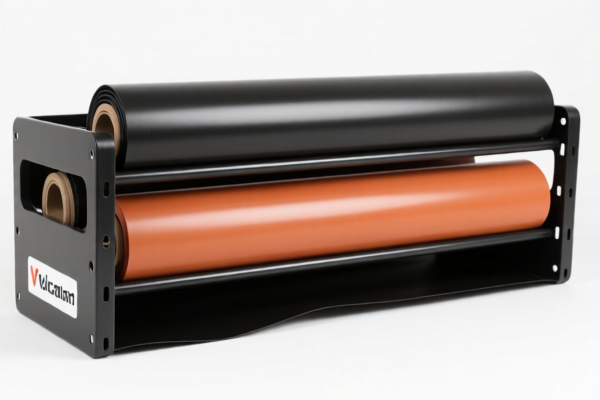


AI Analysis
🎞️ Film Negative Storage
🌐 HS Code Reference & Customs Clearance Guide | 2026 Latest Tariff Analysis | Professional Clearance Strategy
📌 I. Product Definition & Classification: Do You Really Understand "Film Negative Storage"?
"Film Negative Storage" is not a single, standardized HS Code term. In international trade, it typically refers to containers, cases, or archival boxes designed specifically to store photographic film negatives (analog film). These items are usually made of plastics, paperboard, metal, or wood.
Crucial Distinction for Customs: The HS Code classification depends entirely on the material composition and the primary function of the storage item:
- Plastic Cases/Boxes: If the storage container is made of plastics (e.g., hard plastic canisters, slide trays, archival plastic sleeves), it generally falls under Chapter 39.
- Paper/Cardboard Boxes: If made of paper or paperboard, it may fall under Chapter 48.
- Photographic Accessories: If it is a specialized accessory for a photographic camera or darkroom equipment, it might fall under Chapter 90.
⚠️ Key Differentiator:
- If it is a generic plastic box used for storage → HS 3926.90
- If it is a specialized photographic accessory (part/accessory of camera/lab equipment) → HS 9010.90 or 9006.91
- If it is paper-based → HS 4820.10 or 4820.30
📦 II. HS Code Classification Details (Based on Provided Data)
The following HS Codes are derived strictly from the provided <DATA> set. Note that "Film Negative Storage" items often map to Plastic Articles or Stationery/Book-like articles depending on design.
| HS Code | Product Description | Material | Applicable Scenario |
|---|---|---|---|
3926.90.83.00 |
Other articles of plastics...: Empty cartridges and cassettes for typewriter and machine ribbons | Plastics | Generic plastic containers, though specifically listed for ribbon cartridges, often used as catch-all for small plastic storage items if no specific "film case" code exists in local tariff. |
3926.90.99.89 |
Other articles of plastics and articles of other materials...: Other | Plastics / Other | Most Common for Plastic Film Cases. Generic plastic storage boxes, slide trays, or archival sleeves not specifically mentioned elsewhere. |
4820.10.20.10 |
Registers, account books...: Diaries, notebooks and address books, bound... | Paper/Paperboard | Paper-based storage albums, bound film scrapbooks, or diary-style negative storage books. |
4820.30.00.20 |
...: Binders (other than book covers), folders and file covers...: Looseleaf binders | Paper/Paperboard | Looseleaf binders with plastic sleeves (poly pockets) used for storing negatives in a binder format. |
9010.90.85.00 |
Parts and accessories of photographic laboratory apparatus... | Plastic/Metal | Specialized accessories for photographic lab equipment (e.g., specialized developer trays, specialized film holders for lab machines). |
9010.50.60.00 |
Other apparatus and equipment for photographic laboratories... | Plastic/Metal | Specialized photographic lab equipment used for processing/storing negatives (less likely for consumer storage, more for industrial/lab). |
🔍 Important Note:
- Consumer-grade plastic film cans or archival plastic boxes are most commonly classified under3926.90.99.89(Other plastic articles) because they are general-purpose storage containers.
- Binder-style negative storage with plastic sleeves is often classified under4820.30.00.20(Looseleaf binders) because the primary function is binding/organizing sheets.
- Specialized lab equipment parts go under9010.
💰 III. 2026 Latest Tariff Rate Details (Including Surcharge)
✅ Applicable Country: United States (US)
✅ Origin: China (CN)
✅ Effective Date: 2025/2026 (Based on Provided Data)
🎯 1. 3926.90.83.00 — Plastic Articles (Empty Cartridges/Cassettes)
| Item | Detail |
|---|---|
| Base Tariff | 0.0% |
| Additional Tariff | 0.0% |
| Total Tax Rate | 0.0% |
| Tax Detail | 基础关税: 0.0%, 加征关税: 0.0% |
| Legal Basis | None specified in data for surcharge. |
📌 Interpretation:
- This item is tax-exempt from both base and additional tariffs.
- If your "film negative storage" is classified as "empty cartridges" or similar plastic articles under this specific subheading, no duty applies.
🎯 2. 3926.90.99.89 — Other Plastic Articles (Generic Storage Boxes)
| Item | Detail |
|---|---|
| Base Tariff | 5.3% |
| Additional Tariff | 7.5% |
| Total Tax Rate | 12.8% |
| Tax Detail | 基础关税: 5.3%, 加征关税: 7.5% |
| Calculation | CIF Value × 12.8% |
📌 Interpretation:
- This is the most likely classification for generic plastic film storage boxes, slide trays, or archival plastic sleeves.
- Total Duty: 12.8%. This is a moderate duty rate.
🎯 3. 4820.10.20.10 — Diaries/Notebooks (Paper-Based Storage)
| Item | Detail |
|---|---|
| Base Tariff | 0.0% |
| Additional Tariff | 25.0% |
| Total Tax Rate | 25.0% |
| Tax Detail | 基础关税: 0.0%, 加征关税: 25.0% |
| Legal Basis | Likely under USITC Footnote for Chinese goods. |
📌 Interpretation:
- If your product is a bound album or diary-style book for negatives, this code applies.
- High Duty: 25.0%. This is significantly higher than plastic alternatives.
🎯 4. 4820.30.00.20 — Looseleaf Binders (Paper + Plastic Sleeves)
| Item | Detail |
|---|---|
| Base Tariff | 0.0% |
| Additional Tariff | 25.0% |
| Total Tax Rate | 25.0% |
| Tax Detail | 基础关税: 0.0%, 加征关税: 25.0% |
📌 Interpretation:
- Common for binder-and-pocket style negative storage.
- High Duty: 25.0%. Same as above.
🎯 5. 9010.90.85.00 — Parts/Accessories for Photographic Lab Equipment
| Item | Detail |
|---|---|
| Base Tariff | 0.0% |
| Additional Tariff | 25.0% |
| Total Tax Rate | 25.0% |
| Tax Detail | 基础关税: 0.0%, 加征关税: 25.0% |
📌 Interpretation:
- Only applies if the item is a specialized accessory for laboratory equipment (e.g., a specific film holder for a lab processor).
- High Duty: 25.0%.
🎯 6. 9010.50.60.00 — Other Photographic Lab Apparatus
| Item | Detail |
|---|---|
| Base Tariff | 0.0% |
| Additional Tariff | 25.0% |
| Total Tax Rate | 25.0% |
| Tax Detail | 基础关税: 0.0%, 加征关税: 25.0% |
📌 Interpretation:
- Likely not applicable for simple storage cases. Reserved for machines/equipment.
🛠️ IV. Customs Clearance Practical Advice (Avoiding Pitfalls)
✅ 1. Material Declaration is Critical
| Material | Likely HS Code | Duty Rate | Recommendation |
|---|---|---|---|
| Pure Plastic (Boxes, Canisters) | 3926.90.99.89 |
12.8% | ✅ Best Option for low duty. Declare as "Plastic Storage Containers for Photographs." |
| Paper/Cardboard (Books, Binders) | 4820.10.20.10 or 4820.30.00.20 |
25.0% | ❌ High duty. Avoid if possible unless product is uniquely paper-based. |
| Mixed Material | Depends on Essential Character | Variable | If >50% plastic by value/weight, argue for HS 3926.90.99.89 (12.8%). |
📌 Key Tip:
- Plastic storage (12.8%) is significantly cheaper than paper-based storage (25.0%).
- If your product is a binder with plastic sleeves, customs may classify it as paper (25%) because the binder is the primary structure.
- Strategy: If possible, design the storage as all-plastic (e.g., plastic slide boxes, plastic canisters) to qualify for the 12.8% rate.
✅ 2. Product Naming & Description Tips
| ❌ Incorrect Description | ✅ Correct Description | Why? |
|---|---|---|
| "Film Negative Storage" (Vague) | "Plastic Containers for Photographic Film" | Clear material → HS 3926.90.99.89 |
| "Negative Album" | "Looseleaf Binder for Photographs" | Clear function → HS 4820.30.00.20 |
| "Camera Accessory" | "Plastic Slide Tray for Film Storage" | Avoids confusion with camera parts (HS 9010) |
🔥 Golden Rule:
"Material First, Function Second."
Always lead with the material (e.g., "Plastic Storage Case") to encourage classification under Chapter 39 (12.8%) rather than Chapter 48 (25%).
✅ 3. Special Considerations
| Scenario | Handling Advice |
|---|---|
| Plastic Box with Paper Label | Still Plastic (12.8%). The label is incidental. |
| Binder with Plastic Sleeves | Risk of 25% duty (HS 4820). Argue for 12.8% only if plastic is dominant, but risk is high. |
| Metal Canisters | Not in provided data. Likely HS 7323 or 7616. Consult general tariff. |
| Wooden Boxes | Not in provided data. Likely HS 4415 or 4421. |
🌍 V. Global Market Comparison (2026)
| Country | Likely HS Code (Plastic) | Duty Rate | Notes |
|---|---|---|---|
| 🇺🇸 USA | 3926.90.99.89 |
12.8% | Base 5.3% + Surcharge 7.5% |
| 🇨🇳 China | 3926.90.90.00 (Est.) |
~10-15% | Check local tariff schedule. |
| 🇪🇺 EU | 3926.90.97 |
~6.5% | No additional surcharge typically. |
| 🇯🇵 Japan | 3926.90.90 |
~6% | No additional surcharge. |
📌 Conclusion:
- The US market has a unique 7.5% surcharge on plastic articles from China, making the total 12.8%.
- Paper-based storage (25%) is disproportionately taxed in the US due to trade policies.
📌 VI. Common Mistakes & Pitfalls
❌ Mistake 1: Declaring plastic storage as "Photographic Accessory" (HS 9010)
👉 Result: 25% duty. Unnecessary high cost.
❌ Mistake 2: Declaring a plastic box as "Stationery" (HS 4820)
👉 Result: 25% duty. Misclassification.
❌ Mistake 3: Using vague descriptions like "Film Box"
👉 Result: Customs may choose the highest duty rate or request additional documentation.
✅ Correct Approach:
"Plastic Storage Containers for Photographic Film, Unbound, No Electronics, Model XYZ"
🎯 VII. Summary & Recommendations
🎯 Key Takeaway:
🔹 Plastic Storage = 12.8% Duty (
3926.90.99.89)
🔹 Paper/Book Storage = 25.0% Duty (4820.10.20.10/4820.30.00.20)
🔹 Lab Equipment Parts = 25.0% Duty (9010.90.85.00)
📌 Final Advice:
1. Design for Duty: Use plastic construction for storage containers to benefit from the 12.8% rate.
2. Declare Clearly: Use "Plastic Storage Containers" in commercial invoices.
3. Avoid Binders: If possible, avoid binder-style storage for negatives in the US market due to the 25% duty.
4. Pre-Ruling: Consider applying for a Customs Ruling from US CBP to confirm the HS Code for your specific product design.
📣 Immediate Action:
📞 Review your product design. If it's a plastic box, declare it as HS 3926.90.99.89.
📄 Ensure your invoice says "Plastic Storage Containers" and not "Album" or "Binder."
🚀 Save 12.2% in duties by choosing the right material and declaration!
✨ Precise Classification, Lower Duties, Smoother Clearance!
💼 Don't let a 12% difference kill your profit margin.
Customer Reviews
About HS Code Classification
The Harmonized System (HS) is an internationally standardized nomenclature developed by the World Customs Organization (WCO) to classify traded products. Over 200 countries use the HS system as the basis for customs tariffs, trade statistics, and import/export regulations.
Each HS code follows a hierarchical structure:
- Chapter (2 digits) — Broad category of goods (e.g., Chapter 84: Machinery and Mechanical Appliances)
- Heading (4 digits) — More specific grouping within the chapter
- Subheading (6 digits) — Internationally standardized breakdown, used by all WCO member countries
- National subdivisions (8-10 digits) — Country-specific extensions for further classification, such as US HTSUS 10-digit codes
Correct HS code classification is essential for smooth customs clearance, accurate duty payment, and compliance with trade regulations. Misclassification can lead to customs delays, overpayment of duties, or penalties.
When importing from CN to US, the applicable tariff rates may include:
- Most-Favored-Nation (MFN) rate — The standard duty rate applied to WTO members
- General rate — Applied to countries without trade agreements
- Trade remedy duties — Additional tariffs such as Section 301 (anti-dumping), Section 232 (national security), or countervailing duties
The information provided on this page is for reference purposes only. For official classification, please consult with your local customs authority or a licensed customs broker.