Film Positive Process
CN → US| HS Code | Tariff Rate | Origin | Destination | Doc |
|---|---|---|---|---|
| 3702440130 | 38.7% | CN | US | Official Doc |
| 3702320160 | 38.7% | CN | US | Official Doc |
| 3701996030 | 35.0% | CN | US | Official Doc |
| 3701996060 | 35.0% | CN | US | Official Doc |
| 3703103090 | 38.7% | CN | US | Official Doc |
| 3703903090 | 38.7% | CN | US | Official Doc |
Product Images

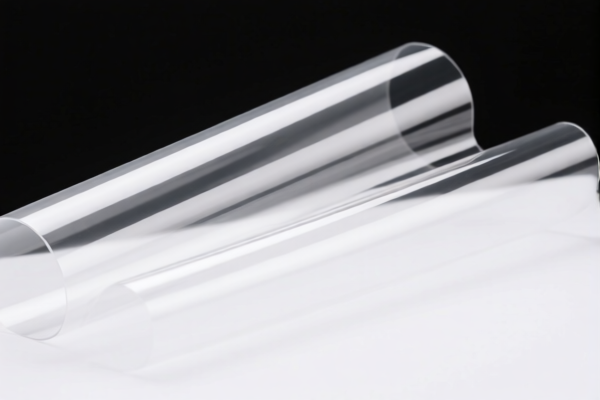

AI Analysis
🎞️ Film Positive Process: The Blueprint for Precision Printing & Imaging
🌐 What is the Film Positive Process?
Definition: The Film Positive (also known as a Positive Master) is a critical intermediate step in traditional offset printing, screen printing, and photolithography. It is a transparent film that contains a solid black image on a clear background, which is used to expose light-sensitive plates or emulsions.
Unlike a Film Negative (black background, clear image), a Film Positive is designed to block light where the image should appear and let light pass where it should not. This "positive" orientation matches the final printed output directly.
💡 Analogy: Think of it as a "stencil" made of light. Where the film is black, light is blocked (no exposure). Where the film is clear, light passes (exposure occurs).
⚙️ How the Process Works: Step-by-Step
1. Image Generation 🖥️
The design is created digitally (using Adobe Illustrator, Photoshop, or specialized Pre-press software). - Crucial Setting: The output file must be set to "Positive" (not inverted). - Resolution: Typically 2400–4800 DPI for high-quality printing to ensure sharp edges.
2. Output on Film 📄
The digital file is sent to a Laser Imagesetter (RIPE/CTP) or a high-resolution inkjet printer. - Material: Special photographic polyester film (sensitive to UV light). - Result: The printer deposits opaque black ink (or silver halide) in the shape of the design, leaving the background transparent. - Key Output: This is your Film Positive.
3. Exposure (The Critical Step) ☀️
The Film Positive is placed directly onto a light-sensitive surface: - Option A: Offset Plate (for printing presses). - Option B: Screen Mesh (for silk screening). - Option C: Photographic Emulsion (for graphic arts).
The Physics: - Light passes through clear areas → The plate/emulsion hardens (or cures). - Light is blocked by black areas → The plate/emulsion remains soft (or dissolves).
4. Development 🧪
- The exposed material is washed with a chemical developer.
- Result: The "soft" areas (the image) are washed away, leaving the "hard" areas.
- Final State: The resulting plate/screen has the image in relief (raised for offset) or openings (for screen printing), exactly matching the Film Positive.
🆚 Film Positive vs. Film Negative
| Feature | Film Positive 🟫 | Film Negative 🌑 |
|---|---|---|
| Image Appearance | Black Image on Clear Background | Clear Image on Black Background |
| Light Transmission | Blocks light on the image | Blocks light on the background |
| Primary Use | Direct exposure for Offset, Screen, Photo | Inverted printing (e.g., old negatives), Contact printing |
| Final Output | Matches the final printed page 1:1 | Must be inverted to print |
| Common Application | Modern Pre-press, Graphic Arts (HS 3703) | Traditional Photography, X-Ray |
⚠️ Critical Warning: Using a Negative when a Positive is required will result in a reversed image (mirror image or inverse colors), ruining the entire print run!
📦 Relevance to HS Code & Classification (Based on Your Data)
The Film Positive Process relies heavily on sensitized films and papers. Based on your provided data, these materials fall under HS Chapter 37 (Photographic).
🔍 Key HS Codes for Film Positive Materials
| HS Code | Product Description | Tax Details (Base/Additional) | Application Context |
|---|---|---|---|
| 3701.99.60.30 | Graphic Arts Film (Flat, sensitized, unexposed, non-paper) | Base: 0.0% / Add: 25.0% Total: 25.0% |
Flat Graphic Arts Film Used for making positives for offset plates or screen printing. |
| 3701.99.60.60 | Other Graphic Arts Film (Flat, sensitized, unexposed, non-paper) | Base: 0.0% / Add: 25.0% Total: 25.0% |
Other flat films for graphic arts, including film positives. |
| 3702.44.01.30 | Graphic Arts Film (Rolls, >105mm, non-perforated) | Base: 0.0% / Add: 0.0% Total: 0.0% |
Rolls of sensitized film for large-format positives. |
| 3703.10.30.90 | Silver Halide Papers (Rolls, >610mm, line reproduction) | Base: 0.0% / Add: 0.0% Total: 0.0% |
Large format paper positives for line reproduction. |
| 3703.90.30.90 | Silver Halide Papers (Other, line reproduction) | Base: 0.0% / Add: 0.0% Total: 0.0% |
Other sensitized paper positives. |
📌 Tax Insight: - Flat Graphic Arts Film (3701.99...): Attracts a 25% additional tariff (likely under US Section 301 or similar trade measures). - Roll Film & Large Paper (3702 & 3703): Generally 0% total tax, making them cost-effective for large-scale production lines.
🛠️ Clearance & Import Strategy: Pro Tips
✅ 1. Classification Accuracy is Mandatory
- Do NOT classify "Graphic Arts Film" (3701) if you are importing Rolls (3702) or Paper (3703).
- Why? The 25% tariff on flat film (3701.99.60.30) is a massive cost difference compared to 0% for rolls.
- Action: Verify if your "Film Positive" is pre-cut to size (Flat) or supplied in rolls (Rolls). If rolls are cut to size by the importer, they may still qualify for the 0% roll rate depending on local customs rulings.
✅ 2. Documentation Requirements
To clear customs for these items, you must prove they are "Sensitized, Unexposed" and for "Graphic Arts": - Product Specification Sheet: Must state "Sensitized to UV light, Unexposed, Polyester/Paper Base." - Technical Drawing: Show dimensions (width >610mm for paper/roll classification). - Certificate of Origin: Crucial for avoiding or confirming the 25% additional tax (if applicable to your country).
✅ 3. Packaging & Handling
- Light Protection: These films are light-sensitive. Packaging must be opaque or UV-protected (e.g., black poly bags + opaque cartons).
- Customs Inspection: If inspected, customs officers may try to expose the film to check sensitivity. Ensure they use safelights (red/dark orange) only, or request a sealed inspection.
🚨 Common Pitfalls in the Film Positive Workflow
| ❌ Pitfall | ✅ Solution |
|---|---|
| Inverted File | Double-check RIP software settings: Output "Positive", not "Negative". |
| Wrong Film Base | Use Polyester (dimensionally stable) for offset; avoid paper for high-precision work. |
| Harsh Processing | Over-developing the plate/screen destroys fine detail from the film. |
| Tariff Confusion | Mixing "Flat" vs. "Roll" classification leads to unexpected 25% duties. |
🎯 Conclusion
The Film Positive Process remains the gold standard for high-fidelity printing in offset and screen industries. By understanding the exact physical nature of the film (transparent image on black background) and the correct HS Code (paying attention to the 25% vs. 0% tariff distinction between flat and roll formats), businesses can streamline their supply chain and avoid costly customs errors.
Final Tip: For large-volume production, sourcing Roll Film (HS 3702.44.01.30) or Large Format Paper (HS 3703.10.30.90) is often the most tax-efficient strategy compared to pre-cut Flat Graphic Arts Film (HS 3701.99.60.30) which carries the heavy 25% surcharge.
✨ Master the Light, Master the Print! ✨
Customer Reviews
About HS Code Classification
The Harmonized System (HS) is an internationally standardized nomenclature developed by the World Customs Organization (WCO) to classify traded products. Over 200 countries use the HS system as the basis for customs tariffs, trade statistics, and import/export regulations.
Each HS code follows a hierarchical structure:
- Chapter (2 digits) — Broad category of goods (e.g., Chapter 84: Machinery and Mechanical Appliances)
- Heading (4 digits) — More specific grouping within the chapter
- Subheading (6 digits) — Internationally standardized breakdown, used by all WCO member countries
- National subdivisions (8-10 digits) — Country-specific extensions for further classification, such as US HTSUS 10-digit codes
Correct HS code classification is essential for smooth customs clearance, accurate duty payment, and compliance with trade regulations. Misclassification can lead to customs delays, overpayment of duties, or penalties.
When importing from CN to US, the applicable tariff rates may include:
- Most-Favored-Nation (MFN) rate — The standard duty rate applied to WTO members
- General rate — Applied to countries without trade agreements
- Trade remedy duties — Additional tariffs such as Section 301 (anti-dumping), Section 232 (national security), or countervailing duties
The information provided on this page is for reference purposes only. For official classification, please consult with your local customs authority or a licensed customs broker.