Film Printer
CN → US| HS Code | Tariff Rate | Origin | Destination | Doc |
|---|---|---|---|---|
| 8443115000 | 35.0% | CN | US | Official Doc |
| 8443130000 | 35.0% | CN | US | Official Doc |
| 8442300150 | 35.0% | CN | US | Official Doc |
| 3701200030 | 38.7% | CN | US | Official Doc |
| 3701200060 | 38.7% | CN | US | Official Doc |
Product Images
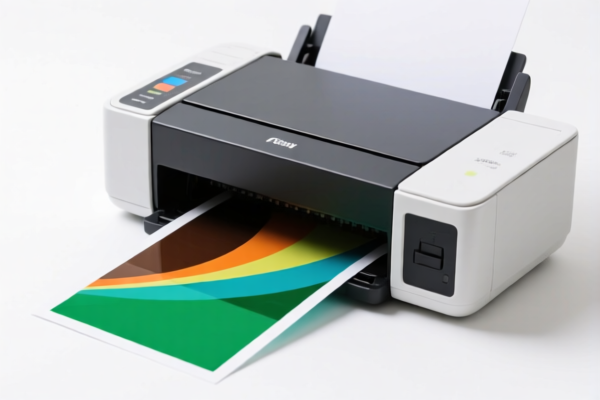
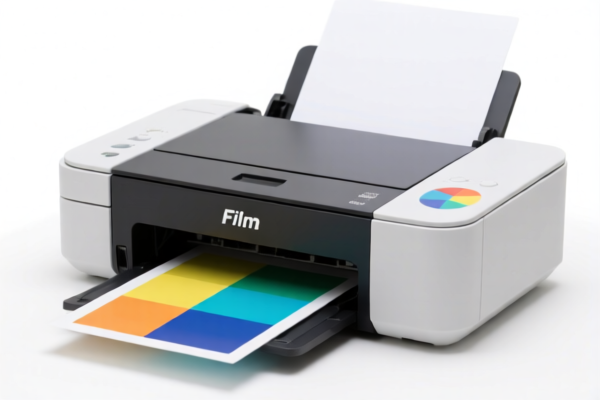
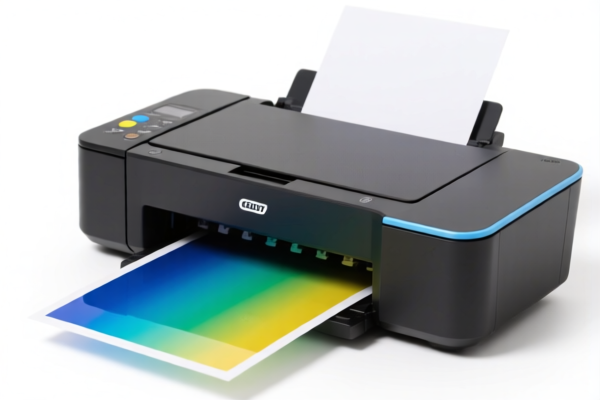

AI Analysis
🎞️ Film Printer (胶印机 / Instant Print Film)
🌐 HS Code Reference & Customs Clearance Guide | 2026 Latest Tariff Analysis | Professional Clearance Strategy
📌 Part 1: Product Definition & Classification – Do You Really Understand "Film Printer"?
In international trade, the term "Film Printer" is ambiguous. It can refer to two distinct types of equipment, leading to different HS Codes and tariff liabilities:
- Printing Machinery (Offset Printers): Large-scale industrial equipment used for printing text/images onto paper, plastic, or metal.
- Instant Print Film (Photographic Material): Consumable media for instant cameras (like Polaroid-style) or specialized medical/industrial imaging systems, where the image develops immediately after printing/exposure.
⚠️ Key Distinction Point: - If it is a machine that performs printing → Classified under Chapter 84 (Machinery). - If it is the film media itself (unexposed/immediate print film) → Classified under Chapter 37 (Photographic Goods).
📦 Part 2: HS Code Classification Details (2026 Latest Tariff Authority)
Based on the provided data, here are the specific classifications and their logic:
| HS Code | Product Description | Application Scenario | Logic/Justification |
|---|---|---|---|
| 8443.11.50.00 | Printing Machinery (Other) | Industrial offset printing presses | Fits the "catch-all" logic for printing machinery not listed elsewhere. Matches the function of offset printing. |
| 8443.13.00.00 | Printing Machinery (Other) | Offset printing machines | Direct match for offset printing machinery. No material or form conflict. |
| 8442.30.01.50 | Machinery for Printing (Other) | Plate/Cylinder manufacturing equipment | Classified as machinery for manufacturing printing components (plates/cylinders), fitting the broader definition of printing equipment. |
| 3701.20.00.30 | Instant Print Film | Color photography instant printing | Shape is film; use matches color photography instant print characteristics. No material conflict. |
| 3701.20.00.60 | Instant Print Film (Other) | Instant imaging rolls/films | Shape and use match instant imaging film classification. Material inferred as non-paper, non-textile light-sensitive material. |
🔍 Key Reminder: - "Film Printer" as a Machine: If you are importing the printer device, look at 8443 or 8442. The summary notes emphasize "offset printing machinery" (8443.11/13) and "printing component machinery" (8442.30). - "Film Printer" as Media: If you are importing the film rolls used in printers (or instant photo film), look at 3701.20. The summaries confirm these are light-sensitive films for instant imaging.
💰 Part 3: 2026 Latest Tariff Rate Breakdown (Including Surcharges & Policy Add-ons)
✅ Applicable Country: United States (US) ✅ Origin: China (CN) ✅ Effective Date: From November 10, 2025 (including subsequent imports)
🎯 1. Printing Machinery Group (8443.11.50.00, 8443.13.00.00, 8442.30.01.50)
These codes are all classified as Printing Machinery.
| Item | Content |
|---|---|
| Base Tariff | 0.0% |
| Section 301 Surcharge | +25.0% |
| 122 Section Tariff | +10.0% |
| Total Tariff Rate | 35.0% |
| Tax Calculation | CIF Value × 35% |
| De Minimis Exemption | ❌ Not Available (Subject to strict scrutiny) |
| Legal Basis Path | USITC:8443.11/13 → 301 Footnote → IEEPA:122 Clause |
📌 Explanation: - "Base Tariff 0%": Standard import duty for printing machinery is often 0%. - "301 Surcharge 25%": Applies to Chinese-origin machinery under Section 301. - "122 Clause 10%": Additional tariff based on specific trade measures (often referred to as the 122 clause in certain trade contexts). - Total 35%: This is a high tariff. Importers must factor this into their cost structure.
🎯 2. Instant Print Film Group (3701.20.00.30, 3701.20.00.60)
These codes are classified as Photographic Film.
| Item | Content |
|---|---|
| Base Tariff | 3.7% |
| Section 301 Surcharge | +25.0% |
| 122 Section Tariff | +10.0% |
| Total Tariff Rate | 38.7% |
| Tax Calculation | CIF Value × 38.7% |
| De Minimis Exemption | ❌ Not Available |
| Legal Basis Path | USITC:3701.20 → 301 Footnote → IEEPA:122 Clause |
📌 Explanation: - "Base Tariff 3.7%": Unlike machinery, photographic materials often have a small base duty. - Surcharges: Same as above (+25% + 10%). - Total 38.7%: Slightly higher than machinery due to the base tariff, but still subject to heavy surcharges.
🛠️ Part 4: Customs Clearance Practical Advice (Battle-Tested Pitfall Guide)
✅ 1. Documentation Checklist (All Required)
| Document | Must Provide | Explanation |
|---|---|---|
| ✅ Product Specification Sheet | ✔️ | Must clearly state: Is it a Machine or Film? If machine: type (offset/digital), capacity. If film: chemical composition, instant develop feature. |
| ✅ Product Photos | ✔️ | Clear photos of the product, including labels, interfaces (if machine), and film packaging. |
| ✅ Commercial Invoice | ✔️ | Must accurately describe the item as "Offset Printing Machine" or "Instant Print Film," NOT just "Printer." |
| ✅ Packing List | ✔️ | Itemize contents. If shipping film, specify number of rolls, chemical packs, etc. |
| ✅ Certificate of Origin (CO) | ✔️ | Essential for proving Chinese origin (which triggers the 35%/38.7% tariffs). |
| ✅ Declaration of Non-Military Use | ✔️ | Often required for dual-use items like imaging equipment. |
✅ 2. Declaration Tips (Key Mnemonic)
🔥 “Distinguish Machine vs. Media, Name Precision Saves Money!”
| Scenario | Correct Declaration | Wrong Practice | Consequence |
|---|---|---|---|
| Printing Press | "Offset Printing Machine" | "Photocopier" | Misclassification → Audit + Penalties |
| Instant Film | "Instant Print Photographic Film" | "Paper" or "Plastic Sheet" | Tariff error (Film is 38.7%, Paper may differ) → Back taxes |
| Machinery Parts | "Parts of Printing Machinery" | "Printing Machine" | If classified as whole machine, tax applies to full value unnecessarily |
| Mixed Shipment | Separate HS Codes | Single Code for all | Delays, seizures, or partial rejection |
📌 Critical Note: - "Film Printer" is a risky generic name. Always specify: - If Machine: Use "Offset Printing Machine" (HS 8443.13.00.00). - If Media: Use "Instant Print Film" (HS 3701.20.00.30/60).
✅ 3. Special Case Handling
| Situation | Handling Advice |
|---|---|
| OEM Printing Machinery | Provide client order + design drawings. Avoid "generic" descriptions. |
| Film for Medical Imaging | If used for medical X-ray/CT film, it may fall under different 3701 subheadings. Confirm exact use. |
| "Instant" Technology | Ensure the film is truly "instant" (chemical develop). If it's digital print film, it might be classified differently. |
| Used Machinery | Used printing presses face stricter inspection. Provide maintenance records. |
🌍 Part 5: Global Market Clearance Comparison (2026 Latest)
| Country/Region | Recommended HS Code | Tariff (China Origin) | Certification | Notes |
|---|---|---|---|---|
| 🇺🇸 USA | 8443.13.00.00 (Machine)3701.20.00.30 (Film) |
35.0% (Machine) 38.7% (Film) |
FCC (if electronic) No specific for film |
High tariffs due to 301 + 122 clauses. |
| 🇨🇳 China | 8443.13.00.003701.20.00.30 |
Machine: ~0-5% Film: ~0-5% |
CCC (if applicable) | No retaliatory tariffs. |
| 🇪🇺 EU | 8443.13.00.003701.20.00.30 |
Machine: 0-1.7% Film: 0-6.5% |
CE RoHS | No Section 301/122 surcharges. |
| 🇯🇵 Japan | 8443.13.00.003701.20.00.30 |
Machine: 0% Film: 0-3% |
PSE (if electronic) | Favorable tariffs. |
📌 Conclusion: - The US is the most expensive market for importing Chinese printing machinery and film due to the 35%/38.7% effective rate. - Consider supply chain diversification: Sourcing from Vietnam, Thailand, or Mexico may avoid these surcharges (subject to Rules of Origin).
📌 Part 6: Common Mistakes & Pitfall Guide (Lessons Learned)
❌ Mistake 1: Using "Film Printer" as the declaration description. 👉 Consequence: Customs officers may misclassify it, leading to delays or incorrect duty assessment.
❌ Mistake 2: Classifying Instant Print Film as "Paper" or "Plastic." 👉 Consequence: Film has specific light-sensitive characteristics. Misclassification can lead to seizures or back-taxes of 38.7%.
❌ Mistake 3: Ignoring the "122 Clause" in US tariffs. 👉 Consequence: Many importers only check 301 tariffs (25%) and forget the additional 10%, leading to unexpected 35%+ costs.
❌ Mistake 4: Declaring machinery parts as "accessories" without proper specs. 👉 Consequence: Parts may be taxed higher than finished machines or vice versa. Always provide part numbers.
✅ Correct Approach:
- For Machines: "Offset Printing Machine, Model XYZ, High-Speed, 4-Color, Made in China."
- For Film: "Instant Photographic Film, Color, For Instant Camera, Made in China."
🎯 Part 7: Conclusion – Professional Declaration Saves Costs!
🎯 Remember These Key Points:
🔹 "Machine vs. Media: Know the Difference!" 🔹 "US Tariffs: 35% for Machines, 38.7% for Film!" 🔹 "Always Specify: 'Offset' for Machines, 'Instant' for Film!"
📌 Pro Tip:
- For US Imports, consider applying for an Advance Ruling from US CBP to confirm the HS Code and tariff rate before shipping.
- Explore FTAs (Free Trade Agreements) if sourcing from third countries to mitigate the 301/122 surcharges.
📣 Action Required:
📞 Contact a professional customs broker. 📄 Provide detailed product specs (Machine type or Film chemical nature). 🚀 Clear customs smoothly, control costs, and maximize profit!
✨ Professional clearance starts with accurate classification! 💼 Every cent of duty is worth calculating precisely!
Customer Reviews
About HS Code Classification
The Harmonized System (HS) is an internationally standardized nomenclature developed by the World Customs Organization (WCO) to classify traded products. Over 200 countries use the HS system as the basis for customs tariffs, trade statistics, and import/export regulations.
Each HS code follows a hierarchical structure:
- Chapter (2 digits) — Broad category of goods (e.g., Chapter 84: Machinery and Mechanical Appliances)
- Heading (4 digits) — More specific grouping within the chapter
- Subheading (6 digits) — Internationally standardized breakdown, used by all WCO member countries
- National subdivisions (8-10 digits) — Country-specific extensions for further classification, such as US HTSUS 10-digit codes
Correct HS code classification is essential for smooth customs clearance, accurate duty payment, and compliance with trade regulations. Misclassification can lead to customs delays, overpayment of duties, or penalties.
When importing from CN to US, the applicable tariff rates may include:
- Most-Favored-Nation (MFN) rate — The standard duty rate applied to WTO members
- General rate — Applied to countries without trade agreements
- Trade remedy duties — Additional tariffs such as Section 301 (anti-dumping), Section 232 (national security), or countervailing duties
The information provided on this page is for reference purposes only. For official classification, please consult with your local customs authority or a licensed customs broker.