Film Processing System
CN → US| HS Code | Tariff Rate | Origin | Destination | Doc |
|---|---|---|---|---|
| 9010502000 | 35.0% | CN | US | Official Doc |
| 9010100000 | 37.4% | CN | US | Official Doc |
| 3707903290 | 35.0% | CN | US | Official Doc |
| 3824999397 | 40.0% | CN | US | Official Doc |
| 3707906000 | 35.0% | CN | US | Official Doc |
Product Images
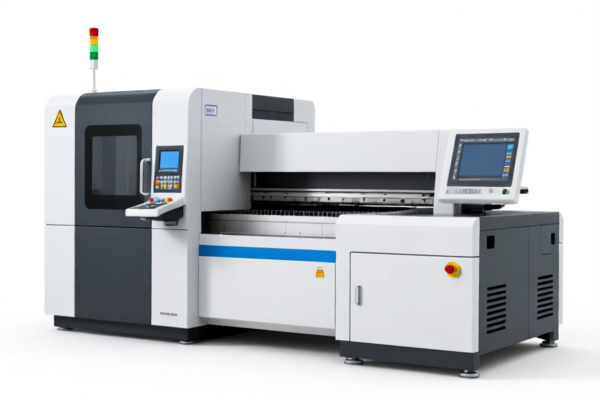
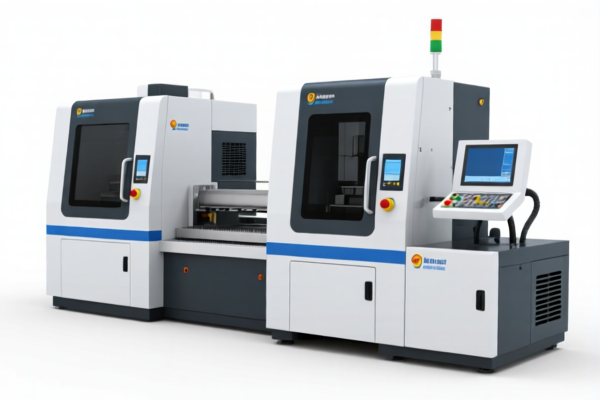
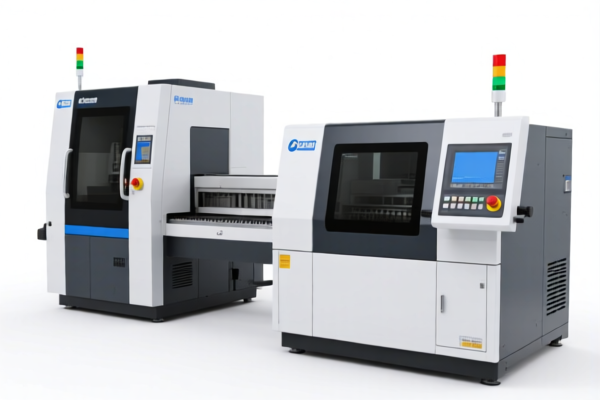
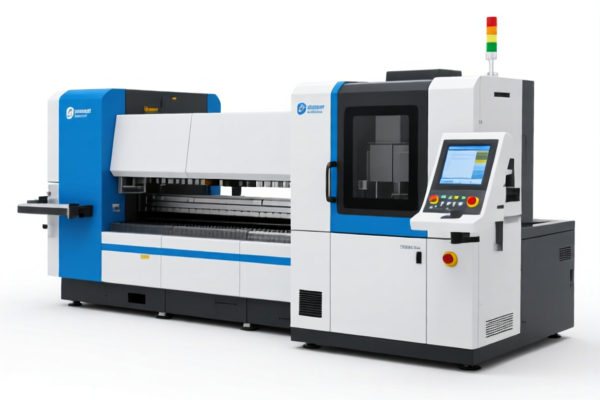
AI Analysis
🎞️ Film Processing System (Film Processing Machine & Chemicals)
🌐 HS Code Reference & Customs Clearance Guide | 2026 Latest Tariff Analysis | Professional Clearance Strategy
📌 I. Product Definition & Classification: Do You Really Understand "Film Processing"?
A Film Processing System is a broad term that typically encompasses two distinct categories in international trade: 1. Hardware (The Machine): Equipment used for developing, fixing, washing, and drying photographic film (roll or sheet). It is considered photographic laboratory equipment. 2. Consumables (The Chemicals): The chemical agents (developers, fixers, stop baths) used in the process. These are classified as photographic chemicals or general chemical preparations.
⚠️ Critical Distinction:
- If you are importing the machine itself → It falls under Chapter 90 (Optical/Medical Instruments).
- If you are importing the liquids/solutions → They fall under Chapter 37 (Photographic Goods) or Chapter 38 (Miscellaneous Chemical Products).
- Do not mix hardware and chemicals in the same HS Code entry; they must be declared separately based on their nature.
📦 II. HS Code Classification Details (Based on Provided Data)
Below are the five specific HS Codes identified for "Film Processing" related items, along with their exact tax rates and legal justifications from the dataset.
1. 🖨️ Film Processing Machine (Hardware)
HS Code: 9010.50.20.00
Summary: Film processing machines belong to photographic laboratory equipment, falling within the category of photographic laboratory instruments and devices, consistent with developing tanks.
Total Tax Rate: 35.0%
| Tax Component | Rate | Description |
|---|---|---|
| Base Duty | 0.0% | Standard Most Favored Nation (MFN) rate for this subheading. |
| Retaliatory/Section 301 | 25.0% | Additional tariff imposed on Chinese goods (Section 301). |
| 122-Clause Tariff | 10.0% | Additional duty specified under "122-Clause" provisions. |
| TOTAL | 35.0% | Base (0%) + Section 301 (25%) + 122-Clause (10%) |
🔍 Analysis: This is the most likely code if you are importing the physical processor unit. The base duty is favorable (0%), but the additional tariffs add up to 35%.
2. 🎞️ Alternative Classification for Film Processor (Hardware)
HS Code: 9010.10.00.00
Summary: The use of film processing machines fits the definition of washing/developing roll film, belonging to laboratory instrumentation.
Total Tax Rate: 37.4%
| Tax Component | Rate | Description |
|---|---|---|
| Base Duty | 2.4% | Standard MFN rate for "Photographic Enlargers and Reducers" or related lab apparatus. |
| Retaliatory/Section 301 | 25.0% | Additional tariff. |
| 122-Clause Tariff | 10.0% | Additional duty. |
| TOTAL | 37.4% | Base (2.4%) + Section 301 (25%) + 122-Clause (10%) |
⚠️ Warning: This code results in a higher total tax (37.4%) compared to
9010.50.20.00. It is likely misclassified if the item is a full "processing machine" rather than an "enlarger/reducer." Use9010.50.20.00for better tax efficiency if the equipment fits that description.
3. 🧪 Film Processing Agent (Chemicals - Category A)
HS Code: 3707.90.32.90
Summary: Film processing agents belong to photographic chemical preparations, fitting the category of chemicals used for photography.
Total Tax Rate: 35.0%
| Tax Component | Rate | Description |
|---|---|---|
| Base Duty | 0.0% | Standard MFN rate for photographic chemicals. |
| Retaliatory/Section 301 | 25.0% | Additional tariff. |
| 122-Clause Tariff | 10.0% | Additional duty. |
| TOTAL | 35.0% | Base (0%) + Section 301 (25%) + 122-Clause (10%) |
🔍 Analysis: Use this for specialized, pre-mixed photographic developers or fixers. It aligns with Chapter 37 (Photographic/Cinematographic Goods).
4. 🧪 Processing Agent (Chemicals - Category B: Mixture)
HS Code: 3824.99.93.97
Summary: Processing agents belong to chemical preparations, fitting the use of chemical products and preparations, classified as chemical mixtures.
Total Tax Rate: 40.0%
| Tax Component | Rate | Description |
|---|---|---|
| Base Duty | 5.0% | Higher base duty for "Chemical products and preparations" not elsewhere specified. |
| Retaliatory/Section 301 | 25.0% | Additional tariff. |
| 122-Clause Tariff | 10.0% | Additional duty. |
| TOTAL | 40.0% | Base (5%) + Section 301 (25%) + 122-Clause (10%) |
⚠️ Warning: This is the most expensive option (40%). It applies if the chemical is considered a general chemical mixture rather than a specific photographic agent. Avoid this code if
3707is applicable, as it saves 5% in base duties.
5. 🧪 Film Processing Agent (Chemicals - Category C: Unmixed/Other)
HS Code: 3707.90.60.00
Summary: Film processing agents belong to photographic chemical products, fitting the logic of unmixed products or photographic chemicals under other categories.
Total Tax Rate: 35.0%
| Tax Component | Rate | Description |
|---|---|---|
| Base Duty | 0.0% | Standard MFN rate. |
| Retaliatory/Section 301 | 25.0% | Additional tariff. |
| 122-Clause Tariff | 10.0% | Additional duty. |
| TOTAL | 35.0% | Base (0%) + Section 301 (25%) + 122-Clause (10%) |
🔍 Analysis: Use this for specialized photographic chemicals that may be unmixed or fall under other specific photographic subheadings within Chapter 37.
💰 III. 2026 Tariff Rate Breakdown (Detailed Explanation)
✅ Context:
- Origin: China (CN)
- Destination: USA (US)
- Applicable Tariffs: Section 301 (25%) + "122-Clause" (10%)
🎯 Key Takeaway on Tax Structure
For all HS Codes provided in the data: 1. Section 301 Tariff (25%): This is a constant additional duty applied to Chinese-origin goods in these categories. 2. "122-Clause" Tariff (10%): A specific additional duty mentioned in the data, likely referring to a specific trade enforcement measure or footnote. 3. Total Additional Duty: 35% (25% + 10%).
The only variable is the Base Duty:
- Low Base (0%): Codes 9010.50.20.00, 3707.90.32.90, 3707.90.60.00 → Total 35%.
- Medium Base (2.4%): Code 9010.10.00.00 → Total 37.4%.
- High Base (5.0%): Code 3824.99.93.97 → Total 40%.
🛠️ IV. Customs Clearance Practical Advice (Pitfall Avoidance)
✅ 1. Document Preparation Checklist
| Document | Requirement | Why? |
|---|---|---|
| Product Description | Must clearly state: "Film Processing Machine" (Hardware) OR "Photographic Developer/Fixer" (Chemicals). | Vague terms like "Processing System" will trigger customs inspection. |
| HS Code Justification | Provide technical specs: - For Machines: Voltage, capacity, function (develop/wash/dry). - For Chemicals: CAS numbers, composition, specific photographic use. |
Proves eligibility for Chapter 90 (Instruments) vs Chapter 37/38 (Chemicals). |
| Safety Data Sheet (SDS) | Mandatory for Chemicals (3707, 3824). |
Customs and CPSC require SDS to verify hazardous material classification and correct shipping names. |
| Invoice & Packing List | Separate invoices for machines and chemicals if shipped together. | Prevents misclassification of mixed shipments. |
✅ 2. Strategic Recommendations
🚫 Avoid Code 3824.99.93.97 if Possible
- Reason: It carries the highest base duty (5%) resulting in a 40% total tax.
- Alternative: If your product is a photographic chemical, try to prove it fits
3707.90.32.90or3707.90.60.00by emphasizing its specific photographic function rather than generic chemical composition. This saves 5% in taxes.
🚫 Avoid Code 9010.10.00.00 for Full Processing Machines
- Reason: It has a 2.4% base duty, leading to a 37.4% total tax.
- Alternative: If the machine is for developing/washing/fixing film (not enlarging),
9010.50.20.00is better (0% base, 35% total). Ensure your technical documentation highlights "developing tank" or "processor" functions.
✅ Best Practice for Chemicals
- Use
3707.90.32.90or3707.90.60.00(35% total). - Clearly label products as "Photographic Developer," "Photographic Fixer," or "Photographic Chemical Preparation" on the commercial invoice.
✅ 3. Special Cases
| Scenario | Recommended Action |
|---|---|
| Shipment contains both Machine + Chemicals | Declare separately. Machine under 9010.50.20.00 (35%), Chemicals under 3707.90.32.90 (35%). Do not combine. |
| Unmixed Chemicals | If the chemical is not yet mixed, check if it qualifies for 3707.90.60.00. If it is a general mixture, 3824 is risky (40%). |
| Pre-mixed Kits | Often classified under 3707.90.32.90. Ensure the label emphasizes "Photographic Use." |
🌍 V. Global Market Comparison (2026)
| Country | HS Code Recommendation | Base Duty | Add. Duties | Total Est. | Notes |
|---|---|---|---|---|---|
| 🇺🇸 USA | 9010.50.20.00 / 3707.90.32.90 |
0% | 35% (25% Sec 301 + 10% 122) | 35% | High additional tariffs. |
| 🇨🇳 China | Similar Codes | 5-10% | 0% | 5-10% | No Section 301. Lower cost. |
| 🇪🇺 EU | 9010.50 / 3707 |
0-2% | 0% | 0-2% | No Section 301. Favorable. |
| 🇬🇧 UK | Similar to EU | 0-5% | 0% | 0-5% | Post-Brexit tariffs apply. |
📌 Conclusion:
- The USA is the most expensive market for Film Processing Systems due to Section 301 and 122-Clause tariffs.
- Consider supply chain diversification (e.g., sourcing from Vietnam or EU) if targeting the US market to avoid the 35% additional duties.
📌 VI. Common Errors & Pitfalls (Blood & Tears Lessons)
❌ Error 1: Declaring a Film Processor Machine as a "Chemical Mixture" (3824).
👉 Consequence: If caught, customs may reclassify it to 9010.50.20.00 (35%) instead of 3824 (40%), but you risk penalties for misdeclaration. More likely, they will demand back taxes and fines.
❌ Error 2: Using 9010.10.00.00 for a general film processor.
👉 Consequence: You pay 37.4% instead of 35%. That’s an unnecessary 2.4% increase in cost on a high-value item.
❌ Error 3: Failing to provide SDS for photographic chemicals.
👉 Consequence: Shipment held at port. Customs may deem it "Hazardous" and require special handling or reject it.
❌ Error 4: Vague Invoice Description ("Processing Parts").
👉 Consequence: Customs assigns a "Catch-all" HS Code, often leading to higher duties or detailed inspection delays.
✅ Correct Practice:
"Photographic Film Processing Machine, Model XYZ, Develops/Washes/Dries 35mm Film, AC 110V, 60Hz"
"Photographic Developer Chemical, 1 Litre, for Black & White Film, CAS No. XXXXX"
🎯 VII. Conclusion: Precision in Classification Saves Money!
🎯 Key Rule of Thumb:
🔹 Machines → Chapter 90 (
9010.50.20.00) → 35% Total
🔹 Chemicals → Chapter 37 (3707.90.32.90) → 35% Total
🔹 Avoid General Chemicals (3824) → 40% Total
📌 Pro Tip:
If your product is borderline between 3707 (Photographic Chemicals) and 3824 (Other Chemicals), provide technical data sheets proving its exclusive use in photography. This can secure the lower base duty (0% vs 5%).
📣 Immediate Action:
📞 Verify HS Code with your supplier’s technical specs.
📄 Prepare SDS for all chemical shipments.
💸 Calculate Landed Cost using 35% for both machine and chemicals to ensure profitability.
✨ Professional Customs Clearance Starts with Accurate Classification!
💼 Every Percent of Duty Saved is Pure Profit!
Customer Reviews
About HS Code Classification
The Harmonized System (HS) is an internationally standardized nomenclature developed by the World Customs Organization (WCO) to classify traded products. Over 200 countries use the HS system as the basis for customs tariffs, trade statistics, and import/export regulations.
Each HS code follows a hierarchical structure:
- Chapter (2 digits) — Broad category of goods (e.g., Chapter 84: Machinery and Mechanical Appliances)
- Heading (4 digits) — More specific grouping within the chapter
- Subheading (6 digits) — Internationally standardized breakdown, used by all WCO member countries
- National subdivisions (8-10 digits) — Country-specific extensions for further classification, such as US HTSUS 10-digit codes
Correct HS code classification is essential for smooth customs clearance, accurate duty payment, and compliance with trade regulations. Misclassification can lead to customs delays, overpayment of duties, or penalties.
When importing from CN to US, the applicable tariff rates may include:
- Most-Favored-Nation (MFN) rate — The standard duty rate applied to WTO members
- General rate — Applied to countries without trade agreements
- Trade remedy duties — Additional tariffs such as Section 301 (anti-dumping), Section 232 (national security), or countervailing duties
The information provided on this page is for reference purposes only. For official classification, please consult with your local customs authority or a licensed customs broker.