Film Roll (Long Roll)
CN → US| HS Code | Tariff Rate | Origin | Destination | Doc |
|---|---|---|---|---|
| 3923400010 | 40.3% | CN | US | Official Doc |
| 3703103090 | 38.7% | CN | US | Official Doc |
| 3703103060 | 38.7% | CN | US | Official Doc |
| 3923400050 | 40.3% | CN | US | Official Doc |
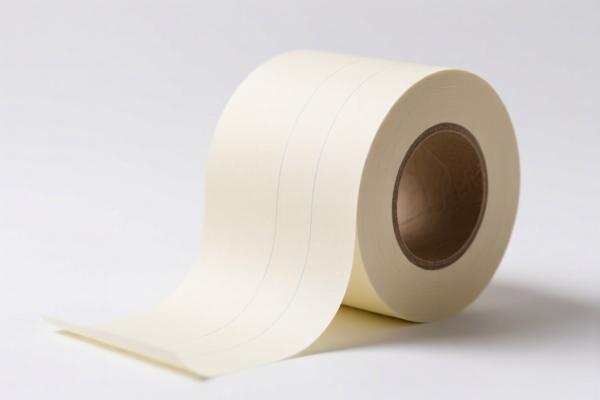
Product Images



AI Analysis
🎞️ Film Roll (Long Roll)
🌐 HS Code Reference & Customs Clearance Guide | 2026 Latest Tariff Analysis | Professional-Level Compliance Strategy
📌 I. Product Definition & Classification: Do You Truly Understand "Film Roll"?
"Film Roll (Long Roll)" refers to continuous sheets of photographic or industrial film supplied in large, extended lengths (long rolls), typically used for wide-format printing, industrial inspection, or large-scale photography. In international trade, classification depends heavily on the material composition (plastic vs. light-sensitive chemicals) and the specific use (support/spool vs. the film itself).
Key Distinction Points:
- If the product is a photographic film (light-sensitive, containing silver halides) with a width > 610mm → It falls under Chapter 37.
- If the product is a plastic/spool-like support or non-photographic polymer film intended for holding/winding other materials → It falls under Chapter 39.
⚠️ Critical Classification Logic:
- Is it a 感光材料 (Light-sensitive Material)? → 3703.xx
- Is it a 塑料基材/卷轴支撑物 (Plastic Substrate/Spool Support)? → 3923.40
- Note: The term "Film" often triggers Chapter 37 for photographic uses, but "Roll" or "Spool" structures can trigger Chapter 39 if they serve as mechanical supports.
📦 II. HS Code Classification Details (2026 Latest Tariff Authority Cross-Reference)
Based on the provided data, here are the four potential classifications with their specific matching logic and tax implications for imports into the US from China.
| HS Code | Product Description & Matching Logic | Applicable Scenario | Tax Rate Structure |
|---|---|---|---|
3923.40.00.10 |
Plastic Spools/Reels: Matches "Film Roll" shape as a spool/reel. Assumes a plastic/polymer base material. Classified as photographic film spools or related supports. | Non-light-sensitive plastic rolls, industrial spools, or photographic film carriers made of plastic. | 40.3% |
3703.10.30.90 |
Light-sensitive Film: Matches Roll shape. "Wide format" corresponds to width > 610mm. Inferred material is light-sensitive film (halide-based), no material conflict. | Wide-format photographic paper/film, industrial light-sensitive sheets. | 38.7% |
3703.10.30.60 |
Light-sensitive Film: Matches Roll shape. "Wide format" = width > 610mm. Inferred material is light-sensitive film, consistent with halide paper/photo paper attributes. | Wide-format photographic materials, large-scale light-sensitive sheets. | 38.7% |
3923.40.00.50 |
Other Plastic Supports: Matches "Film Roll" shape as spools/reels. Inferred plastic/polymer film material. Fits "Other" category for supports/spools, not necessarily photographic-specific. | General industrial plastic rolls, non-photographic polymer films used for winding/support. | 40.3% |
🔍 Key Insight:
- The primary split is between Chapter 37 (Photographic/Light-sensitive) and Chapter 39 (Plastics/Polymers).
- Chapter 37 (3703.xx) generally has a slightly lower total tax rate (38.7%) compared to Chapter 39 (3923.40) (40.3%).
- However, misclassification can lead to severe penalties. If it is truly photographic film, Class 39 is incorrect (and vice versa).
💰 III. 2026 Latest Tariff Rate Breakdown (Including Surcharges & Policy Add-ons)
✅ Applicable Country: United States (US)
✅ Origin: China (CN)
✅ Effective Date: From November 10, 2025 (including subsequent imports)
🎯 1. HS Codes 3923.40.00.10 & 3923.40.00.50 —— Plastic Spools/Reels & Other Plastic Supports
| Item | Details |
|---|---|
| Base Tariff (MFN) | 5.3% (Ad Valorem) |
| Section 301 Surcharge | +25.0% (USITC Footnote 9903.88.01 equivalent logic) |
| Section 122 / IEEPA Surcharge | +10.0% (Targeted at Chinese products) |
| Total Tariff Rate | 40.3% |
| Tax Calculation | CIF Value × 40.3% |
| De Minimis Eligibility | ❌ No (Deny de minimis) |
| Legal Basis Path | USITC:3923.40.xx.xx → Section 301: 25% → IEEPA/Section 122: 10% |
📌 Explanation:
- The 5.3% base is standard for plastics articles.
- The 25% is the standard USITC additional duty for many Chinese goods.
- The 10% is a specific surcharge (often linked to Section 122 or IEEPA provisions for specific categories).
- Total: 40.3%. This is a high-cost classification.
🎯 2. HS Codes 3703.10.30.90 & 3703.10.30.60 —— Light-sensitive Film (Wide Format)
| Item | Details |
|---|---|
| Base Tariff (MFN) | 3.7% (Ad Valorem) |
| Section 301 Surcharge | +25.0% (USITC Footnote 9903.88.01 equivalent logic) |
| Section 122 / IEEPA Surcharge | +10.0% (Targeted at Chinese products) |
| Total Tariff Rate | 38.7% |
| Tax Calculation | CIF Value × 38.7% |
| De Minimis Eligibility | ❌ No (Deny de minimis) |
| Legal Basis Path | USITC:3703.10.xx.xx → Section 301: 25% → IEEPA/Section 122: 10% |
📌 Explanation:
- The 3.7% base is standard for photographic/chemical papers/films.
- The 25% and 10% surcharges apply similarly to Chinese origin goods.
- Total: 38.7%. While slightly lower than the plastic classification, the difference ($1.6\%$) must be weighed against the accuracy risk. Misclassifying photographic film as plastic plastic film (or vice versa) is a major compliance error.⚠️ Critical Note on "122 Clause" / IEEPA:
- The "10%" surcharge referenced in the data appears to be a specific statutory addition (potentially linked to Section 122 of the Trade Expansion Act or similar IEEPA authorities for specific Chinese imports).
- These surcharges are non-negotiable and apply regardless of the product's final use, provided the origin is China.
🛠️ IV. Customs Clearance Operational Advice (Practical Pitfall Avoidance Guide)
✅ 1. Preparation Checklist (Essential Documents)
| Document | Required? | Description |
|---|---|---|
| ✅ Product Specification Sheet | ✔️ | Must explicitly state: Material (Plastic vs. Light-sensitive), Width (to confirm >610mm for "Wide Format"), and Intended Use. |
| ✅ Material Safety Data Sheet (MSDS) | ✔️ | If light-sensitive, confirm chemical composition (halides, emulsions). If plastic, confirm polymer type. |
| ✅ Product Photos (Labeled) | ✔️ | Show the "Roll" structure, packaging, and any labeling indicating "Photographic" or "Industrial Plastic". |
| ✅ Commercial Invoice | ✔️ | Description must be precise: e.g., "Wide-format Light-sensitive Film, Roll, 1.2m Width" or "Industrial Plastic Spool, Roll". Avoid generic "Film Roll". |
| ✅ Packing List | ✔️ | Clearly separate items if mixed (e.g., film rolls + empty plastic spools). |
| ✅ Origin Certificate | ✔️ | Confirm China origin to apply correct surcharges. |
✅ 2. Declaration Strategy (Key Mantras)
🔥 "Material First, Width Second, Use Third, Tax Follows!"
| Scenario | Correct Declaration | Incorrect Declaration | Consequence |
|---|---|---|---|
| Photographic Paper/Film (Wide) | 3703.10.30.60/90 |
3923.40.00.10 (Plastic) |
Under-declaration of tax + Penalty if audited. |
| Plastic Spool/Support (Non-Photo) | 3923.40.00.10/50 |
3703.10.30.60 (Photo) |
Over-declaration of tax (slightly) + potential customs hold for verification. |
| Unknown/General Film | Request Advance Ruling | Guessing 3923 |
High risk of seizure or delayed clearance. |
📌 Warning:
- Do not use the term "Film Roll" alone in the HS description.
- If it is photographic, it MUST go to Chapter 37.
- If it is plastic packaging/support, it MUST go to Chapter 39.
✅ 3. Special Circumstances Handling
| Situation | Advice |
|---|---|
| OEM/Private Label | Provide customer agreement specifying material properties. |
| Mixed Bundles (Film + Spool) | If sold as a set, classify by the essential character (usually the film). If sold separately, declare separately. |
| Width Ambiguity | If width is exactly 610mm or less, "Wide Format" (3703.10.30) may not apply. Check subheadings for narrow formats. |
| Industrial vs. Photographic | Industrial X-ray film or non-chemical light-sensitive films may have different codes. Confirm if it contains silver halides. |
🌍 V. Global Market Comparison (2026 Latest)
| Country/Region | Recommended HS Code | Tariff (China Origin) | Certification Req. | Notes |
|---|---|---|---|---|
| 🇺🇸 USA | 3703.10.30.60/90 or 3923.40.00.10/50 |
38.7% - 40.3% | None specific for film, but may need FDA/CDRH if medical/photographic | High surcharges (35% total add-on). |
| 🇨🇳 China | 3703.10 or 3923.40 |
3.7% - 5.3% | CCC (if applicable) | No Section 301/IEEPA surcharges. |
| 🇪🇺 EU | 3703.10 or 3923.40 |
~5-15% (varies) | CE (if applicable) | No additional retaliatory tariffs. |
| 🇯🇵 Japan | 3703.10 or 3923.40 |
~5-10% | PSE (if electronic component) | No additional surcharges. |
📌 Conclusion:
- The US market is the most challenging due to the 25% + 10% surcharges on Chinese goods.
- The difference between 38.7% and 40.3% is marginal ($1.6\%$), so accuracy is far more important than minor tax savings. Misclassification risks heavier penalties.
📌 VI. Common Mistakes & Pitfall Guide (Lessons Learned)
❌ Mistake 1: Classifying photographic film as "Plastic Roll" (3923.40) to save 1.6%
👉 Consequence: Customs audits may detect silver halide content → Refuge of duties + fines + loss of import privileges.
❌ Mistake 2: Ignoring the "Wide Format" (>610mm) requirement for 3703.10.30
👉 Consequence: If width ≤610mm, the code is wrong. Must use a different subheading under 3703.10.
❌ Mistake 3: Using generic description "Film Roll" on the Invoice
👉 Consequence: Customs officer has to guess → Manual examination, delays, storage fees.
✅ Correct Practice:
"Wide-format (1200mm) Light-sensitive Photographic Film, Roll, Silver Halide Emulsion, for Industrial Imaging, Model XYZ, Origin: China"
OR
"Industrial Plastic Support Roll, Polyethylene Base, Width 1000mm, Non-Photographic, Model ABC, Origin: China"
🎯 VII. Conclusion: Precision Classification, Cost Control, Compliance
🎯 Remember the Mantra:
🔹 "Photographic = 37, Plastic = 39. Width Matters, Material is Key."
🔹 "US Tariffs are High (38-40%), Accuracy Prevents Penalties."
🔹 "Don't Guess: If in Doubt, Apply for Advance Ruling."
📌 Tip:
- If your product is photographic film, ensure it is not classified under Chapter 39, as it is a material mismatch.
- If your product is plastic film/spool, ensure it is not classified under Chapter 37, as it is a functional mismatch.
- The 1.6% tax difference is negligible compared to the risk of customs holds.
📣 Immediate Action:
📞 Contact a Licensed Customs Broker to review product samples.
📄 Prepare Technical Datasheets highlighting material and width.
🚀 File an Advance Ruling with CBP to secure your HS Code and tax rate for 2026 imports.
✨ Professional Customs Clearance Starts with Accurate Classification!
💼 Your Bottom Line Depends on Getting This Right!
Customer Reviews
About HS Code Classification
The Harmonized System (HS) is an internationally standardized nomenclature developed by the World Customs Organization (WCO) to classify traded products. Over 200 countries use the HS system as the basis for customs tariffs, trade statistics, and import/export regulations.
Each HS code follows a hierarchical structure:
- Chapter (2 digits) — Broad category of goods (e.g., Chapter 84: Machinery and Mechanical Appliances)
- Heading (4 digits) — More specific grouping within the chapter
- Subheading (6 digits) — Internationally standardized breakdown, used by all WCO member countries
- National subdivisions (8-10 digits) — Country-specific extensions for further classification, such as US HTSUS 10-digit codes
Correct HS code classification is essential for smooth customs clearance, accurate duty payment, and compliance with trade regulations. Misclassification can lead to customs delays, overpayment of duties, or penalties.
When importing from CN to US, the applicable tariff rates may include:
- Most-Favored-Nation (MFN) rate — The standard duty rate applied to WTO members
- General rate — Applied to countries without trade agreements
- Trade remedy duties — Additional tariffs such as Section 301 (anti-dumping), Section 232 (national security), or countervailing duties
The information provided on this page is for reference purposes only. For official classification, please consult with your local customs authority or a licensed customs broker.