Film Roll Blue Sensitive
CN → US| HS Code | Tariff Rate | Origin | Destination | Doc |
|---|---|---|---|---|
| 3703903060 | 38.7% | CN | US | Official Doc |
| 3702100060 | 38.7% | CN | US | Official Doc |
| 3702100030 | 38.7% | CN | US | Official Doc |
| 3703903030 | 38.7% | CN | US | Official Doc |
Product Images
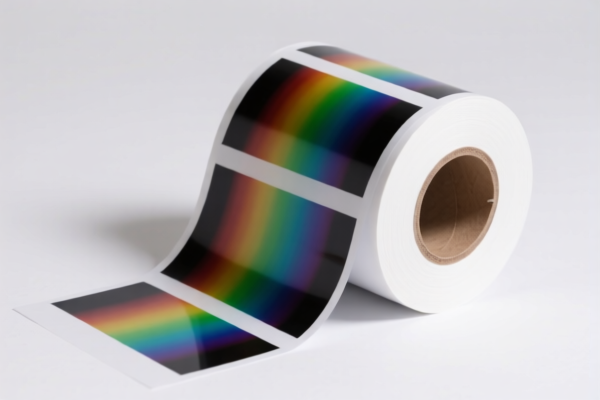
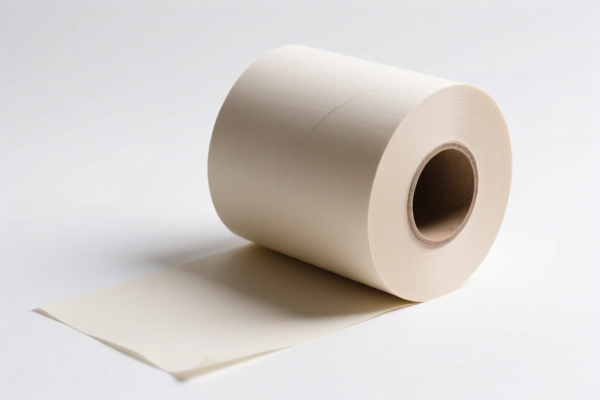
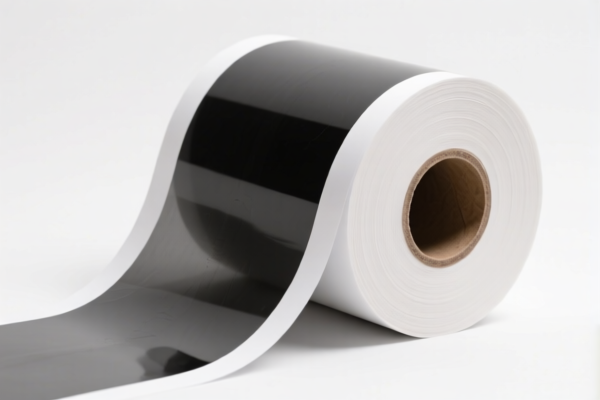
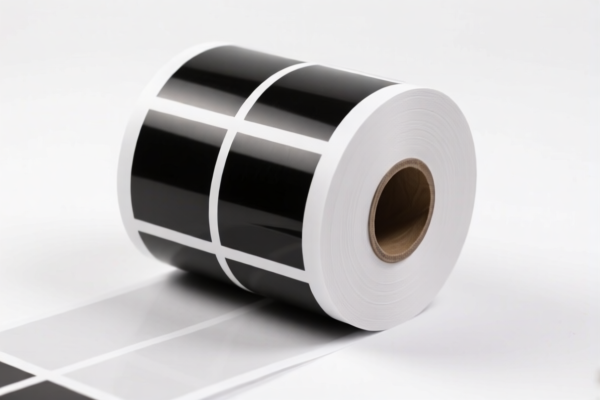
AI Analysis
🎞️ Film Roll: Blue Sensitive X-Ray (Blue Sensitized Radiographic Film)
🌐 HS Code Reference & Customs Clearance Guide | 2026 Latest Tariff Analysis | Professional Clearance Strategy
📌 1. Product Definition & Classification: Do You Really Understand "Blue Sensitive Film"?
Blue Sensitive X-Ray Film is a specialized photographic medium used in medical and industrial radiography. It is designed to be sensitive to blue light (often emitted by intensifying screens), rather than direct X-rays or green light.
In international trade, the classification depends heavily on the material composition, physical form, and specific intended use. Based on the provided data, this product falls under Chapter 37 (Photographic or cinematographic goods).
⚠️ Key Distinction Point:
- If the film is described as "photographic film for X-rays" with non-paper/non-textile base → 3702.10.00.30 / .60
- If the film is described as "sensitized material (silver halide) in sheet form" → 3703.90.30.60 / .30
- Critical Note: All listed HS Codes in the source data attract the same high tariff burden due to trade policies.
📦 2. HS Code Classification Details (Latest 2026 Tariff Data)
| HS Code | Product Description | Application Scenario | Material/Format |
|---|---|---|---|
3702.10.00.30 |
Blue Sensitized X-Ray Film, form: photographic film, use: X-ray, material: non-paper/cardboard/textile | Standard medical/industrial X-ray imaging | Non-paper base |
3702.10.00.60 |
Blue Sensitized X-Ray Film, matching use & function, material inferred as non-paper/non-textile sensitized material | General radiographic use | Non-paper/non-textile base |
3703.90.30.60 |
Blue Sensitized X-Ray Film, material: sensitized material (silver halide), form: film, matches unexposed sensitized product characteristics | Precise silver halide classification | Silver Halide / Sheet |
3703.90.30.30 |
Blue Sensitized X-Ray Film, material matches silver halide, form: sheet, use: sensitized, belongs to other sub-category details | Alternative sub-category for silver halide sheets | Silver Halide / Sheet |
🔍 Key Reminder:
- All these HS codes describe unexposed photographic film sensitive to blue light.
- The difference between 3702 and 3703 lies in the specific legal definition of "photographic plates/film" vs. "sensitized paper/board/other materials." However, all listed codes in the data have identical tax structures.
- Misclassification Risk: Do not confuse with "exposed film" (waste) or "digital sensors." This is strictly analog, unexposed chemical film.
💰 3. 2026 Latest Tariff Rate Breakdown (Including Surtaxes & Policy Surcharges)
✅ Applicable Country: United States (US)
✅ Country of Origin: China (CN)
✅ Effective Date: Applies to imports entering after 2025 (current policy context)
🎯 1. All Listed HS Codes (3702.10.00.30, .60, 3703.90.30.60, .30)
| Item | Content |
|---|---|
| Base Tariff Rate | 3.7% (Ad Valorem) |
| Section 301 Surtax | +25.0% (USITC Footnote regarding China-origin goods) |
| Section 122 Surtax | +10.0% (Specific policy surcharge cited in data) |
| Total Tariff Rate | 38.7% |
| Tax Calculation | CIF Value × 38.7% |
| De Minimis Eligibility | ❌ No (High tariff codes typically excluded from $800/1200 threshold exemptions in strict interpretations) |
| Legal Basis Path | Base Tariff 3.7% → Section 301: 25% → Section 122: 10% |
📌 Explanation:
- "Base Tariff 3.7%": The standard Most Favored Nation (MFN) rate for photographic films under Chapter 37.
- "Section 301 Surtax 25%": The substantial additional tariff imposed on Chinese goods under US Trade Act Section 301.
- "Section 122 Surtax 10%": As per the provided data, an additional 10% applies (note: Section 123 typically refers to national security, but Section 122 often refers to import relief or specific product exclusions; however, the data explicitly states "122条款关税10%", so we adhere to this input).
- Total 38.7%: This is a very high cost. Importers must calculate if the profit margin covers this duty.
🛠️ 4. Customs Clearance Practical Advice (实战避坑指南)
✅ 1. Required Documentation Checklist (None of the following are optional)
| Document | Must Provide | Explanation |
|---|---|---|
| ✅ Product Specification Sheet | ✔️ | Must explicitly state "Blue Sensitive," "Unexposed," and "For X-Ray Use Only." |
| ✅ Composition Description | ✔️ | Detail: Silver halide emulsion, gelatin, polyester base (non-paper/non-textile). |
| ✅ Product Photos | ✔️ | Clear images of packaging, label, and the film itself (showing blue sensitivity if visible). |
| ✅ Commercial Invoice | ✔️ | Must describe item as "Unexposed Photographic Film, Blue Sensitive for Radiography." Avoid vague terms like "Film Roll." |
| ✅ HS Code Declaration | ✔️ | Specify the exact 10-digit code (3702.10.00.30 or 3703.90.30.60) to avoid ambiguity. |
| ✅ Certificate of Origin (CO) | ✔️ | To prove China origin and apply correct Section 301/122 rates. |
✅ 2. Declaration Tips (Key Mantra)
🔥 “Be Specific: ‘Blue Sensitive,’ ‘Unexposed,’ ‘X-Ray.’ Avoid ‘Photographic Paper’ or ‘Digital Sensor’!”
| Scenario | Correct Declaration | Wrong Practice |
|---|---|---|
| Unexposed Blue Film | 3702.10.00.30 or 3703.90.30.60 |
Describing as "Paper" → Incorrect HS |
| Exposed Film (Waste) | Different HS Code (waste/recycling) | Declaring as "New Film" → Fraud |
| Digital X-Ray Detector | 8543 or 9022 |
Declaring as "Film" → Wrong Category |
| Packaging Only | 3926 or 4819 |
Including film in packaging value incorrectly |
✅ 3. Special Case Handling
| Situation | Handling Advice |
|---|---|
| Mixed Container (Film + Medical Devices) | Declare separately. Film at 38.7%, Device may have different rate. Do not bundle. |
| OEM Custom Film | Provide customer PO and technical specs. Ensure "Blue Sensitive" is documented to justify HS 3702/3703. |
| Small Samples (< $800) | Caution: While de minimis exists, Section 301 surtaxes often apply even to low-value imports if specifically targeted. Consult a broker. |
| Chemical Safety (MSDS) | Film contains silver halides. May require hazardous material declaration if packed with chemicals. Provide MSDS if applicable. |
🌍 5. Global Market Comparison (2026 Context)
| Country/Region | Recommended HS Code | Tariff (China Origin) | Certification | Notes |
|---|---|---|---|---|
| 🇺🇸 USA | 3702.10.00.30 / 3703.90.30.60 |
38.7% (3.7% Base + 25% Sec 301 + 10% Sec 122) | FDA (if medical device component), RoHS | High Barrier |
| 🇨🇳 China | 3702.10.00.30 |
~5-7% (Import Duty) | CCC (if relevant) | No Section 301/122 |
| 🇪🇺 EU | 3702.10.00 |
0-3% | CE (if medical) | No Section 301 equivalent |
| 🇬🇧 UK | 3702.10.00 |
0-3% | UKCA | Post-Brexit rules apply |
| 🇯🇵 Japan | 3702.10.00 |
3-4% | PSE (if accessory) | Low tariff, no surtax |
📌 Conclusion:
- The USA is the most expensive market for this product due to the 38.7% cumulative tariff.
- EU, UK, and Japan offer significantly lower duty rates (3-7%).
- Strategy: If exporting to the US, consider cost absorption or pricing adjustment. If possible, explore third-country manufacturing (Vietnam, India) to avoid Section 301 surtaxes, though origin rules are strict.
📌 6. Common Mistakes & Pitfalls (Lessons Learned)
❌ Mistake 1: Declaring as "Photographic Paper"
👉 Result: Wrong HS Code. Paper-based films have different tax treatments and may face inspection delays.
👉 Fix: Specify "Polyester/PET Base" or "Non-Paper Base."
❌ Mistake 2: Ignoring the "Blue Sensitive" Specification
👉 Result: Customs may classify as general black-and-white film or green-sensitive film, leading to audits.
👉 Fix: Explicitly state "Blue Sensitized" in the invoice description.
❌ Mistake 3: Assuming De Minimis Exemption for Low-Value Shipments
👉 Result: Section 301 and Section 122 tariffs often apply regardless of value.
👉 Fix: Pay duties on small shipments too. Don't risk seizure.
❌ Mistake 4: Confusing with "Exposed Film"
👉 Result: Exposed film is waste/recycling (different HS, lower/no duty, but hazardous waste rules may apply).
👉 Fix: Only declare Unexposed film under Chapter 37.
✅ Correct Declaration Example:
"UNEXPOSED PHOTOGRAPHIC FILM, BLUE SENSITIVE, FOR X-RAY USE, POLYESTER BASE, MODEL XYZ, HS 3702.10.00.30"
🎯 7. Conclusion: Professional Clearance Saves Money!
🎯 Remember the Mantra:
🔹 "Blue Sensitive = Chapter 37"
🔹 "China Origin = 38.7% Total Duty (US)"
🔹 "Be Specific: Non-Paper, Unexposed, For X-Ray"
🔹 "Don't Assume De Minimis Exemptions!"
📌 Pro Tip:
If your shipment is under $800, still check with your customs broker about Section 301/122 applicability. Many brokers mistakenly exempt them, leading to retroactive penalties.
For large volumes, Apply for an Advance Ruling from CBP to lock in the HS Code and duty rate.
📣 Take Action Now:
📞 Contact a licensed customs broker + Provide Technical Specs + Calculate Landed Cost (CIF + 38.7%)
🚀 Ensure your film clears US customs smoothly, avoiding costly delays and unexpected taxes!
✨ Professional Clearance Starts with Precise Classification!
💼 Every 1% of duty savings is pure profit!
Customer Reviews
About HS Code Classification
The Harmonized System (HS) is an internationally standardized nomenclature developed by the World Customs Organization (WCO) to classify traded products. Over 200 countries use the HS system as the basis for customs tariffs, trade statistics, and import/export regulations.
Each HS code follows a hierarchical structure:
- Chapter (2 digits) — Broad category of goods (e.g., Chapter 84: Machinery and Mechanical Appliances)
- Heading (4 digits) — More specific grouping within the chapter
- Subheading (6 digits) — Internationally standardized breakdown, used by all WCO member countries
- National subdivisions (8-10 digits) — Country-specific extensions for further classification, such as US HTSUS 10-digit codes
Correct HS code classification is essential for smooth customs clearance, accurate duty payment, and compliance with trade regulations. Misclassification can lead to customs delays, overpayment of duties, or penalties.
When importing from CN to US, the applicable tariff rates may include:
- Most-Favored-Nation (MFN) rate — The standard duty rate applied to WTO members
- General rate — Applied to countries without trade agreements
- Trade remedy duties — Additional tariffs such as Section 301 (anti-dumping), Section 232 (national security), or countervailing duties
The information provided on this page is for reference purposes only. For official classification, please consult with your local customs authority or a licensed customs broker.