Film Roll High Contrast
CN → US| HS Code | Tariff Rate | Origin | Destination | Doc |
|---|---|---|---|---|
| 3701910060 | 38.7% | CN | US | Official Doc |
| 3701996060 | 35.0% | CN | US | Official Doc |
| 3702320160 | 38.7% | CN | US | Official Doc |
| 3702310100 | 38.7% | CN | US | Official Doc |
| 3701910060 | 38.7% | CN | US | Official Doc |
Product Images
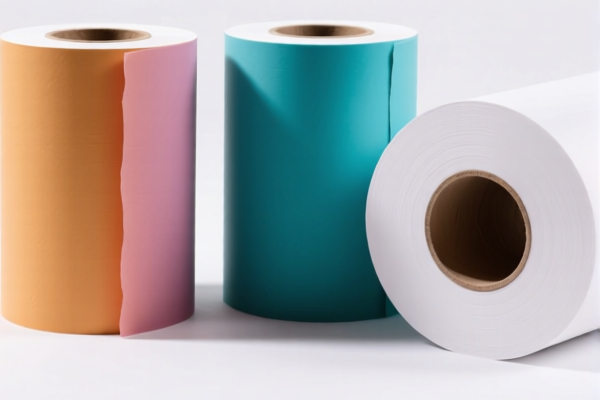
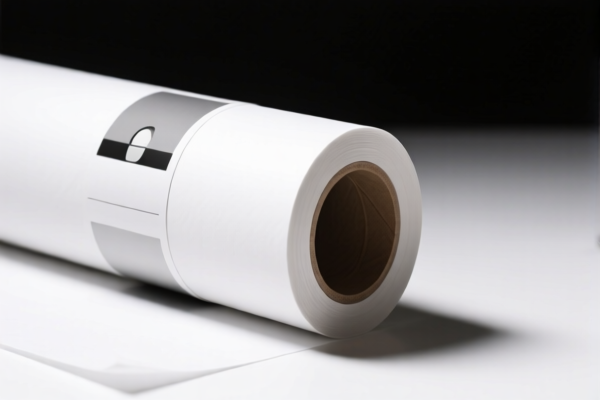


AI Analysis
🎞️ Film Roll - High Contrast (感光胶片卷/高对比度)
🌐 HS Code Reference & Customs Clearance Guide | 2026 Tariff Analysis | Professional Strategy for US Imports from China
📌 One, Product Definition & Classification: What is "High Contrast Film Roll"?
"Film Roll High Contrast" refers to photographic or technical film rolls characterized by high contrast ratios, typically used for specialized imaging, technical documentation, or artistic photography. In international trade, these are classified under Chapter 37 (Photographic or Cinematographic Goods).
Key Distinctions: * Photographic Film (3701/3702): Light-sensitive material in strip/sheet form. * Perforated vs. Perforation-less: Determines if it goes to 3701 (general photographic) or 3702 (other photographic/cinematographic). * Material Base: Typically cellulose acetate, polyester, or triacetate (non-paper, non-textile).
⚠️ Critical Classification Point:
- If the film is color or general-purpose photographic film without specific perforations mentioned → 3701
- If the film is black-and-white (high contrast often implies B&W technical film) or specific cinematographic rolls without perforations → 3702
- If it’s a "catch-all" for unspecified photographic film types → 3701.99 or 3702.32
📦 Two, HS Code Classification Details (2026 Latest Tariff Alignment)
| HS Code | Product Description | Application Scenario | Key Characteristics |
|---|---|---|---|
3701.91.00.60 |
Photographic plates and film, in the flat, including "papier argentique", other than photographic paper, paperboard or textiles; color or other color-sensitive plates and film | General color photography, high-contrast color film, or unspecified photographic film | 🎨 Color/General Photographic; Non-paper base |
3701.99.60.60 |
Other photographic plates and film, in the flat... (Residual Category) | Catch-all for high-contrast film not fitting specific 3701 subheadings | 📦 "Other" category; High contrast as a defining trait |
3702.32.01.60 |
Photographic film, in the roll, other than cinematographic film, perforated, of a width of 35 mm or less, sensitised | 35mm B&W high-contrast film, technical roll film | 🎞️ Perforated, Roll, ≤35mm, High Contrast |
3702.31.01.00 |
Photographic film, in the roll, other than cinematographic film, perforated, of a width of 35 mm or less, sensitised | Black and White high-contrast roll film | ⚫ B&W Characteristic; Perforated Roll |
🔍 Key Reminder:
- High Contrast is a sensitization characteristic, not a separate HS code category. It must be linked to the physical form (Roll vs. Flat) and type (Color vs. B&W). - Perforation is a major classifier. Perforated rolls often fall under 3702.3x, while unperforated or general photographic film may fall under 3701.9x.
💰 Three, 2026 Latest Tariff Rate Details (Including Additional Taxes, Policy Add-ons)
✅ Applicable Country: United States (US)
✅ Country of Origin: China (CN)
✅ Effective Date: From November 10, 2025 (including subsequent imports)
🎯 1. 3701.91.00.60 & 3702.32.01.60 & 3702.31.01.00
General Photographic/Cinematographic Film (High Contrast)
| Item | Content |
|---|---|
| Base Tariff Rate | 3.7% (ad valorem) |
| USITC Additional Duty (Section 301) | +25.0% |
| Section 122 Duty (IEEPA) | +10.0% (Targeting China/HK products) |
| Total Duty Rate | 38.7% |
| Tax Calculation | CIF Value × 38.7% |
| De Minimis Exemption Eligible? | ❌ No (deny_de_minimis) |
| Legal Path | USITC:3701.91.00.60 → FOOTNOTE:301 → IEEPA:122 |
USITC:3702.32.01.60 → FOOTNOTE:301 → IEEPA:122 |
|
USITC:3702.31.01.00 → FOOTNOTE:301 → IEEPA:122 |
📌 Explanation:
- "Base Tariff 3.7%": The standard MFN (Most Favored Nation) duty for photographic film. - "Section 301 Additional Duty 25%": Imposed under the US Trade Act of 1974, Section 301, targeting specific Chinese imports. - "Section 122 Duty 10%": Imposed under the International Emergency Economic Powers Act (IEEPA), specifically targeting Chinese-origin goods. - Total 38.7%: This is a high combined rate. Importers must budget for this significant cost.
🎯 2. 3701.99.60.60
Other Photographic Film (High Contrast - Catch-all)
| Item | Content |
|---|---|
| Base Tariff Rate | 0.0% |
| USITC Additional Duty (Section 301) | +25.0% |
| Section 122 Duty (IEEPA) | +10.0% |
| Total Duty Rate | 35.0% |
| Tax Calculation | CIF Value × 35.0% |
| De Minimis Exemption Eligible? | ❌ No (deny_de_minimis) |
| Legal Path | USITC:3701.99.60.60 → FOOTNOTE:301 → IEEPA:122 |
📌 Note:
- Although the base rate is 0%, the additional duties bring the total to 35.0%. - This code is used when the film doesn't fit specific subheadings like 3701.91. - Even with a 0% base rate, the 35% total is still substantial.
🛠️ Four, Customs Clearance Practical Advice (Battle-tested Pitfall Avoidance)
✅ 1. Required Documentation Checklist (Non-negotiable)
| Document | Must Provide | Description |
|---|---|---|
| ✅ Product Specification Sheet | ✔️ | Must detail: Type (Color/B&W), Format (Roll/Flat), Width, Perforation status, Sensitization type. |
| ✅ Technical Data Sheet | ✔️ | Confirm material base (Polyester/Acetate) – crucial to exclude from Chapter 49 (Paper). |
| ✅ Product Photos (Label & Roll) | ✔️ | Show packaging, brand, model, and any "High Contrast" markings. |
| ✅ Commercial Invoice | ✔️ | Clearly state: "Photographic Film Roll, High Contrast, HS Code [Insert Code]", CIF Value. |
| ✅ Packing List | ✔️ | Detail weight, dimensions, and number of rolls. |
| ✅ Certificate of Origin (CO) | ✔️ | If applicable, to verify Chinese origin (triggers Section 122). |
| ✅ Third-Party Test Report | ✔️ | ISO/IEC certification for film sensitivity (optional but recommended for verification). |
✅ 2. Declaration Tips (Key Mnemonics)
🔥 "Specs Define Code, High Contrast is a Trait, Not a Code!"
| Scenario | Correct Declaration | Wrong Practice |
|---|---|---|
| Color Film Roll, Perforated, 35mm | 3702.32.01.60 |
Misdeclare as 3701.91 (Flat film) → Penalty! |
| B&W High Contrast Roll, Perforated | 3702.31.01.00 |
Declare as "Camera Accessory" → 20%+ penalties |
| Unspecified High Contrast Film | 3701.99.60.60 |
Vague description "Film" → Customs holds for review |
| Non-Photographic Technical Film | Verify if Chapter 37 applies | Assume Chapter 37 → May be misclassified |
✅ 3. Special Handling Cases
| Case | Handling Advice |
|---|---|
| OEM Custom Film | Provide customer PO + technical specs to justify specific HS code. |
| Mixed Shipment (Film + Camera) | Declare Separately! Film goes to Ch.37, Camera to Ch.85. Do not bundle. |
| Digital Sensor vs. Film | Ensure product is physical film, not digital film scanners. Scanners are Ch.84/85. |
| High-Contrast Labeling | Use "High Contrast" as a product characteristic, not the HS code determinant. |
🌍 Five, Global Market Comparison (2026 Latest)
| Country/Region | Recommended HS Code | Duty Rate (China Origin) | Certification | Notes |
|---|---|---|---|---|
| 🇺🇸 USA | 3701.91.00.60 / 3702.31.01.00 |
38.7% | None specific | Highest burden due to 301 + 122 duties. |
| 🇨🇳 China | 3701.91.00 / 3702.31.00 |
3.7% | None | No additional duties. |
| 🇪🇺 EU | 3701.91 / 3702.31 |
0% - 3.7% | CE (if applicable) | No Section 301/122 equivalents. |
| 🇯🇵 Japan | 3701.91 / 3702.31 |
3.7% | PSE (if electronic accessory) | Standard MFN rates. |
| 🇬🇧 UK | 3701.91 / 3702.31 |
3.7% | UKCA | Post-Brexit rules align with EU largely. |
📌 Conclusion:
- The USA imposes the highest total duty (38.7%) on high-contrast film rolls from China due to layered additional tariffs. - Alternative Markets (EU, Japan, UK) offer significantly lower duties (3.7% or lower), making them more cost-effective for re-export or direct sales. - Supply Chain Strategy: Consider sourcing from non-China origins (e.g., Japan, Germany) if targeting the US market to avoid Section 122 and 301 duties.
📌 Six, Common Errors & Pitfall Guide (Lessons Learned)
❌ Error 1: Declaring "High Contrast" as the HS code category.
👉 Result: Customs rejects declaration, delays shipment, fines.
✅ Fix: Use correct HS code based on form (roll/flat) and type (B&W/color).
❌ Error 2: Omitting "Perforated" or "Non-Perforated" in description.
👉 Result: Misclassification between 3701 (often flat/general) and 3702 (roll/cinema).
✅ Fix: Clearly state "Perforated Roll" or "Non-Perforated Sheet".
❌ Error 3: Bundling film with camera accessories.
👉 Result: Incorrect duty rate application (e.g., paying accessory rates instead of film rates).
✅ Fix: Separate HS codes for film and accessories.
❌ Error 4: Assuming "De Minimis" exemption applies.
👉 Result: Small shipments still face 38.7% duty.
✅ Fix: Budget for full duty regardless of shipment size.
🎯 Seven, Conclusion: Precise Declaration, Cost Efficiency, Risk Mitigation
🎯 Remember the Mantra:
🔹 "HS Code dictates duty, 38.7% is the US Reality."
🔹 "High Contrast is a feature, not a tariff category."
🔹 "Separate Film from Accessories, Avoid Penalties and Delays."
📌 Pro Tip:
If your film is originally manufactured in Japan, Germany, or the UK, you may avoid Section 122 and 301 duties, reducing the total rate to 3.7% or even 0% depending on the specific HS code and trade agreements.
Recommendation: Apply for an Advance Ruling (US CBP) before shipment to confirm the HS code and duty liability.
📣 Immediate Action Required:
📞 Contact a licensed customs broker + Provide Product Specs + Request HS Code Advance Ruling
🚀 Ensure smooth customs clearance, minimize tax burden, and maximize profit margins!
✨ Professional Clearance Starts with Accurate Classification!
💼 Every cent in duty savings is pure profit!
Customer Reviews
About HS Code Classification
The Harmonized System (HS) is an internationally standardized nomenclature developed by the World Customs Organization (WCO) to classify traded products. Over 200 countries use the HS system as the basis for customs tariffs, trade statistics, and import/export regulations.
Each HS code follows a hierarchical structure:
- Chapter (2 digits) — Broad category of goods (e.g., Chapter 84: Machinery and Mechanical Appliances)
- Heading (4 digits) — More specific grouping within the chapter
- Subheading (6 digits) — Internationally standardized breakdown, used by all WCO member countries
- National subdivisions (8-10 digits) — Country-specific extensions for further classification, such as US HTSUS 10-digit codes
Correct HS code classification is essential for smooth customs clearance, accurate duty payment, and compliance with trade regulations. Misclassification can lead to customs delays, overpayment of duties, or penalties.
When importing from CN to US, the applicable tariff rates may include:
- Most-Favored-Nation (MFN) rate — The standard duty rate applied to WTO members
- General rate — Applied to countries without trade agreements
- Trade remedy duties — Additional tariffs such as Section 301 (anti-dumping), Section 232 (national security), or countervailing duties
The information provided on this page is for reference purposes only. For official classification, please consult with your local customs authority or a licensed customs broker.