Film Roll High Speed Film
CN → US| HS Code | Tariff Rate | Origin | Destination | Doc |
|---|---|---|---|---|
| 3701996060 | 35.0% | CN | US | Official Doc |
| 3701910060 | 38.7% | CN | US | Official Doc |
| 3702960000 | 38.7% | CN | US | Official Doc |
| 3702970000 | 35.0% | CN | US | Official Doc |
| 3707100090 | 38.0% | CN | US | Official Doc |
| 3707100005 | 38.0% | CN | US | Official Doc |
Product Images
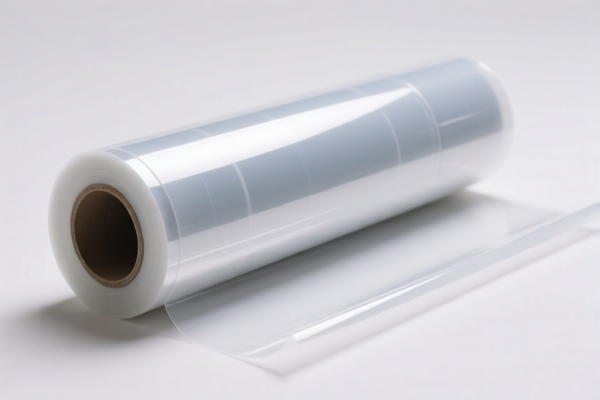


AI Analysis
Based on the provided DATA content, here is the detailed breakdown for Film Roll High Speed Film (specifically referring to sensitized, unexposed photographic film in rolls) formatted as a professional Wiki guide.
🎞️ Film Roll High Speed Film (Photographic Film in Rolls)
🌐 HS Code Reference & Customs Clearance Guide | 2026 Latest Tariff Analysis | Professional Strategy
📌 I. Product Definition & Classification: Is it "High Speed" or "Long Roll"?
"Film Roll High Speed Film" generally refers to photographic film in rolls that is sensitized (coated with light-sensitive chemicals) and unexposed. In the context of your provided data, the critical distinction for classification is not just the "speed" (ISO rating), but the width and length of the roll, as this dictates the HS Code and tariff rate.
Key Classification Criteria (Based on Data): 1. Material: Must be other than paper, paperboard, or textiles (e.g., polyester or cellulose acetate base). 2. Form: Must be in rolls (sensitive, unexposed). 3. The "Golden Rule": * Width ≤ 35mm (Standard 35mm film) AND Length ≤ 30m → Low Tariff (0%). * Width ≤ 35mm (Standard 35mm film) AND Length > 30m (High capacity/Industrial/High Speed rolls) → High Tariff (25%). * Width > 35mm (Medium/Large Format) → Check specific sub-codes (Note: Your data focuses on the 35mm roll distinction).
⚠️ Critical Distinction:
- If the "High Speed Film" is packaged as a 35mm roll exceeding 30 meters in length, it is heavily taxed in the US market.
- If it is standard consumer 35mm film (under 30m), it is duty-free.
- Note: The provided data does not list a specific HS Code for rolls >35mm; it only details the <35mm scenarios.
📦 II. HS Code Classification Details (2026 Latest Tariff Alignment)
Based strictly on the provided DATA, here are the applicable codes for "Film Roll" products:
| HS Code | Product Description | Applicable Scenario | Width & Length Criteria |
|---|---|---|---|
3702.96.00.00 |
Photographic film in rolls, sensitized, unexposed... Other: Of a width not exceeding 35 mm and of a length not exceeding 30 m |
Standard 35mm consumer film, short high-speed rolls, amateur photography | ✅ Width ≤ 35mm ✅ Length ≤ 30m |
3702.97.00.00 |
Photographic film in rolls, sensitized, unexposed... Other: Of a width not exceeding 35 mm and of a length exceeding 30 m |
High Speed Industrial/Commercial Film, Large format cinema rolls, Long exposure rolls | ✅ Width ≤ 35mm ❌ Length > 30m |
🔍 Key Reminder:
-3702.96.00.00is the "Safe Harbor" for most 35mm film. -3702.97.00.00is the Trap for "High Speed" or "Long Roll" films used in industrial or professional cinema applications. If the roll is cut to 30.1 meters or more, the tariff spikes. - Exclusions: This data does not cover film plates (3701category) or sensitized emulsions (3707category). Ensure your product is a finished roll, not a liquid emulsion.
💰 III. 2026 Tariff Rate Breakdown (Detailed Tax Terms)
✅ Context: Based on the provided
DATA, these rates apply to imports (likely from China to the US, given the "Additional Tariff" structure).
✅ Product: Sensitized Photographic Film in Rolls (35mm or less).
🎯 1. 3702.96.00.00 – Standard 35mm Film Rolls (≤ 30m)
| Item | Content |
|---|---|
| Base Tariff | 0.0% (Duty-Free) |
| Additional Tariff | 0.0% (No penalty) |
| Total Tax Rate | 0.0% |
| Tax Detail | "基础关税: 0.0%, 加征关税: 0.0%" |
| Calculation | CIF Value × 0% = $0 |
| Eligibility | ✅ Duty-Free |
📌 Explanation:
Standard 35mm film rolls (including high-speed versions) that are under 30 meters in length enjoy complete duty exemption. This is the most common classification for consumer and general professional photography.
🎯 2. 3702.97.00.00 – Long/High Speed 35mm Film Rolls (> 30m)
| Item | Content |
|---|---|
| Base Tariff | 0.0% |
| Additional Tariff | +25.0% |
| Total Tax Rate | 25.0% |
| Tax Detail | "基础关税: 0.0%, 加征关税: 25.0%" |
| Calculation | CIF Value × 25.0% |
| Eligibility | ❌ Subject to Additional Tariff |
📌 Explanation:
If your "High Speed Film" is a long roll (e.g., 100ft, 400ft, or 500ft cinema rolls, or bulk industrial rolls) where the length exceeds 30 meters, a 25% Additional Tariff is applied on top of the 0% base rate.
Example: If the film costs $1,000 CIF, the tax bill is $250.
🛠️ IV. Customs Clearance Operational Advice (Practical Guide)
✅ 1. Pre-Shipment Documentation Checklist
To ensure the correct HS Code (3702.96 vs 3702.97) is recognized and avoid penalties:
| Document | Requirement | Why it Matters |
|---|---|---|
| Product Specification Sheet | Must explicitly state Roll Width and Roll Length (in meters or feet) | 海关 needs to verify if Length > 30m to apply the 25% tax. |
| Technical Drawings / Photos | Show the reel spool size and film width | Confirms it is "in rolls" and not "plates" (3701) or "emulsion" (3707). |
| Commercial Invoice | Must describe the product as "Sensitized, Unexposed Photographic Film in Rolls" | Prevents reclassification as "Chemical Preparations" (3707). |
| Packing List | Clearly list "Meters per Roll" | Critical for proving the <30m or >30m status. |
✅ 2. Declaration Strategy (The "30-Meter Rule")
🔥 Golden Rule for Declaration:
"Measure First, Declare Second. Length is the King!"
| Scenario | Correct HS Code | Tax Outcome | Risk if Wrong |
|---|---|---|---|
| 35mm Roll, 20m length | 3702.96.00.00 |
0% | N/A |
| 35mm Roll, 30.5m length | 3702.97.00.00 |
25% | If declared as 3702.96, you face underpayment + penalties. |
| 65mm Roll (Large Format) | Not in Data | Likely 3701 (Plates) |
Do not use 3702 codes; data does not cover this. |
| Liquid Emulsion | 3707.10.00.xx |
0% (usually) | Do not declare as "Film Roll"; it will be rejected. |
Declaration Tip:
On the invoice and packing list, always write:
"35mm Photographic Film, Sensitized, Unexposed. Width: 35mm. Length: XX meters (per roll)."
This allows customs officers to instantly calculate the tax without querying.
✅ 3. Special Considerations for "High Speed"
- High Speed ≠ High Tax: The term "High Speed" (referring to ISO 800, 1600, etc.) does not change the HS Code. It is purely about the chemical sensitivity.
- The Real Risk: "High Speed" films are often sold in long rolls for industrial testing or cinema to save cost. If you ship a 40-meter roll of high-speed film, you trigger the 25% tax.
- Packaging: If the product is "put up in measured portions" (e.g., pre-cut reels) but the total length per package exceeds 30m, the rule still applies.
🌍 V. Global Market Comparison (Based on Provided Data)
Note: The provided data specifically highlights a 25% Additional Tariff, which is characteristic of US-China trade relations (Section 301 tariffs).
| Destination | Likely HS Code | Base Rate | Additional Tariff | Total Effective Rate |
|---|---|---|---|---|
| USA (from China) | 3702.96.00 |
0% | 0% | 0% |
| USA (from China) | 3702.97.00 |
0% | 25% | 25% |
| Other Markets | N/A | Varies | Varies | Unknown (Data not provided) |
📌 Conclusion: The 25% Additional Tariff in your data is a specific US trade policy impact. If you are importing to the US, the 30-meter length limit is your most critical cost control point.
📌 VI. Common Pitfalls & Avoidance
❌ Pitfall 1: Assuming "High Speed" implies a different tax class.
👉 Fix: High speed is irrelevant; Length is the only factor for 3702.97.
❌ Pitfall 2: Miscalculating the length of the roll (e.g., mixing feet and meters).
👉 Fix: 30 meters ≈ 98.4 feet. If the roll is longer than 98 feet, you pay 25%.
❌ Pitfall 3: Declaring "Chemical Preparations" (3707) for finished rolls.
👉 Fix: Finished rolls go to 3702. Chemicals go to 3707. Mixing them up causes delays.
✅ Pro Tip:
If you are shipping 35mm film rolls longer than 30 meters, consider re-packaging into smaller rolls (under 30m) before the final destination or in a duty-free zone to save the 25% tax.
🎯 VII. Final Strategy: Save 25% on Your Film Rolls!
🎯 Action Plan:
1. Measure every roll precisely.
2. Label the invoice clearly: "Length: XX Meters".
3. Select 3702.96.00.00 if ≤ 30m.
4. Select 3702.97.00.00 if > 30m (and budget for the 25% tax).
5. Do Not misdeclare long rolls as short rolls to evade tax (High risk of audit).
📣 Ready to Ship?
Ensure your "High Speed Film" dimensions are under 30 meters per roll to enjoy 0% Duties.
Master the length, master the margin!
✨ Precision in Classification = Savings in Cost! 💰
📦 Your Film, Your Rules, Your Tariff!
Customer Reviews
About HS Code Classification
The Harmonized System (HS) is an internationally standardized nomenclature developed by the World Customs Organization (WCO) to classify traded products. Over 200 countries use the HS system as the basis for customs tariffs, trade statistics, and import/export regulations.
Each HS code follows a hierarchical structure:
- Chapter (2 digits) — Broad category of goods (e.g., Chapter 84: Machinery and Mechanical Appliances)
- Heading (4 digits) — More specific grouping within the chapter
- Subheading (6 digits) — Internationally standardized breakdown, used by all WCO member countries
- National subdivisions (8-10 digits) — Country-specific extensions for further classification, such as US HTSUS 10-digit codes
Correct HS code classification is essential for smooth customs clearance, accurate duty payment, and compliance with trade regulations. Misclassification can lead to customs delays, overpayment of duties, or penalties.
When importing from CN to US, the applicable tariff rates may include:
- Most-Favored-Nation (MFN) rate — The standard duty rate applied to WTO members
- General rate — Applied to countries without trade agreements
- Trade remedy duties — Additional tariffs such as Section 301 (anti-dumping), Section 232 (national security), or countervailing duties
The information provided on this page is for reference purposes only. For official classification, please consult with your local customs authority or a licensed customs broker.