Film Roll Rapid Development
CN → US| HS Code | Tariff Rate | Origin | Destination | Doc |
|---|---|---|---|---|
| 3706106060 | 35.0% | CN | US | Official Doc |
| 3705000000 | 35.0% | CN | US | Official Doc |
| 3706900060 | 35.0% | CN | US | Official Doc |
Product Images
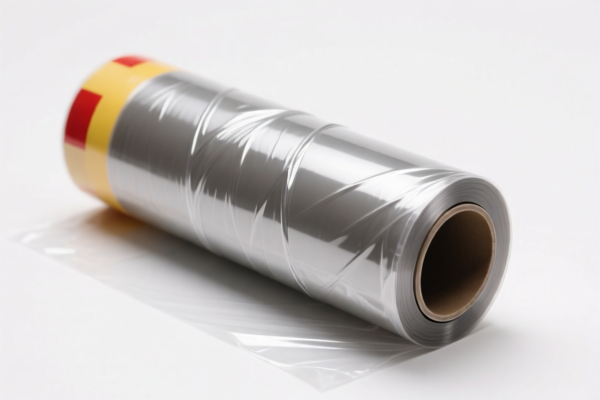

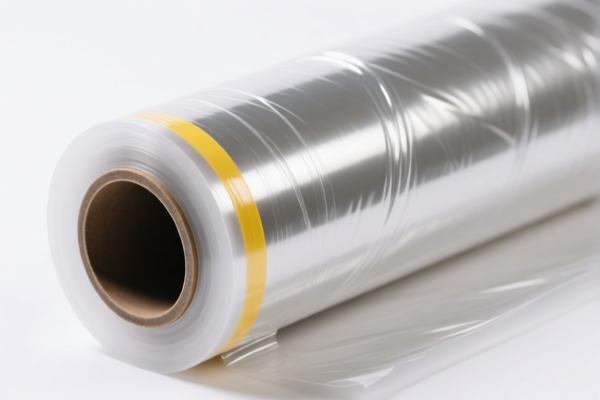
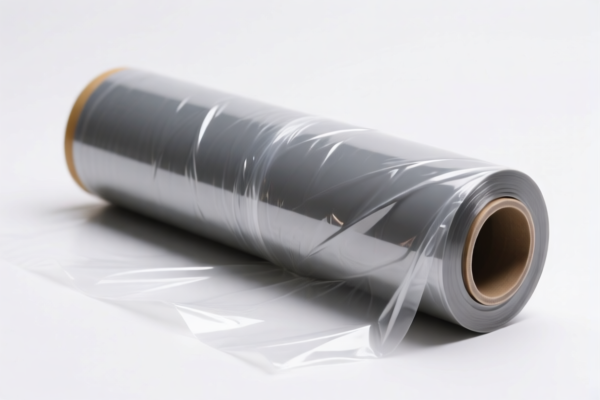
AI Analysis
🎞️ Film Roll Rapid Development (Wide-Format, Developed)
🌐 HS Code Reference & Customs Clearance Guide | 2026 Latest Tariff Analysis | Professional Clearance Strategy
📌 I. Product Definition & Classification: Do You Really Understand "Developed Wide-Format Film"?
Film Roll Rapid Development, specifically referring to wide-format photographic or cinematographic film that has been exposed and developed, falls strictly under Chapter 37 (Photographic or cinematographic goods). In international trade, the critical distinction lies in the physical state of the film:
- Unexposed/Undeveloped Film: Classified under different subheadings (e.g., 3702 or 3704 depending on format).
- Developed Film (Positive/Negative): Once the film is exposed and developed, it is treated as a finished photographic article, not raw material. The term "Rapid Development" confirms the chemical processing is complete.
⚠️ Key Distinction Point:
- If the film is blank/unused → It is "raw material" (Chapter 3702/3704).
- If the film is exposed and chemically processed (Rapid Developed) → It is "finished film" (Chapter 3705/3706).
- "Wide-Format" typically implies dimensions suitable for motion picture cameras or large-format scientific/artistic use, aligning with 3706 (Cinematographic film) or 3705 (Developed photographic film not for motion picture use).
📦 II. HS Code Classification Details (2026 Latest Tariff Authority Comparison)
Based on the product description "Wide-Format Film Roll (Developed)", the following HS Codes are applicable, each with specific justification:
| HS Code | Product Description | Justification for Classification | Application Scenario |
|---|---|---|---|
3706.10.60.60 |
Cinematographic Film, Exposed & Developed | "Film Roll" matches the material attribute of "Cinematographic Film." "Developed" explicitly meets the key morphological feature of "Exposed and Developed" required by this classification. | Professional cinema, high-end advertising video production, archival footage. |
3705.00.00.00 |
Photographic Film, Exposed & Developed | The product form is "Film Roll," and it is explicitly marked as "Developed," fitting the key usage limitation of "Exposed and Developed" in this classification. | Large-format photography, artistic prints, scientific documentation (non-cinematic). |
3706.90.00.60 |
Other Cinematographic Film, Exposed & Developed | The term "Developed" in the name corresponds to "Exposed and Developed." "Film Roll" belongs to the film material category, falling within the scope of cinematographic film codes. | Specialized industrial cinematographic film, non-standard formats, or other specialized motion picture films. |
🔍 Important Note:
- All three codes share the same Total Tax Rate due to similar trade policy treatments for developed film media.
- The choice between3705and3706depends on the intended use (Photographic vs. Cinematic). However, since the tax outcome is identical, precision in declaration helps avoid customs delays.
💰 III. 2026 Latest Tariff Rate Breakdown (Including Surcharges & Policy Add-ons)
✅ Applicable Country: United States (US)
✅ Origin: China (CN)
✅ Effective Date: From November 10, 2025 (for subsequent imports)
🎯 1. All Applicable HS Codes (3706.10.60.60, 3705.00.00.00, 3706.90.00.60)
| Item | Content |
|---|---|
| Base Tariff Rate | 0.0% (ad valorem) |
| Section 301 Surcharge | +25.0% |
| Section 122 Tariff | +10.0% (Additional tariff against China) |
| Total Tariff Rate | 35.0% |
| Tax Calculation | CIF Value × 35% |
| De Minimis Eligibility | ❌ Not Applicable (Film media are typically excluded from de minimis thresholds due to high value/regulatory sensitivity) |
| Legal Basis Path | USITC:3706.10.60.60 → Footnote: Section 301 → IEEPA: Section 122 |
📌 Explanation:
- Base Tariff (0%): Developed film has a low base duty in the US Tariff Schedule.
- Section 301 Surcharge (+25%): This is the standard retaliatory tariff applied to many Chinese goods under US Trade Law Section 301.
- Section 122 Tariff (+10%): Under Section 122 of the Trade Act of 1974, an additional 10% tariff may be applied for national security or economic reasons.
- Total: 35%: This is a high effective tariff rate. Importers must calculate costs accurately, as this significantly impacts margins.
🛠️ IV. Customs Clearance Practical Advice (Avoid Pitfalls)
✅ 1. Documentation Checklist (Mandatory)
| Document | Must Provide | Description |
|---|---|---|
| ✅ Product Specification Sheet | ✔️ | Details film width, length, type (positive/negative), and sensitivity (ISO/ASA). |
| ✅ Commercial Invoice | ✔️ | Must clearly state: "Wide-Format Cinematographic/Photographic Film, Exposed and Developed." Avoid vague terms like "Film Material." |
| ✅ Packing List | ✔️ | Specify net/gross weight and number of rolls. |
| ✅ Certificate of Origin | ✔️ | Essential for determining applicability of Section 301 and 122 tariffs. |
| ✅ Import License (if applicable) | ✔️ | Some developed films may require USDA or FDA checks if they contain specific emulsions (rare for pure film, but check). |
✅ 2. Declaration Tips (Key Mantras)
🔥 "Specify State: Developed. Specify Format: Wide. Avoid Ambiguity!"
| Situation | Correct Declaration | Wrong Practice |
|---|---|---|
| Exposed & Developed Film | Use HS Code 3706... or 3705... |
Misdeclare as Unexposed Film (3702...) → Risk of misclassification penalty. |
| Wide-Format vs. Standard | Explicitly state dimensions (e.g., "35mm" vs. "65mm/70mm") | Omitting size → Customs may reclassify to highest duty rate. |
| Content Description | "Cinematographic Film, Developed" | "Photographic Supplies" → Too vague, triggers manual examination. |
✅ 3. Special Considerations
| Situation | Handling Advice |
|---|---|
| X-Ray Inspection | Inform the carrier that film is radiation-sensitive. Use lead-lined packaging to prevent fogging, which could lead to rejection. |
| Flammable Materials | Some developed films have nitrate bases (rare now) or are packaged with flammable solvents. Ensure MSDS is provided if packaging contains chemicals. |
| Intellectual Property | If the film contains copyrighted images, ensure no IP infringement issues arise upon entry (rare for raw media, but possible). |
🌍 V. Global Market Comparison (2026 Latest)
| Country/Region | Recommended HS Code | Tariff Rate (China Origin) | Key Requirements |
|---|---|---|---|
| 🇺🇸 USA | 3706.10.60.60 / 3705.00.00.00 |
35.0% (0% Base + 25% Sec 301 + 10% Sec 122) | Clear description of "Developed" state. |
| 🇨🇳 China | 3706.10 / 3705.00 |
~6% - 8% | Import license may be required for certain cultural goods. |
| 🇪🇺 EU | 3706.10 / 3705.00 |
0% | CE marking not applicable, but REACH compliance for chemicals may apply. |
| 🇬🇧 UK | 3706.10 / 3705.00 |
0% | Post-Brexit rules apply; ensure UKCA/CE documentation if packaging includes chemicals. |
| 🇯🇵 Japan | 3706.10 / 3705.00 |
0% | JIS standards may apply for quality verification. |
📌 Conclusion:
- The US is the most expensive market for importing developed film from China due to the 35% total tariff.
- EU and UK offer 0% duty, making them more cost-effective destinations if logistics allow.
- China Domestic: Moderate duty; ensure cultural export regulations are met if re-importing.
📌 VI. Common Errors & Pitfalls (Lessons Learned)
❌ Error 1: Declaring "Developed Film" as "Raw Film"
👉 Consequence: Misclassification. If caught, you may face back duties and penalties. The state (exposed/developed) is critical.
❌ Error 2: Omitting "Wide-Format" or Dimensions
👉 Consequence: Customs may assume standard 35mm film, leading to incorrect HS Code assignment and potential delays.
❌ Error 3: Ignoring Section 122 Tariff
👉 Consequence: Underestimating landed cost. The 10% additional tariff is often forgotten in cost calculations.
❌ Error 4: Poor Packaging Leading to Fogging
👉 Consequence: Customer rejection. While not a customs error, it leads to returns and additional logistics costs.
✅ Correct Approach:
"Cinematographic Film, 70mm, Exposed and Developed, for Professional Use, Model XYZ, Packaged in Light-Tight Cans"
🎯 VII. Conclusion: Professional Declaration, Cost Optimization!
🎯 Remember the Mantra:
🔹 "Developed State is Key. Width Defines Code. 35% US Tax is Real."
🔹 "Don't hide the 'Developed' status. It changes everything."
📌 Pro Tip:
- If your film is not destined for the US, consider routing through EU or Asian hubs to avoid the 35% US tariff.
- For high-volume shipments, consult a customs broker for Advance Ruling to confirm the exact HS Code and tariff treatment under the latest 2026 rules.
📣 Immediate Action:
📞 Engage a licensed customs broker.
📦 Provide precise product photos and spec sheets.
🚀 Ensure smooth customs clearance and protect your profit margins!
✨ Professional clearance starts with accurate classification!
💼 Every percent of tax matters in the film industry!
Customer Reviews
About HS Code Classification
The Harmonized System (HS) is an internationally standardized nomenclature developed by the World Customs Organization (WCO) to classify traded products. Over 200 countries use the HS system as the basis for customs tariffs, trade statistics, and import/export regulations.
Each HS code follows a hierarchical structure:
- Chapter (2 digits) — Broad category of goods (e.g., Chapter 84: Machinery and Mechanical Appliances)
- Heading (4 digits) — More specific grouping within the chapter
- Subheading (6 digits) — Internationally standardized breakdown, used by all WCO member countries
- National subdivisions (8-10 digits) — Country-specific extensions for further classification, such as US HTSUS 10-digit codes
Correct HS code classification is essential for smooth customs clearance, accurate duty payment, and compliance with trade regulations. Misclassification can lead to customs delays, overpayment of duties, or penalties.
When importing from CN to US, the applicable tariff rates may include:
- Most-Favored-Nation (MFN) rate — The standard duty rate applied to WTO members
- General rate — Applied to countries without trade agreements
- Trade remedy duties — Additional tariffs such as Section 301 (anti-dumping), Section 232 (national security), or countervailing duties
The information provided on this page is for reference purposes only. For official classification, please consult with your local customs authority or a licensed customs broker.