Film Roll Standard Format
CN → US| HS Code | Tariff Rate | Origin | Destination | Doc |
|---|---|---|---|---|
| 3706106030 | 35.0% | CN | US | Official Doc |
| 3704000000 | 35.0% | CN | US | Official Doc |
| 3702560030 | 35.0% | CN | US | Official Doc |
Product Images
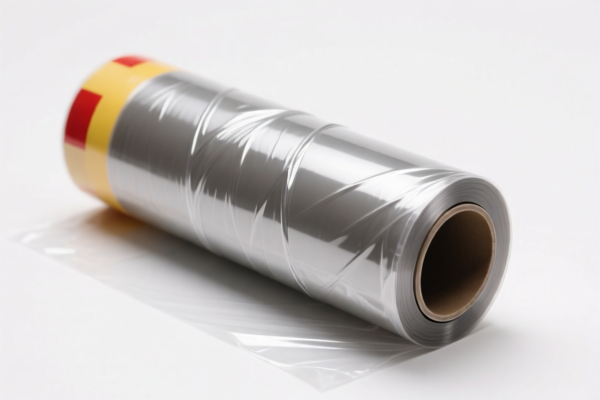

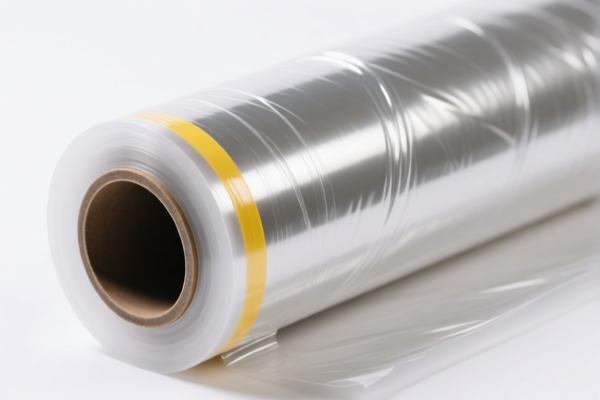
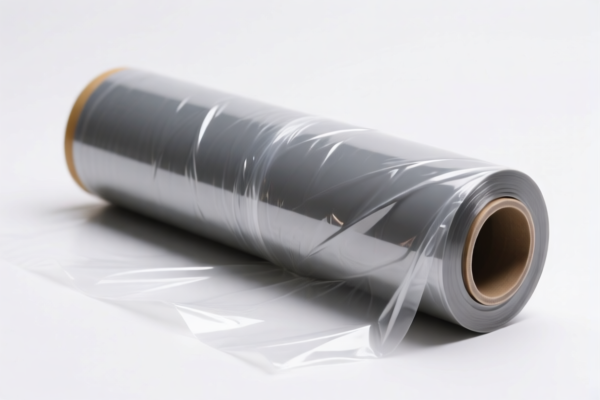
AI Analysis
🎞️ Film Roll Standard Format (Standard Cinema Negatives & Stock)
🌐 HS Code Reference & Clearance Guide | 2026 Latest Tariff Analysis | Professional Customs Strategy
📌 I. Product Definition & Classification: What Exactly is "Standard Film Roll"?
Standard Cinema Film Rolls refer to unexposed or processed photographic materials specifically designed for motion picture production and distribution. In international trade, they are strictly categorized by their state (exposed vs. unexposed) and format (cinema vs. still photography).
Key Categories: 1. Processed Cinema Negatives (Standard Cinema Negative Prints): Final or intermediate copies used for distribution, matching the "35mm and larger" physical format. 2. Unexposed Photographic Materials (Exposed but Unprocessed): Film that has been shot (exposed) but not yet developed, falling under general photographic material categories. 3. Unexposed Cinema Film Stock: Raw, sensitive film in reel/violle form, made of non-paper/plastic base, intended for cinema use.
⚠️ Critical Distinction:
- If the film is processed for distribution (ready to project) → Use 3706.10.60.30
- If the film is exposed but undeveloped → Use 3704.00.00.00
- If the film is raw/unexposed stock for cinema → Use 3702.56.00.30
📦 II. HS Code Classification Details (2026 Latest Tariff Authority Reference)
| HS Code | Product Description | Applicable Scenario | Tax Rate (US Import from CN) |
|---|---|---|---|
3706.10.60.30 |
Standard Cinema Negative Prints | Processed film for distribution; 35mm+ format; matches distribution copy usage | 35% |
3704.00.00.00 |
Photographic Paper, Film & Other Exposed Materials | Exposed but unprocessed film; matches category of "exposed photographic material" | 35% |
3702.56.00.30 |
Other Cinematographic Film (Unexposed) | Raw/Unexposed film stock; cinema use; roll/violle format; non-paper/non-textile base | 35% |
🔍 Key Reminder:
- All three codes attract a flat total tax rate of 35.0% for imports from China to the US. - Despite different stages of processing (raw, exposed, processed), the tariff burden is identical. - Misclassification based on "state" (exposed vs. unexposed) does not reduce tax liability but may cause customs delays if documentation doesn't match.
💰 III. 2026 Latest Tariff Rate Breakdown (Including Surtaxes & Policy Add-ons)
✅ Applicable Country: United States (US)
✅ Origin: China (CN)
✅ Effective Date: 2025 onwards (including subsequent imports)
🎯 1. 3706.10.60.30 —— Standard Cinema Negative Prints (Processed)
| Item | Content |
|---|---|
| Basic Tariff | 0.0% (ad valorem) |
| Section 301 Surtax | +25.0% (Additional Duty) |
| Section 122 Tariff | +10.0% (Specific Trade Policy Surtax) |
| Total Tax Rate | 35.0% |
| Tax Calculation | CIF Value × 35% |
| De Minimis Eligibility | ❌ Not Eligible (Denied under de minimis rules for these categories) |
| Legal Basis Path | Section 301: +25% → Section 122: +10% → HS: 3706.10.60.30 |
📌 Explanation:
- The 25% surtax is imposed under Section 301 of the Trade Act (targeting specific Chinese imports).
- The 10% surtax is a Section 122 duty (national security trade remedy).
- Total: 35%. This is a high tariff category. Do not rely on de minimis exemptions.
🎯 2. 3704.00.00.00 —— Exposed but Unprocessed Photographic Materials
| Item | Content |
|---|---|
| Basic Tariff | 0.0% |
| Section 301 Surtax | +25.0% |
| Section 122 Tariff | +10.0% |
| Total Tax Rate | 35.0% |
| Tax Calculation | CIF Value × 35% |
| De Minimis Eligibility | ❌ Not Eligible |
| Legal Basis Path | Section 301: +25% → Section 122: +10% → HS: 3704.00.00.00 |
📌 Note:
- Even if the film is exposed (used in production), it still falls under this general photographic material heading.
- Tax rate is identical to processed negatives. No benefit in choosing this code if processing status is misreported.
🎯 3. 3702.56.00.30 —— Unexposed Cinematographic Film Stock
| Item | Content |
|---|---|
| Basic Tariff | 0.0% |
| Section 301 Surtax | +25.0% |
| Section 122 Tariff | +10.0% |
| Total Tax Rate | 35.0% |
| Tax Calculation | CIF Value × 35% |
| De Minimis Eligibility | ❌ Not Eligible |
| Legal Basis Path | Section 301: +25% → Section 122: +10% → HS: 3702.56.00.30 |
📌 Note:
- Applies to raw film rolls (unexposed) used in cinema cameras.
- Must be non-paper, non-textile base (typically cellulose acetate or polyester).
- Tax rate is 35%. No advantage over processed film.
🛠️ IV. Clearance Practical Advice (Avoiding Pitfalls)
✅ 1. Required Documentation Checklist (All Required)
| Document | Mandatory | Notes |
|---|---|---|
| ✅ Product Specification Sheet | ✔️ | Must state: Format (35mm/70mm), Base Type, Sensitivity, Processed/Unexposed Status |
| ✅ Commercial Invoice | ✔️ | Clearly state: "Cinema Film Roll," "Standard Format," "Unexposed" or "Processed" |
| ✅ Packing List | ✔️ | Specify number of reels, weight, and dimensions |
| ✅ Certificate of Origin (CO) | ✔️ | If not from China, may reduce duties (but CN origin triggers 35%) |
| ✅ Declaration of Content | ✔️ | Explicitly state: "Photographic Material for Cinema Use" |
| ✅ Photos of Product & Labeling | ✔️ | Show reel labels, format markings, and batch numbers |
✅ 2. Declaration Tips (Key Mantra)
🔥 "Match Status, Name Clearly, Pay 35%, No Escape!"
| Scenario | Correct Declaration | Wrong Practice |
|---|---|---|
| Processed Distribution Copy | 3706.10.60.30 |
Mislabel as "raw film" → Audit Risk |
| Exposed Unprocessed Roll | 3704.00.00.00 |
Mislabel as "processed" → Classification Error |
| Raw Unexposed Stock | 3702.56.00.30 |
Mislabel as "paper-based" → Rejection |
| Non-Cinema Film (e.g., Still Photo) | Not in | Do not force-fit to cinema codes |
✅ 3. Special Cases Handling
| Scenario | Handling Advice |
|---|---|
| OEM Custom Film Stock | Provide manufacturer specs; confirm base material (non-paper) |
| Mixed Shipments (Processed + Unexposed) | Split Declaration: Use separate HS codes for each type |
| Film for Documentary/Education | Still subject to 35% if imported from China; no special exemption |
| Samples < $800 | ❌ De Minimis Exemption DOES NOT APPLY to these HS codes under current rules |
🌍 V. Global Market Comparison (2026 Latest)
| Country/Region | Recommended HS Code | Tariff (from CN) | Notes |
|---|---|---|---|
| 🇺🇸 USA | 3706.10.60.30 / 3704.00.00.00 / 3702.56.00.30 |
35% | High surtax due to Section 301 + 122 |
| 🇨🇳 China | Same HS Codes | ~5-10% | Lower entry tariff; no Section 301/122 |
| 🇪🇺 EU | Varies by HS | ~6-12% | No Section 301/122; depends on base material |
| 🇬🇧 UK | Varies by HS | ~6-12% | Post-Brexit tariffs; no US-style surtaxes |
📌 Conclusion:
- USA is the most expensive market for Chinese film rolls due to 35% total tariff.
- Consider supply chain diversification (e.g., producing in Thailand or India) to avoid Section 301/122 duties.
📌 VI. Common Mistakes & Pitfalls (Blood Lessons)
❌ Mistake 1: Declaring "processed film" as "raw film" to avoid scrutiny
👉 Consequence: Customs audit, delay, penalty, or forced reclassification.
❌ Mistake 2: Assuming de minimis ($800) applies to film rolls
👉 Consequence: No exemption. All imports subject to 35% regardless of value.
❌ Mistake 3: Using vague descriptions like "photographic material"
👉 Consequence: Customs may assign higher default duties or hold shipment for inspection.
❌ Mistake 4: Ignoring the difference between "exposed" and "unexposed"
👉 Consequence: While tax is same, incorrect status declaration leads to legal compliance risks.
✅ Correct Declaration Example:
"35mm Cinema Film Roll, Standard Format, Unexposed, Polyester Base, Batch #12345, Origin: China"
🎯 VII. Conclusion: Precise Classification Saves Time & Money
🎯 Remember the Mantra:
🔹 "Raw, Exposed, or Processed → All 35%!"
🔹 "No De Minimis for Film → Plan for High Tariff!"
🔹 "Describe Clearly → Avoid Delays!"
📌 Pro Tip:
If your film rolls are sourced from Vietnam, India, or Thailand, you may avoid Section 301/122 surtaxes, reducing total tax to 0-10%.
👉 Recommendation: Apply for an Advance Ruling from US Customs (CBP) before shipment.
📣 Immediate Action:
📞 Contact a licensed customs broker
📋 Provide detailed specs + photos
🚀 Ensure smooth clearance with accurate HS codes
✨ Professional Clearance Starts with Accurate Classification!
💼 Every Percent Counts in Global Trade!
Customer Reviews
About HS Code Classification
The Harmonized System (HS) is an internationally standardized nomenclature developed by the World Customs Organization (WCO) to classify traded products. Over 200 countries use the HS system as the basis for customs tariffs, trade statistics, and import/export regulations.
Each HS code follows a hierarchical structure:
- Chapter (2 digits) — Broad category of goods (e.g., Chapter 84: Machinery and Mechanical Appliances)
- Heading (4 digits) — More specific grouping within the chapter
- Subheading (6 digits) — Internationally standardized breakdown, used by all WCO member countries
- National subdivisions (8-10 digits) — Country-specific extensions for further classification, such as US HTSUS 10-digit codes
Correct HS code classification is essential for smooth customs clearance, accurate duty payment, and compliance with trade regulations. Misclassification can lead to customs delays, overpayment of duties, or penalties.
When importing from CN to US, the applicable tariff rates may include:
- Most-Favored-Nation (MFN) rate — The standard duty rate applied to WTO members
- General rate — Applied to countries without trade agreements
- Trade remedy duties — Additional tariffs such as Section 301 (anti-dumping), Section 232 (national security), or countervailing duties
The information provided on this page is for reference purposes only. For official classification, please consult with your local customs authority or a licensed customs broker.