Film Roll Welding Detection Equipment
CN → US| HS Code | Tariff Rate | Origin | Destination | Doc |
|---|---|---|---|---|
| 9031499000 | 35.0% | CN | US | Official Doc |
| 9031909195 | 85.0% | CN | US | Official Doc |
| 8543709860 | 37.6% | CN | US | Official Doc |
| 8543906800 | 35.0% | CN | US | Official Doc |
Product Images
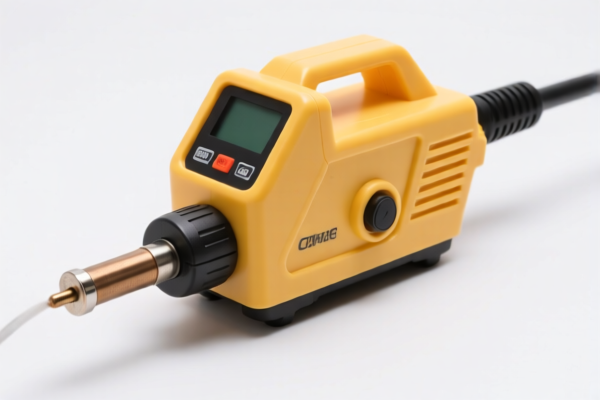
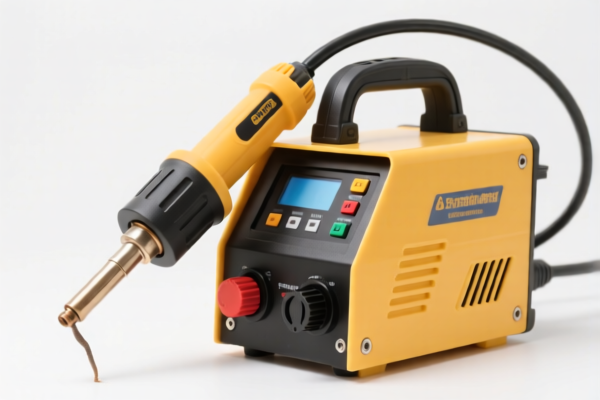


AI Analysis
🏭 Film Roll Welding Detection Equipment (Optical Inspection Systems)
🌐 HS Code Reference & Customs Clearance Guide | 2026 Latest Tariff Analysis | Professional Level通关策略
📌 I. Product Definition & Classification: What is this Equipment?
Film Roll Welding Detection Equipment refers to specialized industrial machinery used in high-speed manufacturing lines (such as packaging, flexible electronics, or automotive interiors). Its core function is to non-destructively test the integrity of welded joints on moving film rolls using optical sensors.
Unlike simple visual inspection, this equipment often employs laser profiling, vision systems, or photometric analysis to detect defects such as weak bonds, gaps, inclusions, or uneven pressure in welds.
⚠️ Critical Classification Point:
The HS Code depends on whether the equipment is classified primarily as an Optical Instrument (measuring light properties) or as a General Electrical Machine with a specific function.
- If it relies on optical principles (lasers, cameras, spectrometers) for measurement/inspection → Likely Chapter 90 (Optical/Medical Instruments).
- If it is a generic industrial detector with no specific optical measuring principle → Likely Chapter 85 (Electrical Machines/Devices).
📦 II. HS Code Classification Details (Based on Provided Data)
Below are the four possible HS Codes derived from the specific data provided, along with their logical justification and associated tax implications.
1️⃣ Option A: Optical Inspection Classification
| HS Code | 9031.49.90.00 |
|---|---|
| Product Description | Optical Inspection Instruments for welding detection. Fits the definition of "instruments and apparatus for measuring or checking" under optical categories. |
| Logic | The device uses optical principles to detect weld quality. It is explicitly categorized under optical inspection instruments in the provided data. |
| Total Tax Rate | 35.0% |
| Tax Breakdown | - Base Tariff: 0.0% - Additional Tariff (Section 301): 25.0% - IEEPA Tariff (Section 122): 10% |
2️⃣ Option B: General Detection Equipment (Special Metals)
| HS Code | 9031.90.91.95 |
|---|---|
| Product Description | Other Measuring/Checking Instruments (Parts/Accessories/Other). Fits "other measuring or checking machines." |
| Logic | Classified as a general detection instrument. Note: The tax detail specifically mentions Steel, Aluminum, and Copper products attract an additional 50% tariff. If the welding detection equipment itself contains significant steel/aluminum/copper components or is considered a "steel/aluminum/copper product" in origin context, this rate applies. |
| Total Tax Rate | 85.0% ⚠️ High Risk |
| Tax Breakdown | - Base Tariff: 0.0% - Additional Tariff (Section 301): 25.0% - IEEPA Tariff (Section 122): 10% - Steel/Aluminum/Copper Additional Tariff: 50% |
3️⃣ Option C: General Electrical Machine
| HS Code | 8543.70.98.60 |
|---|---|
| Product Description | Machines and Apparatus with individual functions. Core function is detection, fitting the "other machines" category. |
| Logic | Classified as a machine with a specific industrial function (detection) but not primarily defined as an optical instrument in this classification path. |
| Total Tax Rate | 37.6% |
| Tax Breakdown | - Base Tariff: 2.6% - Additional Tariff (Section 301): 25.0% - IEEPA Tariff (Section 122): 10% |
4️⃣ Option D: Independent Electrical Device
| HS Code | 8543.90.68.00 |
|---|---|
| Product Description | Electric Apparatus with individual functions. Matches the category of "machines and electrical apparatus." |
| Logic | Treated as an electrical device with a specific function (detection) rather than a pure measuring instrument. |
| Total Tax Rate | 35.0% |
| Tax Breakdown | - Base Tariff: 0.0% - Additional Tariff (Section 301): 25.0% - IEEPA Tariff (Section 122): 10% |
💰 III. 2026 Latest Tariff Rate Analysis (Detailed Breakdown)
✅ Applicable Country: USA (US)
✅ Origin: China (CN)
✅ Context: All rates include Section 301 and IEEPA tariffs as per the provided data.
🎯 Comparison of Total Tax Burdens
| HS Code | Description | Base Rate | Add. Tariff (301) | IEEPA (122) | TOTAL RATE | Risk Level |
|---|---|---|---|---|---|---|
| 9031.49.90.00 | Optical Inspection Instrument | 0.0% | 25.0% | 10.0% | 35.0% | 🟢 Low/Med |
| 8543.90.68.00 | Independent Electrical Device | 0.0% | 25.0% | 10.0% | 35.0% | 🟢 Low/Med |
| 8543.70.98.60 | Machine/Apparatus (Detection) | 2.6% | 25.0% | 10.0% | 37.6% | 🟡 Medium |
| 9031.90.91.95 | Other Measuring Instrument | 0.0% | 25.0% | 10.0% | 85.0% | 🔴 HIGH |
📌 Key Insight:
- Avoid HS Code 9031.90.91.95 unless absolutely necessary. The 50% additional tariff on Steel/Aluminum/Copper products drives the total cost to 85%, which is economically prohibitive for most imports. - HS Code 9031.49.90.00 is likely the most accurate and cost-effective if the device uses optical sensors (lasers/cameras) for measurement, as it avoids the "general electrical machine" base tariff of 2.6% and avoids the metal-specific surcharge. - HS Code 8543.90.68.00 is a safe alternative if the device is considered an "electrical apparatus" rather than a pure optical instrument, with the same effective rate as the optical option (35%).
🛠️ IV. Customs Clearance Practical Advice (Avoid Pitfalls)
✅ 1. Documentation Checklist (Non-Negotiable)
| Document | Requirement | Why It Matters |
|---|---|---|
| Product Specification Sheet | Must clearly state: "Optical Welding Detection System" or "Non-Destructive Testing Equipment". Include sensor type (e.g., Laser, CCD, Infrared). | Proves whether it falls under Chapter 90 (Optical) or Chapter 85 (Electrical). |
| Technical Manual/Block Diagram | Show signal flow: Sensor → Processing Unit → Output. | Helps customs officers understand the "measuring/checking" function. |
| Commercial Invoice | Description: "Film Roll Welding Detection Equipment, Model XYZ, Optical Inspection Type" | Consistency with spec sheet is critical to avoid misclassification flags. |
| Origin Certificate | Proof of Chinese origin. | Required for applying Section 301 and IEEPA tariffs correctly. |
| List of Components | Itemize major parts (e.g., camera, laser source, controller). | If classified under 9031.90.91.95, these parts may trigger the 50% steel/aluminum surcharge. Avoid listing "steel housing" prominently if possible if aiming for 9031.49. |
✅ 2. Declaration Strategy
🔥 Golden Rule:
"Emphasize Function over Form. Highlight 'Optical Measurement'."
| Scenario | Recommended HS Code | Declaration Language |
|---|---|---|
| Device uses cameras/lasers to measure weld quality | 9031.49.90.00 | "Optical Inspection Instrument for Film Weld Quality, Non-Destructive Testing" |
| Device is a general PLC-based detector without optical measuring principles | 8543.90.68.00 | "Electric Detection Apparatus for Industrial Film Production Line" |
| Device contains significant steel/aluminum parts and is classified as 'Other Measuring' | 9031.90.91.95 | ⚠️ AVOID unless unavoidable. High tax risk. |
✅ 3. Special Considerations
| Issue | Advice |
|---|---|
| Steel/Aluminum Components | If you declare under 9031.90.91.95, be prepared for customs to inspect for "steel/aluminum/copper" content. This triggers the 50% additional tariff. Do not use this code if 9031.49.90.00 is applicable. |
| Software Control | If the device is mostly software-driven, ensure the hardware is still described as a "measuring apparatus." Pure software may have different classification issues. |
| Pre-Ruling Request | Due to the high cost difference (35% vs. 85%), strongly recommend filing an Advance Ruling (APA) with US Customs and Border Protection (CBP) if the equipment is high-value. |
🌍 V. Global Market Comparison (Quick Reference)
| Market | Recommended HS Code | Est. Tariff (CN Origin) | Notes |
|---|---|---|---|
| 🇺🇸 USA | 9031.49.90.00 | 35.0% | Includes 301 & IEEPA. Avoid 9031.90.91.95 (85%). |
| 🇪🇺 EU | 9031.49 | ~0-4% | No Section 301/IEEPA. Generally lower duties. |
| 🇨🇳 China | 9031.49 | ~0-10% | Depends on specific sub-heading. |
| 🇯🇵 Japan | 9031.49 | ~0-5% | Free trade agreements may apply. |
📌 Conclusion:
The USA is the most complex market due to Section 301 (25%) and IEEPA (10%) tariffs. The choice of HS Code directly impacts profitability. 9031.49.90.00 is the optimal balance of accuracy and cost (35%).
📌 VI. Common Errors & Pitfalls (Learn from Others' Mistakes)
❌ Error 1: Declaring as "Industrial Robot" or "Packaging Machine"
👉 Result: Misclassification. May face delays or audits. The core function is inspection, not material handling.
❌ Error 2: Using 9031.90.91.95 without realizing the 50% Steel/Aluminum Surcharge
👉 Result: Unexpected 85% total duty. This is a cost killer. Always prefer 9031.49.90.00 if optical principles are used.
❌ Error 3: Vague Description: "Film Welding Tester"
👉 Result: Customs may guess the code, leading to inconsistent rulings. Always specify "Optical Inspection" or "Non-Destructive Testing."
✅ Correct Declaration Example:
"OPTICAL WELDING INSPECTION SYSTEM FOR FILM ROLLS, MODEL ABC, USING LASER SCANNING TECHNOLOGY FOR NON-DESTRUCTIVE TESTING OF WELD SEAMS"
🎯 VII. Conclusion: Professional Clearance, Maximize Profit
🎯 Key Takeaway:
🔹 Optical = 35%
🔹 General Electrical = 35-37.6%
🔹 Other Measuring (Steel/Al) = 85% ❌ AVOID
📌 Action Plan:
1. Confirm Technology: Is it optical (laser/camera)? → Choose 9031.49.90.00.
2. Verify Components: Does it have large steel/aluminum structural parts that might trigger the 50% surcharge under other codes? → Prefer optical classification.
3. Document Precisely: Use terms like "Optical Inspection Instrument" and "Non-Destructive Testing" in all commercial invoices.
4. Consult a Broker: For high-value shipments, seek a pre-classification ruling from CBP to lock in the 35% rate.
📣 Immediate Action:
📞 Contact your customs broker with the technical specs.
📄 Update your invoice description to highlight "Optical Inspection."
🚀 Save 50% in tariffs by choosing the correct HS Code!
✨ Precision Classification Saves Money!
💼 Every dollar in duty is lost profit. Classify correctly.
Customer Reviews
About HS Code Classification
The Harmonized System (HS) is an internationally standardized nomenclature developed by the World Customs Organization (WCO) to classify traded products. Over 200 countries use the HS system as the basis for customs tariffs, trade statistics, and import/export regulations.
Each HS code follows a hierarchical structure:
- Chapter (2 digits) — Broad category of goods (e.g., Chapter 84: Machinery and Mechanical Appliances)
- Heading (4 digits) — More specific grouping within the chapter
- Subheading (6 digits) — Internationally standardized breakdown, used by all WCO member countries
- National subdivisions (8-10 digits) — Country-specific extensions for further classification, such as US HTSUS 10-digit codes
Correct HS code classification is essential for smooth customs clearance, accurate duty payment, and compliance with trade regulations. Misclassification can lead to customs delays, overpayment of duties, or penalties.
When importing from CN to US, the applicable tariff rates may include:
- Most-Favored-Nation (MFN) rate — The standard duty rate applied to WTO members
- General rate — Applied to countries without trade agreements
- Trade remedy duties — Additional tariffs such as Section 301 (anti-dumping), Section 232 (national security), or countervailing duties
The information provided on this page is for reference purposes only. For official classification, please consult with your local customs authority or a licensed customs broker.