Film Roll White Negative
CN → US| HS Code | Tariff Rate | Origin | Destination | Doc |
|---|---|---|---|---|
| 3702960000 | 38.7% | CN | US | Official Doc |
| 3704000000 | 35.0% | CN | US | Official Doc |
| 3702320160 | 38.7% | CN | US | Official Doc |
| 3702520160 | 38.7% | CN | US | Official Doc |
| 3702540060 | 38.7% | CN | US | Official Doc |
Product Images
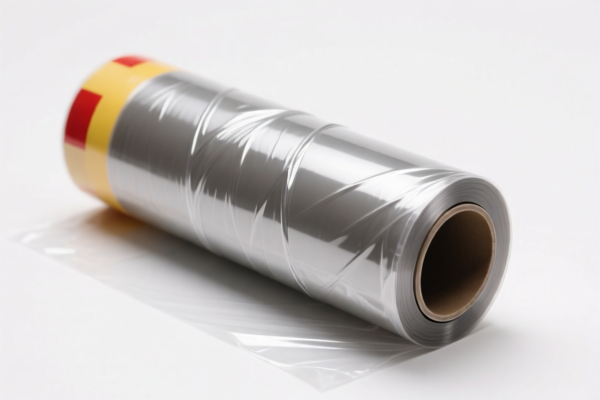

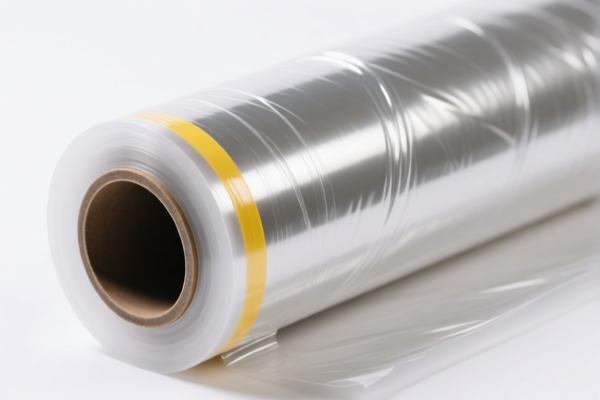
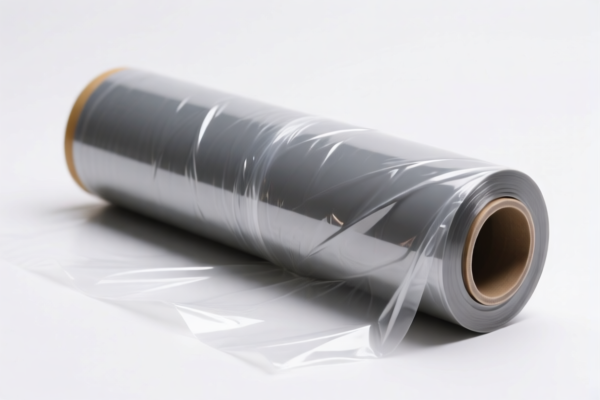
AI Analysis
🎞️ Film Roll: White Negative (Black & White Negative Film)
🌐 HS Code Reference & Customs Clearance Guide | 2026 Latest Tariff Analysis | Professional-Level Clearance Strategy
📌 Part I: Product Definition & Classification: Do You Really Understand "White Negative Film"?
Black and White Negative Film is a traditional photosensitive material used for capturing monochrome images on physical media. In international trade, despite sharing the same visual output (B&W), it is strictly classified based on its state of exposure, material composition, and specific chemical formulation.
⚠️ Key Distinction Point:
- Unexposed/Non-Sensitized: Raw film ready for shooting → Classified under 3702 (Unexposed photographic film).
- Exposed but Unprocessed: Film that has captured an image but hasn't been developed → Classified under 3704 (Exposed but undeveloped photographic film).
- Color vs. B&W: Even if the result is black and white, if the emulsion contains color couplers, it falls under color film codes (3702.5x). Pure B&W uses 3702.3x or 3702.9x.
📦 Part II: HS Code Classification Details (2026 Latest Tariff Authority对照)
| HS Code | Product Description | Applicable Scenario | Exposure State | Material/Type |
|---|---|---|---|---|
3702.96.00.00 |
Unexposed photographic film, other (B&W Negative) | Standard B&W roll film, non-perforated or standard perforation | ❌ Unexposed | Non-paper, non-textile base |
3704.00.00.00 |
Exposed photographic film, undeveloped (B&W Negative) | Film already shot, waiting for development | ✅ Exposed | Photographic material, B&W negative |
3702.32.01.60 |
Unexposed photographic film, other (B&W, Halogen Silver) | Specific B&W negative rolls with halogen silver emulsion | ❌ Unexposed | Non-perforated, specific silver content |
3702.52.01.60 |
Color photographic film, other (Non-Reversal) | Misclassification Alert: Sometimes B&W results are confused with color negatives | ❌ Unexposed | Color emulsion (Non-reversal) |
3702.54.00.60 |
Color photographic film, sensitized but not exposed | Color film ready for shooting | ❌ Unexposed | Color emulsion |
🔍 Critical Reminder:
- Do not confuse "Black and White Result" with "Color Film": If the film contains color layers (even if processed as mono), it falls under 3702.5x. Pure B&W uses 3702.3x or 3702.9x. - Exposure Status is King: If the film has been used in a camera, it MUST be declared under 3704 (Exposed). Declaring exposed film as unexposed (3702) is a major customs violation.
💰 Part III: 2026 Latest Tariff Rate Details (Including Additional Taxes & Policy Surcharges)
✅ Applicable Country: United States (US)
✅ Origin: China (CN)
✅ Effective Time: 2025年11月10日起 (Includes subsequent imports)
🎯 1. 3702.96.00.00 —— Unexposed B&W Negative Film (Other)
| Item | Content |
|---|---|
| Base Tariff | 3.7% (ad valorem) |
| Section 301 Additional Tariff | +25.0% (China origin) |
| Section 122 Tariff | +10.0% (Specific trade provision) |
| Total Tax Rate | 38.7% |
| Tax Calculation | CIF Value × 38.7% |
| De Minimis Exemption | ❌ Not Applicable (Deny de minimis) |
| Legal Basis Path | Base: 3.7% → 301: 25.0% → 122: 10.0% → Total: 38.7% |
📌 Explanation:
- This is the standard rate for unexposed B&W film that doesn't fit into specific perforated or sensitized sub-categories. - The 38.7% rate is significant. It includes the base duty, the heavy Section 301 tariff, and the specific Section 122 levy. - Cost Impact: For a $10,000 shipment, taxes amount to $3,870.
🎯 2. 3704.00.00.00 —— Exposed B&W Negative Film (Undeveloped)
| Item | Content |
|---|---|
| Base Tariff | 0.0% |
| Section 301 Additional Tariff | +25.0% |
| Section 122 Tariff | +10.0% |
| Total Tax Rate | 35.0% |
| Tax Calculation | CIF Value × 35.0% |
| De Minimis Exemption | ❌ Not Applicable (Deny de minimis) |
| Legal Basis Path | Base: 0.0% → 301: 25.0% → 122: 10.0% → Total: 35.0% |
📌 Note:
- Although the base tariff is 0%, the additional tariffs bring the total to 35.0%. - This code applies ONLY to film that has already captured an image. - Risk: Misclassifying exposed film as unexposed (3702) to get a lower base rate is dangerous. Customs may inspect the film (if possible) or audit your production records, leading to penalties for false declaration.
🎯 3. 3702.32.01.60 —— Specific B&W Negative Film (Halogen Silver)
| Item | Content |
|---|---|
| Base Tariff | 3.7% |
| Section 301 Additional Tariff | +25.0% |
| Section 122 Tariff | +10.0% |
| Total Tax Rate | 38.7% |
| Tax Calculation | CIF Value × 38.7% |
| De Minimis Exemption | ❌ Not Applicable |
| Legal Basis Path | Same as 3702.96.00.00 |
📌 Detail:
- This is a more specific code for B&W film with halogen silver emulsion, often used for professional/industrial applications. - The rate is identical to the general "Other" category (38.7%).
🎯 4. & 5. 3702.52.01.60 & 3702.54.00.60 —— Color Film (Non-Reversal)
| Item | Content |
|---|---|
| Base Tariff | 3.7% |
| Section 301 Additional Tariff | +25.0% |
| Section 122 Tariff | +10.0% |
| Total Tax Rate | 38.7% |
| Applicability | ONLY if the film contains color layers |
📌 Warning:
- If you are importing Black and White film, DO NOT use these codes. - Using color film codes for B&W film is a classification error. While the tariff rate is the same (38.7%), it triggers additional scrutiny from customs regarding the product's chemical composition. - If the film is truly B&W, using 3702.5x may lead to rejection if laboratory testing reveals no color couplers.
🛠️ Part IV: Customs Clearance Practical Advice (实战避坑指南)
✅ 1. Documentation Checklist (Non-negotiable)
| Document | Required | Explanation |
|---|---|---|
| ✅ Product Specification Sheet | ✔️ | Must explicitly state: "Black and White," "Negative," "Emulsion Type (e.g., Silver Halide)," "Exposure Status (Unexposed/Exposed)." |
| ✅ Material Safety Data Sheet (MSDS) | ✔️ | Film contains chemicals. MSDS is required for safety clearance. |
| ✅ Commercial Invoice | ✔️ | Must clearly describe the item. Use precise terms like "Unexposed Photographic Film, B&W Negative." Avoid vague terms like "Camera Accessories." |
| ✅ Packing List | ✔️ | Detail the number of rolls, weight, and dimensions. |
| ✅ Certificate of Origin | ✔️ | Proof of China origin to apply the correct Section 301 tariffs. |
| ✅ Photo of Packaging & Labeling | ✔️ | Show the manufacturer's label indicating film type and expiration date. |
✅ 2. Declaration Tips (Key Mnemonic)
🔥 "Unexposed is 3702, Exposed is 3704. B&W is not Color, even if the tone is grey!"
| Scenario | Correct Declaration | Wrong Practice |
|---|---|---|
| New, unshot B&W film | 3702.96.00.00 or 3702.32.01.60 |
Misdeclare as Color Film (3702.5x) → Risk of inspection failure |
| Film already shot, waiting for dev | 3704.00.00.00 |
Declare as Unexposed (3702) → Customs Violation! |
| Color Negative Film | 3702.52.01.60 |
Declare as B&W (3702.9x) → Classification Error |
| Packaging with film + camera | Split declaration: Film as 3702, Camera as its own code |
Bundle as "Camera Kit" → Complex valuation and potential misclassification |
✅ 3. Special Case Handling
| Situation | Handling Advice |
|---|---|
| OEM Custom B&W Film | Provide the customer's order + technical sheet specifying the emulsion is strictly B&W. Avoid generic "Photographic Film." |
| Expiring/Expired Film | Declare as "Used/Expired" if applicable. Customs may restrict imports of certain chemical materials if they are deemed hazardous waste, but standard expired film usually still requires correct HS Code. |
| Small Sample Shipments (De Minimis) | ❌ No Exemption. Even small samples of photographic film from China are subject to the 35-38.7% tariff. Do not attempt to use Section 321 (De Minimis) for this commodity. |
| Labeling | Ensure the packaging clearly indicates "Unexposed" or "Exposed." If exposed, include a statement: "Contains exposed photographic material, undeveloped." |
🌍 Part V: Global Market Clearance Comparison (2026 Latest)
| Country/Region | Recommended HS Code | Tariff Rate (China Origin) | Certification Requirements | Notes |
|---|---|---|---|---|
| 🇺🇸 USA | 3702.96.00.00 (Unexposed) |
38.7% (incl. 301 & 122) | None specific for film | High tariff barrier. No de minimis. |
| 🇺🇸 USA | 3704.00.00.00 (Exposed) |
35.0% (incl. 301 & 122) | None specific for film | Lower base rate, but high additional taxes. |
| 🇨🇳 China | 3702.96.00.00 |
3.7% (Import Duty) | None | No Section 301/122. Low cost. |
| 🇪🇺 EU | 3702.96.00 |
0% - 5% (varies) | REACH (Chemicals) | No Section 301/122. Strict chemical regulations. |
| 🇬🇧 UK | 3702.96.00 |
0% - 5% | UKCA (if applicable) | Post-Brexit rules apply. |
📌 Conclusion:
- The USA is the most expensive market for importing photographic film from China due to the Section 301 (25%) and Section 122 (10%) tariffs. - China-origin film faces a 35-38.7% tax burden in the US, significantly impacting profitability. - No de minimis exemption applies, so even small business-to-business (B2B) shipments are fully taxed.
📌 Part VI: Common Errors & Pitfalls (Blood and Tears Lessons)
❌ Error 1: Declaring Exposed film as Unexposed (3702) to avoid detection.
👉 Consequence: Customs may request proof of non-exposure. If the film is found to be exposed, it’s a fraudulent declaration leading to heavy fines and seizure.
❌ Error 2: Using Color Film HS Codes (3702.5x) for B&W Film.
👉 Consequence: Even if the rate is similar (38.7%), it triggers a chemical composition audit. If the lab finds no color couplers, you face delays and potential penalties for false declaration.
❌ Error 3: Ignoring Section 122 Tariffs.
👉 Consequence: Some importers forget the 10% Section 122 levy, calculating only Base + 301 (28.7%). This leaves them short by 10% in payment, leading to customs holds.
❌ Error 4: Assuming De Minimis ($800) applies.
👉 Consequence: Photographic film from China is explicitly excluded from de minimis exemption under current trade rules. Attempting this will result in package return or seizure.
✅ Correct Practice:
"Unexposed Black and White Negative Photographic Film, Silver Halide Emulsion, Non-Perforated, Roll Form, Model XYZ, Made in China."
🎯 Part VII: Conclusion: Professional Declaration, Save Time, Reduce Costs!
🎯 Remember the Mnemonic:
🔹 "Unexposed is 3702, Exposed is 3704. B&W is not Color. 38.7% for Unexposed, 35% for Exposed. No De Minimis!"
🔹 "HS Code Determines Fate, Tax Rate is High, Declaration Must Be Precise!"
📌 Tips:
- If your film is produced in Vietnam, Mexico, or Thailand, you may be eligible for IEEPA Exemptions or lower Section 301 rates.
- Pre-Apply for Advance Ruling with US Customs and Border Protection (CBP) if you have large, recurring shipments to ensure your HS Code classification is locked in and dispute-free.
📣 Immediate Action:
📞 Contact a professional customs broker + Provide Product Photos + Apply for HS Code Advance Ruling
🚀 Let your film clear customs smoothly, maximize profits, and avoid unexpected penalties!
✨ Professional Clearance Starts with Accurate Classification!
💼 Every cent of your cost deserves precise calculation!
Customer Reviews
About HS Code Classification
The Harmonized System (HS) is an internationally standardized nomenclature developed by the World Customs Organization (WCO) to classify traded products. Over 200 countries use the HS system as the basis for customs tariffs, trade statistics, and import/export regulations.
Each HS code follows a hierarchical structure:
- Chapter (2 digits) — Broad category of goods (e.g., Chapter 84: Machinery and Mechanical Appliances)
- Heading (4 digits) — More specific grouping within the chapter
- Subheading (6 digits) — Internationally standardized breakdown, used by all WCO member countries
- National subdivisions (8-10 digits) — Country-specific extensions for further classification, such as US HTSUS 10-digit codes
Correct HS code classification is essential for smooth customs clearance, accurate duty payment, and compliance with trade regulations. Misclassification can lead to customs delays, overpayment of duties, or penalties.
When importing from CN to US, the applicable tariff rates may include:
- Most-Favored-Nation (MFN) rate — The standard duty rate applied to WTO members
- General rate — Applied to countries without trade agreements
- Trade remedy duties — Additional tariffs such as Section 301 (anti-dumping), Section 232 (national security), or countervailing duties
The information provided on this page is for reference purposes only. For official classification, please consult with your local customs authority or a licensed customs broker.