Film Roll X ray Sensitized Paper
CN → US| HS Code | Tariff Rate | Origin | Destination | Doc |
|---|---|---|---|---|
| 3701100030 | 38.7% | CN | US | Official Doc |
| 9018902000 | 35.0% | CN | US | Official Doc |
| 3702100060 | 38.7% | CN | US | Official Doc |
| 3707100005 | 38.0% | CN | US | Official Doc |
| 3701100030 | 38.7% | CN | US | Official Doc |
Product Images

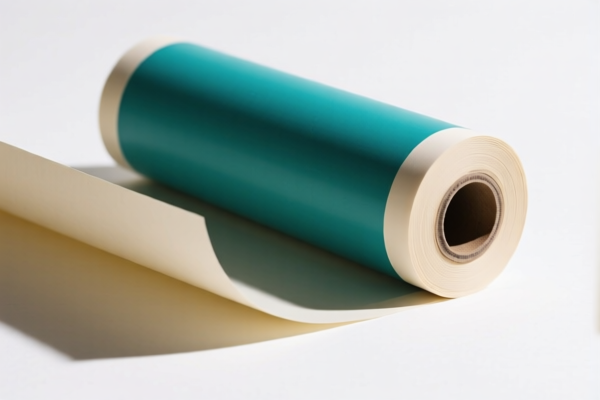

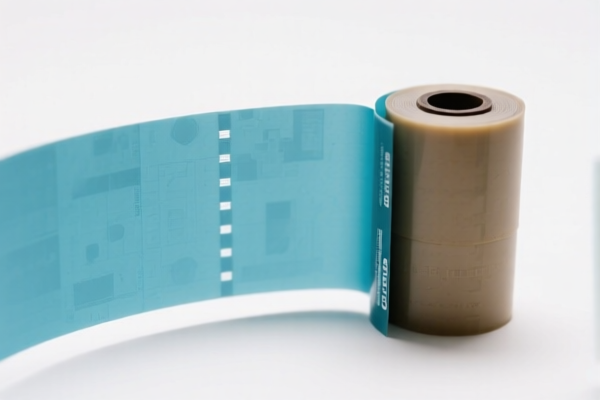
AI Analysis
🎞️ Film Roll X-ray Sensitized Paper (Medical X-Ray Film)
🌐 HS Code Reference & Customs Clearance Guide | 2026 Latest Tariff Analysis | Professional-Level Entry Strategy
📌 I. Product Definition & Classification: Do You Really Understand "X-Ray Film"?
"Film Roll X-ray Sensitized Paper," commonly known as Medical X-Ray Film or Radiographic Film, is a specialized photographic medium used in medical diagnostics. It is a light-sensitive material coated on a flexible polyester base, used to capture X-ray images of internal body structures.
In international trade, it is categorized based on its specific medical use and its physical form (film/roll vs. plate).
⚠️ Key Distinction:
- If the product is strictly for medical diagnostics (human use) and comes in roll or sheet form → It typically falls under Chapter 37 (Photographic Goods).
- If it is considered an accessory or part of an imaging device (like a CT scanner) rather than a consumable medium → It might fall under Chapter 90 (Optical/Medical Instruments).
- Critical Note: Many classifiers attempt to put this under medical instruments (9018), but customs often reject this unless it is explicitly an "accessory" without the imaging medium itself. Pure film is usually treated as a photographic good.
📦 II. HS Code Classification Details (2026 Latest Tariff Authority Comparison)
Based on the provided data, here are the potential HS Codes and their logical justifications:
| HS Code | Product Description | Justification & Logic | Tax Rate (Total) |
|---|---|---|---|
3701.10.00.30 |
X-Ray Plates, Film and Paper, Sensitized, for Photography (Other than Film of Heading 3702) | Primary Match: The product name explicitly includes "X-ray" and "Medical" use. This fits the classification explanation for "Medical Use" under Chapter 37. The form (film/roll) matches photographic film characteristics. | 38.7% |
9018.90.20.00 |
Instruments and Appliances Used in Medical, Surgical, Dental, or Veterinary Sciences (Parts & Accessories) | Alternative Match: Matches the "Medical" use and "Imaging" nature. It is considered a consumable/attachment for optical/medical imaging equipment. No material conflict. | 35.0% |
3702.10.00.60 |
Photographic Film in Rolls, Sensitized, Unexposed (Other than Film of Heading 3701 or 3703) | Material Match: It is a light-sensitive material. Although "X-ray" is the use, if classified broadly as photographic film (roll form) and not specifically under the "Plate/Film/Paper" heading 3701, it may fall here. Assumes non-paper/material base. | 38.7% |
3707.10.00.05 |
**Prepared Emulsions on a Supporting Base | Component Match: Matches the "Sensitized Paper/Film" description. The core component is assumed to be photographic emulsion. High consistency in material and use. | 38.0% |
🔍 Critical Analysis:
-3701.10.00.30is the most precise match for "Medical X-Ray Film" because Chapter 37 specifically distinguishes between general photographic film (3702) and X-ray film/paper (3701).
-9018.90.20.00is a risky alternative. While logical for "medical accessories," customs may view X-ray film as a consumable good (Chapter 37) rather than a part of the machine. Misclassification here can lead to disputes.
-3702.10.00.60is less accurate if the product is explicitly labeled for X-ray/Medical use, as 3701 is more specific.
💰 III. 2026 Latest Tariff Rate Breakdown (Including Surcharges)
✅ Applicable Country: United States (US)
✅ Origin: China (CN)
✅ Effective Date: From November 10, 2025 (and subsequent imports)
🎯 1. 3701.10.00.30 — Medical X-Ray Film (Photographic)
| Item | Details |
|---|---|
| Base Tariff | 3.7% (ad valorem) |
| Section 301 Surcharge | +25.0% (USITC Footnote 9903.88.01) |
| IEEPA Surcharge | +10.0% (针对中国/香港产品, effective from Nov 10, 2025) |
| Total Tax Rate | 38.7% |
| Calculation Basis | CIF Value × 38.7% |
| De Minimis Exemption | ❌ Not Eligible (deny_de_minimis) |
| Legal Basis Path | IEEPA:9903.01.25 → IEEPA:9903.01.24 → USITC:3701.10.00.30 → FOOTNOTE:9903.88.01 |
📌 Explanation:
- Base Tariff (3.7%): Standard duty for X-ray film under heading 3701.
- Section 301 (25%): Additional tariff on Chinese goods listed in List 4a.
- IEEPA (10%): New emergency tariff on Chinese imports.
- Total: 38.7% is a high burden. Accurate classification is crucial.
🎯 2. 9018.90.20.00 — Medical Instrument Accessory
| Item | Details |
|---|---|
| Base Tariff | 0.0% |
| Section 301 Surcharge | +25.0% |
| IEEPA Surcharge | +10.0% |
| Total Tax Rate | 35.0% |
| Calculation Basis | CIF Value × 35.0% |
| De Minimis Exemption | ❌ Not Eligible |
| Legal Basis Path | IEEPA:9903.01.24 → USITC:9018.90.20.00 |
📌 Note:
- This rate is 3.7% lower than3701.10.00.30.
- However, the risk of misclassification is higher. If Customs audits and determines it is "Photographic Film" (Chapter 37), you may face back-taxes and penalties.
- This code is only appropriate if the film is marketed as an integral part/accessory of a specific medical imaging device, not as a standalone consumable.
🎯 3. 3702.10.00.60 — Other Photographic Film Rolls
| Item | Details |
|---|---|
| Base Tariff | 3.7% |
| Section 301 Surcharge | +25.0% |
| IEEPA Surcharge | +10.0% |
| Total Tax Rate | 38.7% |
| Calculation Basis | CIF Value × 38.7% |
| De Minimis Exemption | ❌ Not Eligible |
📌 Note:
- Same tax rate as3701.10.00.30.
- Less specific than3701for X-ray materials. Use only if3701is explicitly excluded for your specific product form.
🛠️ IV. Customs Clearance Practical Advice (Pitfall Avoidance Guide)
✅ 1. Required Documentation Checklist
| Document | Mandatory? | Notes |
|---|---|---|
| ✅ Product Specification Sheet | ✔️ | Must state: "Medical Use," "X-Ray Sensitized," "Material: Polyester Base," "Emulsion Type." |
| ✅ Product Photos | ✔️ | Clear images of the roll, packaging, and any labeling indicating "For Medical X-Ray Use." |
| ✅ Commercial Invoice | ✔️ | Describe as "Medical X-Ray Film, Sensitized, for Radiography." Avoid vague terms like "Photographic Paper." |
| ✅ Certificate of Origin | ✔️ | Required for origin verification (China). |
| ✅ Usage Declaration | ✔️ | Explicitly state: "Used for medical diagnostic imaging in hospitals/clinics." |
| ✅ Safety Data Sheet (SDS) | ✔️ | If the film involves chemical development processes, SDS may be requested. |
✅ 2. Declaration Tips (Key Mantra)
🔥 "Medical Use Explicit, Chapter 37 Primary, Avoid 9018 Risk, Pay 38.7% Safely!"
| Scenario | Correct Declaration | Wrong Practice |
|---|---|---|
| Standard Medical X-Ray Film | HS: 3701.10.00.30Desc: "X-Ray Film for Medical Diagnosis" |
HS: 9018.90.20.00Desc: "Medical Accessory" → High Audit Risk |
| Bulk Roll Film (Unexposed) | HS: 3702.10.00.60 or 3701.10.00.30 |
HS: 4809 (Paper) → Incorrect Material |
| Pre-cut Sheets (Non-Roll) | HS: 3701.10.00.30 |
HS: 3702 (Rolls Only) → Form Mismatch |
⚠️ Warning:
- Do not describe it simply as "Paper" or "Film." It must be "Sensitized" and "For X-Ray/Medical Use."
- If you declare it under9018to save 3.7%, be prepared to prove it is a non-consumable accessory (which X-ray film usually is not, as it is used up in the process).
✅ 3. Special Cases & Handling
| Situation | Handling Advice |
|---|---|
| OEM Branding | Ensure the invoice lists the actual manufacturer or clearly states "OEM for [Brand]." Avoid brand confusion. |
| Dual-Use (Industrial/Medical) | If the film can be used for both industrial NDT (Non-Destructive Testing) and medical, declare as Medical if that is the primary intent. Industrial X-ray film may have different codes. Be consistent. |
| Raw Emulsion vs. Finished Film | If importing just the emulsion coating on a base, it might fall under 3707.10.00.05. If it is the final product, use 3701 or 3702. |
| Small Sample Shipments | Even for samples, if the value exceeds $800 (de minimis), it is not exempt. For small values, still declare correctly to avoid future compliance issues. |
🌍 V. Global Market Customs Comparison (2026 Latest)
| Country/Region | Recommended HS Code | Tariff (China Origin) | Certification Requirements | Notes |
|---|---|---|---|---|
| 🇺🇸 USA | 3701.10.00.30 |
38.7% | FCC (if electronic), RoHS (material) | High tariff due to 301 + IEEPA. |
| 🇨🇳 China | 3701.10.00.30 |
~6-9% | CCC (if applicable) | No surcharges. |
| 🇪🇺 EU | 3701.10.00.00 |
0-4% | CE (if part of device), REACH | Lower tariffs. |
| 🇯🇵 Japan | 3701.10.00.90 |
3-8% | PSE (if applicable) | Moderate tariffs. |
| 🇦🇺 Australia | 3701.10.00.00 |
5% | TGA (if medical device) | Check medical device registration. |
📌 Conclusion:
- The US market is the most expensive for Chinese X-ray film due to layered surcharges.
- Accuracy is Key: Misdeclaring as9018(0% base) to save 3.7% is not worth the risk of audit, seizure, or penalties, which can exceed the savings significantly.
- Plan for 38.7%: Include this in your landed cost calculation.
📌 VI. Common Errors & Pitfalls (Lessons Learned)
❌ Error 1: Classifying as 4809 (Carbon Paper/Sensitized Paper)
👉 Result: Rejection. X-ray film is photographic, not carbon paper.
❌ Error 2: Using "Medical Accessory" (9018) for standard consumable film
👉 Result: Customs may reclassify to 3701, demanding back-taxes + penalties.
❌ Error 3: Ignoring the "Sensitized" aspect
👉 Result: If described as "Blank Paper," it falls under Chapter 48 (higher tariff, different rules). It must be "Sensitized."
❌ Error 4: Assuming De Minimis Exemption
👉 Result: False. Goods from China under these headings are not eligible for de minimis exemption.
✅ Correct Description Example:
"MEDICAL X-RAY FILM ROLL, SENSITIZED, POLYESTER BASE, FOR DIAGNOSTIC IMAGING, UNSIZED, MODEL XYZ, MADE IN CHINA."
🎯 VII. Conclusion: Professional Classification Saves Money
🎯 Remember:
🔹 "Medical X-Ray Film is Chapter 37, not 90."
🔹 "Base 3.7% + 301 (25%) + IEEPA (10%) = 38.7%."
🔹 "Accuracy prevents audit hell."
📌 Pro Tip:
If your volume is high, consider applying for an HTS Classification Ruling from US Customs and Border Protection (CBP) to get a binding decision. This provides legal certainty and protects against future audits.
📣 Action Now:
📞 Consult your customs broker.
📄 Prepare precise technical specs.
💰 Budget for 38.7% total duty for US imports from China.
✨ Professional Customs Clearance Starts with Accurate Classification!
💼 Your Profit Margin Depends on Precision!
Customer Reviews
About HS Code Classification
The Harmonized System (HS) is an internationally standardized nomenclature developed by the World Customs Organization (WCO) to classify traded products. Over 200 countries use the HS system as the basis for customs tariffs, trade statistics, and import/export regulations.
Each HS code follows a hierarchical structure:
- Chapter (2 digits) — Broad category of goods (e.g., Chapter 84: Machinery and Mechanical Appliances)
- Heading (4 digits) — More specific grouping within the chapter
- Subheading (6 digits) — Internationally standardized breakdown, used by all WCO member countries
- National subdivisions (8-10 digits) — Country-specific extensions for further classification, such as US HTSUS 10-digit codes
Correct HS code classification is essential for smooth customs clearance, accurate duty payment, and compliance with trade regulations. Misclassification can lead to customs delays, overpayment of duties, or penalties.
When importing from CN to US, the applicable tariff rates may include:
- Most-Favored-Nation (MFN) rate — The standard duty rate applied to WTO members
- General rate — Applied to countries without trade agreements
- Trade remedy duties — Additional tariffs such as Section 301 (anti-dumping), Section 232 (national security), or countervailing duties
The information provided on this page is for reference purposes only. For official classification, please consult with your local customs authority or a licensed customs broker.