Film Splicer
CN → US| HS Code | Tariff Rate | Origin | Destination | Doc |
|---|---|---|---|---|
| 8479898300 | 35.0% | CN | US | Official Doc |
| 8479899565 | 37.5% | CN | US | Official Doc |
| 8443992050 | 35.0% | CN | US | Official Doc |
| 8441800000 | 35.0% | CN | US | Official Doc |
| 9010502000 | 35.0% | CN | US | Official Doc |
Product Images
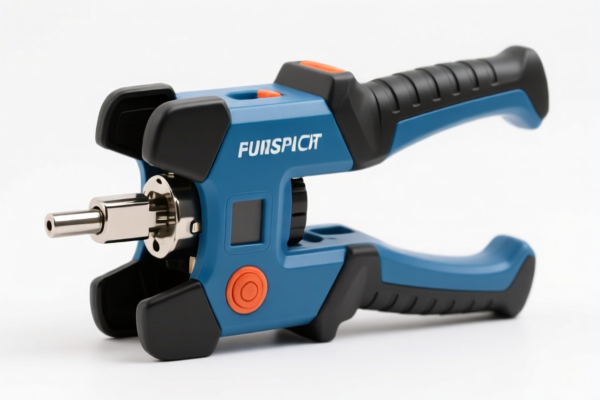
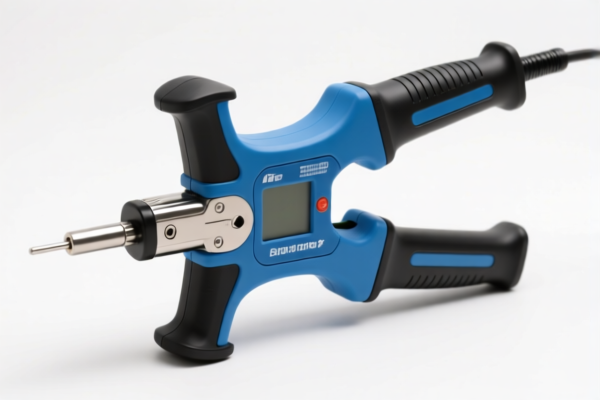
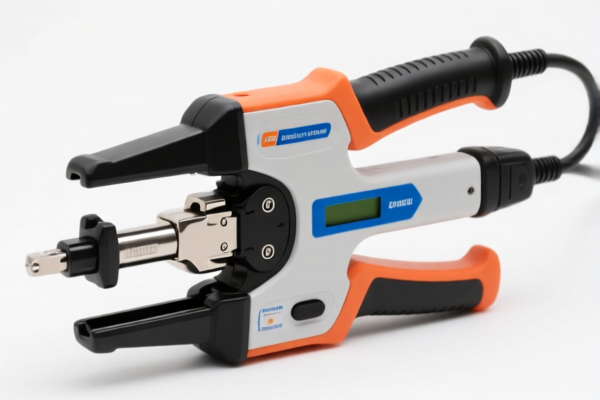
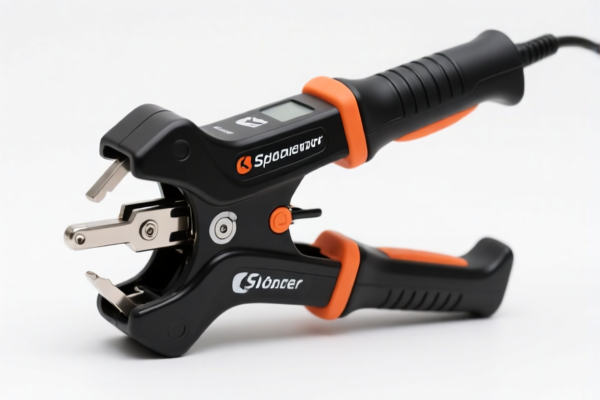
AI Analysis
🎞️ Film Splicer (胶片拼接机/接片机)
🌐 HS Code Reference & Customs Clearance Guide | 2026 Latest Tariff Analysis | Professional Clearance Strategy
📌 I. Product Definition & Classification: Do You Really Understand a "Film Splicer"?
A Film Splicer is a specialized mechanical device used in the motion picture, documentary, or archival industries to join two pieces of film (celluloid, polyester, or acetate) together. In international trade, its classification depends heavily on whether it is viewed as a mechanical tool for paper-like materials, an optical media manufacturing machine, or a component of imaging equipment.
⚠️ Key Distinction:
- If the device is primarily a mechanical cutter/adhesive applicator handling film as a "paper-like" substrate → Likely 8441 or 8479.
- If the device is specifically integrated into a photographic/film laboratory workflow (developing, processing) → Likely 9010.
- If it is a spare part/attachment for a larger film processing printer → Likely 8443.
📦 II. HS Code Classification Details (2026 Latest Harmonized System Cross-Reference)
Based on the provided data, here are the five potential HS Codes for a Film Splicer, along with their logical justifications and tax implications.
| HS Code | Product Description | Applicability Logic | Total Tax Rate (CN Origin to US) |
|---|---|---|---|
8479.89.83.00 |
Other Machines Having Individual Functions (Optical Media Processing) | Classified as machinery for processing optical media (film is an optical carrier). Fits the logic of "Other optical media manufacturing machines." | 35.0% |
8479.89.95.65 |
Other Machines Having Individual Functions (General Mechanical) | Classified as a general mechanical appliance with independent function. Fits the broad category of "Other mechanical appliances" under Chapter 84. | 37.5% |
8443.99.20.50 |
Parts/Accessories for Printers & Image Processing Equipment | Classified as a component/accessory for imaging/printing devices. Since splicers handle film (image medium), they fall under parts of photographic/film printers. | 35.0% |
8441.80.00.00 |
Other Machinery for Paper/Cardboard Processing | Film is treated as a paper-like material in this context. The splicer acts as a binding/cutting device, extending the use of machinery for paper/cardboard manufacturing. | 35.0% |
9010.50.20.00 |
Photographic Laboratory Equipment (Film Processing) | Classified as laboratory equipment for photography/film. The function of splicing is integral to the film development/processing workflow, similar to developing tanks. | 35.0% |
🔍 Important Note:
- 8441 treats film as "paper"; 8479 treats it as "optical media"; 9010 treats it as "laboratory media."
- The choice of HS Code significantly impacts the duty rate (35% vs. 37.5%).
- 8479.89.95.65 is the only option with a 37.5% total rate, likely due to different base duty calculations.
💰 III. 2026 Latest Tariff Rate Breakdown (Including Additional Duties & Policy Surcharges)
✅ Applicable Country: United States (US)
✅ Origin: China (CN)
✅ Effective Date: From November 10, 2025 (including subsequent imports)
🎯 1. 8479.89.83.00 —— Machines for Optical Media Processing
| Item | Details |
|---|---|
| Base Duty | 0.0% |
| Section 301 (USITC) Surcharge | +25.0% |
| IEEPA Surcharge (Section 122) | +10.0% |
| Total Rate | 35.0% |
| Calculation | CIF Value × 35% |
| De Minimis Exemption | ❌ Not Eligible (deny_de_minimis) |
| Legal Basis Path | USITC:8479.89.83.00 → FOOTNOTE:301 → IEEPA:122 |
📌 Explanation:
- Base 0%: Under normal MFN rates, machinery for optical media may have low or zero duty.
- 25% Section 301: Standard additional tariff for Chinese goods under US Trade Law Section 301.
- 10% IEEPA: Additional surcharge under the International Emergency Economic Powers Act for specific Chinese imports.
- Result: A 35% effective rate. High cost for mechanical splicers classified this way.
🎯 2. 8479.89.95.65 —— General Mechanical Appliances
| Item | Details |
|---|---|
| Base Duty | 2.5% |
| Section 301 (USITC) Surcharge | +25.0% |
| IEEPA Surcharge (Section 122) | +10.0% |
| Total Rate | 37.5% |
| Calculation | CIF Value × 37.5% |
| De Minimis Exemption | ❌ Not Eligible (deny_de_minimis) |
| Legal Basis Path | USITC:8479.89.95.65 → FOOTNOTE:301 → IEEPA:122 |
📌 Note:
- This is the most expensive classification due to the 2.5% base duty added on top of the surcharges.
- Avoid this code if possible, as it increases the duty burden by 2.5% compared to other mechanical options.
🎯 3. 8443.99.20.50 —— Parts for Image Processing Equipment
| Item | Details |
|---|---|
| Base Duty | 0.0% |
| Section 301 (USITC) Surcharge | +25.0% |
| IEEPA Surcharge (Section 122) | +10.0% |
| Total Rate | 35.0% |
| Calculation | CIF Value × 35% |
| De Minimis Exemption | ❌ Not Eligible (deny_de_minimis) |
| Legal Basis Path | USITC:8443.99.20.50 → FOOTNOTE:301 → IEEPA:122 |
📌 Explanation:
- If the splicer is sold as a part/attachment for a film printer or processing machine, this code applies.
- Base duty is 0%, making it cost-effective compared to8479.89.95.65.
🎯 4. 8441.80.00.00 —— Machinery for Paper/Cardboard Processing
| Item | Details |
|---|---|
| Base Duty | 0.0% |
| Section 301 (USITC) Surcharge | +25.0% |
| IEEPA Surcharge (Section 122) | +10.0% |
| Total Rate | 35.0% |
| Calculation | CIF Value × 35% |
| De Minimis Exemption | ❌ Not Eligible (deny_de_minimis) |
| Legal Basis Path | USITC:8441.80.00.00 → FOOTNOTE:301 → IEEPA:122 |
📌 Note:
- Classifies film as a paper-like material.
- Common for simple mechanical splicers that cut and paste film without complex optical or digital integration.
🎯 5. 9010.50.20.00 —— Photographic Laboratory Equipment
| Item | Details |
|---|---|
| Base Duty | 0.0% |
| Section 301 (USITC) Surcharge | +25.0% |
| IEEPA Surcharge (Section 122) | +10.0% |
| Total Rate | 35.0% |
| Calculation | CIF Value × 35% |
| De Minimis Exemption | ❌ Not Eligible (deny_de_minimis) |
| Legal Basis Path | USITC:9010.50.20.00 → FOOTNOTE:301 → IEEPA:122 |
📌 Explanation:
- The most industry-specific classification for film splicers used in professional photography labs.
- Highlights the process-oriented nature of the device (developing, splicing, archiving).
🛠️ IV. Customs Clearance Practical Advice (Risk Avoidance Guide)
✅ 1. Required Documentation Checklist (All Required)
| Document | Mandatory? | Description |
|---|---|---|
| ✅ Product Specification Sheet | ✔️ | Must include: Type of film handled (16mm, 35mm, 8mm), cutting mechanism type, adhesive method. |
| ✅ Technical Diagrams | ✔️ | Show internal mechanics to prove it’s not a "printer" or "camera." |
| ✅ Product Photos (with Nameplate) | ✔️ | Clear view of model number, brand, and electrical specs. |
| ✅ Commercial Invoice | ✔️ | Must specify: "Film Splicer – Mechanical Device for Joining Film Strips." Avoid vague terms like "Machine." |
| ✅ Packing List | ✔️ | Detail contents: Main unit, spare blades, adhesive rolls, power cord. |
| ✅ Certificate of Origin (CO) | ✔️ | For US origin verification; may affect eligibility for any future exemptions. |
✅ 2. Declaration Tips (Key Mnemonics)
🔥 “Be Specific: Don’t Just Say ‘Splicer’!”
| Scenario | Correct Declaration | Wrong Approach |
|---|---|---|
| Mechanical Film Splicer | “Mechanical Film Splicer for 35mm Motion Picture Film” | “Film Machine” → Ambiguous, risk of reclassification. |
| Splicer as a Part | “Splicing Unit Attachment for Film Printer” | “Printer Part” without specifying function. |
| Laboratory Equipment | “Photographic Laboratory Film Processing Splicer” | “Lab Tool” → Too vague. |
| Paper-like Processing | “Film Adhesive Binding Machine (Paper-type)” | “Binder” → Risk of being classified as general office machinery. |
✅ 3. Special Situation Handling
| Situation | Recommendation |
|---|---|
| Digital/Computer-Controlled Splicer | May be classified under 8479 (automated machine) rather than 9010. Ensure documentation highlights the control system. |
| Bundle Sales (Splicer + Printer) | Declare separately. Splicer under 9010 or 8443, Printer under 8443. Do not bundle into one HS code unless they are permanently integrated. |
| Used/Refurbished Splicers | US Customs may require additional inspection for used machinery. Provide maintenance logs. |
| Export to Other Markets | EU and China have different classifications. Do not use this US-specific guide for non-US shipments. |
🌍 V. Global Market Comparison (2026 Latest)
| Country/Region | Recommended HS Code | Duty Rate | Certification | Remarks |
|---|---|---|---|---|
| 🇺🇸 USA | 9010.50.20.00 or 8479.89.83.00 |
35.0% (CN Origin) | N/A | High tariff due to Section 301 + IEEPA. |
| 🇨🇳 China | 8441.80.00.00 |
~5-10% | CCC (if electrical) | Lower base duty, no additional surcharges. |
| 🇪🇺 EU | 8441.80.00 |
~0-4% | CE + RoHS | Often classified as paper-processing machinery. |
| 🇬🇧 UK | 8441.80.00 |
~0-4% | UKCA | Post-Brexit rules apply. |
| 🇯🇵 Japan | 8441.80.00 |
~0% | PSE | Often duty-free for film processing machines. |
📌 Conclusion:
- The US market is the most expensive due to additional tariffs (35%).
- China, EU, and Japan have significantly lower duties (0-10%).
- Consider supply chain diversification if exporting to the US.
📌 VI. Common Mistakes & Pitfalls (Lessons Learned)
❌ Mistake 1: Classifying a Film Splicer as a Printer Part (8443) when it is sold as a standalone device.
👉 Consequence: US Customs may reclassify to 8479 or 9010, leading to duty discrepancies and delays.
❌ Mistake 2: Using vague terms like “Film Machine” on the invoice.
👉 Consequence: Customs officer has to guess, leading to random inspections and shipment holds.
❌ Mistake 3: Ignoring the IEEPA 10% Surcharge.
👉 Consequence: Underestimating landed cost by 10%, destroying profit margins.
❌ Mistake 4: Assuming De Minimis ($800) applies.
👉 Consequence: Incorrect. Machinery under these HS codes is denied de minimis. Even small shipments are subject to full duty.
✅ Correct Practice:
“Mechanical Film Splicer, Model XYZ, for 35mm Motion Picture Film, 110V, CE Certified”
🎯 VII. Conclusion: Precise Classification Saves Money!
🎯 Remember:
🔹 “Film is not Paper, but sometimes treated as such.”
🔹 “Laboratory Equipment (9010) vs. General Machine (8479) – Both 35%, but specificity matters.”
🔹 “37.5% (8479.95.65) is a trap – Avoid if possible.”
📌 Tips:
- For high-volume shipments, consider applying for a Customs Ruling to confirm the HS Code.
- If possible, source from non-Chinese origins to avoid Section 301 + IEEPA surcharges.
- Always declare the exact function to avoid misclassification penalties.
📣 Immediate Action:
📞 Consult a licensed US Customs Broker.
📄 Prepare detailed product specifications.
🚀 Ensure your commercial invoice accurately reflects the HS Code and product description.
✨ Professional Clearance Starts with Accurate Classification!
💼 Every percent of duty saved is pure profit!
Customer Reviews
About HS Code Classification
The Harmonized System (HS) is an internationally standardized nomenclature developed by the World Customs Organization (WCO) to classify traded products. Over 200 countries use the HS system as the basis for customs tariffs, trade statistics, and import/export regulations.
Each HS code follows a hierarchical structure:
- Chapter (2 digits) — Broad category of goods (e.g., Chapter 84: Machinery and Mechanical Appliances)
- Heading (4 digits) — More specific grouping within the chapter
- Subheading (6 digits) — Internationally standardized breakdown, used by all WCO member countries
- National subdivisions (8-10 digits) — Country-specific extensions for further classification, such as US HTSUS 10-digit codes
Correct HS code classification is essential for smooth customs clearance, accurate duty payment, and compliance with trade regulations. Misclassification can lead to customs delays, overpayment of duties, or penalties.
When importing from CN to US, the applicable tariff rates may include:
- Most-Favored-Nation (MFN) rate — The standard duty rate applied to WTO members
- General rate — Applied to countries without trade agreements
- Trade remedy duties — Additional tariffs such as Section 301 (anti-dumping), Section 232 (national security), or countervailing duties
The information provided on this page is for reference purposes only. For official classification, please consult with your local customs authority or a licensed customs broker.