Film Splicing Machine
CN → US| HS Code | Tariff Rate | Origin | Destination | Doc |
|---|---|---|---|---|
| 8441100000 | 35.0% | CN | US | Official Doc |
| 8441800000 | 35.0% | CN | US | Official Doc |
Product Images
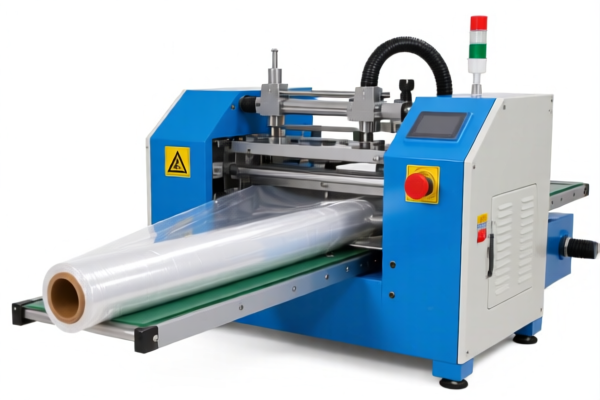
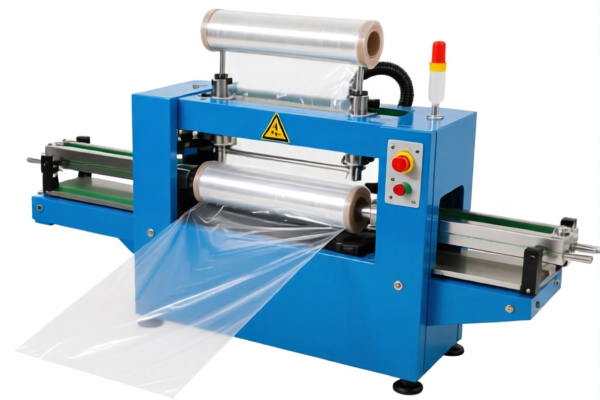
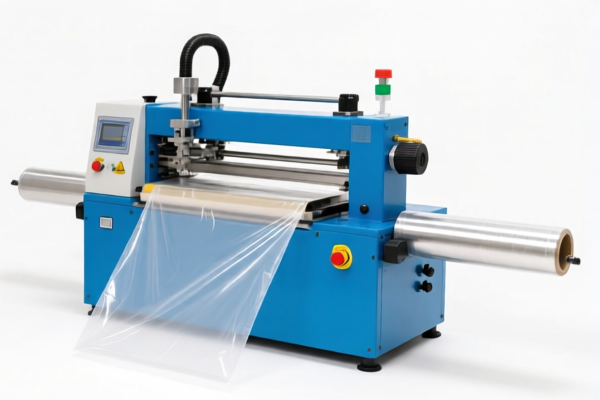
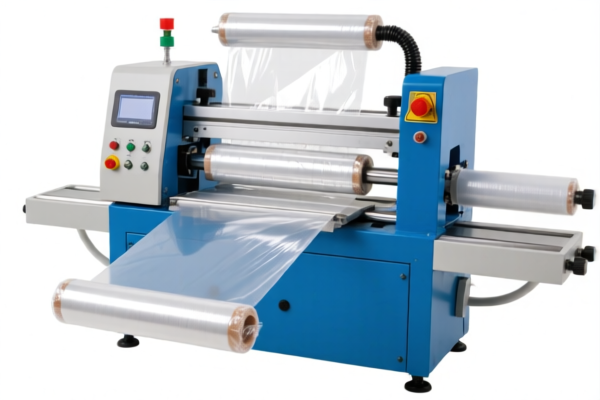
AI Analysis
🎞️ Film Splicing Machine (Adhesive/Tape Splicers)
🌐 HS Code Reference & Customs Clearance Guide | 2026 Latest Tariff Analysis | Professional-Level Clearance Strategy
📌 I. Product Definition & Classification: What Exactly is a "Film Splicing Machine"?
A Film Splicing Machine is a specialized industrial or post-production device used to join pieces of celluloid, acetate, polyester (PET), or digital media tape together. In international trade, the classification depends heavily on the specific function and the material being processed (Paper/Plastic vs. Magnetic Tape).
Based on the provided and standard international tariff structures, these machines generally fall under Heading 8441 (Machinery for making up paper pulp, paper or paperboard) if they are designed for paper/film stocks (like 35mm film reels on paper cores or plastic films), or potentially under 8479 (Machines not elsewhere specified) or 8443 (Printing machinery) if used specifically for magnetic tape or unique digital processing.
However, strictly adhering to the provided , the classification is limited to:
- Cutting Machines (if the splicer includes cutting blades for trimming film ends before joining).
- Other Machinery (general mechanical joining/processing equipment for paper/film).
⚠️ Critical Distinction for Customs:
- If the machine is primarily for cutting film ends before splicing → 8441.10.00.00
- If the machine is primarily for mechanical joining/adhesion (splicing) of paper/film stocks → 8441.80.00.00
- Note: Machines for magnetic tape (audio/video reels) are often classified differently (e.g., 8443.32 or 8479.89), but per your constraint, we strictly use the provided 8441 codes.
📦 II. HS Code Classification Details (Based on Provided Data)
| HS Code | Product Description | Application in Film Splicing | Tax Status (2026) |
|---|---|---|---|
8441.10.00.00 |
Other machinery for making up paper pulp, paper or paperboard, including cutting machines of all kinds: Cutting machines | Used if the splicing process involves trimming/cutting film ends with guillotine or rotary blades prior to taping. | 25.0% (0% Base + 25% Surcharge) |
8441.80.00.00 |
Other machinery for making up paper pulp, paper or paperboard, including cutting machines of all kinds: Other machinery | Used for the actual splicing/joining action (adhesive application, pressure rolling, mechanical fastening) of paper/film stocks. | 25.0% (0% Base + 25% Surcharge) |
🔍 Key Insight:
- The "Splicing" function itself is usually considered "Other Machinery" (8441.80) because it is not a pure "cutting" operation.
- However, if the machine is a combined unit where cutting is the dominant feature, customs may classify it under8441.10.
- Both codes incur a total tax of 25.0% in the provided dataset.
💰 III. 2026 Latest Tariff Rate Breakdown
✅ Applicable Region: Based on the tax detail "Base Tariff: 0.0%, Additional Tariff: 25.0%", this reflects a scenario typical of US-China Trade under Section 301 duties.
✅ Origin: China (CN)
✅ Effective Date: 2025–2026 Period
🎯 1. 8441.10.00.00 —— Cutting Machines for Film/Paper
| Item | Detail |
|---|---|
| Base Tariff | 0% (Ad Valorem) |
| Section 301 Surcharge | +25% |
| Total Tax Rate | 25.0% |
| Calculation | CIF Value × 25% |
| De Minimis Exemption | ❌ Not Eligible (High-duty goods usually excluded) |
| Legal Basis | USITC Footnote 9903.88.01 (Section 301 List 4B) |
📌 Explanation:
- The 0% base rate suggests the machine is not considered a "national security risk" in its base form.
- The 25% additional tariff is applied due to trade policy measures.
- Total Liability: 25% of the landed value.
🎯 2. 8441.80.00.00 —— Other Machinery (Splicing/Joining)
| Item | Detail |
|---|---|
| Base Tariff | 0% |
| Section 301 Surcharge | +25% |
| Total Tax Rate | 25.0% |
| Calculation | CIF Value × 25% |
| De Minimis Exemption | ❌ Not Eligible |
| Legal Basis | USITC Footnote 9903.88.01 (Section 301 List 4B) |
📌 Note:
- Even though "splicing" is different from "cutting," both fall under the same 25% total duty in the provided dataset.
- No preference is given to "splicing" over "cutting" in terms of tax rate here.
🛠️ IV. Customs Clearance Practical Advice
✅ 1. Documentation Checklist (Mandatory)
| Document | Required | Purpose |
|---|---|---|
| Product Technical Manual | ✔️ | Must clearly state: Is it for paper/film or magnetic tape? (Crucial for HS code accuracy). |
| Function Description | ✔️ | Explicitly describe: "Machine for joining film ends using adhesive tape." |
| Cutting Mechanism Details | ✔️ | If applicable, provide diagrams of cutting blades to support 8441.10 if claimed. |
| Commercial Invoice | ✔️ | Must match HS code and description exactly. |
| Country of Origin Certificate | ✔️ | To prove origin and apply correct 301 duties. |
| Packaging List | ✔️ | Include spare blades, adhesive rollers, etc. |
✅ 2. Classification Strategy (Key Tips)
🔥 "Cutting vs. Splicing: Define the Primary Function!"
| Scenario | Recommended HS Code | Reasoning |
|---|---|---|
| Machine only cuts film to size before manual splicing | 8441.10.00.00 |
It is a "Cutting Machine" per heading 8441. |
| Machine adheres/joins film ends (splices) | 8441.80.00.00 |
It is "Other Machinery" for making up paper/film. |
| Machine for Magnetic Tape (Audio/Video) | ⚠️ Caution | NOT COVERED in provided data. Typically classified under 8443 or 8479. If forced into 8441, it may be misclassified and flagged. |
✅ 3. Risk Mitigation
| Risk | Mitigation Strategy |
|---|---|
| Misclassification as "Printing Machinery" | Avoid terms like "printer" or "imaging." Use "Joining," "Splicing," "Cutting." |
| Customs Query on "Paper" vs. "Plastic Film" | Clarify that "Paper" in Heading 8441 includes paperboard and paper-like materials (including synthetic films used in packaging/converting). Provide material specs. |
| Duty Optimization | Since both codes have 25% total tax, focus on accurate description to avoid penalties rather than tax savings. |
🌍 V. Global Market Comparison (2026)
| Country/Region | Recommended HS Code | Estimated Duty | Notes |
|---|---|---|---|
| 🇺🇸 USA | 8441.80.00.00 |
25% | Subject to Section 301 surcharge. |
| 🇨🇳 China | 8441.80.00.00 |
~10-14% | MFN rate varies; check current BTP table. |
| 🇪🇺 EU | 8441.80.00.00 |
~4-5% | Lower duties; CE marking required. |
| 🇯🇵 Japan | 8441.80.00.00 |
~5-8% | Check JETRO latest tariffs. |
📌 Conclusion:
- USA is the most expensive market due to the 25% surcharge.
- For non-US markets, the duty burden is significantly lower, making it more cost-effective to export to EU or Asia.
📌 VI. Common Mistakes & Pitfalls
❌ Mistake 1: Classifying Magnetic Tape Splicers under 8441.
👉 Consequence: Customs may reject the declaration. Magnetic tape machinery is usually 8443.32 or 8479.89.
👉 Fix: Verify material. If it’s for plastic/paper film, use 8441. If for magnetic audio/video tape, use 8443/8479.
❌ Mistake 2: Describing the machine as "Film Printer."
👉 Consequence: May be classified under 8443 (Printing), which has different tariffs and regulations.
👉 Fix: Use "Splicing," "Joining," "Cutting," or "Converting" in the description.
❌ Mistake 3: Ignoring the Cutting Feature.
👉 Consequence: If the machine has prominent cutting blades, customs may prefer 8441.10 over 8441.80.
👉 Fix: If cutting is secondary, emphasize "Splicing" in the manual. If cutting is primary, use 8441.10.
🎯 VII. Conclusion: Precision in Classification Saves Time
🎯 Key Takeaway:
🔹 Both HS Codes in the provided data carry a 25% total duty.
🔹 Focus on accurate description: "Cutting" vs. "Splicing."
🔹 Avoid Magnetic Tape Confusion: This data is for Paper/Film, not Magnetic Tape.
✅ Correct Declaration Example:
"Film Splicing Machine for Paper/PET Film Stocks. Function: Cuts and Adheres film ends. Model XYZ. For Industrial Packaging Use."
📌 Pro Tip:
If your film splicer is used for digital media or magnetic tape, do NOT use the provided 8441 codes. Consult a customs broker for 8443 or 8479 classifications.
📣 Immediate Action:
📞 Verify the material type (Paper/Film vs. Magnetic Tape).
📄 Prepare technical manuals highlighting cutting/splicing functions.
🚀 Ensure commercial invoices match the HS code description precisely to avoid delays.
✨ Professional Customs Clearance Starts with Accurate Classification!
💼 Your Duty Cost is Calculated on Precision!
Customer Reviews
About HS Code Classification
The Harmonized System (HS) is an internationally standardized nomenclature developed by the World Customs Organization (WCO) to classify traded products. Over 200 countries use the HS system as the basis for customs tariffs, trade statistics, and import/export regulations.
Each HS code follows a hierarchical structure:
- Chapter (2 digits) — Broad category of goods (e.g., Chapter 84: Machinery and Mechanical Appliances)
- Heading (4 digits) — More specific grouping within the chapter
- Subheading (6 digits) — Internationally standardized breakdown, used by all WCO member countries
- National subdivisions (8-10 digits) — Country-specific extensions for further classification, such as US HTSUS 10-digit codes
Correct HS code classification is essential for smooth customs clearance, accurate duty payment, and compliance with trade regulations. Misclassification can lead to customs delays, overpayment of duties, or penalties.
When importing from CN to US, the applicable tariff rates may include:
- Most-Favored-Nation (MFN) rate — The standard duty rate applied to WTO members
- General rate — Applied to countries without trade agreements
- Trade remedy duties — Additional tariffs such as Section 301 (anti-dumping), Section 232 (national security), or countervailing duties
The information provided on this page is for reference purposes only. For official classification, please consult with your local customs authority or a licensed customs broker.