Film Storage Equipment
CN → US| HS Code | Tariff Rate | Origin | Destination | Doc |
|---|---|---|---|---|
| 3923400010 | 40.3% | CN | US | Official Doc |
| 3923900080 | 38.0% | CN | US | Official Doc |
| 3706106090 | 35.0% | CN | US | Official Doc |
| 3707100005 | 38.0% | CN | US | Official Doc |
| 3707100090 | 38.0% | CN | US | Official Doc |
Product Images
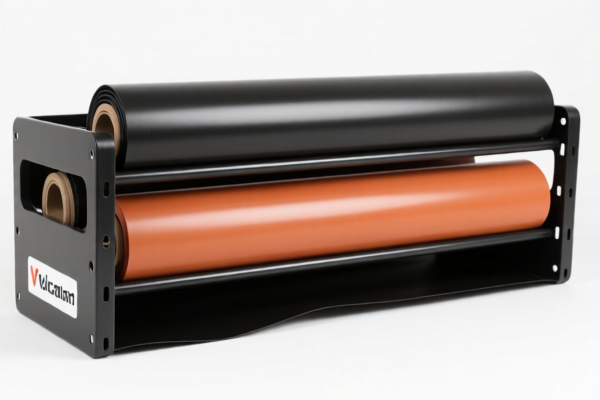


AI Analysis
🎞️ Film Storage Equipment (Photographic & Cinematic Archives)
🌐 HS Code Reference & Customs Clearance Guide | 2026 Latest Tariff Analysis | Professional-Level Strategy
📌 I. Product Definition & Classification: Do You Really Understand "Film Storage"?
Film storage equipment is not a single product but a category involving containers for physical media and the media itself. In international trade, misclassification is common because the boundary between "plastic packaging," "optical media," and "chemical goods" is often blurred.
1. Plastic Storage Containers: Rigid boxes, reels, canisters, or cases made of plastic designed specifically to hold film rolls or spools.
2. The Film Media Itself: The actual photographic or cinematic film (light-sensitive material) intended for archiving or storage.
3. Chemical Agents: Solutions or materials used in the preservation or processing of the film.
⚠️ Key Distinction Point:
- If the item is an empty plastic container (box/canister) → It falls under Chapter 39 (Plastics).
- If the item is the actual film stock (light-sensitive) → It falls under Chapter 37 (Photographic/Cinematic Goods).
- If the item is a chemical preservative → It falls under Chapter 37 as well.
📦 II. HS Code Classification Details (2026 Latest Tariff Authority Cross-Reference)
| HS Code | Product Description | Application Scenario | Key Characteristics |
|---|---|---|---|
3923.40.00.10 |
Film storage containers (Plastic) | Empty reels, canisters, or boxes for holding film | Material: Plastic; Function: Container only |
3923.90.00.80 |
Other plastic packaging articles | General plastic storage boxes for film | Material: Plastic; General purpose storage |
3706.10.60.90 |
Cinematic film archiving | The actual film stock (e.g., 35mm, 16mm) for archives | Material: Light-sensitive; Purpose: Archival |
3707.10.00.05 |
Archival film materials | Photographic sensitized materials | Material: Chemical/Light-sensitive; Purpose: Photography |
3707.10.00.90 |
Chemical products for film | Photographic chemicals used in storage/preservation | Material: Chemical; Purpose: Photography/Processing |
🔍 Important Reminder:
- Empty plastic containers MUST be classified under Chapter 39 (Plastics), NOT Chapter 37.
- The film itself (light-sensitive emulsion on base) MUST be classified under Chapter 37.
- Do not mix the container and the film in the same line item if they are shipped separately or have distinct values.
💰 III. 2026 Latest Tariff Rate Breakdown (Including Surtaxes & Policy Add-ons)
✅ Applicable Country: USA (US)
✅ Origin: China (CN)
✅ Effective Date: From November 10, 2025 onwards (for subsequent imports)
🎯 1. 3923.40.00.10 —— Plastic Film Storage Containers
| Item | Detail |
|---|---|
| Base Tariff | 5.3% (ad valorem) |
| Section 301 Surcharge | +25.0% |
| Section 122 Surcharge | +10.0% |
| Total Tariff Rate | 40.3% |
| Tax Calculation | CIF Value × 40.3% |
| De Minimis Eligibility | ❌ No (deny_de_minimis) |
| Legal Basis Path | Base: 3923.40.00.10 → Sec 301: +25% → Sec 122: +10% |
📌 Explanation:
- Even though it is plastic packaging, the specific use for film triggers a specific HS code.
- The total rate of 40.3% is high due to the cumulative effect of Base + 301 + 122 tariffs.
🎯 2. 3923.90.00.80 —— Other Plastic Packaging for Film
| Item | Detail |
|---|---|
| Base Tariff | 3.0% (ad valorem) |
| Section 301 Surcharge | +25.0% |
| Section 122 Surcharge | +10.0% |
| Total Tariff Rate | 38.0% |
| Tax Calculation | CIF Value × 38.0% |
| De Minimis Eligibility | ❌ No (deny_de_minimis) |
| Legal Basis Path | Base: 3923.90.00.80 → Sec 301: +25% → Sec 122: +10% |
📌 Note:
- If the plastic container is generic (not specifically shaped for film reels) but used for film storage, this code may apply.
- Rate is slightly lower than3923.40.00.10but still significant.
🎯 3. 3706.10.60.90 —— Cinematic Film Archiving (Light-Sensitive)
| Item | Detail |
|---|---|
| Base Tariff | 0.0% (ad valorem) |
| Section 301 Surcharge | +25.0% |
| Section 122 Surcharge | +10.0% |
| Total Tariff Rate | 35.0% |
| Tax Calculation | CIF Value × 35.0% |
| De Minimis Eligibility | ❌ No (deny_de_minimis) |
| Legal Basis Path | Base: 3706.10.60.90 → Sec 301: +25% → Sec 122: +10% |
📌 Explanation:
- The base tariff for photographic/cinematic film is often 0%, making it the lowest tax option among the listed codes.
- However, this applies ONLY to the actual light-sensitive film, not the container.
🎯 4. 3707.10.00.05 & 3707.10.00.90 —— Archival Photographic Chemicals/Materials
| Item | Detail |
|---|---|
| Base Tariff | 3.0% (ad valorem) |
| Section 301 Surcharge | +25.0% |
| Section 122 Surcharge | +10.0% |
| Total Tariff Rate | 38.0% |
| Tax Calculation | CIF Value × 38.0% |
| De Minimis Eligibility | ❌ No (deny_de_minimis) |
| Legal Basis Path | Base: 3707.10.x0.x0 → Sec 301: +25% → Sec 122: +10% |
📌 Note:
- Applies to chemicals used in the preservation or processing of film.
- If you are shipping empty plastic boxes, DO NOT use this code.
🛠️ IV. Customs Clearance Practical Advice (Real-World Pitfall Avoidance)
✅ 1. Required Documentation Checklist
| Document | Mandatory? | Explanation |
|---|---|---|
| ✅ Product Specification Sheet | ✔️ | Must clarify: Is it empty container or film stock? |
| ✅ Material Composition | ✔️ | For plastics: Confirm it is not hazardous. For film: Confirm it is light-sensitive. |
| ✅ HS Code Justification | ✔️ | Provide a memo explaining why it is 3923 (container) vs 3706 (film). |
| ✅ Commercial Invoice | ✔️ | Must clearly state: "Empty Plastic Film Reels" OR "Unexposed Cinematic Film Stock". |
| ✅ Packing List | ✔️ | Separate line items for containers and film if shipped together. |
✅ 2. Declaration Strategy (Key Mnemonics)
🔥 “Container is Plastic, Film is Chemical; Don’t Mix Them Up, Or You’ll Pay More!”
| Scenario | Correct Declaration | Wrong Declaration | Consequence |
|---|---|---|---|
| Empty plastic canister for film | 3923.40.00.10 |
3706.10.60.90 (Film) |
Overpayment: 40.3% vs 35.0% |
| Empty plastic box (generic) | 3923.90.00.80 |
3923.40.00.10 |
Overpayment: 38.0% vs 40.3% |
| Actual unexposed film | 3706.10.60.90 |
3923.40.00.10 (Container) |
Underpayment: 35.0% vs 40.3% → Customs Audit! |
| Film + Container (shipped together) | Split Declaration | Single Line Item | Delay/Seizure: Must separate values. |
✅ 3. Special Cases
| Situation | Handling Advice |
|---|---|
| OEM Branded Containers | Provide brand authorization if applicable, but focus on material (plastic) for HS code. |
| Film Stock with Emulsion | Must declare as Chapter 37. Do not call it "plastic film" (which implies no light sensitivity). |
| Preservation Chemicals | Declare as 3707.10. SDS (Safety Data Sheet) may be required. |
| Sample Sizes (Low Value) | ❌ No De Minimis: Even small samples are subject to the full 35%-40% tariff. |
🌍 V. Global Market Comparison (2026 Latest)
| Country/Region | Recommended HS Code | Tariff Rate | Certification | Notes |
|---|---|---|---|---|
| 🇺🇸 USA | 3923.40.00.10 / 3706.10.60.90 |
35.0% - 40.3% | None specific | High surtaxes due to China origin |
| 🇨🇳 China | 3923.40.00.10 |
5.3% | None | No 301/122 surtaxes |
| 🇪🇺 EU | 3923.40.00.10 / 3706.10.60.90 |
0% - 2% | CE (if applicable) | No US-style surtaxes |
| 🇬🇧 UK | 3923.40.00.10 / 3706.10.60.90 |
0% - 2% | UKCA | Post-Brexit alignment with EU |
📌 Conclusion:
- USA is the most expensive market due to Section 301 (25%) and Section 122 (10%) surtaxes.
- Empty plastic containers are taxed higher (40.3%) than the actual film (35.0%) if classified correctly.
- If possible, optimize logistics: Ship film and containers separately to allow for correct classification and potentially lower duties on the film.
📌 VI. Common Errors & Pitfall Guide (Lessons Learned)
❌ Error 1: Declaring empty plastic film cans as "Photographic Film" (3706).
👉 Consequence: Overpayment of ~5.3% on the plastic value.
👉 Tip: Always specify "Empty Container" in the description.
❌ Error 2: Declaring actual film stock as "Plastic Packaging" (3923).
👉 Consequence: Underpayment → Customs audit, fines, and potential seizure.
👉 Tip: Light-sensitive material is Chapter 37, not Chapter 39.
❌ Error 3: Ignoring Section 122 surtax.
👉 Consequence: Unprepared for the additional 10% fee.
👉 Tip: Budget for 35-40% total landed cost for China-origin goods.
❌ Error 4: Mixing chemicals and plastics in one HS code.
👉 Consequence: Classification rejection.
👉 Tip: Separate line items for chemicals (3707) and containers (3923).
✅ Correct Declaration Example:
"Empty Plastic Reels for Cinematic Film, Non-Sensitized, Model ABC" →
3923.40.00.10
"Unexposed 35mm Cinematic Film Stock for Archival Use, Light-Sensitive" →3706.10.60.90
🎯 VII. Conclusion: Precise Classification Saves Money!
🎯 Remember the Mnemonic:
🔹 "Container = Plastic (Ch39), Film = Chemical (Ch37); Empty is cheaper? No, Film is lower!"
🔹 "35% for Film, 40% for Plastic; Don't mix them, save your cash!"
🔹 "122 Surtax is 10%, 301 is 25%; Total is high, be aware!"
📌 Pro Tip:
- If your film is not light-sensitive (e.g., blank polyester film for non-photographic use), it might still be 3923, but confirm with a lab test.
- For archival film, ensure the description highlights "Archival" and "Light-Sensitive" to justify 3706.10.60.90 and potentially avoid higher-duty general plastic classifications.
📣 Immediate Action:
📞 Contact a professional customs broker + Provide product photos + Request Advance Ruling for HS Code confirmation.
🚀 Ensure your film storage equipment clears customs smoothly, efficiently, and cost-effectively!
✨ Professional clearance starts with accurate classification!
💼 Every percentage point saved is pure profit!
Customer Reviews
About HS Code Classification
The Harmonized System (HS) is an internationally standardized nomenclature developed by the World Customs Organization (WCO) to classify traded products. Over 200 countries use the HS system as the basis for customs tariffs, trade statistics, and import/export regulations.
Each HS code follows a hierarchical structure:
- Chapter (2 digits) — Broad category of goods (e.g., Chapter 84: Machinery and Mechanical Appliances)
- Heading (4 digits) — More specific grouping within the chapter
- Subheading (6 digits) — Internationally standardized breakdown, used by all WCO member countries
- National subdivisions (8-10 digits) — Country-specific extensions for further classification, such as US HTSUS 10-digit codes
Correct HS code classification is essential for smooth customs clearance, accurate duty payment, and compliance with trade regulations. Misclassification can lead to customs delays, overpayment of duties, or penalties.
When importing from CN to US, the applicable tariff rates may include:
- Most-Favored-Nation (MFN) rate — The standard duty rate applied to WTO members
- General rate — Applied to countries without trade agreements
- Trade remedy duties — Additional tariffs such as Section 301 (anti-dumping), Section 232 (national security), or countervailing duties
The information provided on this page is for reference purposes only. For official classification, please consult with your local customs authority or a licensed customs broker.