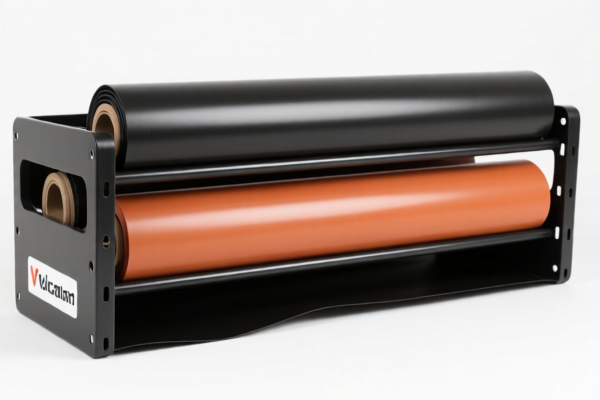
Film Storage Frame
CN → US| HS Code | Tariff Rate | Origin | Destination | Doc |
|---|---|---|---|---|
| 9010908500 | 35.0% | CN | US | Official Doc |
| 9010506000 | 35.0% | CN | US | Official Doc |
| 9002909500 | 35.0% | CN | US | Official Doc |
| 9002204000 | 35.0% | CN | US | Official Doc |
| 3923400010 | 40.3% | CN | US | Official Doc |
Product Images


AI Analysis
🎞️ Film Storage Frame (Photographic Lab Equipment Accessories)
🌐 HS Code Reference & Customs Clearance Guide | 2026 Latest Tariff Analysis | Professional Compliance Strategy
📌 I. Product Definition & Classification: What Exactly Is a "Film Storage Frame"?
In the specialized world of analog photography and industrial film processing, Film Storage Frames are critical auxiliary components. They are typically rigid structures (frames or brackets) designed to hold, fix, or organize photographic film reels, spools, or sheets during development, inspection, or storage processes.
Crucially, these are not the film itself, nor are they the camera. They are classified based on their functional relationship to photographic laboratory equipment or their material composition if used as containers.
⚠️ Key Distinction Points:
- If the item is a metal/plastic frame/bracket used to hold film in a lab processor → It falls under Photographic Lab Equipment Accessories (Ch 90).
- If the item is a plastic container/spool/jar specifically for storing film rolls → It falls under Plastic Articles for Packaging (Ch 39).
📦 II. HS Code Classification Details (2026 Latest Tariff Authority Mapping)
Based on the provided data, there are 5 potential HS Codes depending on the specific physical form and primary function of the item.
| HS Code | Product Description | Application Scenario | Key Attribute |
|---|---|---|---|
9010.90.85.00 |
Parts & Accessories of Photographic Lab Equipment | Frames/brackets used to fix film in lab devices | Fixture/Bracket Nature |
9010.50.60.00 |
Other Photographic Laboratory Instruments/Equipment | Auxiliary devices for film processing labs | Lab Accessory Nature |
9002.90.95.00 |
Parts/Accessories of Optical Instruments | Optically graded material frames for lens/camera systems | Optical Component Attribute |
9002.20.40.00 |
Filters & Accessories for Photographic Use | Support/fixing parts for filters or film holders | Support/Fixing Component |
3923.40.00.10 |
Plastic Spools, Cans, and Containers | Plastic reels, canisters, or jars for storing film | Material: Plastic Storage Container |
🔍 Critical Note:
- Items9010.xxxxand9002.xxxxcarry a 35% total tax rate.
- Item3923.40.00.10carries a 40.3% total tax rate due to the 5.3% base tariff on plastic articles.
- Misclassification Risk: Declaring a plastic film canister as a "lab accessory" (9010) to save taxes is risky. Customs may reclassify it as3923.40.00.10based on material, applying the higher base rate.
💰 III. 2026 Latest Tariff Rate Breakdown (Including Surtaxes)
✅ Applicable Country: United States (US)
✅ Country of Origin: China (CN)
✅ Effective Date: From November 10, 2025 (including subsequent imports)
🎯 1. 9010.90.85.00 / 9010.50.60.00 / 9002.90.95.00 / 9002.20.40.00
Category: Photographic/Optical Lab Accessories & Parts
| Item | Content |
|---|---|
| Base Tariff | 0.0% (Ad Valorem) |
| Section 301 Surtax | +25.0% (USITC Footnote 9903.88.01) |
| IEEPA Surtax | +10.0% (Targeted at China/HK products, effective Nov 10, 2025) |
| Total Tariff Rate | 35.0% |
| Tax Calculation | CIF Value × 35% |
| De Minimis Eligibility | ❌ NO (deny_de_minimis) |
| Legal Basis Path | IEEPA:9903.01.25 → USITC:9010.xxxx/9002.xxxx → FOOTNOTE:9903.88.01 |
📌 Explanation:
- The 25% is the standard Section 301 penalty on Chinese goods.
- The 10% is the new IEEPA tariff layer added in late 2025.
- Total: 35%. This is a high tax burden. No de minimis exemption applies.
🎯 2. 3923.40.00.10
Category: Plastic Storage Containers (Spools/Cans)
| Item | Content |
|---|---|
| Base Tariff | 5.3% (Standard MFN rate for plastic articles) |
| Section 301 Surtax | +25.0% |
| IEEPA Surtax | +10.0% |
| Total Tariff Rate | 40.3% |
| Tax Calculation | CIF Value × 40.3% |
| De Minimis Eligibility | ❌ NO (deny_de_minimis) |
| Legal Basis Path | IEEPA:9903.01.25 → USITC:3923.40.00.10 → FOOTNOTE:9903.88.01 |
📌 Note:
- This code has a 5.3% base duty because it is classified as a "Plastic Article."
- Even with surcharges, the total is 40.3%, which is higher than the 35% for pure accessories.
- Why? Because the base rate is not 0%. If you declare a plastic film jar as a "lab accessory" (9010), you might get 35%, but if Customs inspects and sees it's a plastic container, they will apply3923.40.00.10(40.3%) and may penalize for misdeclaration.
🛠️ IV. Customs Clearance Practical Advice (Pitfall Avoidance Guide)
✅ 1. Required Documentation Checklist
| Document | Mandatory | Explanation |
|---|---|---|
| ✅ Product Spec Sheet | ✔️ | Detail dimensions, material (metal vs. plastic), and weight. |
| ✅ Photos (Clear) | ✔️ | Show the item holding a film reel or in a lab setting. Distinguish between a "frame" and a "container." |
| ✅ Commercial Invoice | ✔️ | Use precise description: "Metal Film Fixing Frame for Lab Processor" OR "Plastic Film Storage Canister." |
| ✅ Material Certificate | ✔️ | Proof of material (e.g., Steel vs. ABS Plastic) to support HS Code selection. |
| ✅ Origin Certificate | ✔️ | Essential for verifying China origin to calculate correct surtaxes. |
✅ 2. Declaration Strategy (Key Mantras)
🔥 “Function Defines Code, Material Defines Tax, Accuracy Saves Money!”
| Scenario | Correct Declaration | Wrong Practice |
|---|---|---|
| Metal/Plastic Frame holding film in a processor | 9010.90.85.00 (35%) |
Declaring as "Plastic Part" → 40.3% |
| Plastic Canister/Jar for storing empty reels | 3923.40.00.10 (40.3%) |
Declaring as "Lab Accessory" → Risk of penalty + 40.3% anyway |
| Optical Lens Filter Holder | 9002.20.40.00 (35%) |
Declaring as "General Plastic Holder" → High risk of audit |
| Generic Plastic Spool (no lab context) | 3923.40.00.10 (40.3%) |
Declaring as "Camera Part" → Misclassification |
✅ 3. Special Handling Tips
| Situation | Recommendation |
|---|---|
| Hybrid Items (e.g., Plastic Frame with Metal Clips) | Declare as the primary functional component. If it's mainly a fixture for a lab machine, argue for 9010.90.85.00 (35%). Provide assembly diagrams. |
| OEM/Custom Lab Frames | Provide the end-user equipment manual showing the frame is an integral accessory to the lab processor. This strengthens the case for 9010.xxxx. |
| Small Quantity Imports | Remember: No De Minimis. Even small frames are subject to 35-40.3% tax. Factor this into pricing. |
🌍 V. Global Market Comparison (2026 Latest)
| Country/Region | Recommended HS Code | Total Tariff (China Origin) | Certification | Notes |
|---|---|---|---|---|
| 🇺🇸 USA | 9010.90.85.00 |
35% | N/A | High surtaxes. 3923 is 40.3%. |
| 🇨🇳 China | 9010.90.85.00 |
0% - 5% | CCC (if applicable) | Low import duty for domestic producers. |
| 🇪🇺 EU | 9010.90.90 |
4.5% | CE (if electrical) | No Section 301/IEEPA surtaxes. Much cheaper! |
| 🇬🇧 UK | 9010.90.90 |
4.5% | UKCA | Similar to EU, significantly lower than US. |
📌 Conclusion:
- USA is the most expensive market due to Section 301 + IEEPA tariffs.
- EU/UK offer a significant cost advantage (~4.5% vs 35-40%).
- Consider supply chain diversification to Southeast Asia or Europe if targeting the US market heavily.
📌 VI. Common Errors & Pitfalls (Lessons from Experience)
❌ Error 1: Declaring a plastic film canister as a "Lab Accessory" to get 35% instead of 40.3%.
👉 Consequence: Customs may inspect, find it's a plastic article, apply 40.3%, plus fines for misdeclaration.
❌ Error 2: Declaring a metal film frame as "Plastic Part" (3923...).
👉 Consequence: Unnecessary higher base duty (5.3%) + surtaxes. You pay more for no reason.
❌ Error 3: Ignoring the IEEPA 10% surtax in cost calculations.
👉 Consequence: Profit margin erosion. Many traders only account for the 25% Section 301 tax, forgetting the additional 10% effective Nov 2025.
✅ Correct Practice:
"Metal Film Fixing Bracket, Compatible with Kodak Lab Processor Model X, Material: Stainless Steel, Part No: XYZ-123"
🎯 VII. Conclusion: Precision in Classification Saves Thousands!
🎯 Remember the Mantra:
🔹 "Lab Frame = 9010 (35%) | Plastic Can = 3923 (40.3%) | Don't Mix Them!"
🔹 "35% or 40.3%? It depends on if you STORE or FIX!"
📌 Pro Tip:
If your film frames are originally made in Vietnam or Mexico, you may qualify for IEEPA Exemptions, reducing the total tariff to 0-5%.
Recommendation: Apply for Pre-Ruling (Advance Ruling) from US Customs if your shipment volume is high, to lock in the correct 35% rate and avoid 40.3% penalties.
📣 Immediate Action:
📞 Contact a professional customs broker.
📦 Provide product photos + material specs.
🚀 Ensure your commercial invoice matches the HS Code function exactly.
✨ Professional Clearance Starts with Accurate Classification!
💼 Every Percent Saved is Profit Earned!
Customer Reviews
About HS Code Classification
The Harmonized System (HS) is an internationally standardized nomenclature developed by the World Customs Organization (WCO) to classify traded products. Over 200 countries use the HS system as the basis for customs tariffs, trade statistics, and import/export regulations.
Each HS code follows a hierarchical structure:
- Chapter (2 digits) — Broad category of goods (e.g., Chapter 84: Machinery and Mechanical Appliances)
- Heading (4 digits) — More specific grouping within the chapter
- Subheading (6 digits) — Internationally standardized breakdown, used by all WCO member countries
- National subdivisions (8-10 digits) — Country-specific extensions for further classification, such as US HTSUS 10-digit codes
Correct HS code classification is essential for smooth customs clearance, accurate duty payment, and compliance with trade regulations. Misclassification can lead to customs delays, overpayment of duties, or penalties.
When importing from CN to US, the applicable tariff rates may include:
- Most-Favored-Nation (MFN) rate — The standard duty rate applied to WTO members
- General rate — Applied to countries without trade agreements
- Trade remedy duties — Additional tariffs such as Section 301 (anti-dumping), Section 232 (national security), or countervailing duties
The information provided on this page is for reference purposes only. For official classification, please consult with your local customs authority or a licensed customs broker.