Film Test Film
CN → US| HS Code | Tariff Rate | Origin | Destination | Doc |
|---|---|---|---|---|
| 9006990000 | 21.4% | CN | US | Official Doc |
| 9031491000 | 35.0% | CN | US | Official Doc |
| 9031499000 | 35.0% | CN | US | Official Doc |
| 9010506000 | 35.0% | CN | US | Official Doc |
| 3706900060 | 35.0% | CN | US | Official Doc |
Product Images
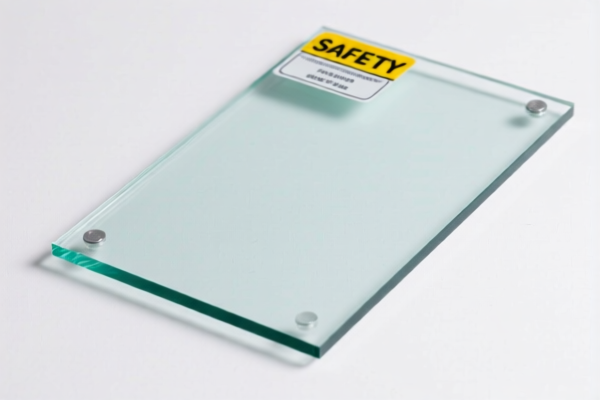
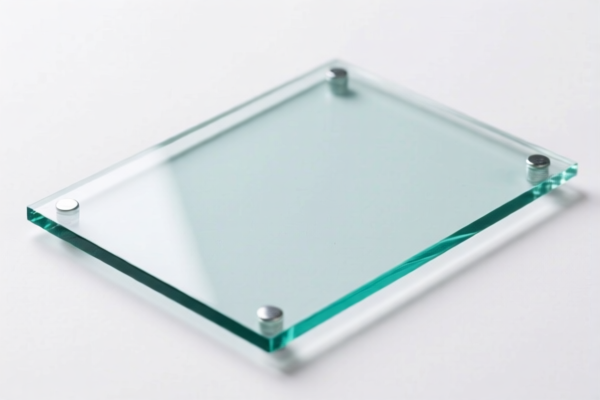
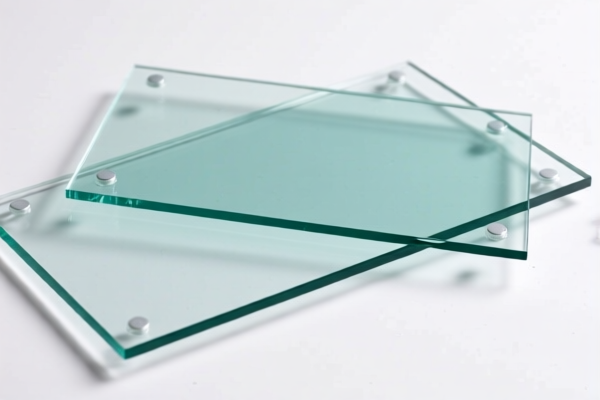
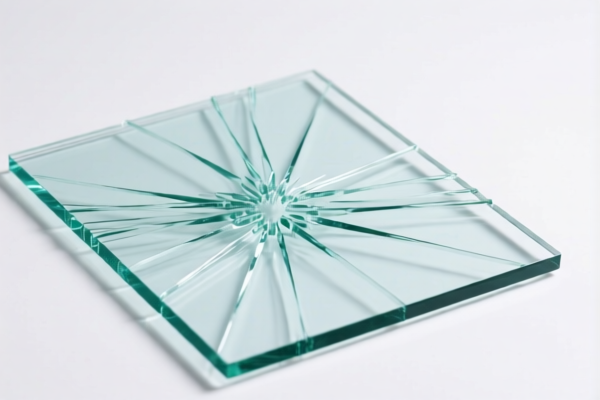
AI Analysis
🎞️ Film Test Chart / Color Checker (Professional Photography & Cinematography Tools)
🌐 HS Code Reference & Customs Clearance Guide | 2026 Latest Tariff Analysis | Professional-Level Clearance Strategy
📌 1. Product Definition & Classification: Do You Really Understand "Test Charts"?
Film Test Charts (also known as Color Checkers, Resolution Charts, or Gray Scale Cards) are critical tools in professional photography, cinematography, and industrial optical inspection. They are used to calibrate cameras, verify color accuracy, test resolution, and inspect film development quality.
In international trade, the classification depends heavily on the specific material and intended use: * Photographic Film Context: If the test chart is printed on photographic paper/film base for use in darkrooms (to test developing chemicals), it falls under Section 37 (Photographic Goods). * Optical Instrument Context: If the chart is a rigid plastic, glass, or metal target used for calibrating optical instruments (cameras, microscopes, inspection systems), it falls under Section 90 (Optical Instruments). * Accessories Context: If it is a generic accessory not specifically described elsewhere, it may fall under Section 90 (Other) or Section 90 (Parts/Accessories).
⚠️ Key Distinction Point:
- If it is a consumable item (like a printed test strip for darkroom use) → HS Code 3706.90.00.60
- If it is a non-photographic test target (plastic/glass/metal) for optical inspection → HS Code 9031.49.xxxxxx
- If it is a general accessory for cameras without specific optical function → HS Code 9006.99.00.00
📦 2. HS Code Classification Details (2026 Latest Tariff Authority Comparison)
| HS Code | Product Description | Application Scenario | Tax Rate (China Origin to US) |
|---|---|---|---|
9006.99.00.00 |
Other Parts & Accessories: Based on film attributes, categorized as a catch-all for camera accessories. | General camera accessories, non-specific film testing aids. | 21.4% |
9031.49.10.00 |
Other Instruments/Apparatus: Specifically for optical inspection (test tools). | Optical testing tools, resolution charts for industrial inspection. | 35.0% |
9031.49.90.00 |
Other Instruments/Apparatus: Other optical instruments for measurement/inspection. | General optical testing equipment, high-precision calibration targets. | 35.0% |
9010.50.60.00 |
Photographic Laboratory Equipment: Auxiliary tools for developing quality inspection. | Darkroom tools, film developer quality checkers. | 35.0% |
3706.90.00.60 |
Photographic Film/Other: Explicitly cinema film category; test cards as specific consumables. | Photographic film test strips, color charts printed on film base for darkroom use. | 35.0% |
🔍 Critical Reminder:
-3706.90.00.60is the only category with 0% Basic Tariff but still subject to heavy additional tariffs. It is strictly for photographic film-related consumables. -9031codes are for optical instruments. Even a simple plastic chart used to calibrate a camera lens is considered an "optical test instrument" by many customs authorities, leading to 35% total duty. -9006.99.00.00is the lowest tax option (21.4%), but it is a "catch-all" for accessories. It is suitable only if the item is clearly an accessory and not a standalone test instrument.
💰 3. 2026 Latest Tariff Rate Breakdown (Including Additional Taxes & Policy Surcharges)
✅ Applicable Country: United States (US)
✅ Country of Origin: China (CN)
✅ Effective Date: From November 10, 2025 (for imports thereafter)
🎯 1. 9006.99.00.00 — Camera Accessories (Catch-All)
| Item | Content |
|---|---|
| Basic Tariff | 3.9% (Ad Valorem) |
| USITC Surcharge (Section 301) | +7.5% (Additional Tariff) |
| IEEPA Surcharge (122 Clause) | +10% (For China/HK Products) |
| Total Effective Rate | 21.4% |
| Tax Calculation | CIF Value × 21.4% |
| De Minimis Exemption | ❌ Not Allowed (deny_de_minimis) |
| Legal Basis Path | IEEPA:9903.01.25 → USITC:9006.99.00.00 → FOOTNOTE:301 |
📌 Explanation:
- This is the most cost-effective option for non-optical camera accessories.
- It avoids the 25% Section 301 tariff applied to optical instruments (9031), replacing it with a lower 7.5%.
- Warning: You must prove the item is an accessory and not an instrument. If customs views it as a "test instrument," they will reclassify it to9031, jumping the tax to 35%.
🎯 2. 9031.49.10.00 & 9031.49.90.00 — Optical Test Instruments
| Item | Content |
|---|---|
| Basic Tariff | 0.0% |
| USITC Surcharge (Section 301) | +25.0% |
| IEEPA Surcharge (122 Clause) | +10% |
| Total Effective Rate | 35.0% |
| Tax Calculation | CIF Value × 35.0% |
| De Minimis Exemption | ❌ Not Allowed (deny_de_minimis) |
| Legal Basis Path | IEEPA:9903.01.25 → USITC:9031.49.xxxx → FOOTNOTE:301 |
📌 Explanation:
- 0% Basic Tariff is misleading! The 35% total is very high.
- These codes apply to plastic, metal, or glass test targets used for optical calibration.
- High Risk: Many "test charts" are mistakenly classified here because they are used for "optical" purposes.
🎯 3. 9010.50.60.00 — Photographic Lab Equipment
| Item | Content |
|---|---|
| Basic Tariff | 0.0% |
| USITC Surcharge (Section 301) | +25.0% |
| IEEPA Surcharge (122 Clause) | +10% |
| Total Effective Rate | 35.0% |
| Tax Calculation | CIF Value × 35.0% |
| De Minimis Exemption | ❌ Not Allowed (deny_de_minimis) |
📌 Explanation:
- Applies to tools specifically for photographic laboratories (e.g., densitometers, film developer testers).
- If your test chart is used in a darkroom to test film development, this may be appropriate, but the 35% tax is still high.
🎯 4. 3706.90.00.60 — Other Photographic Film / Cinema Film
| Item | Content |
|---|---|
| Basic Tariff | 0.0% |
| USITC Surcharge (Section 301) | +25.0% |
| IEEPA Surcharge (122 Clause) | +10% |
| Total Effective Rate | 35.0% |
| Tax Calculation | CIF Value × 35.0% |
| De Minimis Exemption | ❌ Not Allowed (deny_de_minimis) |
📌 Explanation:
- This code is for actual film products (e.g., color correction strips printed on film base).
- If you are selling printed test charts on photographic paper/film for darkroom use, this is the correct classification.
- Note: Despite being "film," it still incurs 35% total duty due to Section 301 and IEEPA surcharges.
🛠️ 4. Customs Clearance Practical Advice (Battle-Tested Pitfall Guide)
✅ 1. Document Checklist (All Required)
| Document | Mandatory | Notes |
|---|---|---|
| ✅ Product Specification Sheet | ✔️ | Must clearly state: Material (Plastic/Glass/Film), Use (Calibration/Consumable), and "No Optical Lenses". |
| ✅ Product Photos | ✔️ | Clear images showing the object. If it's a flexible sheet, show it bending. If rigid, show its thickness. |
| ✅ Commercial Invoice | ✔️ | Description should be precise: e.g., "Plastic Color Calibration Chart" vs. "Photographic Film Test Strip". |
| ✅ Packing List | ✔️ | Show items individually. Avoid bundling "Camera + Test Chart" if claiming accessory status for the chart. |
| ✅ Usage Declaration | ✔️ | Explicitly state: "Used for camera calibration" or "Used in darkroom for film testing." |
✅ 2. Declaration Strategy (Key Mantras)
🔥 "Material Defines HS, Usage Defines Tax, Accessories Save Money!"
| Scenario | Correct Declaration | Wrong Practice | Consequence |
|---|---|---|---|
| Plastic Test Chart | 9031.49.10.00 or 9006.99.00.00 |
Claiming it's "Film" | Rejection/High Tax (35%) |
| Film-Based Test Strip | 3706.90.00.60 |
Claiming it's "Plastic Instrument" | Misclassification Risk |
| Camera Accessory | 9006.99.00.00 |
Claiming it's "Optical Instrument" | Tax Jump from 21.4% to 35% |
| Lab Tool | 9010.50.60.00 |
Generic "Test Tool" | Ambiguity/Delay |
📌 Strategic Recommendation:
- If the item is a rigid plastic card, consider declaring it as a Camera Accessory (9006.99.00.00) to save 13.6% in taxes (21.4% vs 35%).
- Justification: Argue it is a "Reference Card for Camera Settings" rather than an "Optical Measurement Instrument."
- Risk: Customs may challenge this. Provide datasheets showing it has no electronic components and is a passive reference tool.
✅ 3. Special Case Handling
| Case | Handling Advice |
|---|---|
| OEM Custom Charts | Provide design files. If it's a custom size, emphasize it as a "Custom Accessory" for 9006.99.00.00. |
| Integrated with Software | If sold as a bundle, declare the chart separately as an accessory to avoid instrument classification. |
| Digital vs. Analog | If it's a digital sensor test target, it may be classified as 9031.49. If it's a physical color patch, lean towards 9006.99 or 3706. |
| Small Samples | Still subject to duties. No de minimis exemption for China origin. |
🌍 5. Global Market Clearance Comparison (2026 Latest)
| Country/Region | Recommended HS Code | Total Tax (China Origin) | Certification Req. | Notes |
|---|---|---|---|---|
| 🇺🇸 USA | 9006.99.00.00 |
21.4% | None | Lowest US Option. Avoid 9031 (35%). |
| 🇨🇳 China | 9006.99.00.00 |
5% | None | Low import duty. |
| 🇪🇺 EU | 9006.99.00 |
0% | CE (if electronic) | No Section 301 equivalent. |
| 🇬🇧 UK | 9006.99.00 |
0% | UKCA | Post-Brexit alignment with EU. |
| 🇯🇵 Japan | 9006.99.00 |
0% | PSE (if electronic) | Favorable for accessories. |
📌 Conclusion:
- The US market is the most expensive due to Section 301 and IEEPA surcharges.
- Europe, UK, and Japan do not apply these punitive tariffs, making 5%-10% total tax realistic for similar goods.
- Strategy: For US imports, aggressively pursue9006.99.00.00classification to mitigate the 35% hit.
📌 6. Common Errors & Pitfalls (Lessons Learned)
❌ Error 1: Classifying a plastic color chart as "Photographic Film" (3706)
👉 Consequence: Customs rejects it because it's not film. Reclassified to 9031 → 35% tax.
❌ Error 2: Calling a test instrument a "Camera Accessory" (9006) without proof
👉 Consequence: Customs demands technical specs. If specs show optical measurement function, they uphold 9031 → 35% tax.
❌ Error 3: Ignoring IEEPA 122 Clause
👉 Consequence: Even if basic tariff is 0%, missing the 10% IEEPA surcharge leads to back taxes + penalties.
❌ Error 4: Using "Test Card" as a generic term
👉 Consequence: Ambiguity. Use precise terms: "Plastic Color Calibration Reference" or "Film Development Test Strip".
✅ Correct Practice:
"Plastic Color Calibration Chart, 24 patches, ISO 12646 Compliant, for Camera White Balance Calibration, Model XYZ"
🎯 7. Conclusion: Precision Classification Saves Money!
🎯 Remember the Mantra:
🔹 "Plastic Accessory? Aim for 9006 (21.4%). Film Strip? 3706 (35%). Optical Instrument? 9031 (35%)."
🔹 "HS Code Choice = 13.6% Savings! Don't let customs pick for you!"
📌 Pro Tip:
If your product is a simple plastic card, provide a declaration letter stating:
"This product is a passive visual reference tool with no electronic components, no optical sensors, and no measurement capabilities. It is an accessory for camera setup, not an instrument."
This supports the 9006.99.00.00 classification.
📣 Immediate Action:
📞 Consult a licensed customs broker + Provide product samples + Pre-apply for HS Code Binding Opinion if shipment volume is large.
🚀 Clear your film test charts smoothly, save on tariffs, and boost profits!
✨ Professional Customs Clearance Starts with Precise Classification!
💼 Every cent saved is a cent earned!
Customer Reviews
About HS Code Classification
The Harmonized System (HS) is an internationally standardized nomenclature developed by the World Customs Organization (WCO) to classify traded products. Over 200 countries use the HS system as the basis for customs tariffs, trade statistics, and import/export regulations.
Each HS code follows a hierarchical structure:
- Chapter (2 digits) — Broad category of goods (e.g., Chapter 84: Machinery and Mechanical Appliances)
- Heading (4 digits) — More specific grouping within the chapter
- Subheading (6 digits) — Internationally standardized breakdown, used by all WCO member countries
- National subdivisions (8-10 digits) — Country-specific extensions for further classification, such as US HTSUS 10-digit codes
Correct HS code classification is essential for smooth customs clearance, accurate duty payment, and compliance with trade regulations. Misclassification can lead to customs delays, overpayment of duties, or penalties.
When importing from CN to US, the applicable tariff rates may include:
- Most-Favored-Nation (MFN) rate — The standard duty rate applied to WTO members
- General rate — Applied to countries without trade agreements
- Trade remedy duties — Additional tariffs such as Section 301 (anti-dumping), Section 232 (national security), or countervailing duties
The information provided on this page is for reference purposes only. For official classification, please consult with your local customs authority or a licensed customs broker.