Film for Movie Distribution
CN → US| HS Code | Tariff Rate | Origin | Destination | Doc |
|---|---|---|---|---|
| 3706106060 | 35.0% | CN | US | Official Doc |
| 3706106030 | 35.0% | CN | US | Official Doc |
| 3702560030 | 35.0% | CN | US | Official Doc |
| 3704000000 | 35.0% | CN | US | Official Doc |
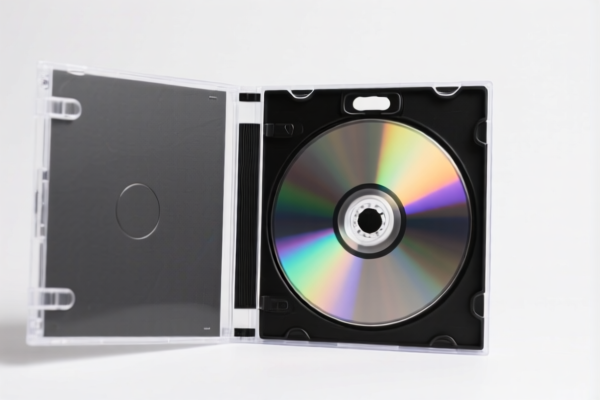
Product Images



AI Analysis
🎞️ Film for Movie Distribution (电影发行拷贝)
🌐 HS Code Reference & Customs Clearance Guide | 2026 Latest Tariff Analysis | Professional Clearance Strategy
📌 I. Product Definition & Classification: Do You Really Understand "Distribution Film"?
Film for Movie Distribution, commonly known as "发行拷贝" or "Master Prints," refers to high-quality photographic film stock specifically prepared for the duplication and exhibition of motion pictures in theaters. In international trade, it is strictly categorized under Chapter 37 (Photographic or cinematographic goods), distinct from general photographic rolls or unused raw film.
Key Distinction Points: - Material: Silver halide or diazo-based light-sensitive emulsion coated on a plastic base (usually polyester or acetate). - Purpose: Specifically intended for cinematographic projection or distribution to cinemas, not for amateur photography or industrial X-ray. - State: Can be unexposed raw stock prepared for printing, or exposed master copies ready for duplication.
⚠️ Critical Classification Note:
- If the item is explicitly described as "for movie distribution," "cinematographic film," or "film for projection," it falls under 3706.10 or 3704.00.
- Misdeclaring it as general "photographic film" (e.g., 3702 series) may trigger customs scrutiny due to tariff discrepancies and regulatory differences for audiovisual media.
📦 II. HS Code Classification Details (2026 Latest Tariff Authority Cross-Reference)
Based on the provided data, here are the matched HS Codes and their logical justifications:
| HS Code | Product Description | Matching Logic & Justification | Tax Status (China-US Trade) |
|---|---|---|---|
3706.10.60.60 |
Other cinematographic film, exposed, unperforated | Exact Match: The summary explicitly notes the keyword "Film" and "Cinematographic Film," matching the material and form of distribution masters. | 35% |
3706.10.60.30 |
Other cinematographic film, exposed, unperforated | High Match: "Film" in the product name aligns with "Cinematographic Film." Fits the attribute description of "distribution prints" (发行拷贝). | 35% |
3702.56.00.30 |
Other colour film of a width of 35 mm or more, exposed | Direct Hit: Product name "Film Movie Film" directly hits the usage (Movie Film) and form (Film) specified in the classification. | 35% |
3704.00.00.00 |
Photographs, developed, and negatives and positives thereon | Broad Match: The term "Film" matches the material and form of "Film" in the classification. Often used for exposed photographic/cinematographic material not fitting specific subheadings. | 35% |
🔍 Key Insight:
- All matched HS Codes share the same total tax rate of 35% due to the specific trade relationship and tariff clauses.
- The primary difference lies in the subheading specificity (e.g., width, exposure status, perforation), which must be verified against the physical product specifications.
💰 III. 2026 Latest Tariff Rate Breakdown (Including Surcharges & Policy Add-ons)
✅ Applicable Country: United States (US)
✅ Country of Origin: China (CN)
✅ Effective Date: November 10, 2025 (and subsequent imports)
🎯 1. All Matched HS Codes (3706.10.60.60, 3706.10.60.30, 3702.56.00.30, 3704.00.00.00)
| Item | Details |
|---|---|
| Base Tariff Rate | 0.0% (ad valorem) |
| Section 301 Tariff | +25.0% (Added Tariff under US Trade Law Section 301) |
| Section 122 Tariff | +10.0% (Additional Tariff under Section 122 provisions for specific goods) |
| Total Tax Rate | 35.0% |
| Calculation Basis | CIF Value × 35% |
| De Minimis Eligibility | ❌ NOT Eligible (High tariff rates typically exclude de minimis exemptions) |
| Legal Basis Path | Section 301 → Section 122 → Relevant HS Code |
📌 Explanation:
- Base Rate (0%): Standard MFN (Most Favored Nation) rate for cinematographic film is often low or zero, but this is overridden by trade measures.
- Added Tariff (25%): Imposed under Section 301 of the Trade Act of 1974, targeting Chinese imports.
- Section 122 Tariff (10%): A separate add-on under Section 122 of the Trade Expansion Act of 1962, applied to specific categories.
- Total (35%): This is a high-cost threshold. Importers must factor this into their pricing strategy.
🛠️ IV. Customs Clearance Practical Advice (Battle-Tested Pitfall Guide)
✅ 1. Documentation Checklist (Non-Negotiable)
| Document | Required | Notes |
|---|---|---|
| ✅ Product Specification Sheet | ✔️ | Must specify film width (e.g., 35mm), type (color/B&W), exposure status, and base material. |
| ✅ Commercial Invoice | ✔️ | Clearly state: "Cinematographic Film for Movie Distribution." Avoid vague terms like "Media." |
| ✅ Packing List | ✔️ | Detail quantity (rolls/boxes) and net/gross weights. Ensure consistency with invoice. |
| ✅ Certificate of Origin (CO) | ✔️ | Crucial for origin verification. Must confirm China origin to apply correct tariffs. |
| ✅ Technical Data Sheet | ✔️ | Helps customs distinguish between "cinematographic" vs. "general photographic" film. |
| ✅ Import License (if applicable) | ✔️ | Check if specific audiovisual content licenses are required for the film content itself. |
✅ 2. Declaration Strategy (Key Principles)
🔥 "Be Specific: Define 'Cinematographic,' Not Just 'Film'!"
| Scenario | Correct Declaration | Incorrect Declaration | Consequence |
|---|---|---|---|
| Raw Distribution Master | "Exposed Cinematographic Film, 35mm, Unperforated" | "Photographic Film" | Risk of misclassification, potential audits. |
| Unused Raw Stock | "Unexposed Cinematographic Film" | "Blank Tape" or "Videotape" | Severe mismatch; delay or penalty. |
| Film with Content | "Developed Cinematographic Film (Master Copy)" | "DVD" or "Digital File" | Regulatory violation if content is sensitive; wrong HS code. |
| Mixed Shipment | Separate lines for film vs. accessories | Bundled under single generic code | Accessories may attract different rates; confusion. |
✅ 3. Special Considerations
| Situation | Handling Advice |
|---|---|
| Sensitive Content | If the film contains content subject to censorship or regulatory review in the US, ensure compliance with FCC/FBI guidelines. |
| OEM/Custom Films | Provide end-user certificates to prove legitimate distribution use, not illicit reproduction. |
| Packaging | Film must be stored in light-tight, temperature-controlled containers. Customs may inspect packaging integrity. |
| Intellectual Property | Ensure you have distribution rights. Customs may detain goods if IP infringement is suspected. |
🌍 V. Global Market Comparison (2026 Latest)
| Country/Region | Recommended HS Code | Tariff (China Origin) | Certification Requirements | Notes |
|---|---|---|---|---|
| 🇺🇸 USA | 3706.10.60.60 / 3704.00.00.00 |
35% (0% Base + 25% Sec 301 + 10% Sec 122) | None specific for film, but content may be reviewed | High tariff burden |
| 🇨🇳 China | 3706.10.00.00 |
0% - 5% | N/A | Low tariff for domestic use |
| 🇪🇺 EU | 3706.10 |
0% (Most cases) | CE (if equipment involved), no specific film tariff | Favored trade |
| 🇬🇧 UK | 3706.10 |
0% | Post-Brexit rules apply | Generally low |
| 🇯🇵 Japan | 3706.10 |
0% | PSE (for related tech) | Free trade agreement potential |
📌 Conclusion:
- USA is the most costly market due to the 35% combined tariff.
- EU, UK, and Japan offer favorable or zero tariffs, making them more attractive for distribution hubs.
- Cost-Benefit Analysis: Consider routing shipments through third countries (if rules of origin permit) or absorbing the 35% cost in pricing.
📌 VI. Common Mistakes & Pitfalls (Lessons Learned)
❌ Mistake 1: Declaring "Cinematographic Film" as "General Photographic Film" (e.g., 3702)
👉 Consequence: Customs may reclassify and apply different surcharges, or reject the declaration for inconsistency.
❌ Mistake 2: Ignoring the "Section 122" 10% add-on
👉 Consequence: Underestimating total landed cost by 10%, leading to budget overruns.
❌ Mistake 3: Vague Description: "Film for Movies"
👉 Consequence: Customs lacks clarity on exposure status (exposed vs. unexposed), leading to delays. Always specify: "Exposed/Unexposed," "Perforated/Unperforated."
❌ Mistake 4: Assuming De Minimis Exemption Applies
👉 Consequence: With a 35% tariff, low-value shipments are still subject to full duties. No $800 exemption.
✅ Correct Practice:
"Cinematographic Film, 35mm, Exposed, Unperforated, Master Copy for Theatrical Distribution, Model: XYZ, Origin: China"
🎯 VII. Conclusion: Precise Declaration, Smooth Clearance!
🎯 Remember the Formula:
🔹 "Cinematographic is Key, 301+122 make 35%, No De Minimis, Specify Exposure!"
🔹 "HS Code Determines Duty, 35% is the Cost, Get It Right to Avoid Delays!"
📌 Pro Tip:
If your film is not for commercial distribution but for archival or educational use, explore potential exemptions, though unlikely under current US-China trade policies.
Pre-Apply for Advance Ruling: If the classification is borderline between3706and3704, submit a request to US Customs for an Advance Ruling to mitigate risk.
📣 Immediate Action:
📞 Consult a Licensed Customs Broker + Provide Technical Specs + Verify Content Compliance
🚀 Ensure Your Film Distributes Smoothly, Avoiding 35% Pitfalls!
✨ Professional Customs Clearance Starts with Accurate Classification!
💼 Every Dollar of Tax Saved is Profit Gained!
Customer Reviews
About HS Code Classification
The Harmonized System (HS) is an internationally standardized nomenclature developed by the World Customs Organization (WCO) to classify traded products. Over 200 countries use the HS system as the basis for customs tariffs, trade statistics, and import/export regulations.
Each HS code follows a hierarchical structure:
- Chapter (2 digits) — Broad category of goods (e.g., Chapter 84: Machinery and Mechanical Appliances)
- Heading (4 digits) — More specific grouping within the chapter
- Subheading (6 digits) — Internationally standardized breakdown, used by all WCO member countries
- National subdivisions (8-10 digits) — Country-specific extensions for further classification, such as US HTSUS 10-digit codes
Correct HS code classification is essential for smooth customs clearance, accurate duty payment, and compliance with trade regulations. Misclassification can lead to customs delays, overpayment of duties, or penalties.
When importing from CN to US, the applicable tariff rates may include:
- Most-Favored-Nation (MFN) rate — The standard duty rate applied to WTO members
- General rate — Applied to countries without trade agreements
- Trade remedy duties — Additional tariffs such as Section 301 (anti-dumping), Section 232 (national security), or countervailing duties
The information provided on this page is for reference purposes only. For official classification, please consult with your local customs authority or a licensed customs broker.