Film grade Natural Rubber Latex
CN → USProduct Images
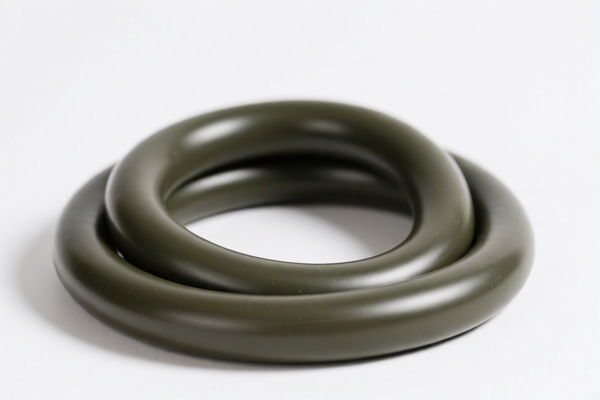


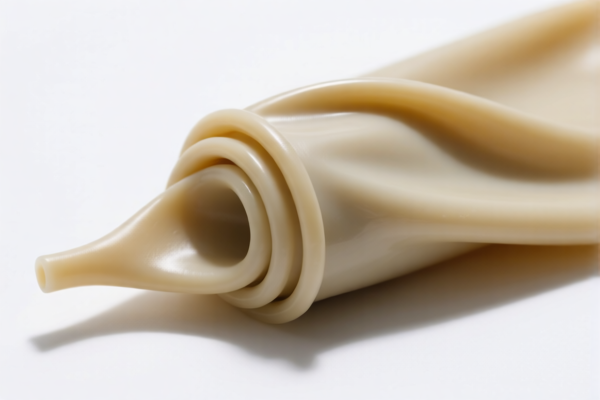
AI Analysis
🌫️ Film Grade Natural Rubber Latex (Latex for Coating/Impregnation)
🌐 HS Code Reference & Customs Clearance Guide | 2026 Latest Tariff Analysis | Professional Clearance Strategy 📌 I. Product Definition & Classification: What is "Film Grade"?
Film Grade Natural Rubber Latex is a specialized semi-finished product primarily used for coating, impregnation, or dipping processes to create thin, uniform rubber films. Unlike solid tires or gloves, this product is a liquid emulsion.
In international trade, it is distinct from general-purpose latices due to its specific viscosity, nitrogen content, and lack of additives intended for final consumer goods (like condoms or balloons) which might fall under different subheadings. It is the raw material for manufacturing rubber gloves, medical devices, balloons, and industrial coatings.
⚠️ Key Distinction: - Liquid Emulsion vs. Solid Rubber: This is a latex fluid, not solid rubber sheets. It must be classified under HS Chapter 40 (Rubber and Articles Thereof), specifically under Heading 4001 or 4002 depending on whether it is compounded or not. - "Film Grade" vs. "General Purpose": While chemically similar, "Film Grade" implies specific technical parameters for coating. Customs often requires technical sheets to distinguish between simple natural rubber latex and compounded latex with specific additives.
📦 II. HS Code Classification Details (2026 Latest Tariff Alignment)
| HS Code | Product Description | Applicable Scenario | Key Characteristics |
|---|---|---|---|
4001.22.00.00 |
Natural rubber latex, simple or compounded, stabilized, homogenized, concentrated, or in other forms. | Most Common for Film Grade Latex. Includes stabilized latex used for dipping/coating. | Liquid emulsion; may contain stabilizers to prevent coagulation during transport. |
4001.30.00.00 |
Natural rubber latex in primary forms. | Less common for industrial film grade; usually refers to pre-concentrated forms without complex compounding. | Pre-concentrated; less stable for long-term shipping without specific treatment. |
4005.10.00.00 |
Compound rubber latex, unstretched. | If heavily compounded with specific curing agents before shipping (rare for film grade, more for solid rubber compounds). | Contains added vulcanizing agents; semi-finished rubber compound. |
🔍 Critical Note: - The vast majority of Film Grade Natural Rubber Latex used for dipping gloves, balloons, or coating fabrics falls under
4001.22.00.00(if stabilized/concentrated) or4001.29(if other forms). - Do NOT classify under4002(Synthetic Rubber) even if it contains a small amount of synthetic modifier, as long as natural rubber content is predominant or it is defined as natural rubber latex. - Do NOT classify under3824(Chemical Products) if it meets the definition of rubber latex under Chapter 40.
💰 III. 2026 Latest Tariff Rate Breakdown (Including Surtaxes & Policy Add-ons)
✅ Applicable Country: United States (US) ✅ Origin: China (CN) or Vietnam (VN) – Crucial for Tariff Difference ✅ Effective Date: Post-2025 Trade Policies
🎯 1. 4001.22.00.00 —— Natural Rubber Latex (Stabilized/Concentrated)
| Item | Content |
|---|---|
| Base MFN Rate | 3.4% (ad valorem) |
| USITC Section 301 Surtax | +7.5% (Note: Some rubber products were exempted from the highest 25% tier, but check current lists; as of 2026, many raw natural rubber inputs are at lower surtax rates or exempt compared to finished goods). |
| IEEPA Surtax | +10% (For China-origin goods, effective from Nov 10, 2025) |
| Total Rate (China Origin) | ~20.9% (3.4% + 7.5% + 10%) Check specific exemption lists as 301 rates for raw latex have been subject to change. |
| Total Rate (Vietnam Origin) | ~3.4% (No 301/IEEPA surtax if substantively transformed) |
| De Minimis Eligibility | ❌ No (Deny de minimis for HS 4001.22.00.00 from China) |
| Legal Path | IEEPA:9903.01.25 → USITC:4001.22.00.00 |
📌 Interpretation: - Natural rubber latex is considered a raw material. Unlike finished rubber gloves (
4015.11or4015.19), which face higher tariffs, raw latex often enjoys lower or zero Section 301 tariffs in certain iterations of the trade policy to support US manufacturing. - However, the IEEPA 10% surtax on Chinese goods remains applicable. - Vietnam/Thailand Origin: If sourced from non-China ASEAN countries with substantial transformation, tariffs can drop to MFN + 0% (depending on FTAs like CPTPP or EU agreements).
🛠️ IV. Customs Clearance Practical Advice (Avoiding Pitfalls)
✅ 1. Essential Documentation Checklist
| Document | Required | Description |
|---|---|---|
| ✅ Technical Data Sheet (TDS) | ✔️ | Must specify: Nitrogen content, Viscosity, pH, Total Solid Content (TSC), Stabilizer type. Crucial for proving it is "Latex" and not a chemical emulsion under 3824. |
| ✅ Certificate of Origin (CO) | ✔️ | Must clearly state "Natural Rubber" origin. For Vietnam/Thailand, Form E or Form D may apply for lower tariffs. |
| ✅ Safety Data Sheet (SDS) | ✔️ | Shows it is not hazardous (UN No. not usually required unless unstable). |
| ✅ Commercial Invoice | ✔️ | Must describe as "Natural Rubber Latex, Stabilized, for Coating/Dipping". Avoid vague terms like "Rubber Solution". |
| ✅ Manufacturer’s Declaration | ✔️ | Confirming natural rubber content >50% (if applicable for synthetic mixtures). |
✅ 2. Declaration Tips (Key Mnemonic)
🔥 "Latex is Liquid, Not Solid; Stabilized is Key; Nitrogen Content Tells the Story!"
| Scenario | Correct Declaration | Wrong Practice |
|---|---|---|
| Stabilized Latex | 4001.22.00.00 - "Stabilized Natural Rubber Latex" |
Declare as "Chemical Emulsion" (3824) → High Duty + Risk |
| Unstabilized/Unconcentrated | 4001.10.00.00 or 4001.29 |
Misclassify as finished product |
| Mixed with Synthetic | Check %: If Natural Rubber >50%, still Ch. 40. If <50%, may be 4002. |
Assume all rubber latex is Ch. 40 without checking composition |
| Origin: China | Pay IEEPA 10% + Check 301 status | Claim "Made in USA" fraudulently → Severe Penalties |
✅ 3. Special Cases Handling
| Situation | Handling Advice |
|---|---|
| High Nitrogen Content | If nitrogen >1.15% (weight), it is "Concentrated Latex" (4001.22). If low nitrogen, it is "Simple Latex" (4001.10). Different tariff implications! |
| Added Preservatives | As long as preservatives do not alter the fundamental character of rubber latex, it remains under 4001. Do not declare as "Biocidal Product". |
| Duties on Finished Goods vs. Raw Material | If you are importing latex to make gloves in the US, consider FTZ (Foreign Trade Zone) benefits to defer duties until final export. |
| Anti-Dumping | Check if specific natural rubber latex from certain regions (e.g., Thailand/China) has anti-dumping duties. (Currently, some rubber products have AD/CVD, but raw latex is often exempt or low rate). |
🌍 V. Global Customs Comparison (2026 Update)
| Country/Region | Recommended HS Code | Tariff (China Origin) | Key Certification | Notes |
|---|---|---|---|---|
| 🇺🇸 USA | 4001.22.00.00 |
~20.9% (incl. IEEPA) | No FDA/CE needed for raw material | 301 Tariff exemption may apply; check latest USITC list. |
| 🇪🇺 EU | 4001.22.00.00 |
3.7% (MFN) | REACH Registration | No IEEPA surtax. Preferential rates under EU-RoK or ASEAN FTAs. |
| 🇨🇳 China | 4001.22.00.00 |
5.0% - 10.0% | N/A | Import duty varies; check annual tariff quota. |
| 🇯🇵 Japan | 4001.22.00.00 |
0% (under JTEPA/JLEPA) | None | Excellent FTA benefits if origin is Japan/Vietnam/Thailand. |
| 🇮🇳 India | 4001.22.00.00 |
~7.5% - 10.0% | BIS Standards | High protective duties on rubber inputs. |
📌 Conclusion: - USA is the most complex due to IEEPA 10% and potential Section 301 variations. - EU & Japan offer more stable, lower tariffs, especially with FTA certificates. - Vietnam/Thailand origins are strategically advantageous for US imports if substantial transformation can be proven.
📌 VI. Common Mistakes & Pitfalls (Blood Lessons)
❌ Mistake 1: Declaring as "Chemical Product" (3824.90)
👉 Consequence: Wrong HS Code. Customs will reassess under 4001, potentially adding delays and penalties. Also, 3824 may have different regulatory requirements (e.g., EPA) that are unnecessary for natural latex.
❌ Mistake 2: Ignoring Nitrogen Content
👉 Consequence: Confusing "Concentrated Latex" (4001.22) with "Simple Latex" (4001.10). The tariff rates and regulatory treatments differ. Always declare TSC (Total Solid Content) and Nitrogen %.
❌ Mistake 3: Failing to provide Stabilizer Information 👉 Consequence: If stabilizers are listed as "unknown," customs may classify it as "unstable," which could lead to rejection or reclassification. Clearly state "Ammonia-stabilized" or "Non-ammonia stabilized."
❌ Mistake 4: Not verifying 301 Tariff Exemptions
👉 Consequence: Paying unnecessary 25% surtax if the specific HS code 4001.22.00.00 was excluded from the latest 301 list (historically, some rubber inputs were exempted).
✅ Correct Practice:
"Natural Rubber Latex, Stabilized with Ammonia, Total Solid Content 60%, Nitrogen 0.5%, HS Code: 4001.22.00.00, Origin: Vietnam, for Industrial Dipping Process."
🎯 VII. Conclusion: Professional Declaration, Cost Control!
🎯 Remember the Mnemonic:
🔹 "Latex is Liquid, Nitrogen Defines Form, Stabilization Matters, Origin Saves Money!" 🔹 "HS 4001 is Key, 301 Exemption Hunt, IEEPA 10% on China, FTA is the Friend!"
📌 Pro Tip: If you are importing large volumes of Film Grade Latex into the US, consider applying for an Exclusion Number under Section 301 if available, or explore Foreign Trade Zones (FTZ) to manage duty deferral and inventory flexibility. Always keep TDS and SDS handy for CBP (Customs and Border Protection) audits.
📣 Immediate Action:
📞 Contact your freight forwarder + Provide TDS + Verify Origin Certificate 🚀 Ensure 4001.22.00.00 is declared accurately to avoid misclassification penalties!
✨ Professional Clearance, Starting from Accurate Classification! 💼 Every Dollar Saved in Tariffs, Adds to Your Bottom Line!
Customer Reviews
About HS Code Classification
The Harmonized System (HS) is an internationally standardized nomenclature developed by the World Customs Organization (WCO) to classify traded products. Over 200 countries use the HS system as the basis for customs tariffs, trade statistics, and import/export regulations.
Each HS code follows a hierarchical structure:
- Chapter (2 digits) — Broad category of goods (e.g., Chapter 84: Machinery and Mechanical Appliances)
- Heading (4 digits) — More specific grouping within the chapter
- Subheading (6 digits) — Internationally standardized breakdown, used by all WCO member countries
- National subdivisions (8-10 digits) — Country-specific extensions for further classification, such as US HTSUS 10-digit codes
Correct HS code classification is essential for smooth customs clearance, accurate duty payment, and compliance with trade regulations. Misclassification can lead to customs delays, overpayment of duties, or penalties.
When importing from CN to US, the applicable tariff rates may include:
- Most-Favored-Nation (MFN) rate — The standard duty rate applied to WTO members
- General rate — Applied to countries without trade agreements
- Trade remedy duties — Additional tariffs such as Section 301 (anti-dumping), Section 232 (national security), or countervailing duties
The information provided on this page is for reference purposes only. For official classification, please consult with your local customs authority or a licensed customs broker.