Filter Bag Set
CN → US| HS Code | Tariff Rate | Origin | Destination | Doc |
|---|---|---|---|---|
| 6307909891 | 24.5% | CN | US | Official Doc |
| 6307908940 | 17.0% | CN | US | Official Doc |
| 8421990140 | 35.0% | CN | US | Official Doc |
| 8421990180 | 35.0% | CN | US | Official Doc |
| 5911400100 | 43.0% | CN | US | Official Doc |
| 5911900040 | 38.8% | CN | US | Official Doc |
Product Images
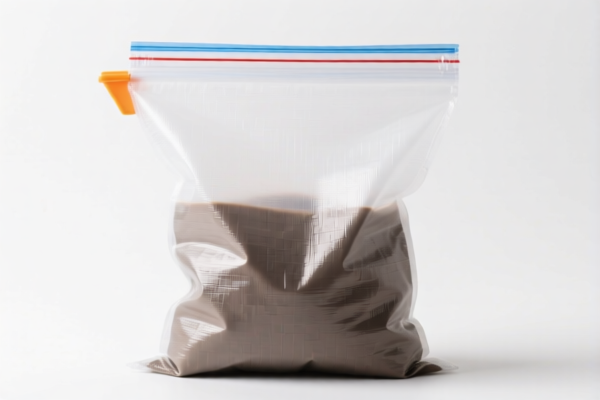
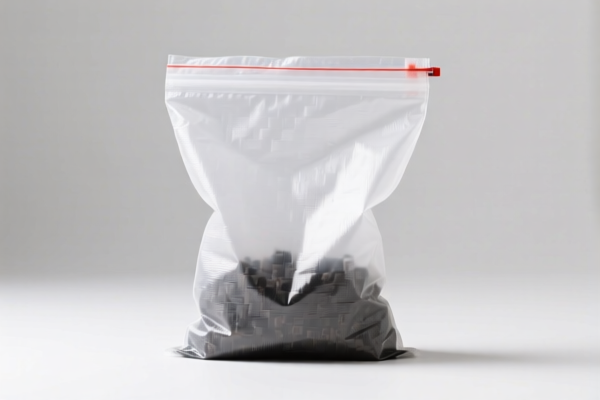


AI Analysis
🛍️ Filter Bag Set (Industrial Filtration Solutions)
🌐 HS Code Reference & Customs Clearance Guide | 2026 Tariff Analysis | Professional Clearance Strategy
📌 I. Product Definition & Classification: Do You Know "Filter Bags"?
Filter Bag Sets are critical components in industrial filtration systems, designed to separate solids from liquids or gases. In international trade, they are primarily classified under Chapter 59 (Textile Products for Technical Uses) or Chapter 63 (Other Made-Up Articles). The classification depends heavily on the material and the specific industrial application.
Key Distinction: - Industrial Technical Textiles (Chapter 59): Bags made of specific materials (like human hair, synthetic fibers, or woven fabrics) used in heavy industry (oil presses, chemical processing, large-scale liquid/gas filtration). These are considered "technical uses." - General Household/Consumer Items (Chapter 63): If the "filter bag" is a small, household-use item (e.g., vacuum cleaner bags, small kitchen strainers not for industrial scale), it may fall under general made-up articles.
⚠️ Critical Classification Point:
- If the bag is for industrial oil presses, large-scale liquid/gas purification, or specific technical straining, it likely falls under 5911.
- If the bag is a general made-up article (e.g., non-technical textile bags, dust bags for household vacuums not meeting Chapter 59 technical specs), it may fall under 6307.
📦 II. HS Code Classification Details (2026 Latest Tariff Reference)
Based on the provided data, here are the relevant HS Codes for filtration-related textile products and general filter bags:
| HS Code | Product Description | Application Scenario | Material/Type |
|--------|--------------------------|--------------------------|
| 5911.40.01.00 | Filtering or straining cloth of a kind used in oil presses or the like, including that of human hair | Oil industry, food processing (large scale), heavy machinery filtration | Textile fabric (including human hair) for technical uses |
| 5911.90.00.40 | Other Cords, braids and the like of a kind used in industry as packing or lubricating material | Industrial packing, sealing, lubrication aids (not direct filtration bags, but related technical textiles) | Braided/textile cords |
| 6307.90.98.91 | Other made up articles, including dress patterns: Other: Other: Other: Other: Other | General household filter bags (e.g., vacuum cleaner bags, small kitchen strainers) NOT classified as technical textiles | General textile made-up articles |
| 6307.90.89.40 | Cotton towels of pile or tufted construction | NOT FILTER BAGS (Included for exclusion; do not confuse with filter bags) | Cotton towels |
🔍 Important Note:
- The provided data does not include a specific HS Code for generic "synthetic filter bags" (e.g., nylon, polyester) under Chapter 59 other than those for oil presses (5911.40.01.00).
- If your filter bag is not for oil presses or specific technical industrial uses, and is a general made-up article, it may be classified under 6307.90.98.91.
- Do not confuse filter bags with cotton towels (6307.90.89.40) or centrifuge parts (8421.99.01.40 / 8421.99.01.80).
💰 III. 2026 Tariff Rate Details (Including Additional Duties)
✅ Applicable Country: United States (US)
✅ Origin: China (CN)
✅ Effective Date: 2025-11-10 onwards
🎯 1. 5911.40.01.00 —— Filtering Cloth for Oil Presses (Technical Textile)
| Item | Content |
|---|---|
| Base Tariff | 0% |
| USITC Additional Tariff | 0% |
| Total Tax Rate | 0% |
| Tax Calculation | CIF Value × 0% = $0 |
| De Minimis Eligibility | N/A (High value industrial goods) |
| Legal Basis | Chapter 59 Note 8; USITC HTSUS |
📌 Explanation:
- Filter cloths for oil presses are classified under Chapter 59 for technical uses.
- Currently, there are NO additional tariffs (0%) for this specific HS Code in the provided data.
- This is a low-tariff advantage if your product qualifies as "oil press filter cloth" or similar technical straining cloth.
🎯 2. 5911.90.00.40 —— Other Industrial Cords/Braids (Technical Textile)
| Item | Content |
|---|---|
| Base Tariff | 0% |
| USITC Additional Tariff | 0% |
| Total Tax Rate | 0% |
| Tax Calculation | CIF Value × 0% = $0 |
| De Minimis Eligibility | N/A |
| Legal Basis | Chapter 59 Note 8 |
📌 Explanation:
- While not a "filter bag," if your product is a braided cord used for industrial packing/lubrication, it also enjoys 0% tax.
- Not applicable for standard filter bags unless they are braided cords.
🎯 3. 6307.90.98.91 —— Other Made-Up Articles (General Filter Bags)
| Item | Content |
|---|---|
| Base Tariff | 7% |
| USITC Additional Tariff (Section 301) | +7.5% |
| Total Tax Rate | 14.5% |
| Tax Calculation | CIF Value × 14.5% |
| De Minimis Eligibility | ❌ Not Eligible (Value usually exceeds $800) |
| Legal Basis | Chapter 63; USITC Section 301 Footnotes |
📌 Explanation:
- If your filter bag is not classified as a technical textile (Chapter 59) but as a general made-up article (Chapter 63), it falls under 6307.90.98.91.
- Total Tax: 14.5% (7% Base + 7.5% Additional).
- This is the most common classification for general-purpose filter bags (e.g., household vacuum bags, small kitchen strainers) that do not meet the "technical use" criteria of Chapter 59.
⛔ Excluded HS Codes (Do Not Use for Filter Bags)
| HS Code | Reason for Exclusion |
|---|---|
8421.99.01.40 / 8421.99.01.80 |
These are parts for centrifuges/filtering machinery, not the filter bags themselves. If you are shipping bags, do not use these codes. |
6307.90.89.40 |
This is for cotton towels, not filter bags. |
🛠️ IV. Customs Clearance Practical Advice (Risk Avoidance Guide)
✅ 1. Preparation Checklist (Essential Documents)
| Document | Required | Notes |
|---|---|---|
| ✅ Product Specification Sheet | ✔️ | Must detail material (e.g., nylon, polyester, human hair), mesh size, dimensions, and intended use (e.g., "for oil press," "for household vacuum"). |
| ✅ Material Composition Statement | ✔️ | Specify if human hair, synthetic, or cotton. Critical for Chapter 59 vs. Chapter 63 classification. |
| ✅ Product Photos | ✔️ | Clear images of the bag, label, and packaging. |
| ✅ Commercial Invoice | ✔️ | Clearly describe as "Industrial Filter Cloth" or "Household Filter Bag" to match HS Code. |
| ✅ Packing List | ✔️ | List net/gross weight, dimensions. |
| ✅ Intended Use Declaration | ✔️ | If claiming 0% tax under 5911.40.01.00, provide a letter stating the bag is used in "oil presses or similar technical applications." |
✅ 2. Declaration Tips (Key Formulas)
🔥 "Technical Use = 0%, General Use = 14.5%!"
| Scenario | Correct HS Code | Tax Rate | Declaration Description |
|---|---|---|---|
| Industrial filter cloth for oil presses | 5911.40.01.00 |
0% | "Filtering cloth for oil presses, made of [Material]" |
| Household vacuum cleaner bag | 6307.90.98.91 |
14.5% | "Household filter bag, made of [Material]" |
| Small kitchen strainer bag | 6307.90.98.91 |
14.5% | "Textile filter bag, for kitchen use" |
| Centrifuge filter part (not bag) | 8421.99.01.40 |
25% | "Part for filtering machine" (Only if it's a rigid part, not a fabric bag) |
✅ 3. Special Cases & Pitfalls
| Situation | Handling Advice |
|---|---|
| "Filter Bag" for Chemical Filtration | If used in liquid/gas purification (not oil press), check if it fits Chapter 59 Note 8. If not, it may fall under 6307.90.98.91 (14.5%). Do not force it into 5911.40.01.00 unless it's for oil presses/human hair. |
| Human Hair Filter Bags | Specifically qualifies for 5911.40.01.00 (0% tax). Ensure documentation explicitly states "human hair." |
| Mixed Materials | If the bag is made of synthetic fibers and not for oil presses, it likely falls under 6307.90.98.91 (14.5%). |
| Parts vs. Product | Do not confuse filter bags (textile) with filter housings/frames (machinery parts). Bags go to Chapter 59/63; housings go to Chapter 84. |
🌍 V. Global Market Comparison (2026 Latest)
| Country/Region | Recommended HS Code (General Filter Bag) | Tariff Rate | Notes |
|---|---|---|---|
| 🇺🇸 USA | 6307.90.98.91 |
14.5% | High tariff due to Section 301. Avoid if possible. |
| 🇺🇸 USA | 5911.40.01.00 |
0% | Only if qualifies as "oil press filter cloth." |
| 🇨🇳 China | 6307.90.98.91 |
~5-7% | Lower base tariff. No Section 301. |
| 🇪🇺 EU | 6307.90.98.91 |
~4-6% | No additional tariffs. |
| 🇦🇺 Australia | 6307.90.98.91 |
~5% | No additional tariffs. |
📌 Conclusion:
- The USA has the highest tariffs for general filter bags (14.5%).
- Industrial filter cloths for oil presses enjoy 0% tax, providing a significant advantage if your product qualifies.
- For non-technical filter bags, consider sourcing from regions with lower tariffs (e.g., Vietnam, Mexico) if possible, or explore tariff engineering (reclassifying if legally permissible).
📌 VI. Common Mistakes & Pitfalls (Lessons Learned)
❌ Mistake 1: Classifying general household filter bags as 5911.40.01.00 to avoid tax.
👉 Consequence: Customs audit, back taxes, penalties. Only oil press/human hair filter cloths qualify.
❌ Mistake 2: Confusing filter bags with centrifuge parts (8421.99.01.40).
👉 Consequence: 25% tariff instead of 14.5% or 0%. Bags are textile products, not machinery parts.
❌ Mistake 3: Vague description "Filter Bag."
👉 Consequence: Customs may assign a default higher tariff or delay clearance. Always specify material and use.
❌ Mistake 4: Ignoring the difference between "Oil Press" and "General Industrial."
👉 Consequence: Misclassification under Chapter 59. Only specific technical uses qualify for 0% tax.
✅ Correct Approach:
"Industrial Filter Cloth for Oil Press, Made of Human Hair, Model XYZ" →
5911.40.01.00(0%)
"Household Vacuum Filter Bag, Made of Polyester, Model ABC" →6307.90.98.91(14.5%)
🎯 VII. Conclusion: Accurate Classification Saves Money!
🎯 Key Takeaways:
🔹 "Technical Use (Oil Press) = 0%, General Use = 14.5%"
🔹 "Human Hair Bags = 0%, Synthetic Bags = 14.5% (if general)"
🔹 "Check Chapter 59 Note 8 before declaring"
📌 Tip:
If your filter bag is not for oil presses, be prepared for 14.5% tax in the USA. Consider:
1. Tariff Engineering: If possible, modify the product to meet Chapter 59 technical criteria.
2. Duty Drawback: If re-exported, claim duty drawbacks.
3. Pre-Ruling: Apply for an Advance Ruling from US Customs (CBP) to confirm classification.
📣 Immediate Action:
📞 Consult with a licensed customs broker.
📄 Provide detailed product specs (material, use, mesh size).
🚀 Accurate classification is the key to cost control!
✨ Professional Clearance Starts with Precise Classification!
💼 Every Cent of Tariff Matters!
Customer Reviews
About HS Code Classification
The Harmonized System (HS) is an internationally standardized nomenclature developed by the World Customs Organization (WCO) to classify traded products. Over 200 countries use the HS system as the basis for customs tariffs, trade statistics, and import/export regulations.
Each HS code follows a hierarchical structure:
- Chapter (2 digits) — Broad category of goods (e.g., Chapter 84: Machinery and Mechanical Appliances)
- Heading (4 digits) — More specific grouping within the chapter
- Subheading (6 digits) — Internationally standardized breakdown, used by all WCO member countries
- National subdivisions (8-10 digits) — Country-specific extensions for further classification, such as US HTSUS 10-digit codes
Correct HS code classification is essential for smooth customs clearance, accurate duty payment, and compliance with trade regulations. Misclassification can lead to customs delays, overpayment of duties, or penalties.
When importing from CN to US, the applicable tariff rates may include:
- Most-Favored-Nation (MFN) rate — The standard duty rate applied to WTO members
- General rate — Applied to countries without trade agreements
- Trade remedy duties — Additional tariffs such as Section 301 (anti-dumping), Section 232 (national security), or countervailing duties
The information provided on this page is for reference purposes only. For official classification, please consult with your local customs authority or a licensed customs broker.