Financial Statement Folder
CN → US| HS Code | Tariff Rate | Origin | Destination | Doc |
|---|---|---|---|---|
| 4820300020 | 35.0% | CN | US | Official Doc |
| 4820300040 | 35.0% | CN | US | Official Doc |
Product Images
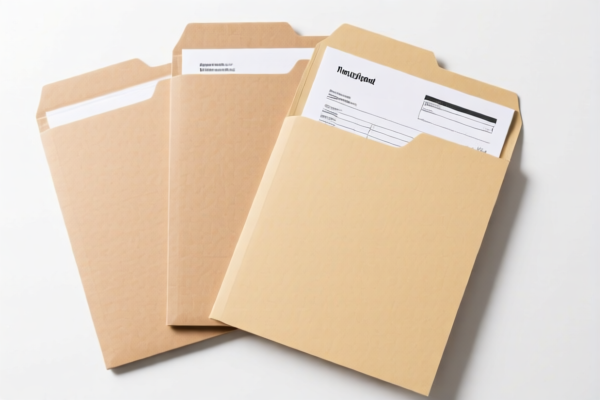
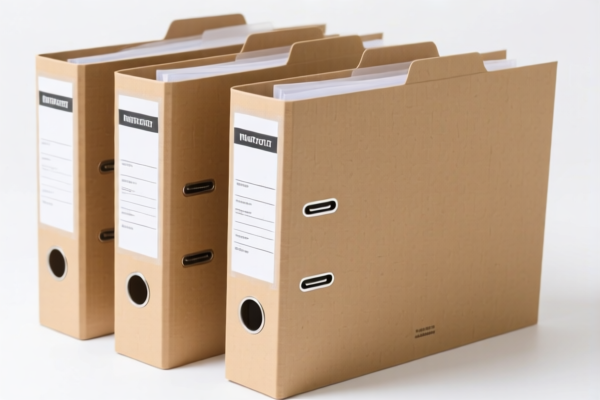
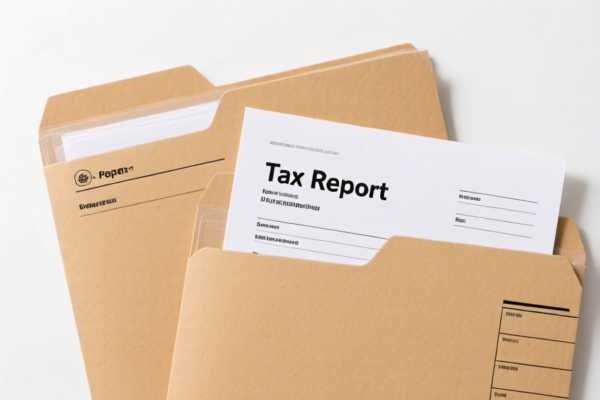
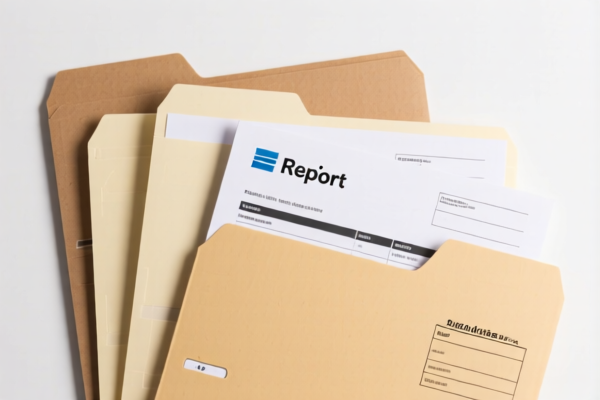
AI Analysis
📂 Financial Statement Folder
🌐 HS Code Reference & Clearance Guide | 2026 Latest Tariff Analysis | Professional Customs Strategy
📌 I. Product Definition & Classification: What exactly is a "Financial Statement Folder"?
A Financial Statement Folder is a specific type of stationery accessory designed to hold, organize, and protect financial documents, accounting records, and corporate reports. In international trade, it falls under the broader category of "Articles of stationery of paper or paperboard."
These folders are typically distinguished by their structure: 1. Loose-leaf Binders: Used for documents that need frequent updating (e.g., quarterly reports). 2. Standard Folders: Flat or accordion-style folders for static document storage. 3. File Covers: Simple covers for temporary organization.
⚠️ Key Distinction: - If it is a Loose-leaf Binder: It contains mechanisms for holding loose pages (rings, clips). → Go to 4820.30.00.20 - If it is a Standard Folder or File Cover: It lacks a binding mechanism for loose pages and is used to hold sheets together. → Go to 4820.30.00.40
📦 II. HS Code Classification Details (2026 Latest Tariff Authority)
| HS Code | Product Description | Applicable Scenario | Binding Mechanism? |
|---|---|---|---|
4820.30.00.20 |
Loose-leaf binders (Other than book covers) | Ring binders, clip binders, mechanical binders for financial reports | ✅ Yes |
4820.30.00.40 |
Folders and file covers (Other) | Manilla folders, plastic sleeves, accordion folders, simple document covers | ❌ No |
🔍 Critical Reminder: - "Financial Statement Folder" is a functional description, not a technical one. Customs looks at the physical structure. - If the folder has metal/plastic rings or clips to hold loose papers, it is a Binder (
.20). - If it is a folded sheet or sleeve with no binding hardware, it is a Folder/Cover (.40). - Misclassification Risk: Declaring a Ring Binder as a "Folder" to potentially lower duties (if any differences exist in other jurisdictions) is a common audit target. However, in the provided data, both codes share the same tax rate.
💰 III. 2026 Latest Tariff Rate Breakdown
✅ Applicable Country: United States (US) ✅ Country of Origin: China (CN) ✅ Effective Date: 2025 November 10 onwards (for subsequent imports)
🎯 1. 4820.30.00.20 —— Loose-leaf Binders
| Item | Content |
|---|---|
| Base Tariff Rate | 0.0% (ad valorem) |
| Additional Tariff | 25.0% (Section 301 / USITC Footnote) |
| Total Tax Rate | 25.0% |
| Tax Calculation | CIF Value × 25% |
| De Minimis Exemption | ❌ Not Available (Not eligible for de minimis) |
| Legal Basis Path | HS:4820.30.00.20 → Section 301: 25% |
📌 Explanation: - "Base Tariff 0%": Paper products generally have low base duties. - "Additional Tariff 25%": This is the significant cost driver. Paper stationery items, including binders and folders, are subject to the Section 301 retaliatory tariffs imposed on Chinese goods. - Total Cost Impact: For every $1,000 of goods, you pay $250 in duties alone.
🎯 2. 4820.30.00.40 —— Other Folders and File Covers
| Item | Content |
|---|---|
| Base Tariff Rate | 0.0% (ad valorem) |
| Additional Tariff | 25.0% (Section 301 / USITC Footnote) |
| Total Tax Rate | 25.0% |
| Tax Calculation | CIF Value × 25% |
| De Minimis Exemption | ❌ Not Available |
| Legal Basis Path | HS:4820.30.00.40 → Section 301: 25% |
📌 Note: - Identical tax treatment to loose-leaf binders. - This includes manifold business forms, interleaved carbon sets, and other stationery articles of paper/paperboard not specifically elsewhere classified. - Even if marketed as "Eco-Friendly Recycled Paper Folders," the tariff rate remains 25%.
🛠️ IV. Customs Clearance Practical Advice (Real-World Pitfall Guide)
✅ 1. Required Documentation Checklist (Non-Negotiable)
| Document | Mandatory? | Purpose |
|---|---|---|
| ✅ Product Specification Sheet | ✔️ | Must clearly describe material (Paper/Paperboard) and structure (Binder vs. Folder). |
| ✅ Clear Product Photos | ✔️ | Show the binding mechanism (rings/clips) or lack thereof. Crucial for HS Code validation. |
| ✅ Commercial Invoice | ✔️ | Description must match HS Code definition (e.g., "Paper Loose-Leaf Binder" vs. "Paper Folder"). |
| ✅ Packing List | ✔️ | Details quantity and weight. |
| ✅ Country of Origin Certificate | ✔️ | Confirms production in China (triggers the 25% tariff). |
✅ 2. Declaration Strategy (Key Mnemonic)
🔥 “Structure Defines Code, Tariff is Flat, Don’t Split!”
| Scenario | Correct Declaration | Wrong Practice |
|---|---|---|
| Binder with Rings | 4820.30.00.20 – “Loose-leaf Binder” |
Call it “Folder” → Risk of re-classification & penalties |
| Simple Paper Folder | 4820.30.00.40 – “Paper Folder” |
Call it “Binder” → Unnecessary complexity |
| Binder + Pen Set | Declare Separately | Mixed HS Codes → Potential rejection or delay |
| Bulk Box of Folders | Single Line Item | Splitting into “Cover” + “Inside Sheets” → Fraud suspicion |
✅ 3. Special Considerations
| Situation | Handling Advice |
|---|---|
| OEM Custom Printing | If the folder has a company logo, it is still a standard stationery item. No special tariff change. Provide proof of printing if asked. |
| Plastic Components | If the binder has significant plastic rings (>10% value), it might be argued under plastics, but US Customs typically keeps it under 4820 if paper is the primary material. Stick to 4820 for consistency. |
| Gift Sets | If sold with a pen/notebook, the entire set’s character is determined by the item giving it essential character. Usually, the Stationery (Folder/Binder) dictates the class if it’s the main functional item. |
| Small Quantity Samples | 25% Tax Still Applies. De minimis ($800) does not apply to Chinese origin goods for this HS code. |
🌍 V. Global Market Comparison (2026 Latest)
| Country/Region | Recommended HS Code | Tariff Rate (China Origin) | Notes |
|---|---|---|---|
| 🇺🇸 United States | 4820.30.00.20 / .40 |
25% | High tariff due to Section 301. No de minimis. |
| 🇨🇳 China | 4820.30.00.20 / .40 |
5% - 10% (Import) | Standard MFN rates apply for foreign imports. |
| 🇪🇺 EU | 4820.30.00.20 / .40 |
0% - 4% | Generally low duty for paper stationery. No Section 301 equivalent. |
| 🇬🇧 UK | 4820.30.00.20 / .40 |
0% - 4% | Post-Brexit UK Global Tariff applies. |
| 🇨🇦 Canada | 4820.30.00.20 / .40 |
0% - 5% | Generally favorable for paper products. |
📌 Conclusion: - The US market is significantly more expensive for Chinese-origin stationery due to the 25% surcharge. - EU/UK/CA markets offer much lower duty costs, making them potentially more attractive for high-volume exports if supply chains allow.
📌 VI. Common Errors & Pitfall Avoidance (Lessons Learned)
❌ Error 1: Declaring “Loose-leaf Binders” as “Folders” to confuse customs. 👉 Consequence: If caught, goods may be seized or reassigned with penalties. Even if taxes are the same, misdeclaration is fraud.
❌ Error 2: Assuming “Small Value” = “No Tax.” 👉 Consequence: Many shippers think under $800 is free (de minimis). This is FALSE for China-origin goods under Section 301. You MUST pay the 25% duty even on small parcels.
❌ Error 3: Ignoring Material Composition. 👉 Consequence: If the folder is made of plastic instead of paper, it might fall under Chapter 39 (Plastics). Ensure the description specifies “Of Paper or Paperboard.”
✅ Correct Practice:
“Paper Loose-leaf Binder, 3-Ring, 11x14 inch, Model FB-100, Made in China” OR “Manila File Folder, Letter Size, Pack of 100, Made in China”
🎯 VII. Conclusion: Professional Declaration, Cost Efficiency!
🎯 Remember the Rules:
🔹 “Binders with Rings = .20” 🔹 “Folders without Rings = .40” 🔹 “China Origin + Paper Stationery = 25% Duty” 🔹 “No De Minimis Exemption!”
📌 Tips:
- If you are exporting non-Chinese origin folders (e.g., Vietnam, Thailand), you MIGHT qualify for lower or zero tariffs. Verify your supply chain.
- Consider pre-classification rulings from US Customs if you have mixed types of binders/folders.
📣 Take Action:
📞 Verify your product structure (Binder vs. Folder). 📄 Prepare accurate commercial invoices. 🚀 Budget for the 25% duty in your pricing model.
✨ Accurate Classification is the First Step to Smooth Clearance! 💼 Don’t let a simple folder cost you 25% of your profit!
Customer Reviews
About HS Code Classification
The Harmonized System (HS) is an internationally standardized nomenclature developed by the World Customs Organization (WCO) to classify traded products. Over 200 countries use the HS system as the basis for customs tariffs, trade statistics, and import/export regulations.
Each HS code follows a hierarchical structure:
- Chapter (2 digits) — Broad category of goods (e.g., Chapter 84: Machinery and Mechanical Appliances)
- Heading (4 digits) — More specific grouping within the chapter
- Subheading (6 digits) — Internationally standardized breakdown, used by all WCO member countries
- National subdivisions (8-10 digits) — Country-specific extensions for further classification, such as US HTSUS 10-digit codes
Correct HS code classification is essential for smooth customs clearance, accurate duty payment, and compliance with trade regulations. Misclassification can lead to customs delays, overpayment of duties, or penalties.
When importing from CN to US, the applicable tariff rates may include:
- Most-Favored-Nation (MFN) rate — The standard duty rate applied to WTO members
- General rate — Applied to countries without trade agreements
- Trade remedy duties — Additional tariffs such as Section 301 (anti-dumping), Section 232 (national security), or countervailing duties
The information provided on this page is for reference purposes only. For official classification, please consult with your local customs authority or a licensed customs broker.