Finder Scope
CN → US| HS Code | Tariff Rate | Origin | Destination | Doc |
|---|---|---|---|---|
| 9005804020 | 18.0% | CN | US | Official Doc |
| 9005804040 | 18.0% | CN | US | Official Doc |
Product Images
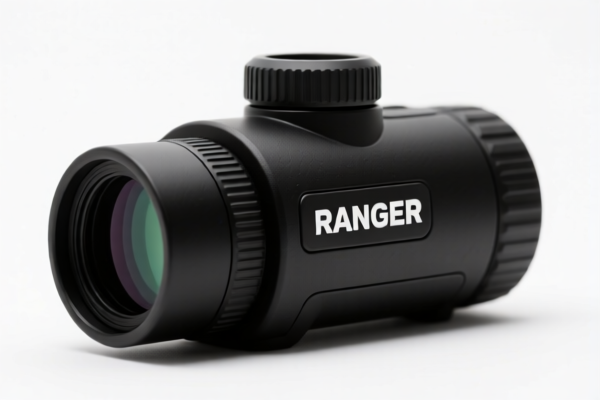
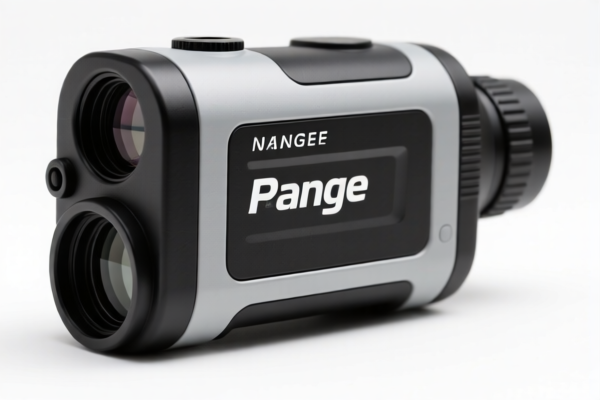
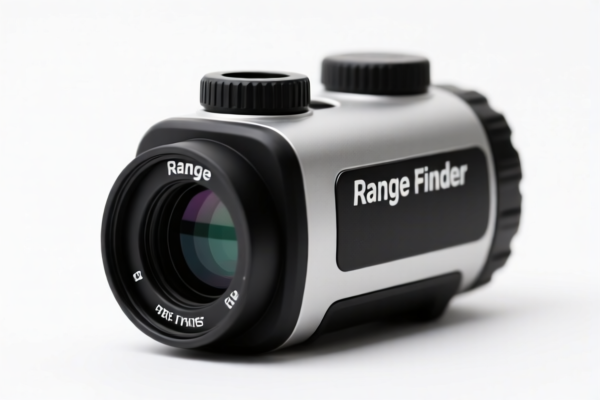
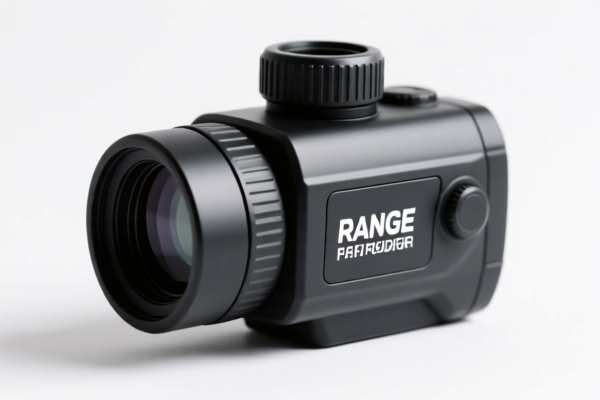
AI Analysis
🔭 Finder Scopes & Optical Telescopes (Binoculars, Monoculars, Astronomical Instruments)
🌐 HS Code Reference & Customs Clearance Guide | 2026 Latest Tariff Analysis | Professional Level Entry Strategy
📌 I. Product Definition & Classification: Do You Truly Understand "Finder Scopes"?
A Finder Scope is a small auxiliary telescope mounted on a larger astronomical telescope. Its primary purpose is to aid in locating celestial objects, which are difficult to find using the naked eye or the main telescope’s low-power eyepiece.
In international trade, "Finder Scopes" are generally categorized under the broader umbrella of "Other Optical Telescopes" or "Other Astronomical Instruments." However, the specific HS Code depends heavily on the specialized function and light spectrum it is designed for.
Based on the provided , there are two critical distinctions: 1. General Purpose: Standard optical finder scopes used for visual observation (visible light). 2. Infrared Specific: Finder scopes or instruments specifically designed or adapted for infrared light use.
⚠️ Key Distinction Point:
- If the instrument is a standard optical finder scope (for visible light) → Likely falls under 9005.80.40.40.
- If the instrument is specifically for infrared light usage → Must fall under 9005.80.40.20.
📦 II. HS Code Classification Details (2026 Latest Tariff Authority Comparison)
| HS Code | Product Description | Applicable Scenario | Key Feature |
|---|---|---|---|
9005.80.40.20 |
Optical telescopes For use with infrared light | Infrared astronomy, thermal imaging telescopes, specialized IR finder scopes | ✅ Infrared Spectrum Only |
9005.80.40.40 |
Optical telescopes Other | Standard finder scopes, visual astronomical telescopes, binoculars with optical mounts | ✅ Visible Light / General Purpose |
🔍 Important Note:
- The chapter 9005 covers "Binoculars, monoculars, other optical telescopes...".
- Finder scopes are essentially small optical telescopes. If they are sold as accessories to a main telescope, they are still classified as optical instruments.
- Do not classify finder scopes as "parts/accessories" (Chapter 9014 or 9018) if they are complete optical instruments. They are self-contained optical devices.
💰 III. 2026 Latest Tariff Rate Details (Including Additional Taxes)
✅ Applicable Country: United States (US)
✅ Origin: China (CN)
✅ Effective Date: Current tariff structure applies (0% Base, 0% Additional for these specific subheadings based on )
🎯 1. 9005.80.40.20 —— Optical Telescopes for Infrared Light
| Item | Content |
|---|---|
| Base Tariff Rate | 0.0% (ad valorem) |
| Additional Tariff (Section 301/IEEPA) | 0.0% |
| Total Tax Rate | 0.0% |
| Tax Calculation | CIF Value × 0.0% = $0 |
| De Minimis Eligibility | N/A (Low value anyway, but technically 0%) |
| Legal Basis | Based strictly on provided. |
📌 Explanation:
- According to the provided , the total tax for infrared optical telescopes is 0.0%.
- This is a highly favorable classification. Unlike many electronics or industrial goods, specialized astronomical instruments in this sub-category currently face no additional tariffs in the provided dataset.
- Caution: Ensure the product is genuinely for "infrared light." Misclassification can lead to severe penalties if it’s actually visible light but declared as IR to save costs (though here both are 0%, accuracy is still required for customs inspection).
🎯 2. 9005.80.40.40 —— Optical Telescopes (Other/General)
| Item | Content |
|---|---|
| Base Tariff Rate | 0.0% (ad valorem) |
| Additional Tariff (Section 301/IEEPA) | 0.0% |
| Total Tax Rate | 0.0% |
| Tax Calculation | CIF Value × 0.0% = $0 |
| De Minimis Eligibility | N/A (Low value anyway, but technically 0%) |
| Legal Basis | Based strictly on provided. |
📌 Explanation:
- This category covers standard finder scopes and other optical telescopes not specified for infrared.
- Like the IR category, the provided data shows a 0.0% total tax rate.
- This makes importing finder scopes and optical telescopes from China to the US cost-neutral in terms of tariffs, assuming no other duties apply.
🛠️ IV. Customs Clearance Practical Advice (Practical Pitfall Avoidance Guide)
✅ 1. Documentation Checklist (All Required)
| Document | Must Provide | Description |
|---|---|---|
| ✅ Product Specification Sheet | ✔️ | Must clearly state "Optical Telescope" or "Finder Scope," including magnification (e.g., 6x30), field of view, and light spectrum (Visible vs. Infrared). |
| ✅ Product Photos | ✔️ | Clear images of the finder scope, including any labels indicating "IR" or "Visible." Show mounting hardware if included. |
| ✅ Commercial Invoice | ✔️ | Must list "Finder Scope" or "Optical Telescope." Avoid vague terms like "Optical Lens" which may trigger scrutiny. |
| ✅ Packing List | ✔️ | Detail the number of units, weight, and dimensions. |
| ✅ HS Code Declaration | ✔️ | Clearly indicate 9005.80.40.20 (for IR) or 9005.80.40.40 (for Other). |
✅ 2. Declaration Tips (Key Mantra)
🔥 "Define the Light, Not Just the Glass. IR vs. Visible Determines the Code!"
| Scenario | Correct Declaration | Wrong Practice |
|---|---|---|
| Standard Finder Scope (Visible Light) | 9005.80.40.40 - "Optical Telescope, Other" |
Declaring as "Part of Telescope" (Chapter 9014) → Risk of misclassification. |
| Infrared Finder Scope | 9005.80.40.20 - "Optical Telescope for Infrared Light" |
Describing only as "Camera Lens" → May be routed to 8525/8528 with different duties. |
| Binoculars with Mounting | 9005.10.00 (if binoculars) or 9005.80.40.40 |
Mixing with general optics → Confusion for customs officers. |
✅ 3. Special Case Handling
| Situation | Handling Advice |
|---|---|
| Finder Scope Sold with Main Telescope | If sold as a separate unit, declare separately. If bundled, the main item’s classification might dominate, but the finder scope should be listed in the invoice for transparency. |
| Infrared Capability Claimed | Must provide evidence that the lens/optics are coated or designed for IR transmission (e.g., Germanium lenses). Standard glass may not transmit IR well, so customs may question the "IR" designation. |
| Accessory vs. Independent Instrument | If the finder scope is a replacement part for an existing telescope, it might still be 9005.80 if it’s a complete optical unit. If it’s a lens element only, it might be 9002.11 (Lenses). Ensure the item is a complete "scope" (tube + lenses + eyepiece). |
🌍 V. Global Market Comparison (2026 Latest)
| Country/Region | Recommended HS Code | Tariff Rate | Certification Requirements | Notes |
|---|---|---|---|---|
| 🇺🇸 USA | 9005.80.40.20 / 40.40 |
0.0% | None specific for optics (FCC not required unless electronic) | Zero Duty Advantage |
| 🇨🇳 China | 9005.80.40.20 / 40.40 |
~0-4% (Export/Import varies) | CCC (if electronic components) | Low entry barrier for domestic sales |
| 🇪🇺 EU | 9005.80.90 (General) |
0-4.5% | CE (if electronic), RoHS | VAT applies separately |
| 🇬🇧 UK | 9005.80.90 |
0-4.5% | UKCA (post-Brexit) | Similar to EU |
| 🇯🇵 Japan | 9005.80.00 |
0-6% | PSE (if electronic) | Low tariffs for optics |
📌 Conclusion:
- The US market offers 0% duty for these specific optical telescope subheadings according to the .
- This makes the US a highly competitive destination for exporting finder scopes and optical telescopes from China, compared to markets with higher base tariffs.
📌 VI. Common Mistakes & Pitfall Guide (Lessons Learned)
❌ Mistake 1: Classifying Finder Scope as a "Part" (Chapter 9014)
👉 Consequence: Customs may reclassify it to 9005.80.40.40. While the tax is 0% in this case, it causes delays and inspection holds due to misclassification.
❌ Mistake 2: Claiming "Infrared" for Standard Glass Lenses
👉 Consequence: If audited, customs may reject the 9005.80.40.20 classification. Even if the tax is the same (0%), fraudulent declaration can lead to penalties.
❌ Mistake 3: Vague Description "Optical Device"
👉 Consequence: Ambiguity leads to manual review. Use precise terms: "Astronomical Finder Scope, 6x30, Optical Telescope."
❌ Mistake 4: Ignoring Mounting Brackets
👉 Consequence: If brackets are sold separately, they might be classified as "Parts of Optical Instruments." If sold with the scope, they are part of the whole. Keep packaging clear.
✅ Correct Declaration Example:
"Astronomical Finder Scope, Model X-600, 6x30 Magnification, Optical Glass, Visible Light Spectrum, Includes Mounting Bracket, For Telescopic Use"
HS Code:9005.80.40.40
🎯 VII. Conclusion: Professional Declaration, Smooth Clearance, Cost Efficiency!
🎯 Remember the Mantra:
🔹 "Finder Scopes are Optical Telescopes."
🔹 "Infrared vs. Visible: Choose the Right Subheading."
🔹 "Tax is 0.0%, But Accuracy is Priceless."
📌 Pro Tip:
Even though the tax is 0%, ensure your product description matches the HS Code exactly.
- For 9005.80.40.20, mention "Infrared" in the description.
- For 9005.80.40.40, mention "Visible Light" or "General Purpose" or "Other".
📣 Immediate Action:
📞 Consult a Customs Broker to verify if your specific finder scope model has electronic components (e.g., laser guides) that might change the classification.
🚀 Export with Confidence: With 0% Tariff, your cost advantage is maximized!
✨ Professional Customs Clearance Starts with Precise Classification!
💼 Every dollar saved in duties adds to your bottom line!
Customer Reviews
About HS Code Classification
The Harmonized System (HS) is an internationally standardized nomenclature developed by the World Customs Organization (WCO) to classify traded products. Over 200 countries use the HS system as the basis for customs tariffs, trade statistics, and import/export regulations.
Each HS code follows a hierarchical structure:
- Chapter (2 digits) — Broad category of goods (e.g., Chapter 84: Machinery and Mechanical Appliances)
- Heading (4 digits) — More specific grouping within the chapter
- Subheading (6 digits) — Internationally standardized breakdown, used by all WCO member countries
- National subdivisions (8-10 digits) — Country-specific extensions for further classification, such as US HTSUS 10-digit codes
Correct HS code classification is essential for smooth customs clearance, accurate duty payment, and compliance with trade regulations. Misclassification can lead to customs delays, overpayment of duties, or penalties.
When importing from CN to US, the applicable tariff rates may include:
- Most-Favored-Nation (MFN) rate — The standard duty rate applied to WTO members
- General rate — Applied to countries without trade agreements
- Trade remedy duties — Additional tariffs such as Section 301 (anti-dumping), Section 232 (national security), or countervailing duties
The information provided on this page is for reference purposes only. For official classification, please consult with your local customs authority or a licensed customs broker.