Fine Animal Hair Carpet Tiles
CN → US| HS Code | Tariff Rate | Origin | Destination | Doc |
|---|---|---|---|---|
| 4303900000 | 35.0% | CN | US | Official Doc |
| 4303100060 | 39.0% | CN | US | Official Doc |
| 5705002015 | 38.3% | CN | US | Official Doc |
| 5705002005 | 38.3% | CN | US | Official Doc |
| 5701109000 | 39.5% | CN | US | Official Doc |
Product Images
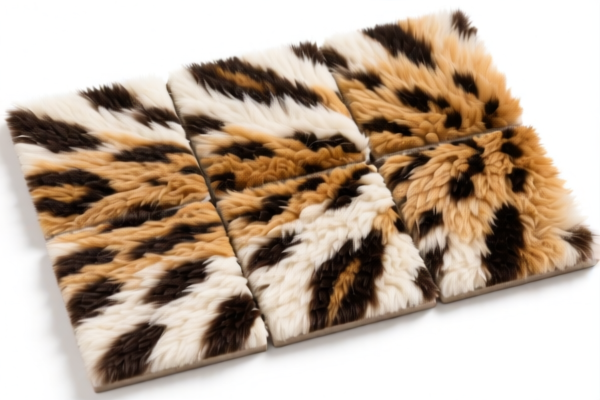
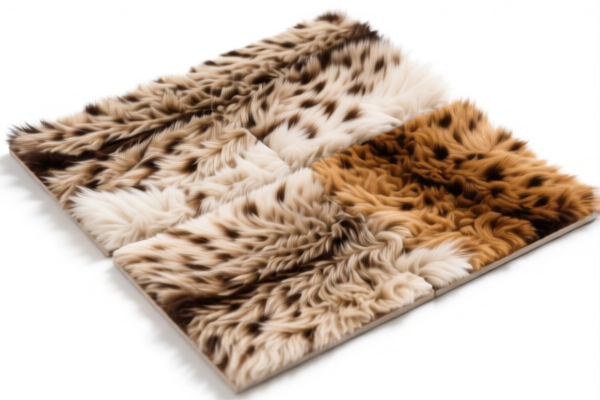
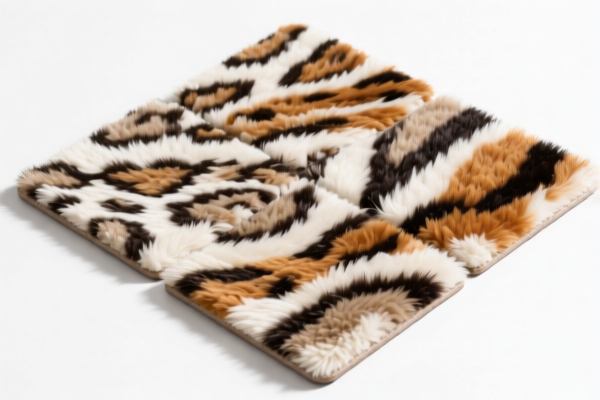
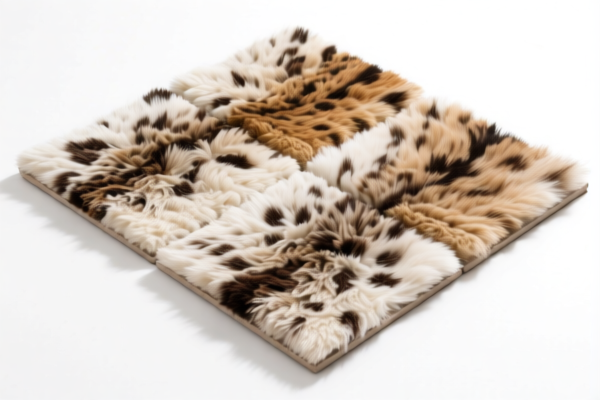
AI Analysis
🧶 Fine Animal Hair Carpet Tiles: The Ultimate Taxation & Customs Clearance Guide (2026 Update)
🌐 HS Code Reference & Customs Strategy | 2026 Latest Tariff Analysis | Professional Clearance Guide
📌 I. Product Definition & Classification: Do You Really Understand "Animal Hair Carpet Tiles"?
Fine Animal Hair Carpet Tiles are modular flooring solutions made from high-quality animal fibers (such as wool, goat hair, or camel hair). In international trade, they are categorized based on their material composition, manufacturing method, and final form.
They fall into two primary broad categories: 1. Fur/Skin Products (Chapter 43): If the product is viewed primarily as a processed fur or skin item (e.g., felted fur mats). 2. Textile Floor Coverings (Chapter 57): If the product is viewed primarily as a woven, knotted, or tufted textile floor covering.
⚠️ Key Classification Distinction:
- Fur Classification (4303): Focuses on the material value and finish. Often applies to "felted" or "pressed" fur products.
- Textile Classification (5705/5701): Focuses on the construction method (woven/knotted) and floor covering function.
- Crucial Point: The term "Tile" implies modularity but does not change the base material classification. However, Chapter 43 (Fur) vs. Chapter 57 (Textiles) is the critical battleground for tariff differences.
📦 II. HS Code Classification Details (2026 Latest Tariff Authority Comparison)
| HS Code | Product Description | Application Scenario | Material/Construction Logic |
|---|---|---|---|
4303.90.00.00 |
Other articles of fur skins | Felted animal hair tiles, processed as "fur products" rather than textiles | ✅ Fur Property: Viewed as processed skin/fur article. No textile weaving structure emphasized. |
4303.10.00.60 |
Other fur skins and articles thereof | Animal hair carpet, general "other" category, no specific material conflict | ✅ Fur Property: Fallback category for fur articles not specified elsewhere. |
5705.00.20.15 |
Other carpets and floor coverings | Animal hair carpet tiles, non-knitted, defined as "other floor coverings" | ✅ Textile Property: Defined as a floor covering. Non-knitted (e.g., woven or felted). |
5705.00.20.05 |
Other carpets and floor coverings | Animal hair carpet, wool/fine animal hair material, specific to floor use | ✅ Textile Property: Specifically targets wool/fine animal hair floor coverings under "Other". |
5701.10.90.00 |
Woven pile carpets | Animal hair carpet tiles, textile floor covering, no material conflict | ✅ Textile Property: Specifically covers woven pile carpets. If the tile is woven, this is the correct textile code. |
🔍 Important Note:
-4303vs570x: If the "carpet tile" is essentially felted or pressed animal hair without a visible woven structure, customs may prefer Chapter 43. If it has a distinct woven, knotted, or tufted textile structure, Chapter 57 is more appropriate.
- "Fine Animal Hair": This term often aligns with 5705.00.20 (Wool/Fine Animal Hair) if the textile classification is chosen.
💰 III. 2026 Latest Tariff Rate Breakdown (Including Surcharges & Policy Add-ons)
✅ Applicable Country: United States (US)
✅ Origin: China (CN)
✅ Effective Date: Post-2025/2026 (Current Trade War Era)
🎯 1. 4303.90.00.00 —— Other Articles of Fur Skins (Fur Classification)
| Item | Content |
|---|---|
| Base Duty Rate | 0.0% (Ad valorem) |
| USITC Additional Duty (Section 301) | +25.0% |
| IEEPA Additional Duty (Section 122/Other) | +10.0% |
| Total Effective Rate | 35.0% |
| Tax Calculation | CIF Value × 35% |
| De Minimis Exemption Eligible | ❌ No (Denied) |
| Legal Basis Path | USITC:4303.90.00.00 → FOOTNOTE:301 → IEEPA:122/9903 |
📌 Explanation:
- Although the base duty is 0%, the 25% Section 301 tariff applies to Chapter 43 goods from China.
- An additional 10% (often labeled as Section 122 or IEEPA) is applied, bringing the total to 35%.
- Strategic Insight: This is the lowest total tax rate in the list, but only if customs accepts the "Fur" classification.
🎯 2. 4303.10.00.60 —— Other Fur Skins and Articles (Fur Classification - Fallback)
| Item | Content |
|---|---|
| Base Duty Rate | 4.0% (Ad valorem) |
| USITC Additional Duty (Section 301) | +25.0% |
| IEEPA Additional Duty (Section 122/Other) | +10.0% |
| Total Effective Rate | 39.0% |
| Tax Calculation | CIF Value × 39% |
| De Minimis Exemption Eligible | ❌ No (Denied) |
| Legal Basis Path | USITC:4303.10.00.60 → FOOTNOTE:301 → IEEPA:122/9903 |
📌 Explanation:
- This is a "catch-all" fur category.
- 4% base + 25% + 10% = 39%.
- Higher than4303.90. Avoid if4303.90.00.00is defensible.
🎯 3. 5705.00.20.15 —— Other Carpets and Floor Coverings (Textile Classification)
| Item | Content |
|---|---|
| Base Duty Rate | 3.3% (Ad valorem) |
| USITC Additional Duty (Section 301) | +25.0% |
| IEEPA Additional Duty (Section 122/Other) | +10.0% |
| Total Effective Rate | 38.3% |
| Tax Calculation | CIF Value × 38.3% |
| De Minimis Exemption Eligible | ❌ No (Denied) |
| Legal Basis Path | USITC:5705.00.20.15 → FOOTNOTE:301 → IEEPA:122/9903 |
📌 Explanation:
- Classified as a textile floor covering.
- 3.3% base + 25% + 10% = 38.3%.
- Slightly higher than the best fur option, but lower than5701.
🎯 4. 5705.00.20.05 —— Other Carpets (Wool/Fine Animal Hair) (Textile Classification)
| Item | Content |
|---|---|
| Base Duty Rate | 3.3% (Ad valorem) |
| USITC Additional Duty (Section 301) | +25.0% |
| IEEPA Additional Duty (Section 122/Other) | +10.0% |
| Total Effective Rate | 38.3% |
| Tax Calculation | CIF Value × 38.3% |
| De Minimis Exemption Eligible | ❌ No (Denied) |
| Legal Basis Path | USITC:5705.00.20.05 → FOOTNOTE:301 → IEEPA:122/9903 |
📌 Explanation:
- Specifically targets wool or fine animal hair carpets.
- Same rate as5705.00.20.15(38.3%).
- Best if the product is clearly woven/knotted and made of wool/camel hair.
🎯 5. 5701.10.90.00 —— Woven Pile Carpets (Textile Classification)
| Item | Content |
|---|---|
| Base Duty Rate | 4.5% (Ad valorem) |
| USITC Additional Duty (Section 301) | +25.0% |
| IEEPA Additional Duty (Section 122/Other) | +10.0% |
| Total Effective Rate | 39.5% |
| Tax Calculation | CIF Value × 39.5% |
| De Minimis Exemption Eligible | ❌ No (Denied) |
| Legal Basis Path | USITC:5701.10.90.00 → FOOTNOTE:301 → IEEPA:122/9903 |
📌 Explanation:
- Applies to woven pile carpets.
- 4.5% base + 25% + 10% = 39.5%.
- Highest tax rate in this dataset. Only use if the product is explicitly woven pile and other textile codes don't fit.
🛠️ IV. Customs Clearance Practical Advice (Battle-Tested Pitfall Avoidance)
✅ 1. Document Checklist (Non-Negotiable)
| Document | Required | Description |
|---|---|---|
| ✅ Product Specification Sheet | ✔️ | Must detail: Fiber type (Wool? Goat? Camel?), Construction (Woven/Felted/Tufted), Thickness, Backing Material. |
| ✅ Material Composition Statement | ✔️ | Explicitly state % of animal hair vs. synthetic backing/glue. |
| ✅ Product Photos (Clear) | ✔️ | Show the pile structure (to prove woven vs. felted) and the backing. |
| ✅ Commercial Invoice | ✔️ | Use precise description: "Animal Hair Carpet Tile, [Wool/Goat], [Woven/Felted], for Floor Covering". Avoid vague terms like "Fur Rug". |
| ✅ Packing List | ✔️ | List quantities by tile size. |
| ✅ Certificate of Origin | ✔️ | Essential for verifying China origin (triggering Section 301). |
| ✅ Third-Party Test Report | ✔️ | If claiming "100% Wool," provide a lab test. Discrepancies lead to re-classification and penalties. |
✅ 2. Classification Strategy (Key Mantra)
🔥 "Construction Defines Chapter: Felted=Fur (43), Woven=Textile (57). Always Add 35%+ Tax!"
| Scenario | Correct HS Code | Why? |
|---|---|---|
| Felted/Pressed Hair Tiles | 4303.90.00.00 |
No woven structure. Treated as processed fur article. Lowest Tax (35%). |
| Woven Tufted/Woven Pile | 5701.10.90.00 or 5705.00.20.xx |
Visible textile weave. Treated as floor covering. Higher Tax (38.3%-39.5%). |
| Mixed Material (Hair + Synth) | 5705.00.20.05 |
If animal hair is the essential character, but construction is textile. |
| Unknown Construction | ❌ DO NOT SHIP | Customs will inspect. If they deem it textile, you pay 39.5%. If they deem it fur, 35%. Get a Pre-Ruling. |
✅ 3. Special Circumstances Handling
| Situation | Handling Advice |
|---|---|
| OEM Custom Carpet Tiles | Provide design files. Ensure "Animal Hair" content is accurately declared. Mislabeling as "Synthetic" is fraud. |
| With Non-Woven Backing | The backing (rubber, jute) does not change the classification of the top layer if the top layer defines the article. |
| "Fine Animal Hair" Claim | "Fine" usually implies Wool/Cashmere/Mohair. If using lower-grade hair, ensure specs match to avoid "Misdescription" penalties. |
| Small Sample Shipments | No De Minimis! Even for small values, the ~35-40% tax applies. Do not rely on $800 exemption. |
🌍 V. Global Market Customs Comparison (2026 Update)
| Country/Region | Recommended HS Code | Duty Rate (China Origin) | Certification | Notes |
|---|---|---|---|---|
| 🇺🇸 USA | 4303.90.00.00 (Best) or 5705.00.20.05 |
35% - 39.5% | None specific | High Tariff Environment. Section 301 + IEEPA applies. |
| 🇪🇺 EU | 5703.90 or 4303.00 |
8% - 12% (Standard) | CE (if applicable) | No Section 301. Much lower duty. Consider EU routing if possible. |
| 🇨🇳 China | 5703.90 or 4303.00 |
5% - 10% | CCC (if applicable) | Domestic sales or export. Low duty. |
| 🇬🇧 UK | 5703.90 |
12% - 15% | UKCA | Post-Brexit tariffs. Higher than pre-Brexit EU. |
| 🇦🇺 Australia | 5703.90 |
5% | RCM | Competitive. No major surcharges. |
📌 Conclusion:
- USA is the most expensive market due to political tariffs.
- EU/UK/AU offer significantly better tax margins.
- If your product is felted, try to argue for 4303.90 in the US to save 0.3% - 4.5% compared to textile codes. Every percentage point counts!
📌 VI. Common Errors & Pitfall Guide (Blood-Tested Lessons)
❌ Mistake 1: Classifying Woven Carpet as Fur (4303)
👉 Consequence: Customs rejects, reclassifies to 5701/5705, charges back taxes + penalties.
✅ Fix: If woven, use 5705 or 5701.
❌ Mistake 2: Classifying Felted Carpet as Textile (5701)
👉 Consequence: Overpayment of 1.5% - 4.5% in duties.
✅ Fix: If felted/no weave, use 4303.90.00.00.
❌ Mistake 3: Ignoring Section 122/IEEPA
👉 Consequence: Underestimating landed cost by 10%.
✅ Fix: Always add 10% on top of the 25% Section 301 for China-origin goods.
❌ Mistake 4: Vague Description: "Carpet"
👉 Consequence: Customs delays for inspection to determine material.
✅ Fix: Use "Animal Hair Carpet Tile, Felted/Woven, Wool Content XX%".
🎯 VII. Conclusion: Precise Classification, Maximize Profit!
🎯 Remember the Mantra:
🔹 "Felted = Fur (43) = 35% Tax; Woven = Textile (57) = 38-40% Tax."
🔹 "China Origin = +35-40% Total Duty. No Exemptions!"
🔹 "Get a Pre-Ruling if your construction is ambiguous!"
📌 Pro Tip:
If your product is 100% Wool Felt, prioritize 4303.90.00.00.
If your product is Wool Tufted/Woven, prioritize 5705.00.20.05 (slightly better than 5701).
📣 Immediate Action:
📞 Contact a Customs Broker to apply for an Advance Ruling if you are unsure if your carpet tile is "Felted" or "Woven".
🚀 Optimize your supply chain: Consider transshipment to Vietnam or Mexico if possible, though 301 tariffs may still apply depending on substantial transformation rules.
✨ Professional Clearance Starts with Accurate Classification!
💼 Every 1% of duty saved is 1% of your net profit increased!
Customer Reviews
About HS Code Classification
The Harmonized System (HS) is an internationally standardized nomenclature developed by the World Customs Organization (WCO) to classify traded products. Over 200 countries use the HS system as the basis for customs tariffs, trade statistics, and import/export regulations.
Each HS code follows a hierarchical structure:
- Chapter (2 digits) — Broad category of goods (e.g., Chapter 84: Machinery and Mechanical Appliances)
- Heading (4 digits) — More specific grouping within the chapter
- Subheading (6 digits) — Internationally standardized breakdown, used by all WCO member countries
- National subdivisions (8-10 digits) — Country-specific extensions for further classification, such as US HTSUS 10-digit codes
Correct HS code classification is essential for smooth customs clearance, accurate duty payment, and compliance with trade regulations. Misclassification can lead to customs delays, overpayment of duties, or penalties.
When importing from CN to US, the applicable tariff rates may include:
- Most-Favored-Nation (MFN) rate — The standard duty rate applied to WTO members
- General rate — Applied to countries without trade agreements
- Trade remedy duties — Additional tariffs such as Section 301 (anti-dumping), Section 232 (national security), or countervailing duties
The information provided on this page is for reference purposes only. For official classification, please consult with your local customs authority or a licensed customs broker.