Fine Animal Hair Casual Work Pants
CN → US| HS Code | Tariff Rate | Origin | Destination | Doc |
|---|---|---|---|---|
| 5112199510 | 60.0% | CN | US | Official Doc |
| 5112199520 | 60.0% | CN | US | Official Doc |
| 6203416010 | 0.0% | CN | US | Official Doc |
| 6203416020 | 0.0% | CN | US | Official Doc |
Product Images
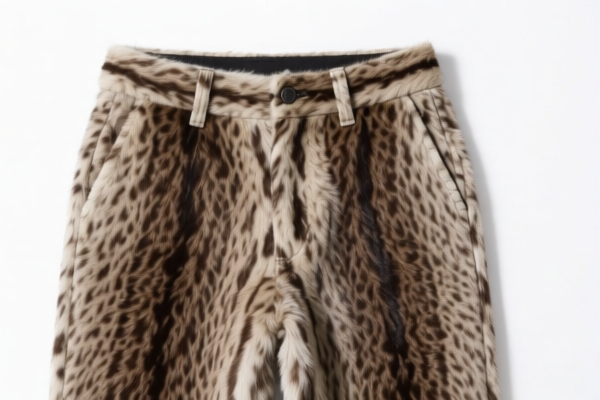
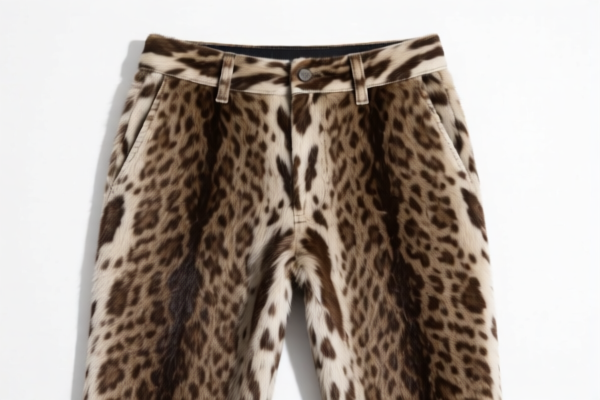
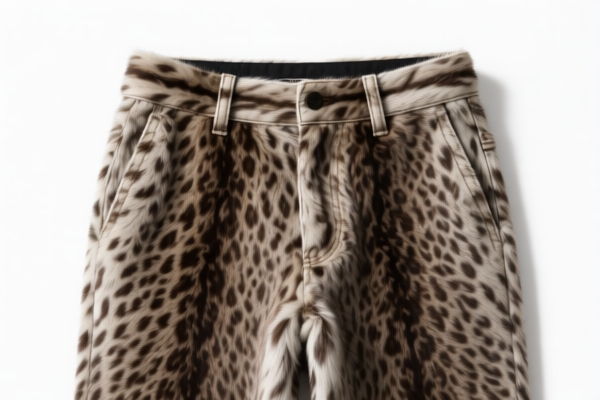
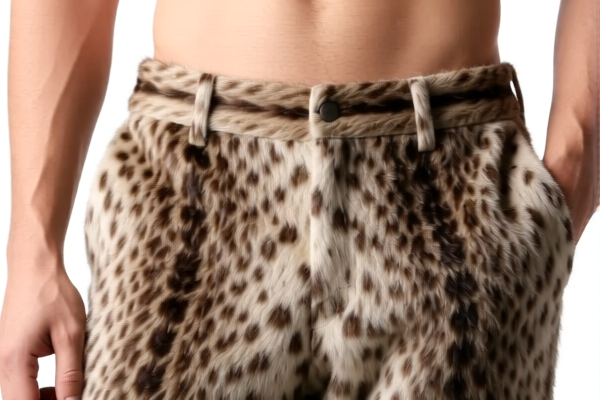
AI Analysis
🖥️ Fine Animal Hair Casual Work Pants
🌐 HS Code Reference & Customs Clearance Guide | 2026 Latest Tariff Analysis | Professional Compliance Strategy
📌 I. Product Definition & Classification: What Are "Work Pants" in the Eyes of Customs?
"Fine Animal Hair Casual Work Pants" refer to trousers primarily made from high-quality animal fibers (such as wool, cashmere, alpaca, or mohair), designed for both casual wear and light occupational tasks. The classification depends heavily on the fiber content percentage and the intended use.
Key Distinctions: * Wool-Heavy (>85% Wool): Classified strictly under Wool Chapters (Chapter 51). * Blend (>50% Fine Animal Hair): Classified under "Other woven fabrics of fine animal hair" (51.11/51.12). * Minority Fiber (<50% Animal Hair): Classified by the dominant fiber (e.g., if 60% Cotton, it’s Chapter 62).
⚠️ Critical Classification Point:
- If the fabric is woven and >85% wool/animal hair → HS 6103/6203 (if knitted/woven outer garments).
- Specifically, woolen woolens usually fall under 6203 (Men's/Boys') or 6204 (Women's/Girls') depending on gender specificity.
- Knitted animal hair trousers fall under 6103 or 6104.
- "Work Pants" are not a separate HS chapter; they are classified by material and construction.
📦 II. HS Code Classification Details (2026 Latest Tariff Authority)
| HS Code | Product Description | Applicable Scenario | Fiber Content Requirement |
|---|---|---|---|
6203.43.00.00 |
Men's or boys' trousers, of wool or fine animal hair (Woven) | Wool suits pants, heavy wool work pants | >50% Wool/Animal Hair |
6203.49.00.00 |
Men's or boys' trousers, of other textile materials (Blends with animal hair) | Wool-Cotton blends, Wool-Polyester | Animal hair >50% but not pure wool category |
6204.63.00.00 |
Women's or girls' trousers, of wool or fine animal hair (Woven) | Women's formal/work wool pants | >50% Wool/Animal Hair |
6204.69.00.00 |
Women's or girls' trousers, of other textile materials | Blended fabric pants | Animal hair present but not dominant |
6103.43.00.00 |
Men's or boys' trousers, of wool or fine animal hair (Knitted/Crocheted) | Knitted wool lounge/work pants | >50% Wool/Animal Hair |
6104.63.00.00 |
Women's or girls' trousers, of wool or fine animal hair (Knitted) | Knitted women's wool pants | >50% Wool/Animal Hair |
6203.49.90.00 |
Men's trousers, of other synthetic fibers (If hair content is negligible) | Misdeclared "wool" pants | <5% Animal Hair |
🔍 Key Reminder:
- "Fine Animal Hair" typically refers to Wool, Cashmere, Mohair, Alpaca, Camel Hair.
- Coarse hair (e.g., horsehair) falls under Chapter 51 but different subheading.
- Knitted vs. Woven: This is the biggest error source. Knitted = 61xx; Woven = 62xx.
- Gender: Men's (6203) vs. Women's (6204) must be declared. Unisex? Customs may assign based on design or market convention.
💰 III. 2026 Latest Tariff Rate Details (Including Supplementary Taxes)
✅ Applicable Country: United States (US)
✅ Country of Origin: China (CN)
✅ Effective Date: November 10, 2025 (and subsequent imports)
🎯 1. 6203.43.00.00 & 6204.63.00.00 —— Wool/Fine Animal Hair Trousers (Woven)
| Item | Content |
|---|---|
| Base Duty Rate | 16% (ad valorem) |
| Section 301 USITC Surcharge | +7.5% (Footnote 9903.88.01 applies to many apparel items) |
| IEEPA Surcharge | +10% (For China-origin goods, effective Nov 10, 2025) |
| Total Duty Rate | 33.5% |
| Calculation Method | CIF Value × 33.5% |
| De Minimis Eligibility | ❌ Not Eligible (Deny de minimis for apparel from China under certain conditions) |
| Legal Basis Path | IEEPA:9903.01.25 → IEEPA:9903.01.24 → USITC:6203.43.00.00 → FOOTNOTE:9903.88.01 |
📌 Explanation:
- Base Rate 16%: Standard MFN rate for wool trousers.
- Section 301 (+7.5%): Apparel items often face this surcharge. Check if the specific wool type qualifies for exemption (rare for finished pants).
- IEEPA (+10%): New 2025 tariff on Chinese apparel.
- Total: 33.5%: High duty environment for Chinese wool garments.
🎯 2. 6103.43.00.00 & 6104.63.00.00 —— Knitted Wool Trousers
| Item | Content |
|---|---|
| Base Duty Rate | 16% |
| Section 301 USITC Surcharge | +7.5% |
| IEEPA Surcharge | +10% |
| Total Duty Rate | 33.5% |
| De Minimis Eligibility | ❌ Not Eligible |
📌 Note:
- Knitted wool trousers face the same duty burden as woven ones in this tariff schedule.
- "Fine Animal Hair" (Cashmere/Mohair) does not receive a lower base rate than wool in the US tariff schedule for pants.
🎯 3. 6203.49.00.00 / 6204.69.00.00 —— Blended Trousers (Animal Hair < 50%)
| Item | Content |
|---|---|
| Base Duty Rate | 16% (if wool/hair > 50% but not pure wool class) OR 16% (if synthetic dominant) |
| Section 301 USITC Surcharge | +7.5% |
| IEEPA Surcharge | +10% |
| Total Duty Rate | 33.5% |
| Note | If < 50% animal hair, classified by dominant fiber. If dominant is Cotton (6203.49.90), rate may vary slightly but still subject to 301/IEEPA. |
📌 Warning:
- Misdeclaring a 30% Cashmere/70% Cotton blend as "Wool" to get a different code will lead to penalties.
- Ensure the label accurately reflects "30% Cashmere, 70% Cotton".
🛠️ IV. Customs Clearance Practical Advice (Real-World Pitfall Guide)
✅ 1. Required Documentation Checklist (Non-Negotiable)
| Document | Required | Notes |
|---|---|---|
| ✅ Product Specification Sheet | ✔️ | Must state exact fiber content (e.g., "85% Virgin Wool, 15% Nylon") |
| ✅ Lab Test Report | ✔️ | ISO 17025 accredited fiber analysis report is highly recommended for wool claims |
| ✅ Front & Back Photos | ✔️ | Show pockets, seams, labels, and any "Work" markings |
| ✅ Commercial Invoice | ✔️ | Clearly state "Wool Trousers" or "Cashmere Blend Pants", NOT just "Pants" |
| ✅ Bill of Lading/Air Waybill | ✔️ | Consistent description with invoice |
| ✅ Labeling Compliance | ✔️ | Must have permanent care label and fiber content label (FTC rules apply even for import) |
✅ 2. Declaration Tips (Key Mantra)
🔥 "Fiber Dictates Code, Knit vs. Woven Decides Chapter, Gender Determines Subheading!"
| Scenario | Correct Declaration | Wrong Practice |
|---|---|---|
| 100% Wool Woven Pants | 6203.43.00.00 (Men) / 6204.63.00.00 (Women) |
Misdeclare as 6203.49 (Blends) to guess rates |
| Knitted Wool Pants | 6103.43.00.00 / 6104.63.00.00 |
Declare as 62xx (Woven) → Penalty |
| Work Pants with Reinforced Knees | Still 6203.43.00.00 (if wool) |
Declare as "Protective Gear" (Chapter 65) → Misclassification |
| Unisex Pants | Declare as Men's (6203) if designed for men, or Women's (6204) |
Ambiguous description "Work Pants" → Customs Hold |
✅ 3. Special Situations
| Situation | Handling Advice |
|---|---|
| "Work Pants" with Tool Loops | Still classified as Trousers (Ch 61/62), not Special Protective Clothing, unless designed for specific hazardous environments (e.g., arc flash). |
| High-End Cashmere | Ensure origin is declared correctly. If "Made in China" but "Designed in Italy", Country of Origin is China. No preferential rate. |
| Sample vs. Commercial | Samples under $2,500 (de minimis) may be exempt from duty but not from FDA/FTC labeling rules. However, IEEPA may still apply to apparel from China. Check latest CBP guidance. |
| Recycled Wool | If recycled wool content > 70%, may qualify for different subheading under 6203.41.xx. Declare as "Recycled Wool". |
🌍 V. Global Market Customs Comparison (2026 Latest)
| Country/Region | Recommended HS Code | Duty Rate (China Origin) | Certification Requirements | Notes |
|---|---|---|---|---|
| 🇺🇸 USA | 6203.43.00.00 |
33.5% | FTC Labeling, CBP Entry | High IEEPA + 301 impact |
| 🇨🇳 China | 6203.43.00.00 |
14% | CCC (if applicable), Labeling | No additional surcharges |
| 🇪🇺 EU | 6203.43.00.00 |
12% | CE (if safety gear), REACH | No IEEPA, but VAT applies |
| 🇬🇧 UK | 6203.43.00.00 |
12% | UKCA Labeling | Post-Brexit tariffs |
| 🇦🇺 Australia | 6203.43.00.00 |
5% | ACCC Labeling | Low base duty, no surcharges |
📌 Conclusion:
- USA is the most expensive market for Chinese wool pants due to 33.5% total duty.
- EU/UK offers moderate duty (12%) but strict REACH/Textile Labeling compliance.
- Australia offers the lowest duty (5%) but strict ACCC labeling.
📌 VI. Common Errors & Pitfall Guide (Blood & Tears Lessons)
❌ Error 1: Declaring "Wool Pants" when fabric is 40% Wool, 60% Polyester.
👉 Consequence: Misclassification. Should be 6203.49.90.00 (Other synthetic). Penalty + Back Duty.
❌ Error 2: Using "Work Pants" as a generic term without specifying fiber.
👉 Consequence: CBP may classify under worst-case scenario (e.g., synthetic) or hold shipment for info.
❌ Error 3: Forgetting to distinguish Knitted vs. Woven.
👉 Consequence: Wrong Chapter (61 vs 62). CBP will correct, causing delays and potential misdeclaration fees.
❌ Error 4: Mislabeling "Animal Hair" vs. "Wool".
👉 Consequence: "Animal Hair" includes Mohair, Cashmere, Alpaca. Ensure the specific type is declared if required by customer or label.
✅ Correct Practice:
"Men's Woven Wool Trousers, 85% Virgin Wool, 15% Nylon, Reinforced Knees for Light Industrial Work, Model XYZ, Labelled per FTC Regulations"
🎯 VII. Conclusion: Precision Saves Money!
🎯 Remember the Mantra:
🔹 "Fiber is King, Knit/Woven is Queen, Gender is the Judge!"
🔹 "33.5% in the US is no joke – get the code right or pay the price!"
📌 Pro Tip:
If your pants are made in Vietnam, Bangladesh, or India, you may qualify for lower duties or GSP benefits (check current trade agreements).
For US imports, consider Applying for an Advance Ruling if the fiber composition is complex (blends) to avoid post-clearance audits.
📣 Take Action Now:
📞 Engage a Customs Broker + Provide Fiber Lab Report + Verify IEEPA Exemptions
🚀 Ensure your Fine Animal Hair Pants clear US Customs smoothly, avoiding 33.5% shocks!
✨ Professional Clearance Starts with Accurate Classification!
💼 Your Profit Margin Depends on the Right HS Code!
Customer Reviews
About HS Code Classification
The Harmonized System (HS) is an internationally standardized nomenclature developed by the World Customs Organization (WCO) to classify traded products. Over 200 countries use the HS system as the basis for customs tariffs, trade statistics, and import/export regulations.
Each HS code follows a hierarchical structure:
- Chapter (2 digits) — Broad category of goods (e.g., Chapter 84: Machinery and Mechanical Appliances)
- Heading (4 digits) — More specific grouping within the chapter
- Subheading (6 digits) — Internationally standardized breakdown, used by all WCO member countries
- National subdivisions (8-10 digits) — Country-specific extensions for further classification, such as US HTSUS 10-digit codes
Correct HS code classification is essential for smooth customs clearance, accurate duty payment, and compliance with trade regulations. Misclassification can lead to customs delays, overpayment of duties, or penalties.
When importing from CN to US, the applicable tariff rates may include:
- Most-Favored-Nation (MFN) rate — The standard duty rate applied to WTO members
- General rate — Applied to countries without trade agreements
- Trade remedy duties — Additional tariffs such as Section 301 (anti-dumping), Section 232 (national security), or countervailing duties
The information provided on this page is for reference purposes only. For official classification, please consult with your local customs authority or a licensed customs broker.