Fine Animal Hair Home Textile Fabric
CN → US| HS Code | Tariff Rate | Origin | Destination | Doc |
|---|---|---|---|---|
| 5407920520 | 60.0% | CN | US | Official Doc |
| 5111191000 | 42.0% | CN | US | Official Doc |
| 5111909000 | 60.0% | CN | US | Official Doc |
| 5112116030 | 60.0% | CN | US | Official Doc |
| 5112199510 | 60.0% | CN | US | Official Doc |
Product Images
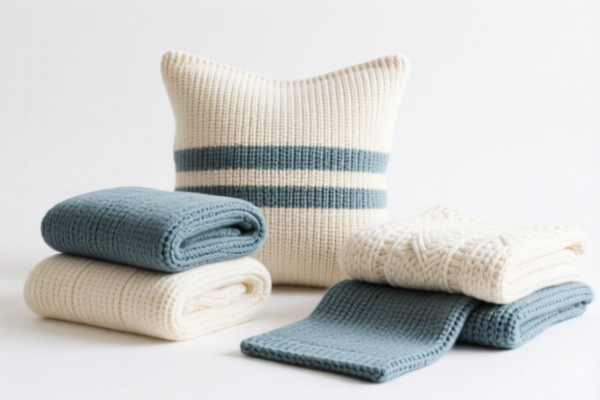
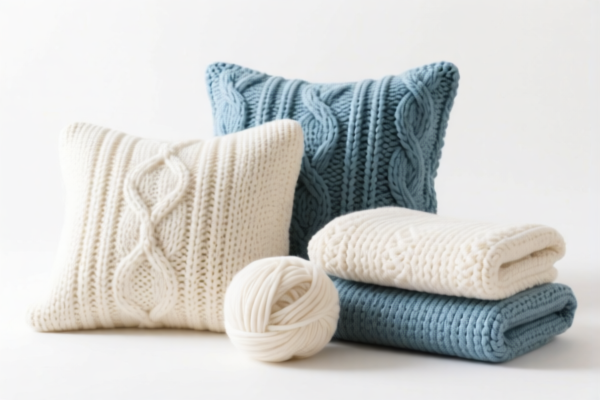
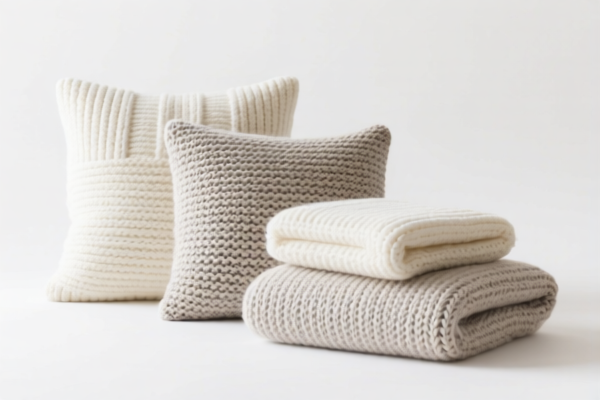
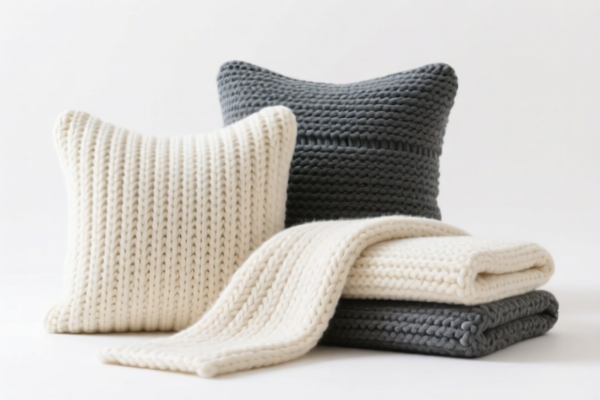
AI Analysis
🧶 Fine Animal Hair Home Textile Fabric
🌐 HS Code Reference & Customs Clearance Guide | 2026 Latest Tariff Analysis | Professional Clearance Strategy
📌 I. Product Definition and Classification: Do You Really Understand "Fine Animal Hair Textiles"?
Fine animal hair home textile fabrics are premium materials derived from the hair of specific animals (such as cashmere, mohair, alpaca, camel hair, etc.), processed into woven or knitted fabrics for home decoration (curtains, upholstery, bedspreads, etc.). In international trade, these products are strictly regulated based on fiber type and manufacturing process.
⚠️ Key Distinction Point:
- If the fabric is made from fine animal hair (e.g., cashmere, camel hair) and is woven/knitted → It falls under Chapter 51 (Wool, fine or coarse animal hair);
- If it contains mixed fibers or non-animal components, classification may vary;
- Crucially, for imports into the United States from China, high additional tariffs apply due to trade restrictions.
📦 II. HS Code Classification Details (2026 Latest Tariff Authority Reference)
| HS Code | Product Description | Application Scenario | Fabric Form |
|---|---|---|---|
5407.92.05.20 |
Fine animal hair home textile fabric, material: fine animal hair, form: fabric | General home decoration, curtains, upholstery | Woven/Knitted |
5111.19.10.00 |
Fine animal hair home textile fabric, material: fine animal hair, form: woven fabric, for decoration | Decorative textiles, high-end interior design | Woven |
5111.90.90.00 |
Fine animal hair home textile fabric, material: fine animal hair, form: woven fabric | General woven animal hair textiles | Woven |
5112.11.60.30 |
Fine animal hair home textile fabric, material: fine animal hair, form: fabric | Broad category of fine animal hair textiles | Woven/Knitted |
5112.19.95.10 |
Fine animal hair home textile fabric, material: fine animal hair, form: fabric | Broad category of fine animal hair textiles | Woven/Knitted |
🔍 Key Reminder:
- All listed HS codes apply to fine animal hair products.
- The distinction among them lies in sub-category specifics (e.g., woven vs. knitted, specific animal source).
- Do not confuse with synthetic or blended fabrics; pure fine animal hair textiles have distinct tariff treatments.
💰 III. 2026 Latest Tariff Rate Details (Including Additional Taxes, Policy Surcharges)
✅ Applicable Country: United States (US)
✅ Origin: China (CN)
✅ Effective Time: 2025年11月10日起 (From November 10, 2025)
🎯 1. 5407.92.05.20 —— Fine Animal Hair Home Textile Fabric
| Item | Content |
|---|---|
| Base Tariff Rate | 25.0% (Ad valorem) |
| Section 301 Additional Tariff | +25.0% |
| Section 122 Tariff (IEEPA) | +10.0% |
| Total Tariff Rate | 60.0% |
| Tax Calculation | CIF Value × 60% |
| De Minimis Exemption Available? | ❌ No (Deny De Minimis) |
| Legal Basis Path | USITC:5407.92.05.20 → Section 301: 25% → IEEPA Section 122: 10% |
📌 Explanation:
- The 25% base tariff is the standard Most Favored Nation (MFN) rate for Chapter 54 textiles;
- The 25% Section 301 tariff is applied to Chinese-origin goods under U.S. trade law;
- The 10% IEEPA Section 122 tariff is an additional surcharge targeting specific Chinese imports;
- Total 60% is extremely high. Importers must factor this into cost structures.
🎯 2. 5111.19.10.00 —— Fine Animal Hair Home Textile Fabric (Woven, for Decoration)
| Item | Content |
|---|---|
| Base Tariff Rate | 7.0% (Ad valorem) |
| Section 301 Additional Tariff | +25.0% |
| Section 122 Tariff (IEEPA) | +10.0% |
| Total Tariff Rate | 42.0% |
| Tax Calculation | CIF Value × 42% |
| De Minimis Exemption Available? | ❌ No (Deny De Minimis) |
| Legal Basis Path | USITC:5111.19.10.00 → Section 301: 25% → IEEPA Section 122: 10% |
📌 Note:
- This code has a lower base rate (7%) compared to others, but still incurs significant additional tariffs;
- Total rate is 42%, still high, but 18 percentage points lower than the 60% codes;
- Suitable for woven decorative fabrics made from fine animal hair.
🎯 3. 5111.90.90.00 —— Fine Animal Hair Home Textile Fabric (Woven)
| Item | Content |
|---|---|
| Base Tariff Rate | 25.0% (Ad valorem) |
| Section 301 Additional Tariff | +25.0% |
| Section 122 Tariff (IEEPA) | +10.0% |
| Total Tariff Rate | 60.0% |
| Tax Calculation | CIF Value × 60% |
| De Minimis Exemption Available? | ❌ No (Deny De Minimis) |
| Legal Basis Path | USITC:5111.90.90.00 → Section 301: 25% → IEEPA Section 122: 10% |
📌 Explanation:
- This code is a general category for woven fine animal hair fabrics;
- Same high tariff burden as5407.92.05.20;
- Ensure proper documentation to avoid misclassification.
🎯 4. 5112.11.60.30 —— Fine Animal Hair Home Textile Fabric
| Item | Content |
|---|---|
| Base Tariff Rate | 25.0% (Ad valorem) |
| Section 301 Additional Tariff | +25.0% |
| Section 122 Tariff (IEEPA) | +10.0% |
| Total Tariff Rate | 60.0% |
| Tax Calculation | CIF Value × 60% |
| De Minimis Exemption Available? | ❌ No (Deny De Minimis) |
| Legal Basis Path | USITC:5112.11.60.30 → Section 301: 25% → IEEPA Section 122: 10% |
📌 Note:
- Specific sub-category under fine animal hair textiles;
- High tariff applies; verify fabric composition carefully.
🎯 5. 5112.19.95.10 —— Fine Animal Hair Home Textile Fabric
| Item | Content |
|---|---|
| Base Tariff Rate | 25.0% (Ad valorem) |
| Section 301 Additional Tariff | +25.0% |
| Section 122 Tariff (IEEPA) | +10.0% |
| Total Tariff Rate | 60.0% |
| Tax Calculation | CIF Value × 60% |
| De Minimis Exemption Available? | ❌ No (Deny De Minimis) |
| Legal Basis Path | USITC:5112.19.95.10 → Section 301: 25% → IEEPA Section 122: 10% |
📌 Note:
- Another general code for fine animal hair fabrics;
- Consistent with other 60% codes;
- Misclassification risks are high; use precise descriptions.
🛠️ IV. Customs Clearance Practical Advice (Battle-Tested Pitfall Avoidance Guide)
✅ 1. Required Documents Checklist (Non-Negotiable)
| Document | Mandatory? | Description |
|---|---|---|
| ✅ Product Specification Sheet | ✔️ | Include fiber content (e.g., 100% Cashmere), weight, width, use |
| ✅ Fabric Composition Test Report | ✔️ | Third-party lab report confirming animal hair type and purity |
| ✅ Product Photos (Including Label) | ✔️ | Clear images showing texture, label, and intended use |
| ✅ Commercial Invoice | ✔️ | Must state “Fine Animal Hair Home Textile Fabric” clearly |
| ✅ Packing List | ✔️ | Detail rolls, dimensions, gross/net weight |
| ✅ Certificate of Origin (CO) | ✔️ | If not Chinese origin, may qualify for preferential rates |
| ✅ Bill of Lading/Air Waybill | ✔️ | Standard shipping document |
✅ 2. Declaration Tips (Key Mantras)
🔥 “Pure Fiber, Precise Code, Full Documentation, Lower Risk!”
| Scenario | Correct Declaration | Wrong Practice |
|---|---|---|
| 100% Cashmere Woven Fabric | 5111.19.10.00 (42%) |
Misdeclare as synthetic → 60% |
| Mixed Fiber (e.g., 50% Wool + 50% Polyester) | May fall under different chapter | Declare as “100% Animal Hair” → Penalty |
| Knitted vs. Woven | Specify in description | Vague terms → Classification error |
| Small Sample Imports | Still subject to tariffs | Assume de minimis exemption → Denied entry |
✅ 3. Special Case Handling
| Scenario | Handling Advice |
|---|---|
| OEM Custom Fabric | Provide customer order + design specs to prove final use |
| Blended Fabrics | Accurately declare fiber percentage; may change HS code |
| Sample Shipments | Still incur full tariffs; plan for cost |
| Origin Non-China | If from Canada, Mexico, etc., may avoid Section 301 tariffs |
🌍 V. Global Market Customs Comparison (2026 Latest)
| Country/Region | Recommended HS Code | Tariff | Certification Required | Notes |
|---|---|---|---|---|
| 🇺🇸 USA | 5111.19.10.00 (optimal) |
42%–60% | No special certs | High tariffs for China-origin |
| 🇨🇳 China | 5111.19.10.00 |
~5–7% | None | Low base tariffs |
| 🇪🇺 EU | 5111.19.10.00 |
~4–12% | REACH (if chemical treatment) | No Section 301 equivalent |
| 🇬🇧 UK | 5111.19.10.00 |
~5–10% | Post-Brexit rules | Check post-UK exit tariffs |
| 🇦🇺 Australia | 5111.19.10.00 |
~5% | None | Moderate tariffs |
📌 Conclusion:
- USA imposes the highest tariffs on Chinese fine animal hair textiles;
- EU/UK/Australia have significantly lower rates;
- Consider supply chain diversification (e.g., sourcing from Peru, Mongolia) to mitigate U.S. tariffs.
📌 VI. Common Errors & Pitfall Avoidance (Blood-Tested Lessons)
❌ Error 1: Declaring blended fabrics as 100% animal hair
👉 Consequence: Customs audit → Fine + penalty + delay
❌ Error 2: Assuming de minimis exemption applies
👉 Consequence: Shipment detained → Full 60% tariff applied retroactively
❌ Error 3: Vague product description (“Textile Fabric”)
👉 Consequence: HS code misclassification → Higher tariff or rejection
❌ Error 4: Ignoring Section 122 IEEPA surcharge
👉 Consequence: Underpaid duties → Late fees + interest
✅ Correct Practice:
“100% Cashmere Woven Home Textile Fabric, 150cm Width, for Upholstery, Made in China, HS 5111.19.10.00”
🎯 VII. Conclusion: Precise Declaration, Save Time, Reduce Cost!
🎯 Remember the Mantra:
🔹 “Pure Fiber, Precise Code, 42% is Better than 60%!”
🔹 “HS Code Determines Tariff, Declaration Error Costs Thousands!”
📌 Pro Tip:
If your fabric is originating from Peru, Mongolia, or New Zealand (major cashmere/mohair producers), you may avoid Section 301 tariffs, reducing total duty to base rate only (7%~25%).
Recommend applying for an Advance Ruling with U.S. Customs (CBP) for certainty.
📣 Take Action Now:
📞 Contact a Professional Customs Broker + Provide Product Specs + Apply for HS Code Advance Ruling
🚀 Ensure Your Fabric Clears Customs Smoothly, Maximizes Profit!
✨ Professional Customs Clearance Starts with Accurate Classification!
💼 Every Dollar Saved, Counts!
Customer Reviews
About HS Code Classification
The Harmonized System (HS) is an internationally standardized nomenclature developed by the World Customs Organization (WCO) to classify traded products. Over 200 countries use the HS system as the basis for customs tariffs, trade statistics, and import/export regulations.
Each HS code follows a hierarchical structure:
- Chapter (2 digits) — Broad category of goods (e.g., Chapter 84: Machinery and Mechanical Appliances)
- Heading (4 digits) — More specific grouping within the chapter
- Subheading (6 digits) — Internationally standardized breakdown, used by all WCO member countries
- National subdivisions (8-10 digits) — Country-specific extensions for further classification, such as US HTSUS 10-digit codes
Correct HS code classification is essential for smooth customs clearance, accurate duty payment, and compliance with trade regulations. Misclassification can lead to customs delays, overpayment of duties, or penalties.
When importing from CN to US, the applicable tariff rates may include:
- Most-Favored-Nation (MFN) rate — The standard duty rate applied to WTO members
- General rate — Applied to countries without trade agreements
- Trade remedy duties — Additional tariffs such as Section 301 (anti-dumping), Section 232 (national security), or countervailing duties
The information provided on this page is for reference purposes only. For official classification, please consult with your local customs authority or a licensed customs broker.