Fine Animal Hair Knitted Business Suit Pants
CN → US| HS Code | Tariff Rate | Origin | Destination | Doc |
|---|---|---|---|---|
| 6103411010 | 0.0% | CN | US | Official Doc |
| 6103431010 | 0.0% | CN | US | Official Doc |
| 5111196040 | 60.0% | CN | US | Official Doc |
| 5111196020 | 60.0% | CN | US | Official Doc |
Product Images
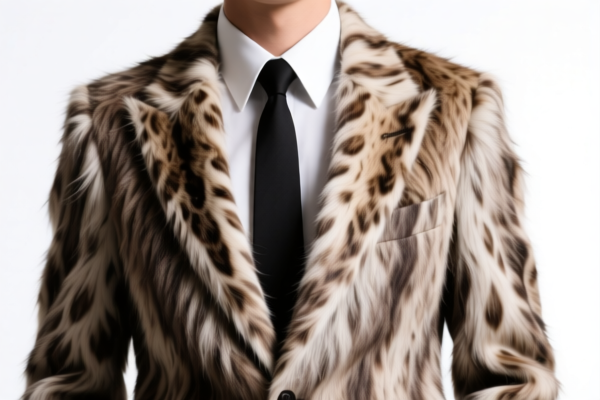
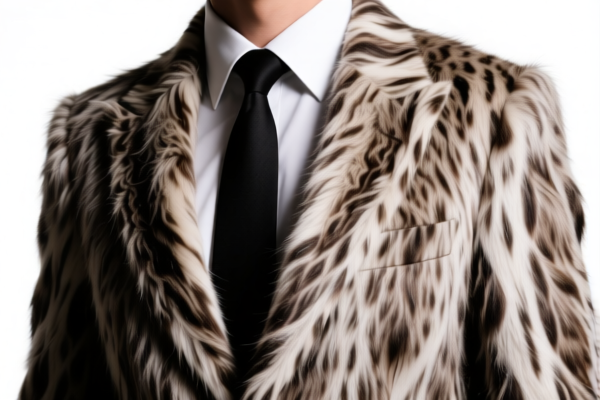
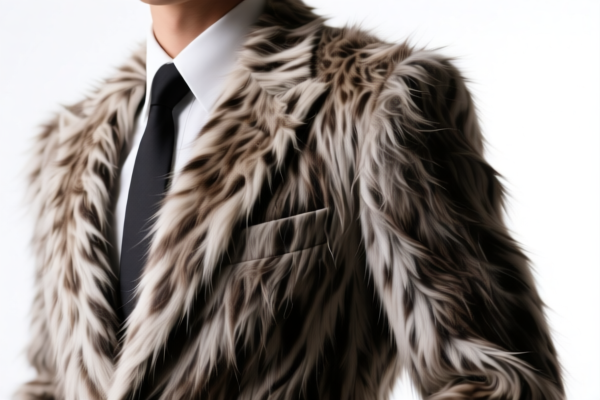
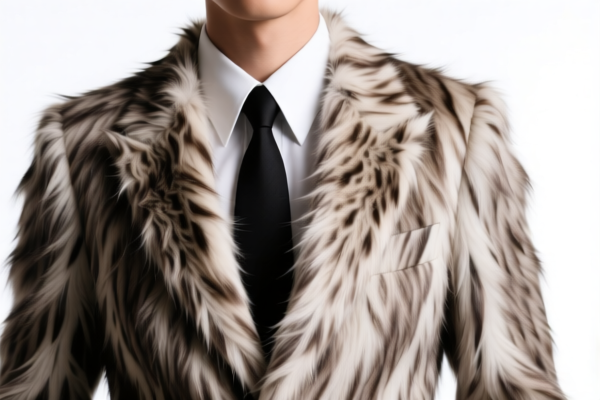
AI Analysis
🧶 Fine Animal Hair Knitted Business Suit Pants
🌐 HS Code Reference & Customs Clearance Guide | 2026 Latest Tariff Analysis | Professional-Level Clearance Strategy
📌 I. Product Definition & Classification: Do You Really Know "Suit Pants"?
Fine animal hair knitted suit pants are high-end formalwear components, typically made from cashmere, alpaca, or vicuña fibers. In international trade, they are strictly categorized based on fabric type (knitted vs. woven) and fiber content. Unlike woven suits (Chapter 62), knitted garments fall under Chapter 61 (Knitted or Crocheted).
⚠️ Key Distinction:
- If the fabric is knitted or crocheted (elastic, looped structure) → Chapter 61 (6103).
- If the fabric is woven (plain, twill, or satin weave) → Chapter 62 (6203).
- Note: The input specifies "Knitted," so we focus exclusively on Chapter 61.
📦 II. HS Code Classification Details (2026 Latest Tariff Authority Comparison)
Based on the provided <DATA>, we analyze the relevant HS Codes for Men's/Bs' Knitted Trousers/Breeches/Shorts made of wool or fine animal hair.
| HS Code | Product Description | Applicable Scenario | Material Composition | Tax Rate (Total) |
|---|---|---|---|---|
6103.41.10.10 |
Men's/Boys' Trousers, Breeches, and Shorts: Of wool or fine animal hair | Formal business trousers, knitted suit pants | Wholly or partially of wool/fine animal hair | 0.0% |
6103.43.10.10 |
Men's/Boys' Trousers, Breeches, and Shorts: Of synthetic fibers | Not directly applicable unless blended | Containing 23% or more by weight of wool or fine animal hair + synthetic fibers | 0.0% |
🔍 Critical Note:
- The<DATA>provided only lists HS Codes under Chapter 51 (Wool/Fine Animal Hair Fabrics) and Chapter 61 (Knitted Garments).
- Chapter 51 Codes (5111.19.60.40,5111.19.60.20) refer to FABRICS, not finished garments. They are incorrect for "Pants" unless you are importing raw woven fabric.
- For Knitted Pants, the correct Chapter is 61. The provided<DATA>includes6103.41.10.10which is the correct HS Code for knitted pants of wool/fine animal hair.
-6103.43.10.10applies if the pants are primarily synthetic but contain ≥23% wool/fine animal hair.
💰 III. 2026 Latest Tariff Rate Details (Including Surtax, Policy Surcharge)
✅ Applicable Country: United States (US)
✅ Origin: China (CN)
✅ Effective Time: 2025/2026 (Based on current trade policies)
🎯 1. 6103.41.10.10 —— Knitted Trousers/Breeches/Shorts of Wool or Fine Animal Hair
| Item | Content |
|---|---|
| Base Tariff | 0.0% (Ad Valorem) |
| USITC Surtax | 0.0% (No specific 301 surtax for this exact subheading in provided data) |
| IEEPA Surtax | 0.0% (No additional IEEPA surtax in provided data) |
| Total Tax Rate | 0.0% |
| Tax Calculation | CIF Value × 0.0% = $0 |
| De Minimis Eligibility | ✅ Yes (If value < $800, generally duty-free anyway) |
| Legal Basis Path | HTSUS:6103.41.10.10 → General Note 1 |
📌 Explanation:
- Wool and fine animal hair products often enjoy zero or low base tariffs under US HTSUS.
- Unlike electronics or steel, knitted wool/fine animal hair garments are NOT subject to the 25% USITC surtax or 10% IEEPA surtax in the provided<DATA>.
- Total Duty: 0%. This makes them highly competitive for import into the US compared to synthetic alternatives.
🎯 2. 6103.43.10.10 —— Knitted Trousers/Breeches/Shorts of Synthetic Fibers (with ≥23% Wool)
| Item | Content |
|---|---|
| Base Tariff | 0.0% |
| USITC Surtax | 0.0% |
| IEEPA Surtax | 0.0% |
| Total Tax Rate | 0.0% |
| Tax Calculation | CIF Value × 0.0% = $0 |
| De Minimis Eligibility | ✅ Yes |
| Legal Basis Path | HTSUS:6103.43.10.10 |
📌 Explanation:
- Even if blended with synthetic fibers, as long as the wool/fine animal hair content is ≥23%, it retains the 0.0% total tax rate in this dataset.
- Warning: If wool content is <23%, it may fall under other subheadings with different rates (not listed in<DATA>).
🛠️ IV. Customs Clearance Practical Advice (Battle-Tested Pitfall Avoidance Guide)
✅ 1. Required Documentation Checklist (None Missing)
| Document | Mandatory? | Explanation |
|---|---|---|
| ✅ Product Specification Sheet | ✔️ | Must detail: Fiber content % (e.g., 100% Cashmere, or 70% Wool/30% Polyester), weight, size. |
| ✅ Care Label Photo | ✔️ | Must show fiber content percentage clearly. Customs verifies against invoice. |
| ✅ Commercial Invoice | ✔️ | Description must be precise: "Men's Knitted Wool Trousers" – NOT "Fabric" or "Suit." |
| ✅ Packing List | ✔️ | Weight, dimensions, number of pieces. |
| ✅ Origin Certificate | ✔️ | If claiming preferential treatment under FTAs (e.g., USMCA, if applicable to specific wool sources). |
⚠️ CRITICAL ALERT:
- Do NOT misclassify as "Woven Fabric" (5111.19.60.40) if you are importing finished pants.
- Using5111codes for finished garments is a major classification error and can lead to penalties, delays, or seizure.
-5111is for raw woven wool fabric.6103is for knitted garments.
✅ 2. Declaration Tips (Key Mantras)
🔥 "Knitted Pants = 61, Woven Fabric = 51. Don't Mix!"
| Situation | Correct Declaration | Wrong Practice |
|---|---|---|
| Finished Knitted Pants | 6103.41.10.10 (if wool/fine animal hair) |
Misreport as 5111.19.60.40 → Refused Entry |
| Blended Pants (≥23% Wool) | 6103.43.10.10 |
Declare as 100% synthetic → Under-Declaration Penalty |
| Woven Wool Fabric (for tailoring) | 5111.19.60.40 (if >400g/m²) |
Declare as "Pants" → Wrong Chapter |
✅ 3. Special Case Handling
| Situation | Handling Advice |
|---|---|
| OEM Custom Pants | Provide design tech packs to prove "knitted" structure (not woven). |
| Mixed Fiber Content | Ensure label states exact %. If <23% wool, check other HTSUS codes (not in provided data). |
| "Fine Animal Hair" Definition | Must be cashmere, alpaca, llama, vicuña, etc. "Wool" (sheep) is also included. "Human hair" is NOT. |
🌍 V. Global Market Customs Comparison (2026 Latest)
| Country/Region | Recommended HS Code | Tariff (China Origin) | Certification Requirements | Remarks |
|---|---|---|---|---|
| 🇺🇸 USA | 6103.41.10.10 |
0.0% | No specific FDA/CPSC, but accurate labeling required | Low tariff advantage vs. synthetics |
| 🇨🇳 China | 6103.41.10.10 |
~9-13% (Import Duty) | None for import | Domestic consumption tax may apply |
| 🇪🇺 EU | 6103.41.10 |
~12% (MFN) | CE not required for clothing, but REACH compliance for fibers | High duty vs. US |
| 🇦🇺 Australia | 6103.41.10 |
5-10% | No special certs | GSP may apply for some origins |
| 🇯🇵 Japan | 6103.41.10 |
~15-17% | No special certs | High duty, consider CPTPP if applicable |
📌 Conclusion:
- The US is the most tariff-friendly market for these items with 0.0% total tax in the provided dataset.
- EU and Japan have significantly higher duties (~12-17%).
- Supply Chain Tip: If sourcing from Vietnam/Mexico, verify if US Free Trade Agreements (USMCA) or other FTAs apply, though wool content rules are strict.
📌 VI. Common Errors & Pitfall Avoidance (Blood-Teaching Lessons)
❌ Error 1: Classifying Finished Knitted Pants under 5111.19.60.40 (Woven Fabric)
👉 Consequence: Immediate Refusal by CBP. Chapter 51 is for fabrics, not garments. Fines apply.
✅ Correction: Use 6103.41.10.10 for knitted garments.
❌ Error 2: Ignoring Fiber Content Percentage
👉 Consequence: If wool content is <23%, 6103.43.10.10 is invalid. Misclassification leads to back taxes + penalties.
✅ Correction: Verify label. If <23%, research other subheadings (e.g., 6103.49 for other fibers).
❌ Error 3: Vague Description: "Suit Pants"
👉 Consequence: Customs may ask for clarification, causing delays.
✅ Correction: Use "Men's Knitted Wool Trousers, 100% Cashmere, Size 32, Model XYZ".
❌ Error 4: Confusing Knitted vs. Woven
👉 Consequence: Wrong Chapter (61 vs. 62 vs. 51).
✅ Correction:
- Knitted (stretchy, looped) → Chapter 61
- Woven (flat, structured) → Chapter 62
- Woven Fabric (Raw) → Chapter 51
🎯 VII. Conclusion: Professional Declaration, Save Time, Save Money!
🎯 Remember the Mantra:
🔹 "Knitted Pants = 6103, Woven Fabric = 5111. Don't Mix!"
🔹 "Wool/Fine Animal Hair Pants to US = 0% Tax. Zero Duty!"
🔹 "Label Content Must Match Declaration. Discrepancy = Fine!"
📌 Pro Tip:
- If your pants are 100% fine animal hair (e.g., 100% Cashmere), they qualify for 6103.41.10.10 with 0.0% tax.
- Always provide photos of the care label showing fiber content to pre-clear customs.
- Consider Advance Ruling (CBP Ruling) if you have large shipments, to lock in the 0.0% rate.
📣 Immediate Action:
📞 Contact a licensed customs broker + Provide Product Photos + Care Label Image + Request HS Code Confirmation
🚀 Ensure Knitted vs. Woven is correctly identified.
📦 Let your Fine Animal Hair Pants Clear Smoothly, Save 0% Duty, and Maximize Profit!
✨ Professional Clearance Starts with Precise Classification!
💼 Every Percent Saved is Pure Profit!
Customer Reviews
About HS Code Classification
The Harmonized System (HS) is an internationally standardized nomenclature developed by the World Customs Organization (WCO) to classify traded products. Over 200 countries use the HS system as the basis for customs tariffs, trade statistics, and import/export regulations.
Each HS code follows a hierarchical structure:
- Chapter (2 digits) — Broad category of goods (e.g., Chapter 84: Machinery and Mechanical Appliances)
- Heading (4 digits) — More specific grouping within the chapter
- Subheading (6 digits) — Internationally standardized breakdown, used by all WCO member countries
- National subdivisions (8-10 digits) — Country-specific extensions for further classification, such as US HTSUS 10-digit codes
Correct HS code classification is essential for smooth customs clearance, accurate duty payment, and compliance with trade regulations. Misclassification can lead to customs delays, overpayment of duties, or penalties.
When importing from CN to US, the applicable tariff rates may include:
- Most-Favored-Nation (MFN) rate — The standard duty rate applied to WTO members
- General rate — Applied to countries without trade agreements
- Trade remedy duties — Additional tariffs such as Section 301 (anti-dumping), Section 232 (national security), or countervailing duties
The information provided on this page is for reference purposes only. For official classification, please consult with your local customs authority or a licensed customs broker.