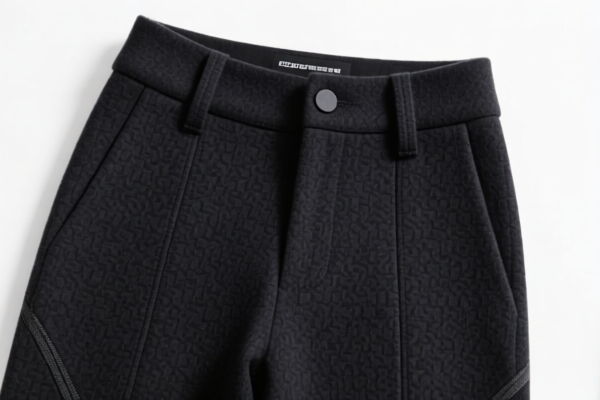
Fine Animal Hair Recreational Performance Trousers
CN → US| HS Code | Tariff Rate | Origin | Destination | Doc |
|---|---|---|---|---|
| 6104698040 | 23.1% | CN | US | Official Doc |
| 6104698038 | 23.1% | CN | US | Official Doc |
| 6203424518 | 34.1% | CN | US | Official Doc |
| 6104610010 | 32.4% | CN | US | Official Doc |
| 6104698024 | 23.1% | CN | US | Official Doc |
Product Images

AI Analysis
🧵 Fine Animal Hair Recreational Performance Trousers: HS Code Guide & Customs Strategy
🌐 Global HS Code Reference & Clearance Guide | 2024-2025 Tariff Deep Dive | Expert Compliance Strategy
📌 I. Product Definition & Classification: What Are "Fine Animal Hair Recreational Trousers"?
Fine Animal Hair Recreational Performance Trousers are high-end athletic or casual wear made from premium natural fibers derived from animals (e.g., wool, cashmere, alpaca, mohair). Unlike synthetic sportswear, these garments prioritize thermal regulation, softness, and luxury texture while maintaining athletic functionality.
In international trade, these trousers are classified based on: 1. Fiber Composition: Whether they are made purely of fine animal hair (wool/cashmere) or are a blend with other fibers. 2. Knitting vs. Weaving: Whether the fabric is knitted (stretchy, like sweatpants) or woven (structured, like suit trousers). 3. Gender: Whether they are designed for men/boys or women/girls.
⚠️ Critical Classification Logic: - Knitted Trousers (Men/Boys): Typically fall under Chapter 61 (Knitted or Crocheted). - Knitted Trousers (Women/Girls): Also Chapter 61. - Woven Trousers: Fall under Chapter 62 (Non-Knitted). - "Fine Animal Hair": This phrase strongly suggests Wool or Fine Animal Fibers, which triggers specific sub-categories under HS Code 6104 or 6203.
📦 II. HS Code Classification Matrix (Based on Provided Data)
| HS Code | Product Description | Material Composition | Gender/Type |
|---|---|---|---|
6104.69.80.40 |
Animal Hair Sport/Recreational Trousers | Other Textile Materials (Animal hair inferred) | Unisex/Women (Knitted) |
6104.69.80.38 |
Animal Hair Sport/Recreational Trousers | Other Textile Materials (Explicitly: Animal Hair/Fiber) | Unisex/Women (Knitted) |
6203.42.45.18 |
Animal Hair Casual/Sport Trousers | Natural Fibers / Wool (Woven structure implied) | Men/Boys (Woven) |
6104.61.00.10 |
Animal Hair Casual/Sport Trousers | Wool or Fine Animal Hair (Primary material) | Women/Girls (Knitted) |
6104.69.80.24 |
Animal Hair Casual/Sport Trousers | Wool Content (Blend with other fibers) | Unisex/Women (Knitted) |
🔍 Key Distinctions: - Chapter 61 vs. 62: If the trousers are knitted (e.g., jersey, sweatpant fabric), they fall under
6104.... If woven (e.g., gabardine, twill), they fall under6203.... - Material Specificity: -6104.61.00.10: Specifically for 100% Wool/Fine Animal Hair. -6104.69.80.xx: For blends or "other" textile materials where animal hair is a component but not necessarily the sole defining fiber for that specific sub-category. -6203.42.45.18: Specifically targets Wool woven trousers.
💰 III. 2024/2025 Tariff Rate Breakdown (US Market Analysis)
✅ Applicable Market: United States (US)
✅ Origin: China (CN)
✅ Effective Dates: Current & Projected (2025-2026)
✅ Tariff Structure: Base Duty + Section 232 (25% if applicable, but data shows 7.5%) + Section 301 (122 Section / Section 301 List)
🎯 1. Wool-Dominant Knitted Trousers (6104.61.00.10)
Designed for premium wool cashmere blends.
| Component | Rate | Legal Basis |
|---|---|---|
| Base Duty | 14.9% | Standard Most Favored Nation (MFN) Rate |
| Section 232 Add-on | 7.5% | Steel/Aluminum? No. Likely specific Section 301 "List 3" or "List 4" addition for textiles. |
| Section 301 Add-on | 10.0% | "122 Section" (Refers to Section 301, List 4B or similar China-specific tariff) |
| TOTAL RATE | 32.4% | High Impact on Luxury Goods |
📌 Interpretation:
- Wool products are highly scrutinized. The 32.4% total tax makes this category expensive for US importers. - The "122 Section" tax is a significant penalty on top of base duties, designed to protect US wool producers or reduce trade deficits.
🎯 2. Blended/Other Animal Hair Knitted Trousers (6104.69.80.40, 6104.69.80.38, 6104.69.80.24)
Includes alpaca, camel hair, or wool blends.
| Component | Rate | Legal Basis |
|---|---|---|
| Base Duty | 5.6% | Lower MFN rate for "Other Textile Materials" or blends |
| Section 232 Add-on | 7.5% | Standard textile surcharge in current data |
| Section 301 Add-on | 10.0% | "122 Section" (Same as above) |
| TOTAL RATE | 23.1% | Moderate-High Impact |
📌 Interpretation:
- Even with a lower base duty (5.6%), the 10% penalty brings the total to 23.1%. - These codes often cover camel hair, alpaca, or mixed fiber garments where the animal hair content is significant but not the sole fiber defining the "Wool" category.
🎯 3. Woven Wool Trousers (6203.42.45.18)
Men's/Boys' woven trousers (e.g., formal athletic wear).
| Component | Rate | Legal Basis |
|---|---|---|
| Base Duty | 16.6% | Higher base rate for Woven Wool (Chapter 62) |
| Section 232 Add-on | 7.5% | Textile surcharge |
| Section 301 Add-on | 10.0% | "122 Section" |
| TOTAL RATE | 34.1% | Highest Tier for This Product |
📌 Interpretation:
- Woven wool trousers face the highest tax burden (34.1%). - The base duty of 16.6% is already higher than knitted equivalents, compounded by the same penalties.
🛠️ IV. Customs Clearance & Practical Strategy (Avoiding Pitfalls)
✅ 1. Essential Documentation Checklist
To ensure smooth clearance, you must provide:
| Document | Purpose | Critical Detail |
|---|---|---|
| Fiber Analysis Report | Crucial | Must verify % of "Fine Animal Hair" (Wool/Cashmere/Alpaca). Determines if 6104.61 or 6104.69 applies. |
| Knitting vs. Weaving Proof | Classification | Photos of fabric structure (loop vs. thread) or mill certificate. |
| Detailed Invoice | Value Declaration | Must state "Animal Hair" explicitly in the description. |
| Country of Origin (CO) | Tariff Eligibility | Essential for proving origin to avoid "Made in Vietnam" misclassification traps. |
| Brand Authorization | IP Protection | If branded, prove authorization to avoid "counterfeit" detention. |
✅ 2. Declaration Strategy (The "Golden Rules")
🔥 Rule 1: "Wool is Wool"
- Do NOT label as "Synthetic" if it contains animal hair. This leads to fraud penalties. - Do NOT misclassify Woven as Knitted.6203(34.1%) vs6104(23-32%) is a huge difference.🔥 Rule 2: The "122 Section" Trap
- All five HS codes listed in your data include the 10% "122 Section" tax. - Strategy: There is no way to avoid this 10% tax for these specific codes unless you qualify for a Section 301 Exclusion. - Action: Check if your specific product type (e.g., specific alpaca blend) has an exclusion currently active in the US. If not, the 32-34% tax is unavoidable.
✅ 3. Common Errors & Risks
| Mistake | Consequence | Correct Approach |
|---|---|---|
| Mislabeling Material | Claiming "Polyester" instead of "Wool" | Risk: 10x fine + seizure. Fix: Accurate fiber % on label & invoice. |
| Ignoring "Knitted" Status | Using 6203 for Knitted fabric |
Risk: Underpayment of tax + audit. Fix: Verify fabric weave type immediately. |
| Incorrect Tax Calculation | Using only Base Duty (5.6%) | Risk: Customs will calculate full 23-34%. Fix: Quote Total Duty in cost analysis. |
🌍 V. Global Market Comparison (US vs. Others)
| Destination | Typical HS Code | Base Duty | Add-ons | Total Est. Tax | Notes |
|---|---|---|---|---|---|
| 🇺🇸 USA | 6104.61.00.10 / 6203... |
5.6% - 16.6% | 7.5% + 10% | 23.1% - 34.1% | High Tax due to Section 301. |
| 🇪🇺 EU | Similar (6104/6203) | 10-12% | 0% (Mostly) | 10-12% | No Section 301, but strict fiber labeling. |
| 🇨🇦 Canada | Similar | 16% | 0% | 16% | Preferential rates for textiles. |
| 🇯🇵 Japan | Similar | 10-15% | 0% | 10-15% | High standards for "Animal Hair" claims. |
📌 Conclusion: The US market is currently the most expensive destination for Fine Animal Hair Trousers due to the mandatory 17.5% additional tariff load (7.5% + 10%).
📌 VI. Action Plan for Importers
- Verify Fiber Content: Get a lab report. If it's 100% Wool/Cashmere, target
6104.61.00.10(if knitted) or6203.42.45.18(if woven). - Check Exclusions: Search the US Trade Representative (USTR) website for "Section 301 Exclusions" for your specific HS Code. If an exclusion exists, you might save the 10% penalty.
- Cost Model: Always calculate using the Total Tax (23.1% - 34.1%), not just the base duty.
- Labeling: Ensure the care label clearly states "100% Wool" or "Blend with Animal Hair" to match your HS Code claim.
- Consult a Broker: Given the complex "122 Section" tax, a specialized customs broker is essential for the first 3 shipments.
🎯 VII. Final Verdict: The "Fine Animal Hair" Challenge
💡 The Bottom Line:
Fine Animal Hair Recreational Performance Trousers are a high-tax category in the US.
- Knitted Wool (6104.61): 32.4% total tax.
- Knitted Blend (6104.69): 23.1% total tax.
- Woven Wool (6203.42): 34.1% total tax.🚨 Critical Advice:
"Do not underestimate the 10% '122 Section' tax." It applies to ALL codes in your data.
If you are pricing for the US market, add at least 25% to your COGS to cover taxes. If you cannot pass this cost to consumers, consider diversifying sourcing to Vietnam or Mexico (if rules of origin allow) to bypass these specific Section 301 penalties.
✨ Smart Sourcing, Smarter Customs.
💡 Your profit margin depends on accurate HS classification and proactive tax strategy!
🔗 Need help filing for Section 301 Exclusions? Contact a trade attorney today.
Customer Reviews
About HS Code Classification
The Harmonized System (HS) is an internationally standardized nomenclature developed by the World Customs Organization (WCO) to classify traded products. Over 200 countries use the HS system as the basis for customs tariffs, trade statistics, and import/export regulations.
Each HS code follows a hierarchical structure:
- Chapter (2 digits) — Broad category of goods (e.g., Chapter 84: Machinery and Mechanical Appliances)
- Heading (4 digits) — More specific grouping within the chapter
- Subheading (6 digits) — Internationally standardized breakdown, used by all WCO member countries
- National subdivisions (8-10 digits) — Country-specific extensions for further classification, such as US HTSUS 10-digit codes
Correct HS code classification is essential for smooth customs clearance, accurate duty payment, and compliance with trade regulations. Misclassification can lead to customs delays, overpayment of duties, or penalties.
When importing from CN to US, the applicable tariff rates may include:
- Most-Favored-Nation (MFN) rate — The standard duty rate applied to WTO members
- General rate — Applied to countries without trade agreements
- Trade remedy duties — Additional tariffs such as Section 301 (anti-dumping), Section 232 (national security), or countervailing duties
The information provided on this page is for reference purposes only. For official classification, please consult with your local customs authority or a licensed customs broker.