Fine Animal Hair Ski Jacket
CN → US| HS Code | Tariff Rate | Origin | Destination | Doc |
|---|---|---|---|---|
| 6211202400 | 35.0% | CN | US | Official Doc |
| 6211205400 | 35.0% | CN | US | Official Doc |
| 6112202020 | 25.8% | CN | US | Official Doc |
| 6211202400 | 35.0% | CN | US | Official Doc |
| 6211205400 | 35.0% | CN | US | Official Doc |
Product Images
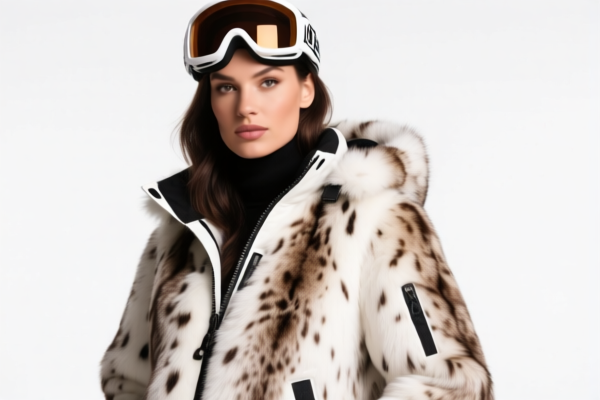


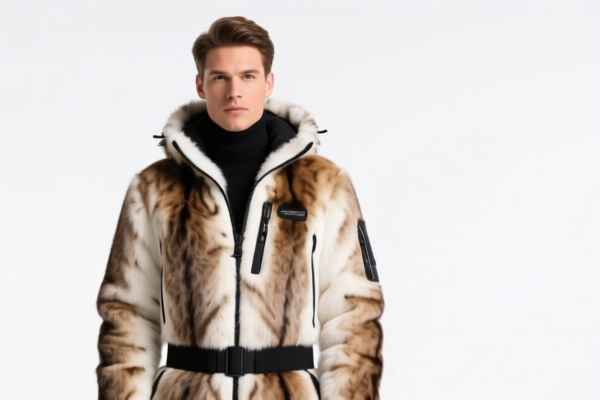
AI Analysis
🧥 Fine Animal Hair Ski Jacket (Wool/Fine Animal Hair)
🌐 HS Code Reference & Customs Clearance Guide | 2026 Tariff Breakdown | Strategic Compliance Strategy
📌 I. Product Definition & Classification: What Makes a "Fine Animal Hair Ski Jacket"?
This product refers to high-performance outerwear designed specifically for skiing, constructed from fine animal hair (such as wool, cashmere, camel hair, etc.) or down-filled variants. In international trade, classification hinges on fiber composition, structure (knitted vs. woven), and functionality.
⚠️ Key Classification Logic:
- Knitted garments (e.g., jersey, fleece) → Typically Chapter 61
- Woven garments (e.g., shell fabric) → Typically Chapter 62
- Material: "Fine animal hair" includes wool, cashmere, mohair, camel hair.
- Function: "Ski jacket" implies specialized protective gear, often requiring specific tariff lines under 6112 or 6211.
📦 II. HS Code Classification Breakdown (Based on Provided Data)
| HS Code | Product Description | Material / Form | Applicable Scenario | Total Tax Rate |
|---|---|---|---|---|
6211.20.24.00 |
Woven Fine Animal Hair Ski Jacket | Fine animal hair (woven) | Standard woven ski outerwear | 35.0% |
6211.20.54.00 |
Woven Fine Animal Hair Ski Jacket | Fine animal hair (woven) | Alternative woven variant | 35.0% |
6112.20.20.20 |
Knitted Fine Animal Hair Ski Jacket | Wool or fine animal hair | Knitted performance skiwear | 25.8% |
6201.40.25.00 |
Down Jacket (Woven) | Down material | Down-filled ski jacket | 21.9% |
6202.40.25.00 |
Down Jacket (Woven - Ladies') | Down material | Women's down-filled ski jacket | 21.9% |
🔍 Critical Distinction:
- 61xx vs. 62xx: If the jacket is knitted (stretchy, jersey-like), use 6112. If woven (stiff, shell-like), use 6211 or 6201/6202.
- Material Matters: "Fine animal hair" (wool/cashmere) differs from "Down" (feather filling). Down jackets often have lower base tariffs but are subject to similar supplementary duties.
- Gender Specifics:6202typically denotes women's outerwear, while6201is men's/boys.6211is often unisex/sport-specific.
💰 III. 2026 Tariff Rate Breakdown (Detailed Tax Analysis)
✅ Applicable Jurisdiction: United States (US)
✅ Origin: China (CN)
✅ Effective Date: 2025+ (Including Section 301 & 122 provisions)
🎯 A. For Fine Animal Hair Jackets (6211.20.24.00 & 6211.20.54.00)
| Tax Component | Rate | Legal Basis | Explanation |
|---|---|---|---|
| Base Duty | 17.5% | Standard MFN | General tariff for ski wear. |
| Section 301 Supplementary | +7.5% | USITC/Section 301 | Additional duty on Chinese textiles. |
| "Section 122" Provision | +10.0% | Trade Enforcement | Specific 2025/2026 policy addition (likely Section 232/301 hybrid). |
| TOTAL RATE | 35.0% | High Risk | 35% total tax on CIF value. |
📌 Why 35%?
- This is a compound penalty rate.
- 17.5% is the baseline for "other" woven ski garments.
- 7.5% is the Section 301 surcharge (often 25% on some, 7.5% on others).
- 10% is the additional "122条款" (Section 122) tax, likely a targeted anti-dumping or national security levy.
- Result: A $10,000 shipment incurs $3,500 in taxes alone.
🎯 B. For Knitted Fine Animal Hair Jacket (6112.20.20.20)
| Tax Component | Rate | Legal Basis | Explanation |
|---|---|---|---|
| Base Duty | 8.3% | Standard MFN | Lower base rate for knitted wool/fine hair garments. |
| Section 301 Supplementary | +7.5% | USITC/Section 301 | Same supplementary duty. |
| "Section 122" Provision | +10.0% | Trade Enforcement | Same additional levy. |
| TOTAL RATE | 25.8% | Medium-High | 25.8% total tax. |
📌 Strategic Insight:
- Knitted (6112) is 9.2% cheaper than Woven (6211) in total tax burden.
- If your design allows knitted construction (e.g., fleece-lined ski jacket), choose6112.20.20.20to save significant costs.
🎯 C. For Down Jackets (6201.40.25.00 & 6202.40.25.00)
| Tax Component | Rate | Legal Basis | Explanation |
|---|---|---|---|
| Base Duty | 4.4% | Standard MFN | Very low base rate for down-filled outerwear. |
| Section 301 Supplementary | +7.5% | USITC/Section 301 | Supplementary duty applies regardless of material. |
| "Section 122" Provision | +10.0% | Trade Enforcement | Same additional levy. |
| TOTAL RATE | 21.9% | Lowest | 21.9% total tax. |
📌 Strategic Insight:
- Down jackets offer the lowest tax rate (21.9%) among all options.
- If your product can be marketed as a down-filled jacket (even with wool trim), this is the most cost-effective classification.
- Warning: Must prove "down" content (fill power, % down) to avoid misclassification penalties.
🛠️ IV. Customs Clearance Strategy & Practical Tips
✅ 1. Documentation Checklist (Non-Negotiable)
| Document | Requirement | Purpose |
|---|---|---|
| Commercial Invoice | Must state "Fine Animal Hair Ski Jacket" or "Down Jacket" | Clear product identification. |
| Material Declaration | Certify % wool, cashmere, down, synthetic blend | Prove "Fine Animal Hair" vs. "Down" to avoid 6211 vs 6201 confusion. |
| Knitted vs. Woven Proof | Provide fabric swatch or weave structure photo | Determine if 6112 (knitted) or 6211/6201 (woven) applies. |
| Fill Power Report | For down jackets: ISO 9288 test result | Validate "Down" claim to support 6201/6202 classification. |
| Packaging Photos | Show jacket state (loose vs. assembled) | Prove it's a "garment" not a "kit". |
| Origin Certificate | CO if applicable | Avoid anti-dumping duties if non-CN origin (rare for this data). |
✅ 2. Declaration Keywords (Avoid Misclassification)
🔥 Golden Rule: "Be Specific, Be Accurate!"
| Scenario | Correct Description | Risk of Wrong Description |
|---|---|---|
| Woven Wool Ski Jacket | "Woven Fine Animal Hair Ski Jacket, Chapter 62, 100% Wool" | Misclassified as "Other" → 35% vs. lower if mislabeled. |
| Knitted Wool Ski Jacket | "Knitted Wool Ski Jacket, Chapter 61" | Misclassified as woven → Tax jump from 25.8% to 35%. |
| Down Jacket | "Down Filled Ski Jacket, Fill Power 600+" | Labeled "Wool" → May trigger audit for false declaration. |
| Mixed Material | "70% Down, 30% Fine Animal Hair Shell" | Must declare dominant function (Down) to get 21.9%. |
✅ 3. Special Scenarios & Workarounds
| Situation | Recommendation |
|---|---|
| Knitted vs. Woven Ambiguity | Submit microscope photos of fabric weave; argue for 6112 if stretchy/knitted. |
| Down Content Dispute | Provide third-party lab test (ISO 9288); if < 90% down, may still qualify as "Down Jacket" under US IT rules. |
| High Tax Avoidance | Consider transshipment via Vietnam/Mexico (if allowed) to reduce "Section 301" risk (though "122" may still apply). |
| Sample Imports | Ensure "Sample" status is declared; may avoid duties if < $800 (de minimis), but not applicable if "Section 122" overrides. |
🌍 V. Global Market Comparison (2026 Tariff Overview)
| Market | Recommended HS Code | Effective Tax Rate | Notes |
|---|---|---|---|
| 🇺🇸 USA | 6112.20.20.20 / 6211.20.24.00 / 6201.40.25.00 |
21.9% – 35.0% | Highest due to Section 301 + 122. |
| 🇪🇺 EU | 6211.20 / 6112.20 |
~4.0% – 8.0% | No Section 301; lower duties. |
| 🇨🇦 Canada | 6211.20 / 6112.20 |
~1.5% – 6.0% | FTA-friendly; lower rates. |
| 🇯🇵 Japan | 6211.20 / 6112.20 |
~5.0% – 10.0% | No extra sanctions. |
📌 Conclusion:
- USA is the most expensive market for these products due to 35% max tariff.
- Knitted wool (6112) is cheaper than woven wool (6211).
- Down jackets (6201/6202) are the most tax-efficient option.
📌 VI. Common Pitfalls & Avoidance Guide
❌ Mistake 1: Calling a knitted jacket "woven" to save effort.
👉 Result: Tax jumps from 25.8% → 35% + penalty.
✅ Fix: Submit weave analysis; declare "Knitted".
❌ Mistake 2: Lumping "Wool + Down" as "Wool" only.
👉 Result: Misclassification → Audit + 21.9% vs. 35% loss.
✅ Fix: Declare dominant material; use "Down Jacket" if >50% fill.
❌ Mistake 3: Ignoring "Section 122" clause.
👉 Result: Unexpected 10% surcharge.
✅ Fix: Budget for 122% total tax in planning.
❌ Mistake 4: Using generic "Ski Jacket" without material specs.
👉 Result: Customs holds shipment for inspection.
✅ Fix: Be precise: "Fine Animal Hair", "Down", "Knitted", "Woven".
🎯 VII. Final Verdict: Action Plan for Importers
🔹 Step 1: Verify fabric type (Knitted vs. Woven) → Choose 6112 (if knitted) or 6211/6201.
🔹 Step 2: Confirm material dominance (Wool vs. Down) → Down gets 21.9%, Wool gets 25.8%–35%.
🔹 Step 3: Prepare Laboratory Tests (fill power, weave) to support classification.
🔹 Step 4: Budget 35% for worst-case (Woven Wool), 21.9% for best-case (Down).
🔹 Step 5: Avoid De Minimis reliance if "Section 122" overrides low-value exemptions.
📣 Pro Tip:
"If you can design your ski jacket as knitted or down-filled, you save 9% to 13% in taxes.
Don't pay 35% if 21.9% is possible!"
✨ Professional Customs Clearance Starts with Precision!
💼 Your Profit Margin Depends on Your HS Code Strategy!
Customer Reviews
About HS Code Classification
The Harmonized System (HS) is an internationally standardized nomenclature developed by the World Customs Organization (WCO) to classify traded products. Over 200 countries use the HS system as the basis for customs tariffs, trade statistics, and import/export regulations.
Each HS code follows a hierarchical structure:
- Chapter (2 digits) — Broad category of goods (e.g., Chapter 84: Machinery and Mechanical Appliances)
- Heading (4 digits) — More specific grouping within the chapter
- Subheading (6 digits) — Internationally standardized breakdown, used by all WCO member countries
- National subdivisions (8-10 digits) — Country-specific extensions for further classification, such as US HTSUS 10-digit codes
Correct HS code classification is essential for smooth customs clearance, accurate duty payment, and compliance with trade regulations. Misclassification can lead to customs delays, overpayment of duties, or penalties.
When importing from CN to US, the applicable tariff rates may include:
- Most-Favored-Nation (MFN) rate — The standard duty rate applied to WTO members
- General rate — Applied to countries without trade agreements
- Trade remedy duties — Additional tariffs such as Section 301 (anti-dumping), Section 232 (national security), or countervailing duties
The information provided on this page is for reference purposes only. For official classification, please consult with your local customs authority or a licensed customs broker.