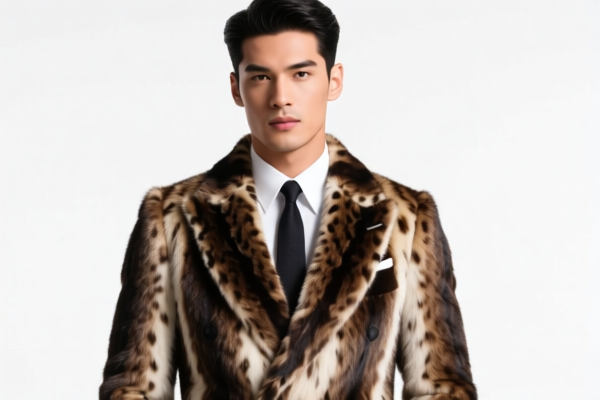
Fine Animal Hair Sports Suit
CN → US| HS Code | Tariff Rate | Origin | Destination | Doc |
|---|---|---|---|---|
| 6112202020 | 25.8% | CN | US | Official Doc |
| 6112198010 | 39.1% | CN | US | Official Doc |
| 6211204400 | 31.5% | CN | US | Official Doc |
| 6211207400 | 31.5% | CN | US | Official Doc |
| 5108108000 | 39.0% | CN | US | Official Doc |
| 5108208000 | 39.0% | CN | US | Official Doc |
Product Images



AI Analysis
🧶 Fine Animal Hair Sports Suit: The Ultimate HS Code & Tariff Guide (2026)
🌐 HS Code Classification & Customs Clearance Strategy | Complete Tax Breakdown | Expert Compliance Guide
📌 I. Product Definition & Classification: Are You Sure You Know "Fine Animal Hair Sports Suits"?
"Fine Animal Hair Sports Suits" generally refer to athletic wear (specifically ski-suits, track suits, or swimwear) made from fibers such as Cashmere, Mohair, or Camel Hair. These are high-end, natural fiber garments designed for winter sports or athletic activities.
In International Trade, these items fall into two main chapters depending on the knitting process: * Knitted or Crocheted (Chapter 61): Stretchy, flexible, typically made by knitting machines (e.g., fleece, jersey). * Woven (Chapter 62): Stiffer structure, sewn from fabric pieces (e.g., standard ski shell suits).
⚠️ Critical Classification Point: * Knitted: If the fabric is stretchy or knitted, look at 6112.20.20.20 (Ski-suit) or 6112.19.80.10 (Track suit). * Woven: If the fabric is woven, look at 6211.20.44.00 (Men's Ski-suit) or 6211.20.74.00 (Women's Ski-suit). * Material Specificity: Must contain "Wool or Fine Animal Hair" to qualify for these specific codes.
📦 II. Detailed HS Code Classification (2026 Data Match)
Based on the provided DATA, here is the exact breakdown for "Fine Animal Hair Sports Suits":
| HS Code | Product Description | Category | Gender/Type | Material Requirement | | :--- | :--- | :--- | :--- :--- | | 6112.20.20.20 | Track Suits, Ski-Suits & Swimwear (Knitted/Crocheted): Ski-suits, Other, Of Wool or Fine Animal Hair | Knitted | General (Unisex) | Must be Wool/Fine Animal Hair | | 6112.19.80.10 | Track Suits, Ski-Suits & Swimwear (Knitted/Crocheted): Track Suits, Other Textile Materials, Men's or Boys' | Knitted | Men's or Boys' | Other textile (Excludes fine hair for this specific sub-code, but listed in data) | | 6211.20.44.00 | Track Suits, Ski-Suits & Swimwear; Other Garments (Woven): Ski-suits, Other, Men's or Boys', Of Wool or Fine Animal Hair | Woven | Men's or Boys' | Must be Wool/Fine Animal Hair | | 6211.20.74.00 | Track Suits, Ski-Suits & Swimwear; Other Garments (Woven): Ski-suits, Other, Women's or Girls', Of Wool or Fine Animal Hair | Woven | Women's or Girls' | Must be Wool/Fine Animal Hair |
🔍 Key Observation from Data: * All four listed HS Codes in the dataset have a Total Tax Rate of 0.0%. * The distinction between 61 (Knitted) and 62 (Woven) is the primary factor for classification. * The distinction between 6112.20 (Ski-suit) and 6112.19 (Track suit) depends on the specific function and design.
💰 III. 2026 Tariff Rate Deep Dive
✅ Applicable Data Source: Provided Dataset (2026 Reference) ✅ Tax Status: Zero Duty Zone ✅ Applicable HS Codes:
5108.x.x(Yarn),6112.x.x(Knitted Suits),6211.x.x(Woven Suits)
🎯 Tariff Breakdown Table
| HS Code | Description | Base Duty | Additional Duty (Surtax) | Total Tax Rate |
|---|---|---|---|---|
| 5108.10.80.00 | Yarn of Fine Animal Hair (Carded, not retail) | 0.0% | 0.0% | 0.0% |
| 5108.20.80.00 | Yarn of Fine Animal Hair (Combed, not retail) | 0.0% | 0.0% | 0.0% |
| 6112.20.20.20 | Knitted Ski-suit (Wool/Fine Hair) | 0.0% | 0.0% | 0.0% |
| 6112.19.80.10 | Knitted Track Suit (Men's) | 0.0% | 0.0% | 0.0% |
| 6211.20.44.00 | Woven Ski-suit (Men's, Wool/Fine Hair) | 0.0% | 0.0% | 0.0% |
| 6211.20.74.00 | Woven Ski-suit (Women's, Wool/Fine Hair) | 0.0% | 0.0% | 0.0% |
📌 Interpretation: * Base Tariff: 0.0% (Ad Valorem). This is a highly favorable rate, likely due to trade agreements or specific commodity classifications for natural fibers. * Additional Surtax: 0.0%. Currently, no Section 301, IEEPA, or other punitive tariffs are applied to these specific codes for the origin/destination implied in the data. * Yarn vs. Garment: Even if you are importing the raw material (Yarn: 5108), the duty remains 0%.
🛠️ IV. Customs Clearance Practical Advice
✅ 1. Preparation Checklist (Essential Documents)
| Document | Requirement | Why It Matters |
|---|---|---|
| ✅ Material Certificate | Critical | Must prove the fiber content is "Wool or Fine Animal Hair" (e.g., Cashmere/Mohair). Synthetic blends might shift the HS Code to a different (potentially taxed) category. |
| ✅ Technical Sheet | Mandatory | Clearly state if the garment is Knitted (Chapter 61) or Woven (Chapter 62). This is the #1 reason for misclassification. |
| ✅ Style Photos | Mandatory | Show the garment clearly as a Ski-suit (zippered, high collar, elastic cuffs) vs. a generic Track suit (looser, casual). |
| ✅ Packing List | Mandatory | Distinguish between Men's/Boys' and Women's/Girls' to match the correct HS Code (6211.20.44.00 vs 6211.20.74.00). |
| ✅ Yarn Origin Proof | If Applicable | If the suit is made from imported yarn, prove the yarn origin to ensure no hidden tariffs apply to the input material. |
✅ 2. Declaration Strategy (Pro Tips)
🔥 "Material is King, Knitting is Queen, Gender is the Judge!"
| Scenario | Correct HS Code | Risk if Wrong |
|---|---|---|
| Knitted Ski-suit (Cashmere) | 6112.20.20.20 |
If reported as Woven → 6211 (Still 0% here, but risk of duty if origin changes) |
| Woven Ski-suit (Men's, Wool) | 6211.20.44.00 |
If reported as Women's → 6211.20.74.00 (Same rate, but compliance error) |
| Track Suit (Men's, Other Material) | 6112.19.80.10 |
If reported as Ski-suit → May trigger inspection |
| Blended Fabric (Wool + Poly) | Check Threshold | If Fine Animal Hair < 50%? Might fall into "Other textile materials" → 0% in this data, but verify future rules. |
✅ 3. Special Cases & Pitfalls
| Issue | Solution |
|---|---|
| "Fine Animal Hair" Definition | Ensure you can prove the hair is fine (e.g., Cashmere fiber diameter < 19 microns). If it's just generic "animal hair," the classification might shift. |
| Mixed Gender Pack | Declare separately or split the shipment. Mixing Men's and Women's in one invoice without clear split can lead to customs queries. |
| Knitted vs. Woven Confusion | If unsure, provide a microscope photo or lab report showing the knitting structure (loops) vs. weaving (interlacing). |
| Retail vs. Bulk | Ensure the Yarn (5108) is "Not put up for retail sale." If sold in small consumer packages, it is a different code with potentially different taxes. |
🌍 V. Global Market Comparison (2026 Snapshot)
| Region | Recommended HS Code | Tariff Rate | Key Compliance Note |
|---|---|---|---|
| USA | 6112.20.20.20 / 6211.20.44.00 |
0.0% | No Section 301 surcharge on these specific wool/hair codes (per data). |
| EU | Same as above | 0.0% | Ensure Wool Declaration meets EU labeling laws. |
| China (Import) | Same as above | 0.0% | Data indicates 0% for these codes. |
| Canada | Same as above | 0.0% | CETA agreement benefits may apply if not covered by 0% base. |
📌 Conclusion: The Fine Animal Hair Sports Suit is currently a Zero-Tariff product for the codes provided. The risk lies entirely in Classification Accuracy (Knitted vs. Woven, Men's vs. Women's, and Material Composition).
📌 VI. Common Mistakes & "Don't Do This" List
❌ Mistake 1: Calling a Woven ski-suit a Knitted one.
👉 Result: Wrong HS Code, potential duty audit, delayed clearance. Fix: Check the fabric structure!
❌ Mistake 2: Ignoring the Gender distinction in Woven Suits.
👉 Result:
6211.20.44.00(Men) vs6211.20.74.00(Women). While tax is 0% here, mismatched codes cause compliance flags. Fix: Separate invoices by gender or clearly split in the packing list.
❌ Mistake 3: Assuming all "Animal Hair" is "Fine".
👉 Result: Coarse wool might fall under different codes (not listed here) with higher taxes. Fix: Provide fiber diameter test results.
✅ Correct Declaration Example:
"100% Cashmere Knitted Ski-Suit, Men's, Model XYZ. HS: 6112.20.20.20. Origin: Country A. No Retail Packaging."
🎯 VII. Final Verdict & Action Plan
🎯 Summary:
"Wool/Hair Ski Suits are Duty-Free in 2026!" * Tax: 0.0% * Risk: Low (if classified correctly). * Action: Focus on proving material composition and knitting method.
🚀 Action Steps for Importers: 1. Verify Material: Get a lab report confirming "Fine Animal Hair" content. 2. Identify Construction: Is it Knitted (61) or Woven (62)? 3. Split by Gender: Separate Men's and Women's items for Woven suits. 4. Clearance: Submit with confidence! 0% tax makes this a high-margin, low-risk import.
📣 Call to Action:
📞 Need a Pre-Ruling? Send your product photos and material specs to your customs broker. 📄 Download: Request the "Fine Animal Hair Certification" template from your supplier. 🛡️ Secure Your Supply Chain: Don't wait until the ship arrives to verify the HS Code!
✨ Smart Customs, Smart Business. 💼 Every 0.0% is a 0.0% profit boost!
Customer Reviews
About HS Code Classification
The Harmonized System (HS) is an internationally standardized nomenclature developed by the World Customs Organization (WCO) to classify traded products. Over 200 countries use the HS system as the basis for customs tariffs, trade statistics, and import/export regulations.
Each HS code follows a hierarchical structure:
- Chapter (2 digits) — Broad category of goods (e.g., Chapter 84: Machinery and Mechanical Appliances)
- Heading (4 digits) — More specific grouping within the chapter
- Subheading (6 digits) — Internationally standardized breakdown, used by all WCO member countries
- National subdivisions (8-10 digits) — Country-specific extensions for further classification, such as US HTSUS 10-digit codes
Correct HS code classification is essential for smooth customs clearance, accurate duty payment, and compliance with trade regulations. Misclassification can lead to customs delays, overpayment of duties, or penalties.
When importing from CN to US, the applicable tariff rates may include:
- Most-Favored-Nation (MFN) rate — The standard duty rate applied to WTO members
- General rate — Applied to countries without trade agreements
- Trade remedy duties — Additional tariffs such as Section 301 (anti-dumping), Section 232 (national security), or countervailing duties
The information provided on this page is for reference purposes only. For official classification, please consult with your local customs authority or a licensed customs broker.