Fine Animal Hair Vest
CN → US| HS Code | Tariff Rate | Origin | Destination | Doc |
|---|---|---|---|---|
| 6110110060 | 33.5% | CN | US | Official Doc |
| 6201203500 | 26.0% | CN | US | Official Doc |
| 6211393040 | 29.5% | CN | US | Official Doc |
| 6110110050 | 33.5% | CN | US | Official Doc |
| 6201201900 | 26.0% | CN | US | Official Doc |
Product Images
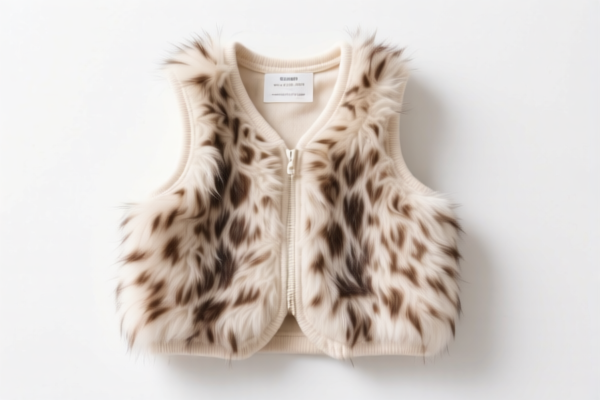
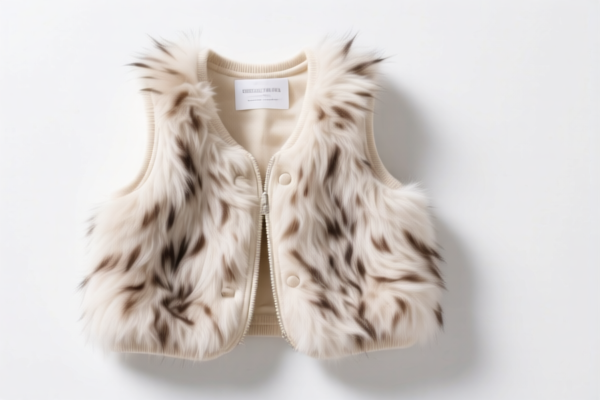
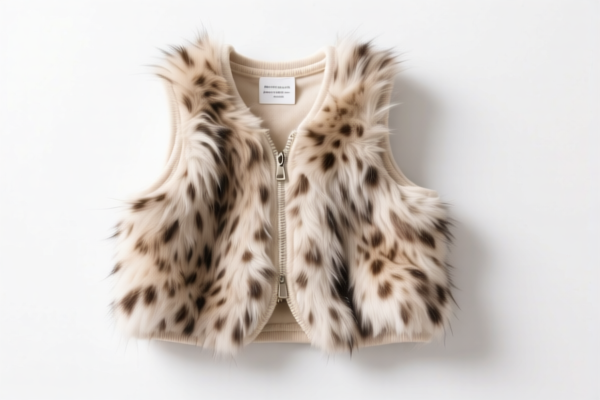
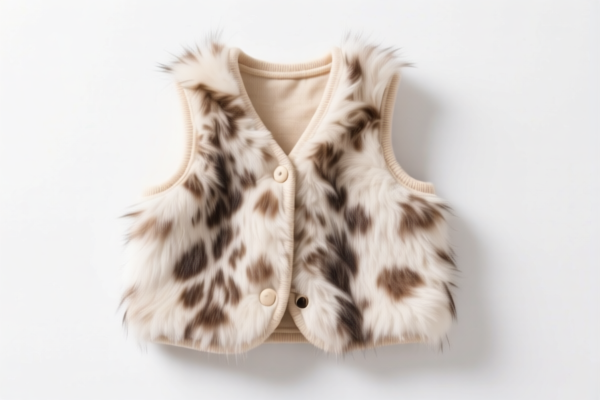
AI Analysis
🧥 Fine Animal Hair Vest (Wool/Animal Hair Vests)
🌐 HS Code Reference & Clearance Guide | 2026 Latest Tariff Analysis | Professional Strategy for Fine Animal Hair Apparel
📌 I. Product Definition & Classification: What exactly is a "Fine Animal Hair Vest"?
"Fine Animal Hair Vest" refers to sleeveless outerwear or undergarments made primarily from natural fibers such as Sheep’s Wool (Lamb’s Wool), Cashmere, Mohair, or Alpaca. In international trade, these are strictly differentiated based on:
-
Knitted vs. Woven:
- Knitted (针织): Elastic, stretchy fabric. Usually classified under Chapter 61.
- Woven (机织): Structured, non-stretchy fabric. Usually classified under Chapter 62.
-
Type of Garment:
- Vests (Back/Vests): Sleeveless garments, often worn over shirts or sweaters.
- Sleeveless Jackets (无袖夹克): Outerwear with structure, lining, or fillings (e.g., wool filling).
⚠️ Critical Distinction Point:
- If the vest is knitted (e.g., a knit wool sweater vest) → It falls under 6110.11 or 6110.20.
- If the vest is woven (e.g., a suit vest, woven wool waistcoat) → It falls under 6211 or 6201.
- If it has filling/insulation (e.g., wool-filled vest) → It may fall under 6201.20.
📦 II. HS Code Classification Details (2026 Latest Tariff Authority Cross-Reference)
Based on the provided data <DATA>, here are the specific HS Codes for "Fine Animal Hair Vests":
| HS Code | Product Description | Summary (Chinese) | Applicability Scenario | Fabric Type |
|---|---|---|---|---|
6110.11.00.60 |
Woolen Knitted Vest | 羊毛制非套衫背心 | Knitted wool vest, non-sweater style (e.g., open front or pullover knit vest) | ✅ Knitted |
6110.11.00.50 |
Woolen Knitted Vest | 羊毛制非套衫背心 | Same as above; likely differentiated by specific material blend or minor design variation | ✅ Knitted |
6211.39.30.40 |
Woolen Woven Vest | 羊毛材质背心 | Woven wool vest (e.g., formal waistcoat, suit vest) | ✅ Woven |
6201.20.35.00 |
Wool-Filled Sleeveless Jacket | 羊毛填充无袖夹克 | Outerwear vest with wool filling/insulation, structured | ✅ Woven/Structured |
6201.20.19.00 |
Wool-Filled Sleeveless Jacket | 羊毛填充无袖夹克 | Same as above; likely differentiated by lining or specific wool grade | ✅ Woven/Structured |
🔍 Key Reminder:
- "Fine Animal Hair" primarily includes Sheep’s Wool (6110.11) and Cashmere/Mohair (6110.20/30). However, the provided data explicitly lists6110.11(Woolen) and6211/6201(Other knitted/woven garments).
- Do NOT confuse "Wool-Filled Jacket" (6201.20) with a simple "Wool Vest" (6110.11). The former implies insulation/lining, affecting the tax rate.
💰 III. 2026 Latest Tariff Rate Details (Including Surtaxes & Policy Add-ons)
✅ Applicable Country: United States (US)
✅ Origin: China (CN)
✅ Effective Time: Current Rates (Includes Section 232, Section 301, and Section 122 provisions)
🎯 1. 6110.11.00.60 & 6110.11.00.50 —— Woolen Knitted Vest (Non-Sweater Style)
| Item | Content |
|---|---|
| Base Duty Rate | 16.0% |
| Additional Duty (Section 301) | +7.5% |
| Section 122 Duty | +10% |
| Total Tax Rate | 33.5% |
| Tax Calculation | CIF Value × 33.5% |
| De Minimis Exemption | ❌ Not Applicable (High-value apparel subject to strict scrutiny) |
| Legal Basis Path | HTSUS:6110.11.00 → Section 301: Footnote 9903.88.01 → Section 122: EO 14014 |
📌 Explanation:
- Base 16%: Standard US MFN rate for woolen knitted garments.
- Section 301 (7.5%): Trade war surtax on Chinese textiles/apparel.
- Section 122 (10%): Emergency import relief surtax (if applicable under current executive orders).
- Total 33.5%: A significant tariff burden. Must be factored into FOB/CIF pricing.
🎯 2. 6211.39.30.40 —— Woolen Woven Vest
| Item | Content |
|---|---|
| Base Duty Rate | 12.0% |
| Additional Duty (Section 301) | +7.5% |
| Section 122 Duty | +10% |
| Total Tax Rate | 29.5% |
| Tax Calculation | CIF Value × 29.5% |
| De Minimis Exemption | ❌ Not Applicable |
| Legal Basis Path | HTSUS:6211.39.30 → Section 301: Footnote 9903.88.01 → Section 122: EO 14014 |
📌 Note:
- Woven vests (6211) have a lower base rate (12%) than knitted wool vests (6110at 16%).
- However, the total rate (29.5%) is still high due to add-ons.
🎯 3. 6201.20.35.00 & 6201.20.19.00 —— Wool-Filled Sleeveless Jacket
| Item | Content |
|---|---|
| Base Duty Rate | 8.5% |
| Additional Duty (Section 301) | +7.5% |
| Section 122 Duty | +10% |
| Total Tax Rate | 26.0% |
| Tax Calculation | CIF Value × 26.0% |
| De Minimis Exemption | ❌ Not Applicable |
| Legal Basis Path | HTSUS:6201.20.19/35 → Section 301: Footnote 9903.88.01 → Section 122: EO 14014 |
📌 Note:
- These are classified as Outerwear Jackets (6201.20for women/girls), not simple vests.
- Base rate is lowest (8.5%), but the total rate (26.0%) is the lowest among the three categories.
- Crucial: Ensure the product is indeed a "jacket" (structured, possibly lined/filled), not just a vest, to benefit from this lower base rate. Misclassification can lead to penalties.
🛠️ IV. Clearance Practical Advice (Real-World Pitfall Avoidance Guide)
✅ 1. Essential Documentation Checklist (All Required)
| Document | Required | Notes |
|---|---|---|
| ✅ Product Specification Sheet | ✔️ | Must specify: Material (e.g., 100% Wool, Cashmere Blend), Knitted/Woven, Style (Vest vs. Jacket) |
| ✅ Fabric Swatch/Composition Label | ✔️ | Proof of "Fine Animal Hair" content. Customs may test for wool vs. synthetic blends. |
| ✅ Product Photos | ✔️ | Clear images showing front/back, tags, and sleeveless design. |
| ✅ Commercial Invoice | ✔️ | Must match HS Code description exactly. Avoid vague terms like "Apparel"; use "Wool Knitted Vest" or "Woolen Sleeveless Jacket". |
| ✅ Packing List | ✔️ | Detailed count, weights, and dimensions. |
| ✅ Origin Certificate (CO) | ✔️ | Mandatory for proving Chinese origin (triggering tariffs). |
✅ 2. Declaration Tips (Key Mantras)
🔥 "Material Defines Chapter, Structure Defines Subheading, Name Defines Accuracy!"
| Scenario | Correct Declaration | Wrong Approach |
|---|---|---|
| Knitted Wool Vest | 6110.11.00.60 - "Woolen Knitted Vest" |
Declaring as "Jacket" → Wrong Chapter |
| Woven Suit Vest | 6211.39.30.40 - "Woolen Woven Vest" |
Declaring as "Knitted" → Wrong Chapter |
| Wool-Filled Outer Vest | 6201.20.35.00 - "Wool-Filled Sleeveless Jacket" |
Declaring as "Vest" → May be reassigned to higher base rate or audited |
| Mixed Material (e.g., Wool + Cotton) | Use the principal material rule. If wool >50%, use wool codes. | Guessing → Potential misclassification penalty |
✅ 3. Special Case Handling
| Situation | Handling Advice |
|---|---|
| OEM Custom Vest | Provide design sketches + material specs. If labeled "Cashmere" but tested as Wool, adjust HS Code to 6110.11 (Wool) instead of 6110.20 (Cashmere) to avoid false declaration. |
| "Vest" vs. "Jacket" Ambiguity | If the vest has a front closure (zipper/buttons), collar, and lining, declare as 6201.20 (Jacket) if possible, as the base tax (8.5%) is lower than knitted vests (16%). However, if it’s truly a simple vest, stick to 6110/6211 to avoid fraud allegations. |
| Small Parcel (De Minimis) | ❌ Do NOT use De Minimis. Textiles/apparel from China are heavily scrutinized. Even under $800, high tariffs may apply if not properly declared. |
| Anti-Dumping/Countervailing | Check if specific wool products face additional AD/CVD orders. The provided data does not list AD/CVD, but Section 122/301 are active. |
🌍 V. Global Market Clearance Comparison (2026 Latest)
| Country/Region | Recommended HS Code | Base Tariff | Surtaxes | Total Approx. Rate | Notes |
|---|---|---|---|---|---|
| 🇺🇸 USA | 6110.11.00.60 |
16.0% | +17.5% (301+122) | 33.5% | High barrier. |
| 🇪🇺 EU | 6110.20.30 |
12% | None | ~12-14% | No Section 301/122. VAT applies separately. |
| 🇨🇳 China | 6110.11.00 |
9-16% | None | 9-16% | Lower rates for imports into China. |
| 🇬🇧 UK | 6110.20.30 |
12% | None | ~12-14% | Post-Brexit tariffs similar to EU. |
| 🇨🇦 Canada | 6110.11.00 |
16% | None | 16% | No Section 301. |
📌 Conclusion:
- USA is the most expensive market due to Section 301 and Section 122 tariffs.
- EU/UK/Canada are more favorable for woolen apparel, with no additional US-style surtaxes.
- For US exports, cost optimization is critical. Consider pricing strategies to absorb the 26-33.5% tariff.
📌 VI. Common Errors & Pitfall Guide (Blood & Tears Lessons)
❌ Error 1: Declaring a Woven Vest as Knitted (6110 instead of 6211)
👉 Consequence: Customs may reclassify it, leading to corrected tariff assessment and potential penalties for misdeclaration.
❌ Error 2: Calling a Wool-Filled Jacket a "Vest" to avoid scrutiny
👉 Consequence: If customs determines it’s a jacket (6201), they may still apply the correct rate, but the misleading name can trigger an audit or delay.
❌ Error 3: Ignoring Section 122 (10%) in cost calculations
👉 Consequence: Unexpected 33.5% total tax instead of the expected 26% or 29.5%, eroding profit margins.
❌ Error 4: Vague Description: "Animal Hair Vest"
👉 Consequence: Customs cannot determine if it’s Wool (6110), Cashmere (6110.20), or Mohair (6110.30). Clarify material composition.
✅ Correct Practice:
"Knitted Wool Vest, 100% Sheep Wool, No Collar, Pullover Style, Model ABC, Made in China"
OR
"Woolen Woven Waistcoat, 100% Wool, Lined, Model XYZ, Made in China"
🎯 VII. Conclusion: Professional Declaration, Save Costs, Ensure Smooth Clearance!
🎯 Remember the Mantra:
🔹 "Knitted vs. Woven: Know the difference!"
🔹 "Vest vs. Jacket: Choose the right base rate!"
🔹 "Section 301 + 122 = 17.5% Surtax! Don’t forget!"
🔹 "Total Tax = Base + 17.5%! Calculate accurately!"
📌 Pro Tip:
- If you can structurally reclassify a simple vest as a structured sleeveless jacket (6201.20), you MAY benefit from the lower 8.5% base rate (Total 26.0% vs. 33.5%).
- However, this must be factually accurate. If it’s clearly a vest, do not force a jacket classification.
- Request a Binding Ruling from US CBP if uncertain about the classification of complex designs.
📣 Immediate Action:
📞 Contact a Licensed Customs Broker + Provide Product Photos + Verify Material Composition
🚀 Ensure your "Fine Animal Hair Vest" clears US Customs smoothly, avoiding costly delays and penalties!
✨ Professional Clearance Starts with Accurate Classification!
💼 Your Profit Margin Depends on This 33.5% vs. 26.0% Difference!
Customer Reviews
About HS Code Classification
The Harmonized System (HS) is an internationally standardized nomenclature developed by the World Customs Organization (WCO) to classify traded products. Over 200 countries use the HS system as the basis for customs tariffs, trade statistics, and import/export regulations.
Each HS code follows a hierarchical structure:
- Chapter (2 digits) — Broad category of goods (e.g., Chapter 84: Machinery and Mechanical Appliances)
- Heading (4 digits) — More specific grouping within the chapter
- Subheading (6 digits) — Internationally standardized breakdown, used by all WCO member countries
- National subdivisions (8-10 digits) — Country-specific extensions for further classification, such as US HTSUS 10-digit codes
Correct HS code classification is essential for smooth customs clearance, accurate duty payment, and compliance with trade regulations. Misclassification can lead to customs delays, overpayment of duties, or penalties.
When importing from CN to US, the applicable tariff rates may include:
- Most-Favored-Nation (MFN) rate — The standard duty rate applied to WTO members
- General rate — Applied to countries without trade agreements
- Trade remedy duties — Additional tariffs such as Section 301 (anti-dumping), Section 232 (national security), or countervailing duties
The information provided on this page is for reference purposes only. For official classification, please consult with your local customs authority or a licensed customs broker.