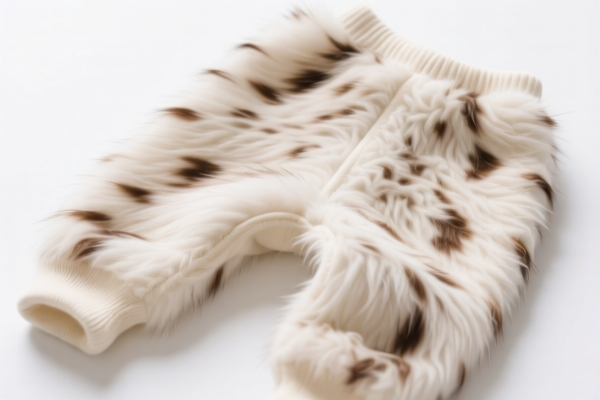
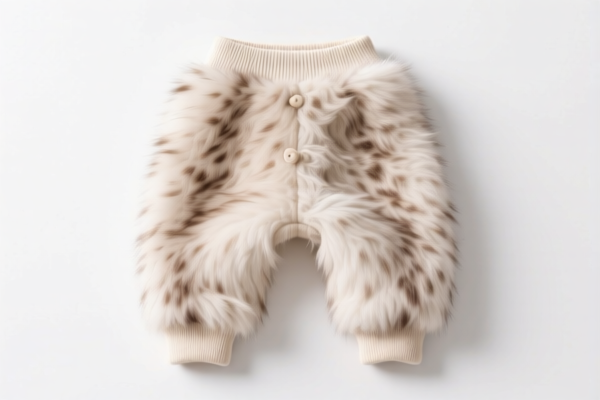
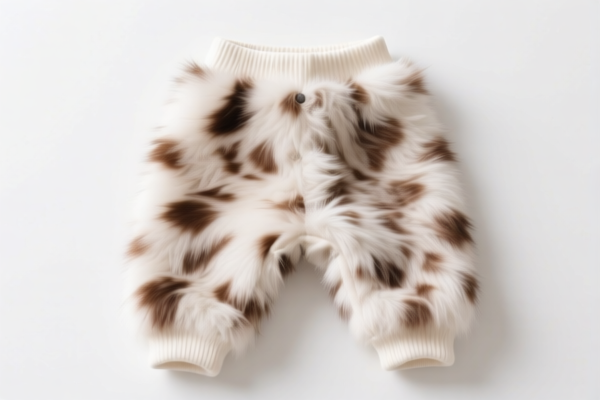
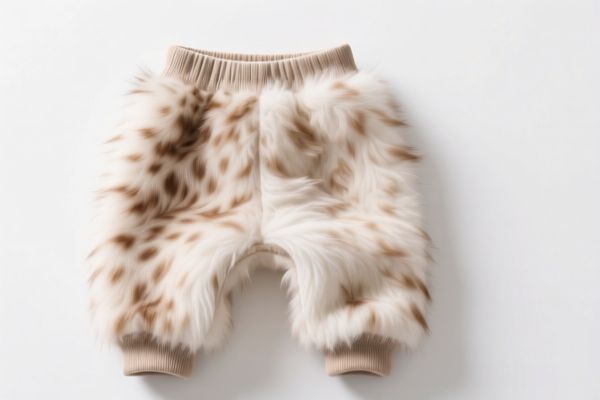
Fine Animal Hair Waterproof Breathable Pants
CN → USProduct Images
AI Analysis
🐾 Fine Animal Hair Waterproof & Breathable Pants
🌐 HS Code Reference & Customs Clearance Guide | 2026 Latest Tariff Analysis | Professional Compliance Strategy
📌 I. Product Definition & Classification: What Exactly Are "Fine Animal Hair Pants"?
Pants made from fine animal hair (typically wool, cashmere, alpaca, or mohair) are classified as textile articles. However, the functional attributes of waterproof and breathable can significantly impact classification if they transform the product into a "technical garment."
Key Distinction: * Standard Wool/Animal Hair Trousers: Purely textile-based, no rubber/plastic coating or laminate. * Waterproof/Breathable Technical Trousers: If the waterproofing is achieved via a rubber/plastic coating, a laminated membrane, or if the product is primarily valued for its weatherproofing rather than its textile nature, it may shift from Chapter 61/62 to Chapter 42 or 39/40 depending on construction.
⚠️ Critical Classification Point:
- If the pants are knitted/crocheted → Generally Chapter 61.
- If the pants are woven (most common for wool suits/trousers) → Generally Chapter 62.
- If the pants are waterproof due to a continuous plastic/rubber coating on the fabric or a laminate that constitutes the essential character, it may fall under Chapter 42 (Articles of leather) or specific subheadings for waterproof clothing. However, for most "waterproof breathable" wool pants (e.g., Gore-Tex laminated wool), they often remain in 6203 but with specific notes on "other waterproof clothing."
📦 II. HS Code Classification Details (2026 Latest Tariff Schedule)
| HS Code | Product Description | Applicable Scenario | Material/Construction |
|---|---|---|---|
6203.43.00 |
Men's or boys' suit-type trousers, of synthetic fibers | Most Common: Synthetic blends (e.g., wool/polyester) | Woven, Synthetic Blend |
6203.49.00 |
Men's or boys' suit-type trousers, of other textile materials | Wool/Cashmere/Alpaca: Pure or blended animal hair (not synthetic) | Woven, Animal Hair |
6103.43.00 |
Men's or boys' trousers, knitted/crocheted, synthetic fibers | Knitted wool-blend trousers | Knitted, Synthetic Blend |
6103.49.00 |
Men's or boys' trousers, knitted/crocheted, other textile materials | Knitted cashmere/alpaca trousers | Knitted, Animal Hair |
4202.92.00 |
Trousers, waterproof, made of sheeting of plastic or rubber | Special Case: Fully waterproof rubber/plastic trousers | Plastic/Rubber Coated |
6307.90.00 |
Other made-up articles (if not primarily textile) | Non-standard, highly technical waterproof gear | Mixed Materials |
🔍 Key Reminder:
- Wool/Cashmere/Alpaca falls under "Other textile materials" in HS Codes 6203.49 (Woven) or 6103.49 (Knitted).
- "Fine Animal Hair" usually refers to Cashmere (1420) or Alpaca (5106/5108), which are high-value fibers.
- If the pants are woven and made of wool/cashmere, use6203.49.00.
- If they are knitted, use6103.49.00.
- Waterproofing alone does not automatically move you out of Chapter 62 unless it involves a plastic/rubber sheet (Chapter 42) or is a technical garment explicitly classified elsewhere. For most consumer wool pants with DWR (Durable Water Repellent) or laminated breathability, Chapter 62 remains correct.
💰 III. 2026 Latest Tariff Rate Breakdown (Including Additional Duties)
✅ Applicable Country: United States (US)
✅ Country of Origin: China (CN)
✅ Effective Date: November 10, 2025 (and subsequent imports)
🎯 1. 6203.49.00 —— Men's/Women's Woven Trousers of Other Textile Materials (Wool/Cashmere/Alpaca)
| Item | Content |
|---|---|
| Base Rate | 12% (ad valorem) |
| USITC Additional Duty | +7.5% (from USITC Footnote 4 for "Other textile apparel") |
| IEEPA Additional Duty | +10% (for Chinese/Hong Kong products, effective Nov 10, 2025) |
| Total Tariff Rate | 29.5% |
| Tax Calculation | CIF Value × 29.5% |
| De Minimis Eligibility | ❌ No (deny_de_minimis) |
| Legal Path | IEEPA:9903.01.24 → USITC:6203.49.00 → FOOTNOTE:4 |
📌 Explanation:
- Base 12%: Standard MFN rate for non-synthetic woven trousers.
- USITC +7.5%: Additional duty on "Other textile apparel" from China under Section 301.
- IEEPA +10%: New additional duty effective Nov 10, 2025, targeting Chinese textiles.
- Total 29.5%: This is a high tariff for apparel. Must be factored into pricing.
🎯 2. 6103.49.00 —— Men's/Women's Knitted Trousers of Other Textile Materials
| Item | Content |
|---|---|
| Base Rate | 16% (ad valorem) |
| USITC Additional Duty | +7.5% |
| IEEPA Additional Duty | +10% |
| Total Tariff Rate | 33.5% |
| Tax Calculation | CIF Value × 33.5% |
| De Minimis Eligibility | ❌ No |
| Legal Path | IEEPA:9903.01.24 → USITC:6103.49.00 → FOOTNOTE:4 |
📌 Note:
- Knitted garments often face higher base rates (16% vs 12%) in the US.
- With additional duties, the total cost impact is even more significant.
🎯 3. 4202.92.00 —— Waterproof Trousers (Plastic/Rubber Coated)
| Item | Content |
|---|---|
| Base Rate | 10% |
| USITC Additional Duty | +25% (Section 301 on "Other made-up articles") |
| IEEPA Additional Duty | +10% |
| Total Tariff Rate | 45% |
| Tax Calculation | CIF Value × 45% |
| De Minimis Eligibility | ❌ No |
📌 Warning:
- If your "waterproof" pants are classified as rubber/plastic-coated (e.g., rain pants with wool lining), they fall under Chapter 42.
- This triggers the 25% Section 301 duty and 10% IEEPA, totaling 45%.
- Misclassification Risk: If you label as6203.49but海关 determines it's4202.92, you face a 15.5% underpayment penalty.
🛠️ IV. Customs Clearance Practical Advice (Real-World Pitfall Avoidance)
✅ 1. Documentation Checklist (Mandatory)
| Document | Required | Description |
|---|---|---|
| ✅ Product Spec Sheet | ✔️ | Detail material composition (e.g., 80% Wool, 20% Elastane), waterproof rating (mm H₂O), breathability (RET value). |
| ✅ Material Composition Certificate | ✔️ | Must confirm % of "Fine Animal Hair" vs. synthetic blends. |
| ✅ Waterproofing Method Proof | ✔️ | DWR treatment? Laminated membrane? Coated? This determines Chapter 62 vs. 42. |
| ✅ Product Photos | ✔️ | Show seams, labels, and any waterproof zippers/tapes. |
| ✅ Commercial Invoice | ✔️ | Must specify "Wool Trousers" or "Cashmere Trousers," NOT just "Pants." |
| ✅ Bill of Lading | ✔️ | Ensure HS Code matches invoice. |
✅ 2. Declaration Tips (Golden Rules)
🔥 "Know Your Fiber, Declare Your Function, Avoid Rubber Traps!"
| Scenario | Correct Declaration | Wrong Practice |
|---|---|---|
| Woven Wool/Cashmere Pants with DWR | 6203.49.00 "Wool Trousers" |
Mislabel as "Synthetic" → Higher duty |
| Knitted Alpaca Pants | 6103.49.00 "Alpaca Trousers" |
Use generic "Textile Pants" → Delay |
| Rubber-Coated Rain Pants with Wool Lining | 4202.92.00 "Waterproof Trousers" |
Declare as Wool → 45% penalty risk |
| Mixed Material (50% Wool, 50% Polyester) | 6203.43.00 if synthetic predominates |
Declare as 100% Wool → Fine |
✅ 3. Special Cases
| Situation | Handling Advice |
|---|---|
| Gore-Tex® Laminated Wool Pants | Still usually 6203.49.00 if wool is essential character. Provide lamination proof. |
| DWR (Durable Water Repellent) Treatment Only | Definitely 6203.49.00. No change in chapter. |
| OEM Custom Orders | Provide design sheets to prove material composition and construction. |
| Samples | Even samples are subject to 29.5%-45% duties. Do not assume "no tax" for samples. |
🌍 V. Global Market Comparison (2026 Latest)
| Country/Region | Recommended HS Code | Tariff | Certification | Notes |
|---|---|---|---|---|
| 🇺🇸 USA | 6203.49.00 |
29.5% | None | High duties due to IEEPA/Section 301 |
| 🇨🇳 China | 6203.49.00 |
8-10% | None | Lower duties, but check VAT |
| 🇪🇺 EU | 6203.49.00 |
12% | REACH, OEKO-TEX | No additional duties if origin is China |
| 🇬🇧 UK | 6203.49.00 |
12% | UKCA | Post-Brexit rules apply |
| 🇯🇵 Japan | 6203.49.00 |
16% | None | Standard MFN rate |
📌 Conclusion:
- USA is the most expensive market for Chinese-origin wool/cashmere pants due to IEEPA +10% and Section 301 +7.5%.
- EU/UK/Japan have stable duties around 12-16%, making them more competitive for high-end animal hair apparel.
- Strategic Suggestion: For US market, consider Vietnam/Mexico origin to avoid IEEPA/Section 301 (if applicable), or absorb the 29.5% cost into pricing.
📌 VI. Common Errors & Pitfall Guide (Lessons Learned)
❌ Error 1: Declaring "Waterproof Pants" as 4202.92 when they are just DWR-treated wool.
👉 Consequence: Overpayment of tariff (45% vs 29.5%) → Lost profit margin.
❌ Error 2: Declaring wool pants as 6203.43 (Synthetic) to lower base rate.
👉 Consequence: Customs audit → Penalties + Back Taxes + Seizure.
❌ Error 3: Ignoring "Knitted" vs. "Woven" distinction.
👉 Consequence: Misclassification → 6103.49 (16% base) vs 6203.49 (12% base) → Underpayment.
❌ Error 4: Not specifying "Fine Animal Hair" type (Cashmere vs. Sheep Wool).
👉 Consequence: No direct tariff difference in HS, but affects customs valuation and origin verification.
✅ Correct Practice:
"Men's Woven Wool Trousers, 80% Wool, 20% Elastane, DWR Water-Repellent Finish, Model XYZ, Origin: China"
🎯 VII. Conclusion: Precision in Classification, Profit in Clearance!
🎯 Remember the Key Points:
🔹 "Wool/Cashmere = 6203.49 (Woven) or 6103.49 (Knitted)"
🔹 "Waterproof ≠ Chapter 42 unless Rubber/Plastic Coated"
🔹 "USA Tariff: 29.5% for Wool Pants (China Origin)"
🔹 "Always Declare Material Composition Accurately!"
📌 Pro Tip:
If your pants are made from Alpaca (Peru/Bolivia origin), you may qualify for GSP (Generalized System of Preferences) duty-free entry to the US, IF eligible. Check specific country eligibility.
For Cashmere (Mongolia origin), similar GSP benefits may apply.
📣 Immediate Action:
📞 Contact a Licensed Customs Broker
📄 Provide Material Certificates & Waterproofing Specs
🚀 Ensure Accurate HS Code: 6203.49.00 or 6103.49.00
💡 Avoid the 45% Rubber Trap!
✨ Professional Customs Clearance Starts with Accurate Classification!
💼 Every Percent of Tariff Matters!
Customer Reviews
About HS Code Classification
The Harmonized System (HS) is an internationally standardized nomenclature developed by the World Customs Organization (WCO) to classify traded products. Over 200 countries use the HS system as the basis for customs tariffs, trade statistics, and import/export regulations.
Each HS code follows a hierarchical structure:
- Chapter (2 digits) — Broad category of goods (e.g., Chapter 84: Machinery and Mechanical Appliances)
- Heading (4 digits) — More specific grouping within the chapter
- Subheading (6 digits) — Internationally standardized breakdown, used by all WCO member countries
- National subdivisions (8-10 digits) — Country-specific extensions for further classification, such as US HTSUS 10-digit codes
Correct HS code classification is essential for smooth customs clearance, accurate duty payment, and compliance with trade regulations. Misclassification can lead to customs delays, overpayment of duties, or penalties.
When importing from CN to US, the applicable tariff rates may include:
- Most-Favored-Nation (MFN) rate — The standard duty rate applied to WTO members
- General rate — Applied to countries without trade agreements
- Trade remedy duties — Additional tariffs such as Section 301 (anti-dumping), Section 232 (national security), or countervailing duties
The information provided on this page is for reference purposes only. For official classification, please consult with your local customs authority or a licensed customs broker.