Fine Animal Hair Windproof Jacket (Set Components)
CN → US| HS Code | Tariff Rate | Origin | Destination | Doc |
|---|---|---|---|---|
| 6110190080 | 33.5% | CN | US | Official Doc |
| 6201201900 | 26.0% | CN | US | Official Doc |
| 6110190070 | 33.5% | CN | US | Official Doc |
| 6202202911 | 0.0% | CN | US | Official Doc |
| 6202202921 | 0.0% | CN | US | Official Doc |
Product Images
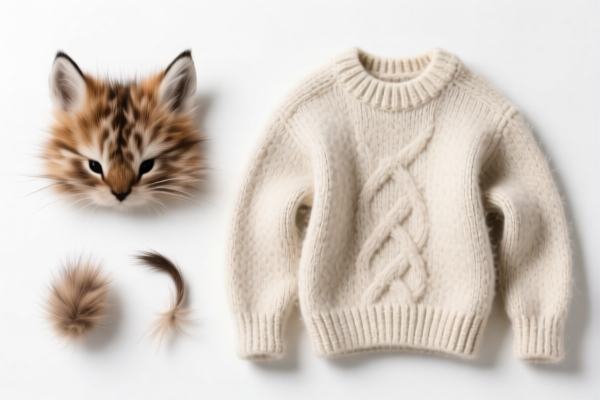
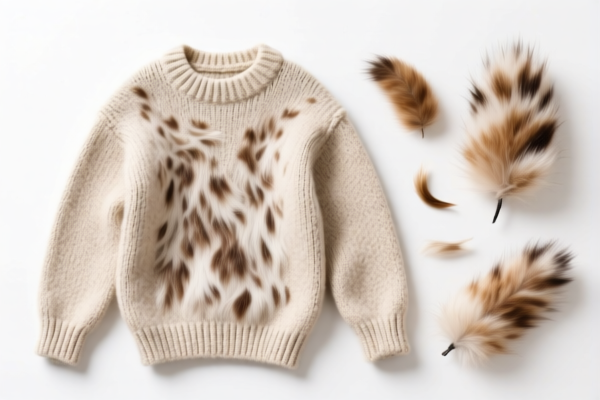
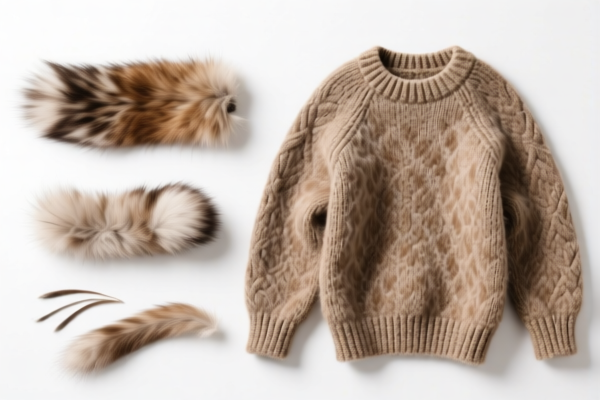
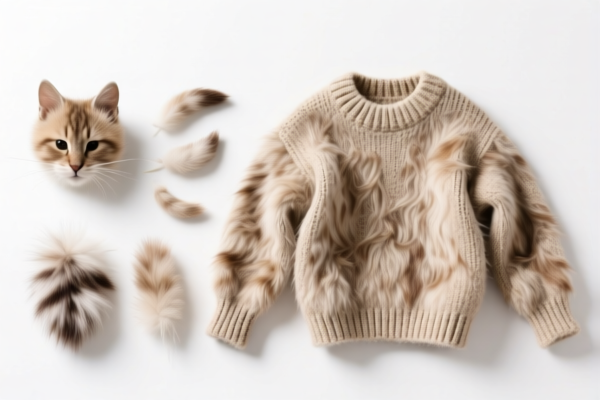
AI Analysis
🧥 Fine Animal Hair Windproof Jacket (Set Components)
🌐 HS Code Reference & Customs Clearance Guide | 2026 Latest Tariff Analysis | Professional Compliance Strategy
📌 I. Product Definition & Classification: What Are "Set Components"?
Fine animal hair windproof jackets (often cashmere, wool, or mohair blends) are high-value apparel items. However, the key term here is "Set Components" (组件套装). In international trade and customs classification, this usually refers to: 1. Cut Components: Panels cut from fabric but not yet sewn into a finished garment. 2. Semi-finished Kits: Parts that require further assembly (e.g., lining, collars, zippers sold separately or in a kit). 3. Partial Sets: A jacket body + sleeves + collar sold together but not fully assembled.
⚠️ Critical Distinction:
- If the item is a finished, wearable jacket → It falls under Chapter 62 (Other Made-up Clothing Articles) or Chapter 61 (Knitted/Crocheted).
- If the item is components/kits intended for assembly → It may fall under Chapter 61/62 subheadings for "Parts" or "Not Elsewhere Specified", or specific "Set Component" codes as listed below.
- Misclassification Risk: Declaring a finished jacket as "components" to lower duty is a major red flag. Customs will inspect for buttons, zippers, stitching, and lining.
📦 II. HS Code Classification Details (Based on Provided Data)
The provided data indicates two main categories based on whether the item is classified as Knitted (Ch 61) or Woven/Other Made-up (Ch 62).
| HS Code | Product Description | Classification Logic | Key Attributes |
|---|---|---|---|
6110.19.00.80 |
Fine Animal Hair Knitted/Crocheted Jacket | Knitted/Non-Interlock Other |
- Gender-neutral - Classified as "Other" - No specific gender code used |
6110.19.00.70 |
Fine Animal Hair Knitted Jacket (Set Components) | Knitted/Non-Interlock Parts/Components |
- Fits Component/Part matching logic - Not fully assembled |
6201.20.19.00 |
Fine Animal Hair Jacket (Set Components) | Woven/Other Made-up Men’s/Boys’ |
- Core attributes match material & function - Classified as Men’s |
6202.20.29.11 |
Fine Animal Hair Windproof Jacket (Set Components) | Woven/Other Made-up Women’s/Girls’ |
- Considered as containing Core Garment Parts - Classified as Women’s |
6202.20.29.21 |
Fine Animal Hair Trench Coat/Jacket (Set Components) | Woven/Other Made-up Women’s/Girls’ |
- Fits Component/Part logic inference - Classified as Women’s |
🔍 Key Insight:
- Ch 61 (Knitted):6110is for pullovers, cardigans, and jackets knitted from fine animal hair. - Ch 62 (Woven/Other):6201is for Men’s/Boys’,6202for Women’s/Girls’. - "Set Components" in the description implies these HS codes are applied to incomplete or kit-based shipments, which may attract different scrutiny than finished goods.
💰 III. 2026 Latest Tariff Rate Breakdown (Including Add-ons)
✅ Applicable Country: United States (US)
✅ Origin: China (CN)
✅ Effective Date: 2025+ (Current Trade Policy)
🎯 1. Knitted Jackets (6110.19.00.80 & 6110.19.00.70)
| Item | Content |
|---|---|
| Ad Valorem Duty | 16.0% (Base) |
| Section 301 Tariff | +7.5% |
| Section 122 Tariff | +10% |
| Total Rate | 33.5% |
| Calculation | CIF Value × 33.5% |
| De Minimis Eligibility | ❌ No (Value exceeds $800 threshold likely; also Section 301/122 apply) |
| Legal Path | USITC:6110.19.00.80/70 → Section 301: +7.5% → Section 122: +10% |
📌 Explanation:
- Knitted fine animal hair garments are subject to 16% base duty. - Section 301 adds 7.5% for Chinese-origin goods. - Section 122 (if applicable based on current enforcement) adds an additional 10%. - Total: 33.5%. This is a high-duty category.
🎯 2. Woven Jackets (Men’s) (6201.20.19.00)
| Item | Content |
|---|---|
| Ad Valorem Duty | 8.5% (Base) |
| Section 301 Tariff | +7.5% |
| Section 122 Tariff | +10% |
| Total Rate | 26.0% |
| Calculation | CIF Value × 26.0% |
| De Minimis Eligibility | ❌ No |
| Legal Path | USITC:6201.20.19.00 → Section 301: +7.5% → Section 122: +10% |
📌 Explanation:
- Woven men’s jackets have a lower base rate of 8.5%. - Add-ons remain the same: 7.5% + 10%. - Total: 26.0%. Still significant, but 7.5% lower than knitted counterparts.
🎯 3. Woven Jackets (Women’s) (6202.20.29.11 & 6202.20.29.21)
| Item | Content |
|---|---|
| Specific Duty | 36¢/kg (Ad Valorem Base) |
| Ad Valorem Duty | 16.3% (Base) |
| Section 301 Tariff | +7.5% |
| Section 122 Tariff | +10% |
| Total Rate | 36¢/kg + 16.3% + 7.5% + 10% = ~43.8% (mixed) |
| Calculation | (Weight × 0.36) + (CIF Value × 43.8%) |
| De Minimis Eligibility | ❌ No |
| Legal Path | USITC:6202.20.29.11/21 → Section 301: +7.5% → Section 122: +10% |
📌 Explanation:
- Women’s woven fine animal hair jackets have a mixed duty structure: Specific (per kg) + Ad Valorem (%). - Base ad valorem is 16.3%, plus 36¢/kg. - Add-ons: 7.5% + 10%. - Total Effective Rate: Can exceed 40%+ depending on the weight-to-value ratio. Light, high-value cashmere jackets will be hit hard by the ad valorem component; heavier items by the specific duty.
🛠️ IV. Customs Clearance Practical Advice (Avoid Pitfalls)
✅ 1. Documentation Checklist (Mandatory)
| Document | Required | Purpose |
|---|---|---|
| ✅ Product Specification Sheet | ✔️ | Defines "Fine Animal Hair" (e.g., Cashmere %), fabric weight, construction type (Knitted/Woven) |
| ✅ Bill of Materials (BOM) | ✔️ | Crucial for "Set Components" – proves what parts are included and if assembly is required |
| ✅ Commercial Invoice | ✔️ | Must clearly state "Set Components" or "Parts" vs. "Finished Garment" |
| ✅ Packing List | ✔️ | Show dimensions, weight, and number of pieces per carton |
| ✅ Origin Certificate (CO) | ✔️ | To confirm CN origin and apply correct Section 301/122 duties |
| ✅ Lab Test Report | ✔️ | Fiber composition analysis (e.g., "100% Cashmere") to justify Chapter 51 or 61/62 |
✅ 2. Declaration Strategy (Key Mantra)
🔥 "Define Form: Knitted or Woven? Gender? Finished or Part?"
| Scenario | Correct HS Code | Risk if Misdeclared |
|---|---|---|
| Knitted, Gender-Neutral, Finished | 6110.19.00.80 |
Declaring as "Men's" → 6110.19.00.70 (if logic mismatch) → Audit |
| Knitted, Components | 6110.19.00.70 |
Declaring as "Finished" → Higher scrutiny on assembly status |
| Woven, Men’s, Components | 6201.20.19.00 |
Declaring as "Women’s" → Wrong gender classification → Penalty |
| Woven, Women’s, Core Parts | 6202.20.29.11 |
Declaring as "Men’s" → 6201.20.19.00 → Duty difference |
| Woven, Women’s, Trench/Coat Parts | 6202.20.29.21 |
Misclassification → Duty rate mismatch (16.3% vs 8.5%) |
📌 Critical Warning:
- "Set Components" must be clearly described. If you ship a finished jacket labeled as "components," Customs will reject it or reclassify it, leading to back taxes and penalties. - Gender Classification: Ensure the description matches the intended gender. Women’s (6202) and Men’s (6201) have different base rates.
✅ 3. Special Considerations for "Fine Animal Hair"
| Issue | Advice |
|---|---|
| Fiber Content | Must specify exact percentage (e.g., "90% Cashmere, 10% Silk"). Mislabeling leads to false claims. |
| Windproof Feature | If the jacket has a waterproof/windproof membrane (e.g., Gore-Tex), it may fall under Chapter 62 (Other Made-up) rather than 61 (Knitted), even if knitted. Verify with a lab report. |
| Section 122 & 301 | These are non-negotiable for Chinese origin. Factor them into your pricing. No exemptions for "components." |
| De Minimis | Not applicable. High-value animal hair jackets will almost always exceed $800, and even if under, Section 301/122 apply. |
🌍 V. Global Market Comparison (2026)
| Market | Recommended HS Code | Base Duty | Section 301/122 | Total Effective Duty |
|---|---|---|---|---|
| 🇺🇸 USA | 6110.19.00.80 / 6201.20.19.00 / 6202.20.29.xx |
8.5% - 16.3% | +17.5% | 26% - 43.8% |
| 🇨🇳 China | Same HS Codes | 5% - 10% | None | 5% - 10% |
| 🇪🇺 EU | 6110 / 6202 | 0% - 12% | None | 0% - 12% (If no CBAM impact) |
| 🇬🇧 UK | Same HS Codes | 0% - 12% | None | 0% - 12% |
| 🇦🇺 Australia | 6110 / 6202 | 5% | None | 5% |
📌 Conclusion:
- USA is the most expensive market due to Section 301 (+7.5%) and Section 122 (+10%). - Knitted (Ch 61) and Woven Men’s (Ch 62) are cheaper than Woven Women’s (Ch 62) due to the specific duty component. - Consider supply chain diversification (e.g., Vietnam, Turkey) to avoid US tariffs if targeting the US market.
📌 VI. Common Mistakes & Pitfalls
❌ Mistake 1: Declaring a finished jacket as "Components"
👉 Consequence: Customs inspection delays, potential reclassification, and back taxes with penalties.
❌ Mistake 2: Ignoring Section 122
👉 Consequence: Underpayment by 10%. The US CBP actively enforces this on Chinese-origin apparel.
❌ Mistake 3: Misidentifying Knitted vs. Woven
👉 Consequence: 6110 (Knitted) vs 6201/6202 (Woven) have different base rates. Error leads to audit.
❌ Mistake 4: Incorrect Gender Classification
👉 Consequence: Men’s (6201) and Women’s (6202) have different duty rates. Switching codes incorrectly is fraud.
✅ Correct Approach:
"Fine Animal Hair, Knitted Windproof Jacket, Unisex, Set Components (Cut Panels), 90% Cashmere, CN Origin"
🎯 VII. Conclusion: Precision Saves Money!
🎯 Key Takeaway:
🔹 "Components are not Finished Goods" – Be transparent.
🔹 "Knitted vs. Woven" – Check the fabric structure.
🔹 "Section 122 + 301" – Budget for an additional 17.5% on top of base duty.
🔹 "Women’s Woven" – Watch out for the 36¢/kg specific duty.
📌 Pro Tip:
If you are importing high-value cashmere, consider applying for an Advance Ruling (Ruling Letter) from US CBP to confirm the HS Code and duty treatment before shipment. This protects you from retroactive audits.
📣 Immediate Action:
📞 Verify your fiber content and construction type (Knitted/Woven).
📊 Calculate your total landed cost including 33.5% - 43.8% duty.
📄 Prepare detailed BOMs for any "Set Components" shipment.
✨ Professional Customs Clearance Starts with Accurate Classification!
💼 Every Percentage Point Matters in the Fine Animal Hair Trade!
Customer Reviews
About HS Code Classification
The Harmonized System (HS) is an internationally standardized nomenclature developed by the World Customs Organization (WCO) to classify traded products. Over 200 countries use the HS system as the basis for customs tariffs, trade statistics, and import/export regulations.
Each HS code follows a hierarchical structure:
- Chapter (2 digits) — Broad category of goods (e.g., Chapter 84: Machinery and Mechanical Appliances)
- Heading (4 digits) — More specific grouping within the chapter
- Subheading (6 digits) — Internationally standardized breakdown, used by all WCO member countries
- National subdivisions (8-10 digits) — Country-specific extensions for further classification, such as US HTSUS 10-digit codes
Correct HS code classification is essential for smooth customs clearance, accurate duty payment, and compliance with trade regulations. Misclassification can lead to customs delays, overpayment of duties, or penalties.
When importing from CN to US, the applicable tariff rates may include:
- Most-Favored-Nation (MFN) rate — The standard duty rate applied to WTO members
- General rate — Applied to countries without trade agreements
- Trade remedy duties — Additional tariffs such as Section 301 (anti-dumping), Section 232 (national security), or countervailing duties
The information provided on this page is for reference purposes only. For official classification, please consult with your local customs authority or a licensed customs broker.